
I thought that some personal observations might be in order now that we’d had a bit of time in Bhutan…
This is a very beautiful, picturesque and well-maintained country. The streets and highways are well-maintained and clean (juxtapose Kathmandu), and the strict control over tourism volume definitely has allowed the government to establish clear guidelines for cleanliness, a infrastructure and design.
Having heard about Bhutan’s Gross National Happiness Index and watched a movie about this. Gross National Happiness, (GNH sometimes called Gross Domestic Happiness (GDH), is a philosophy that guides the government of Bhutan. It includes an index used to measure a population’s collective happiness and well-being. The Gross National Happiness Index was instituted as the goal of the government of Bhutan in the Constitution of Bhutan in July 2008. GNH constructs Buddhism as the core of the cultural values of the country.
While people seem unhurried, I wouldn’t say they exude happiness. We were not introduced to a wide range of people during our tour – we got a sense of how the “common people” feel from retail and food servers – but the opportunity to have extended conversations with locals did not happen. Most of our exposure was through conversations with our guide and at a respectful distance to observe the multitude of monks. There is a clear focus on nurturing community and mutual respect (some core tenants of Buddhism), but cultural, ethnic and religious diversity doesn’t exist here, so one has to decide if that is an important component of one’s happiness.
In many conversations with our guide, he shared his concern that the younger generations will now face many great challenges based on prophecies as well as external influences. He fears the loss of local culture and language with the advent and proliferation of internet access. Does this sound familiar? Seems the government has not been successful in controlling the spread of mobile phones and computer access to the wider world.
One interesting throughline of underlying beliefs here is seen in the meanings attached to each color of the ever-present prayer flags:
The colors of Bhutanese prayer flags (Lungta) represent the five elements of nature and are deeply rooted in Buddhist symbolism:
- Blue is frequently linked to the sky and the element of space in prayer flags, symbolizing peace and tranquility, and wards off negative energies.
- White represents purity and wisdom, while embodying clarity of mind and the pursuit of enlightenment.
- Red represents the life force, energy, and passion – the warmth of love and compassion. This reflects a deep connection to both physical vitality and the emotional richness that compassion brings.
- Green signifies balance and harmony reflecting he interconnectedness of nature and life. In Buddhist philosophy, the color green calls out a deep connection to healing and growth, a reminder of the equilibrium that should exist both within us and in our environment.
- Yellow symbolizes abundance and nourishment, representing the growth and prosperity that align with spiritual development. This hue also reflects the nurturing aspects of nature, conjuring images of fields ready for harvest and the fertility that sustains life.
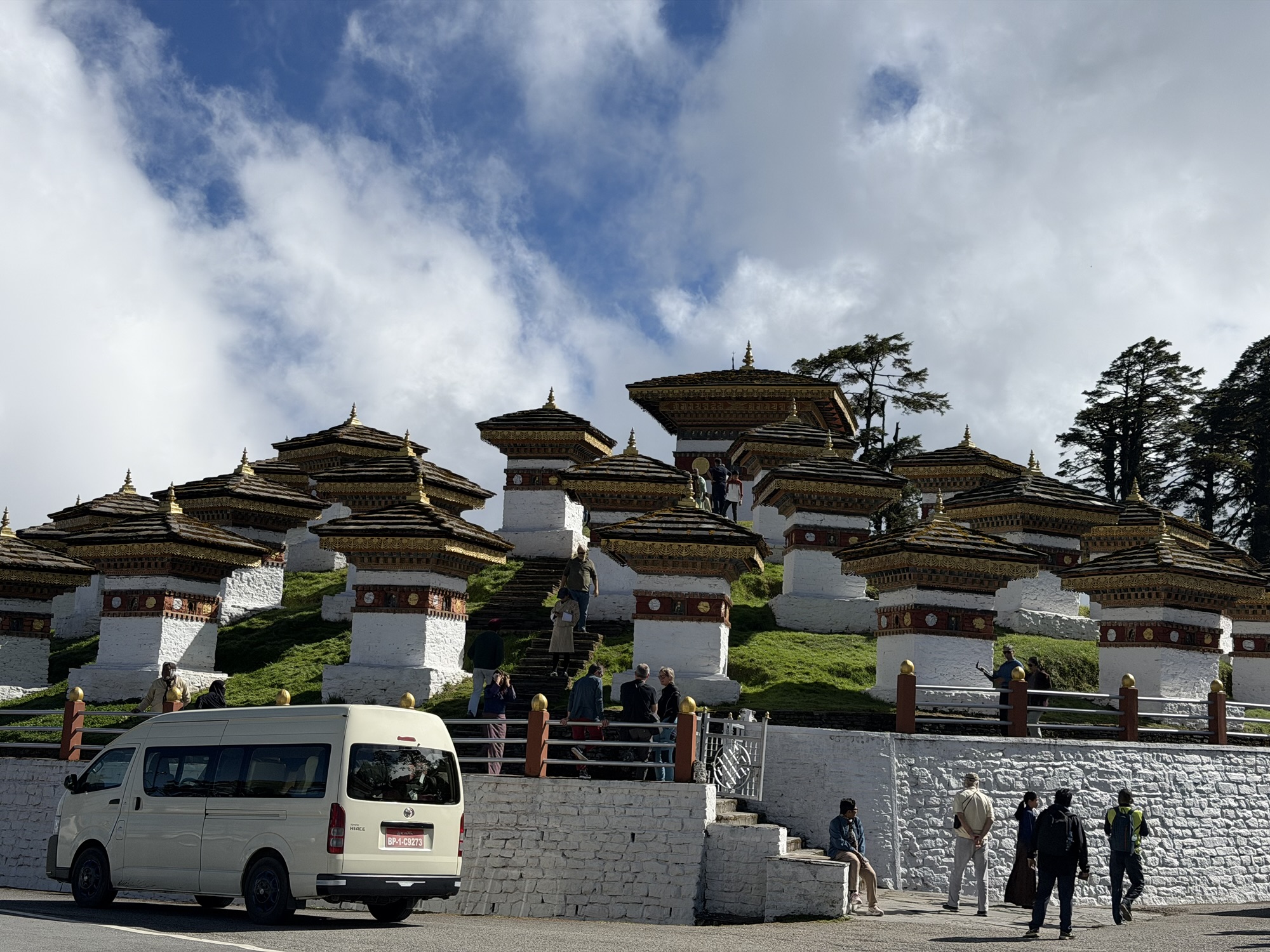
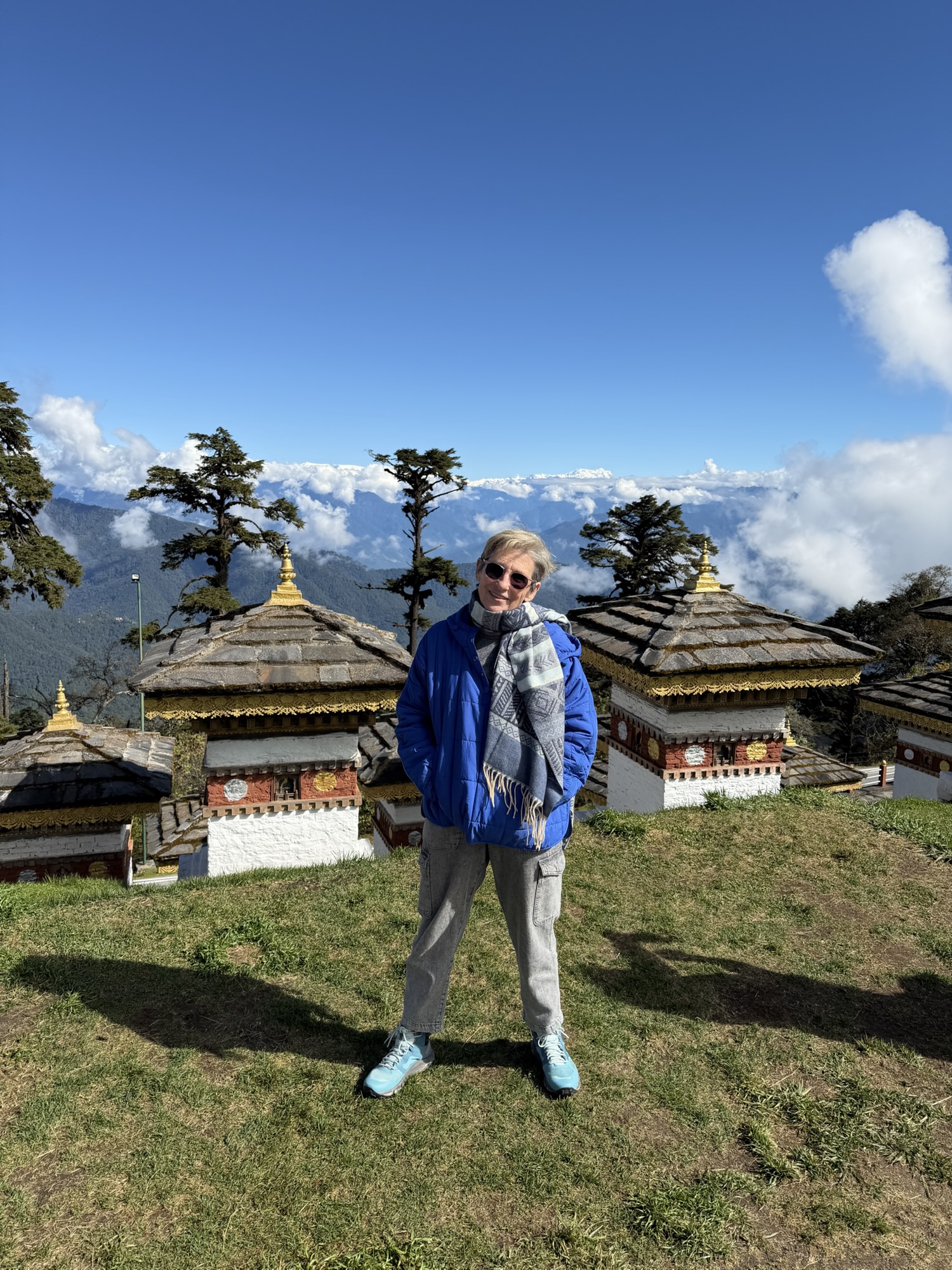
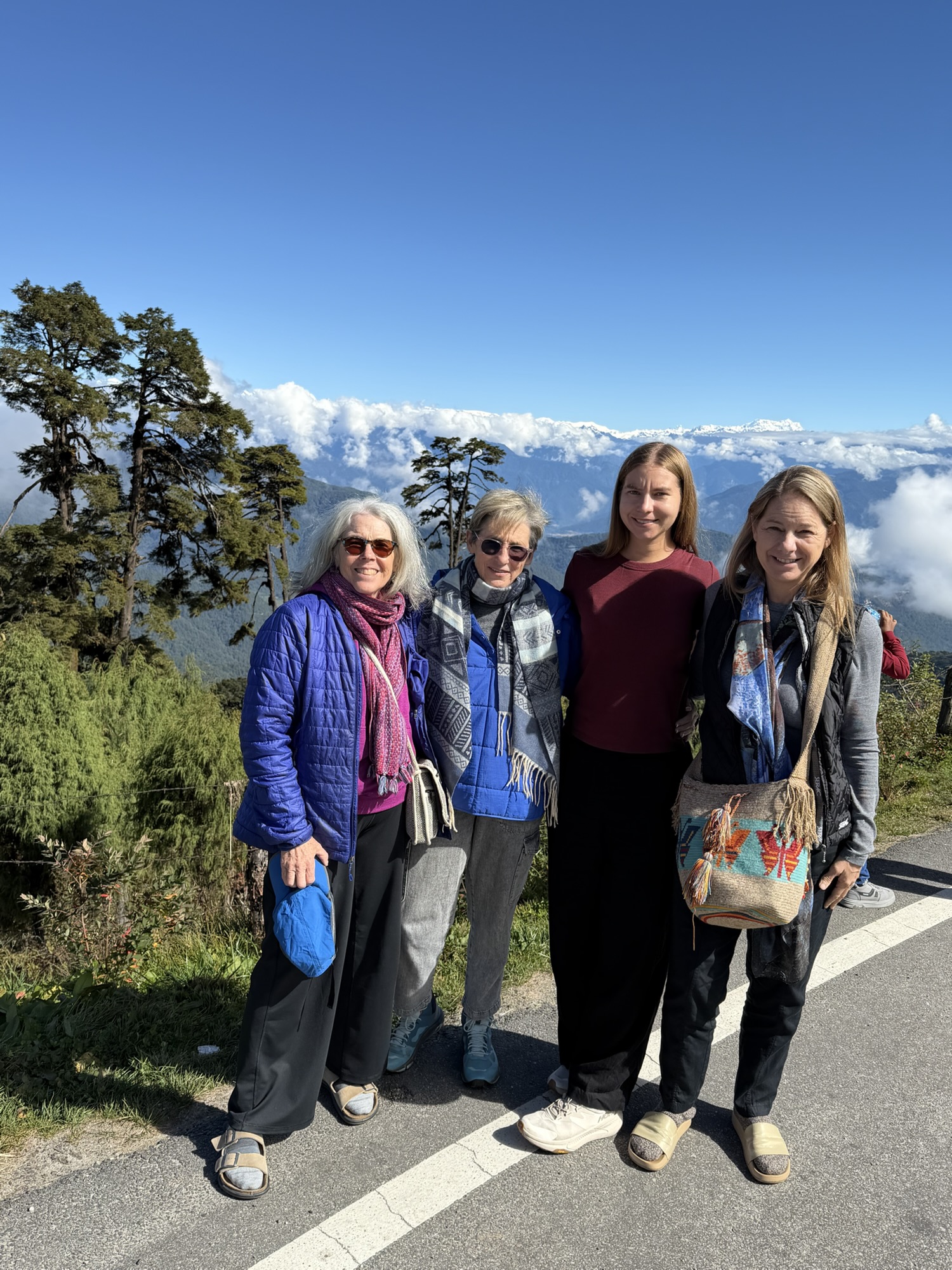
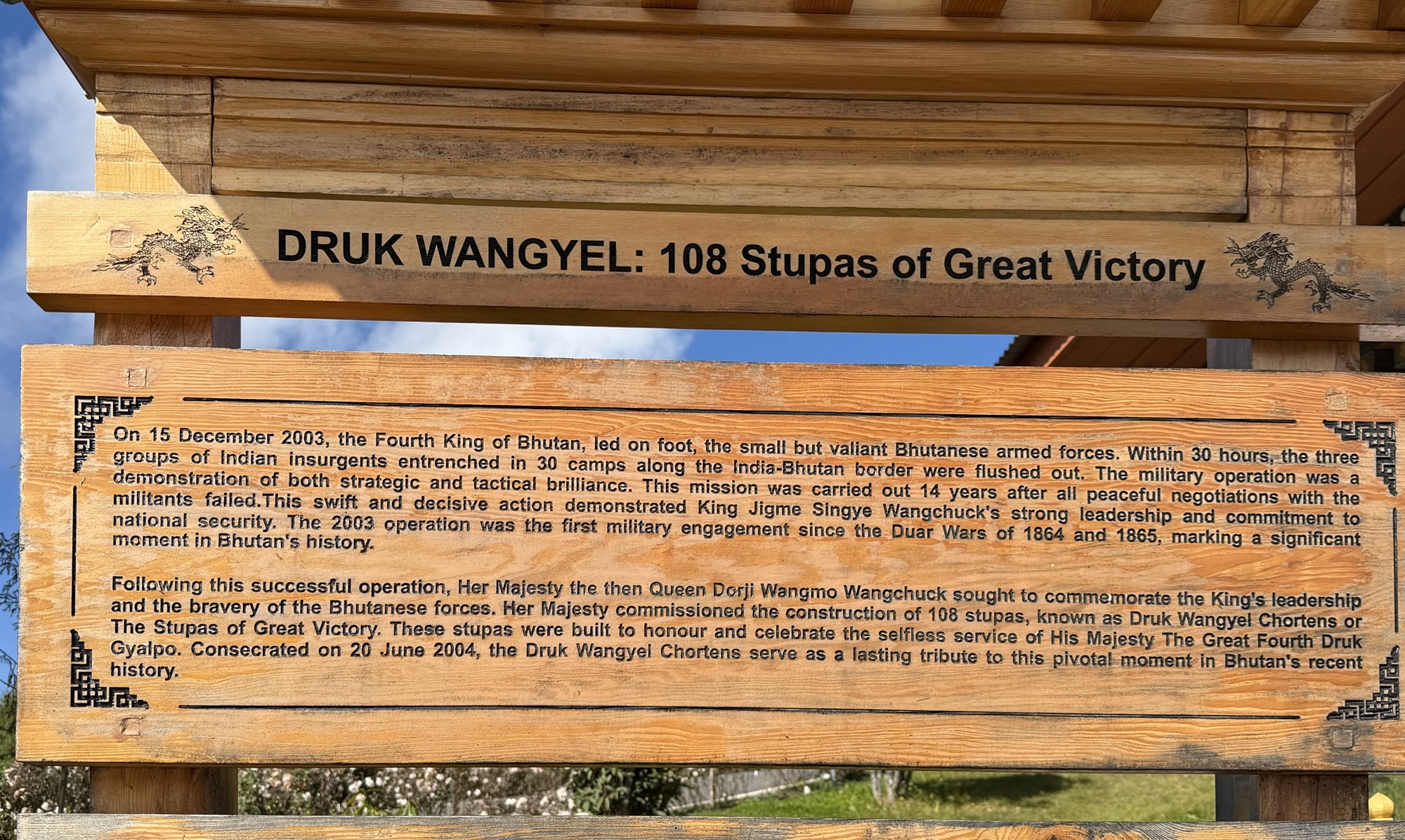
We stopped at a unique site – the Druk Wangyel – where there is one larger stupa and 108 smaller ones (called chortens). Apparently, this was founded in 2003 by the Queen to pay a tribute to the fourth King who led a successful battle to flush out more than 30 encampments of Indian insurgents along the Indian- Bhutan border. The view from the hill that these structures stand on is breathtaking – a panorama of the Himalayas, and on the clear day we were bless with, it was truly spectacular.
The Phallus Town: Punakha
Our next stop was a village that is famous for being the fertility center of Bhutan. Many merchants selling all sorts of shapes, sizes and paintings of phallus -many with a humorous twist. Homes and various buildings are adorned with artistic renderings of this leader of the male anatomy – they definitely elicited chuckles and a few blushes! It’s traditional that the phallic figures that adorn entries to a home be wearing clothes to welcome visitors.
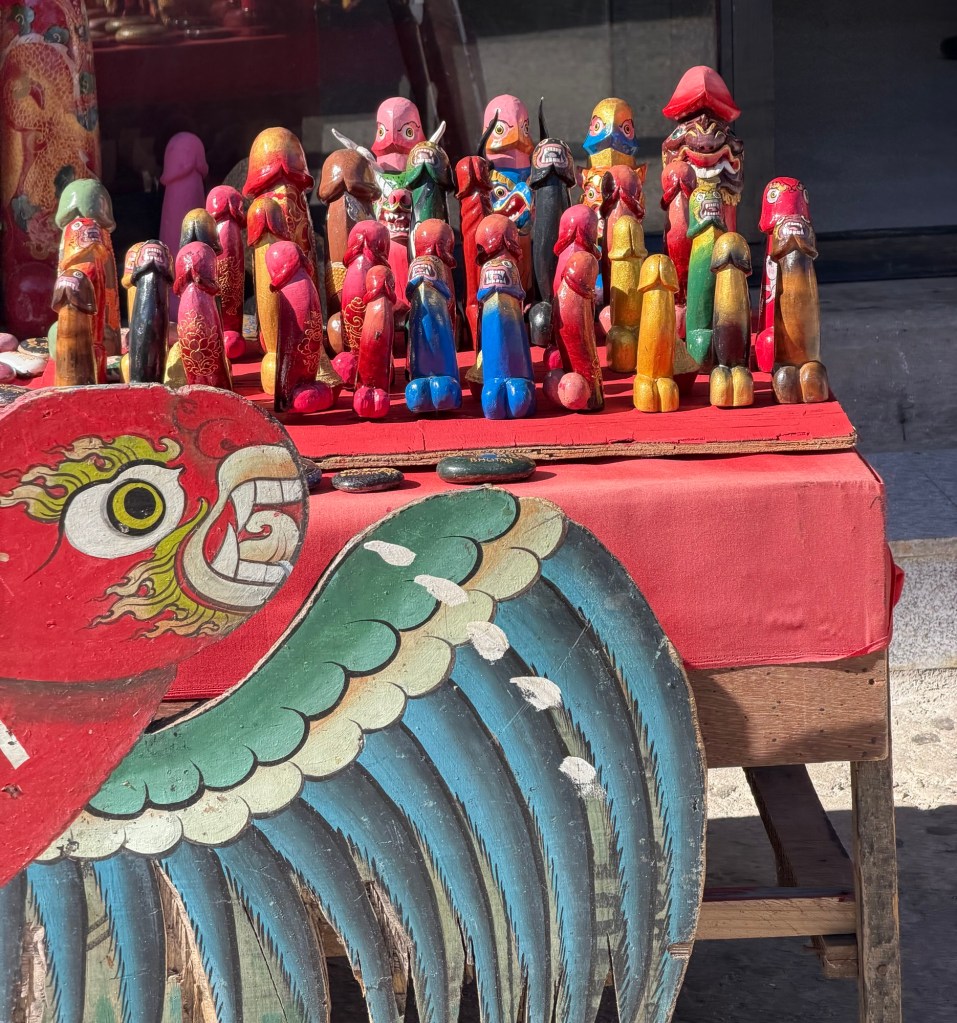
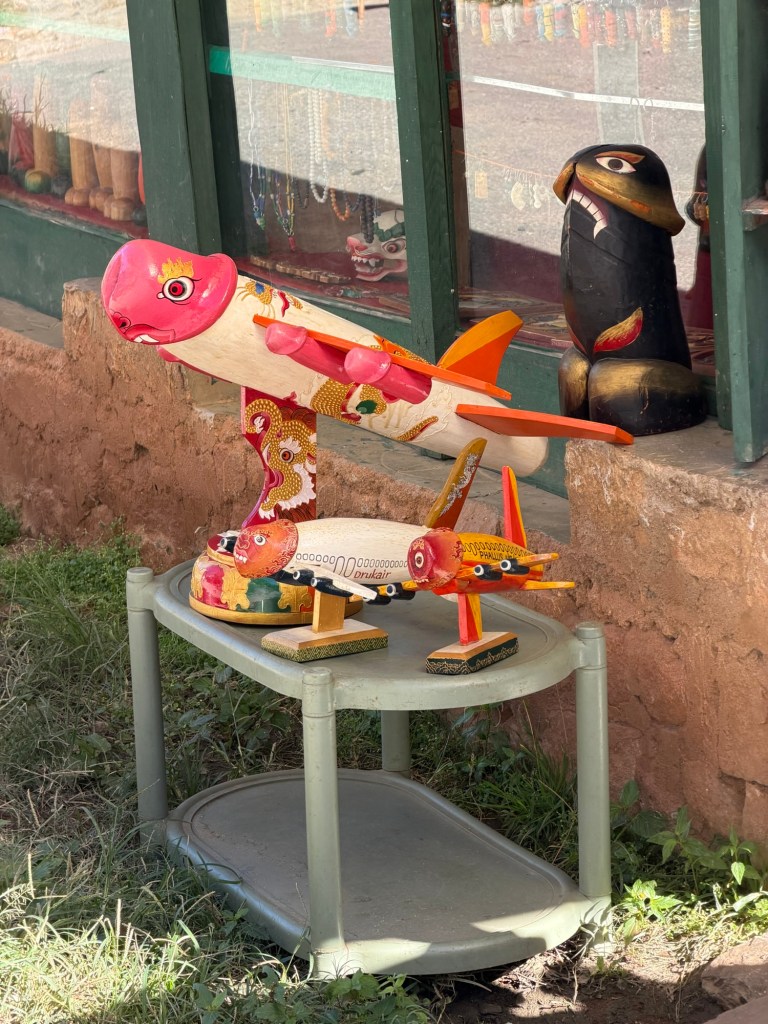
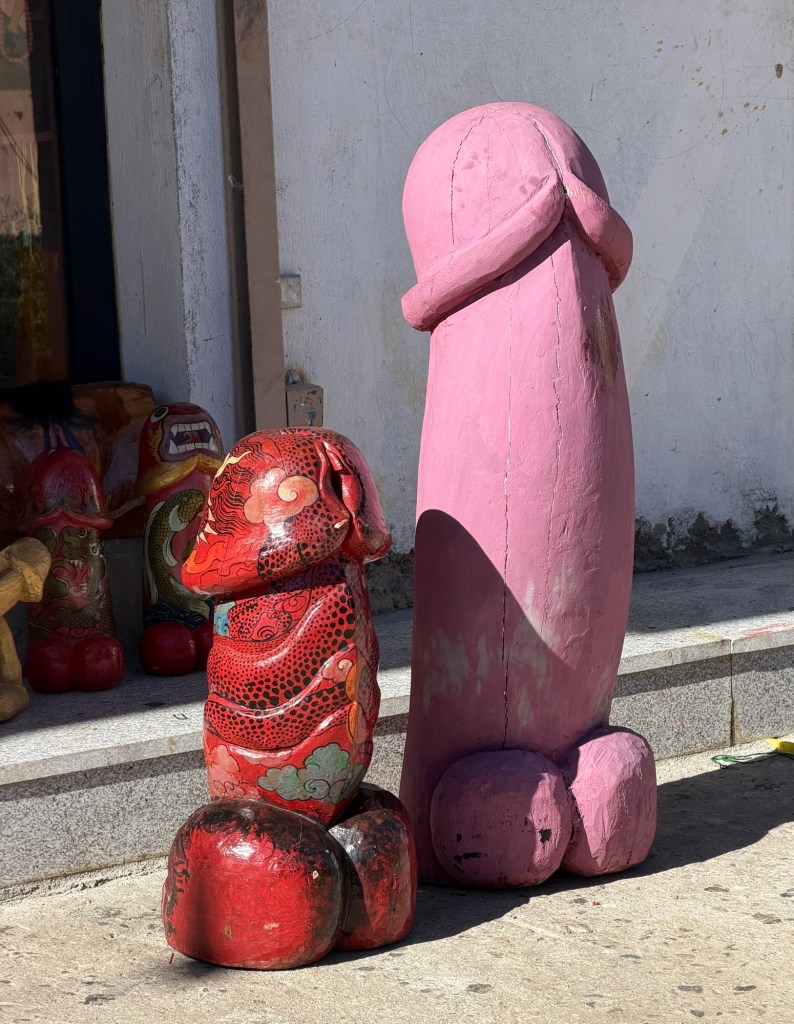
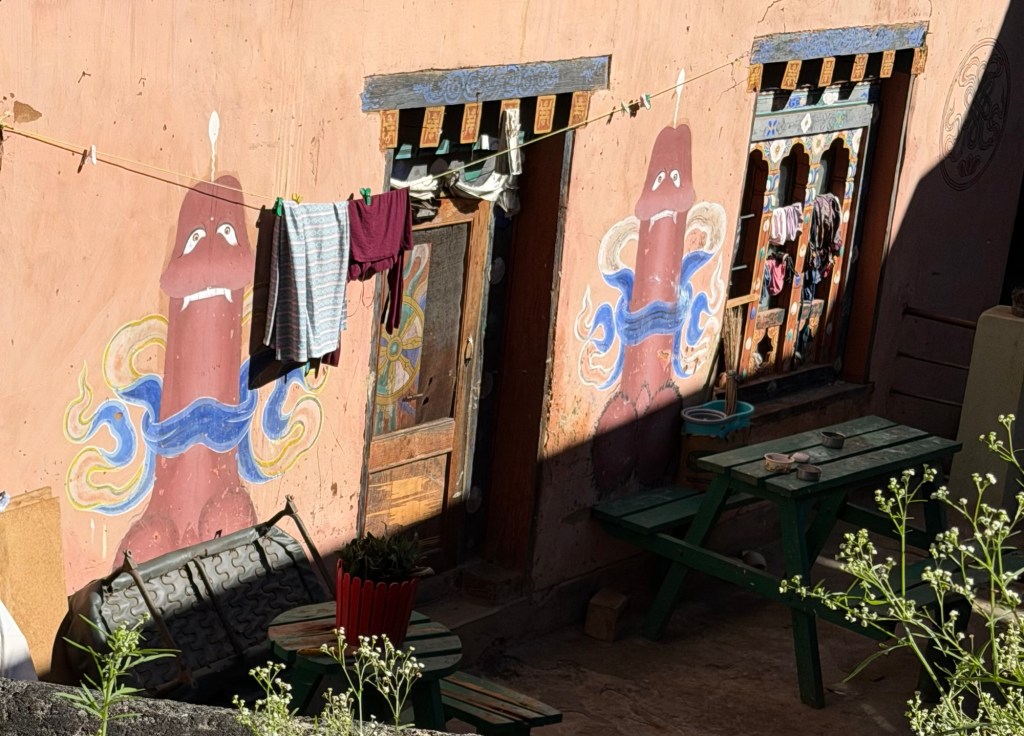
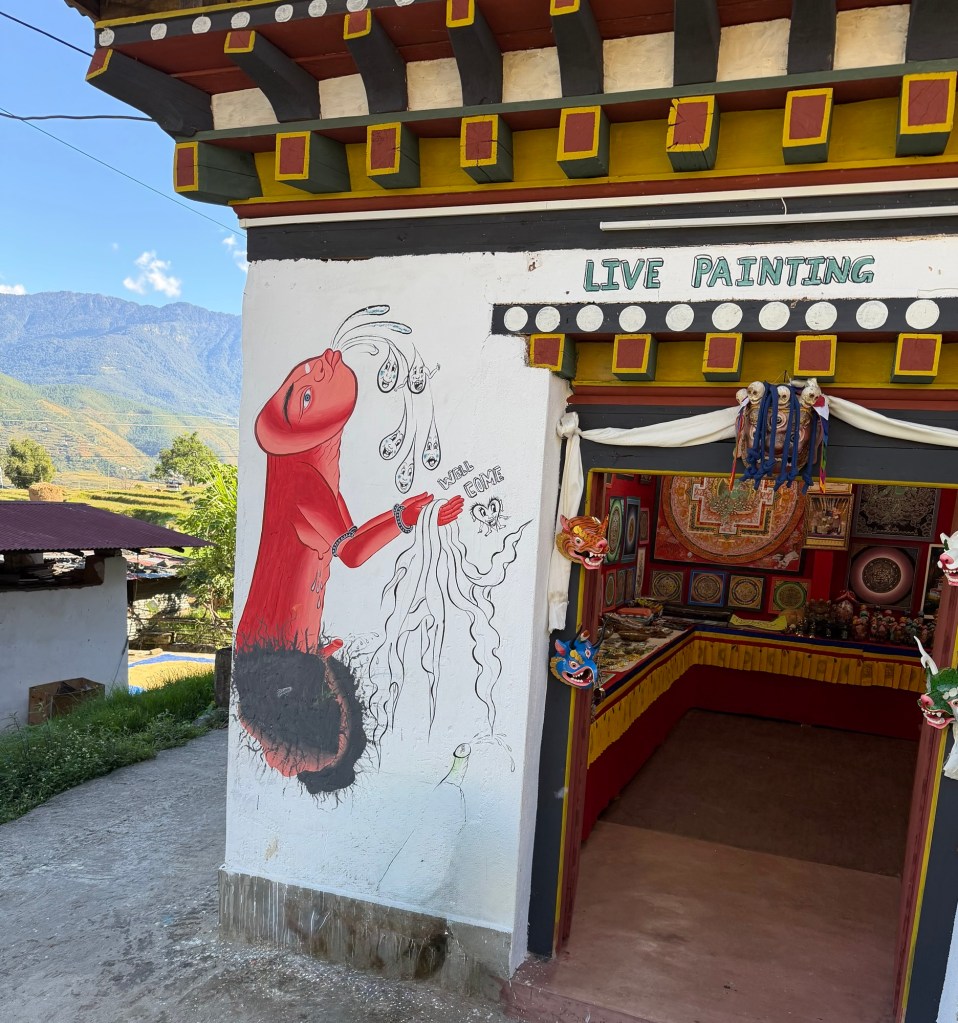
Apparently, this fixation was started by a rebellious monk who took exception to perceived corruption in the monk community. This monk, despite his erratic behavior, is considered enlightened. He just took a different path and has many disciples.
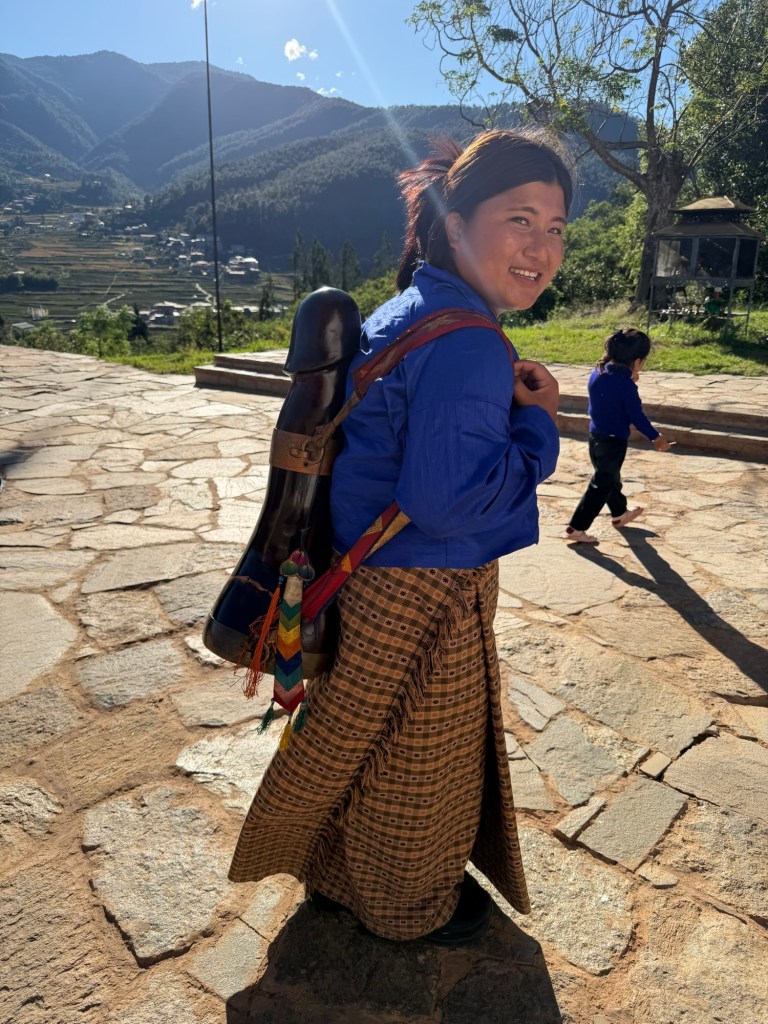
We visited the fertility temple, officially known as Chimi Lhakhang, draws visitors from around the globe who come seeking blessings of fertility, protection, and of course, a little humor in their lives. Inside there is a sculpture of a huge phallus. Couples come and pray here if they wish for fertility and can also get help choosing the name of future children. We even passed a young woman carrying a large wooden phallus as a backpack while she prayed for a child.
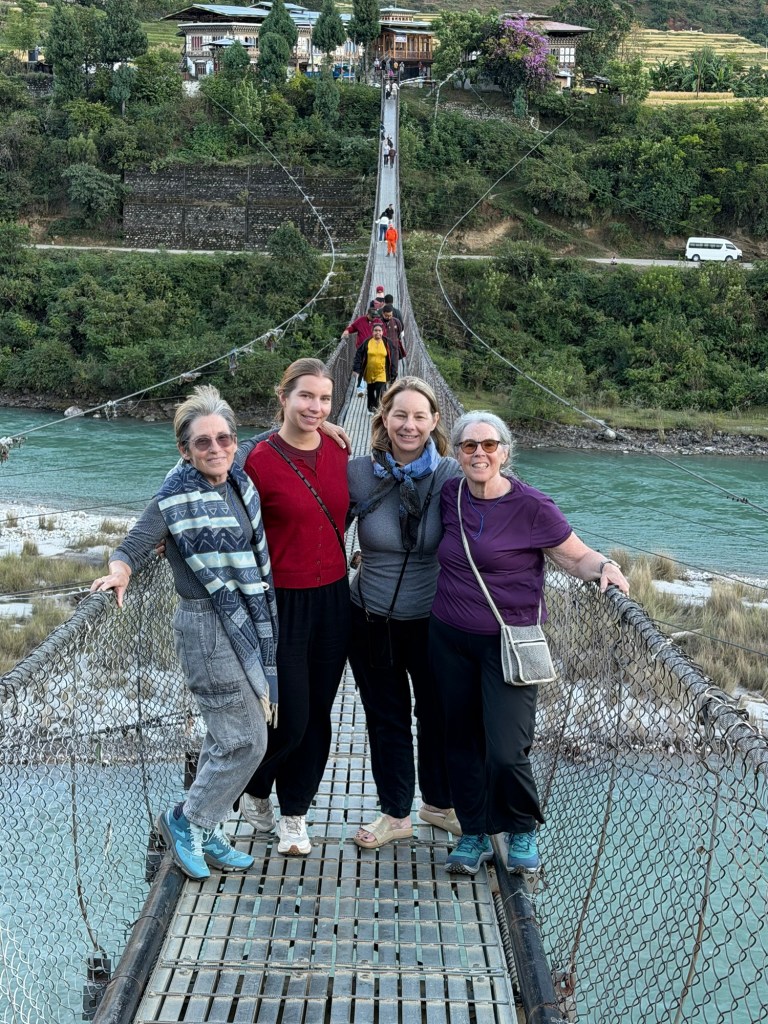
Our final stop was at a very long suspension bridge over the river that runs through a magnificent valley. We noticed a number of these bridges that span a very wide gap between villages and forested mountains. I kept wondering how these were constructed…any guesses???
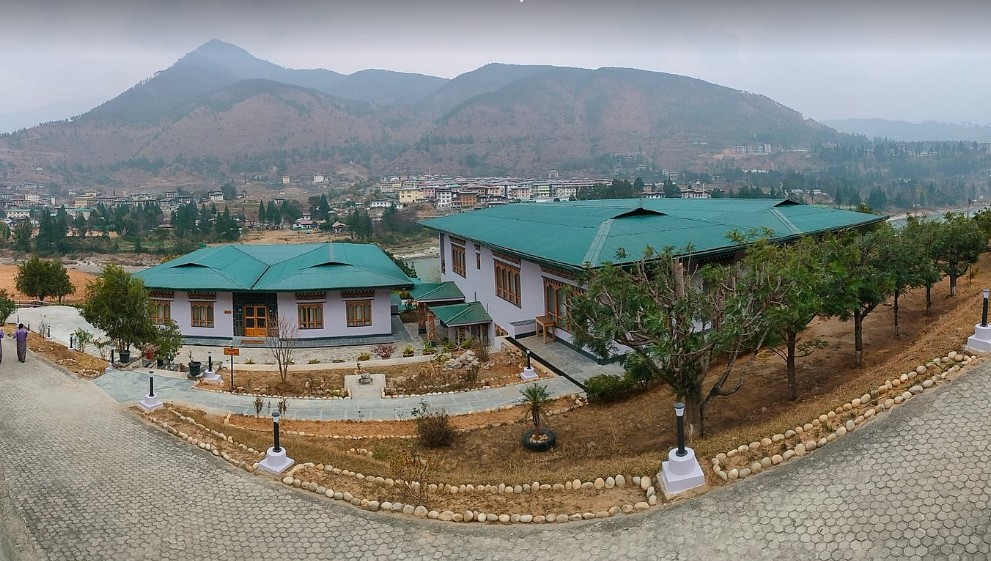
We stayed that night at the PUNATSANGCHHU Cottages located midway from Wangdue & Punakha valley, spread over 18 acres. The hotel overlooks the Punatsangchhu River.


 Living La Vida Loca
Leave a reply to Esther Schorr Cancel reply