
Thimphu, the capital city of Bhutan, clearly reflects all key aspects of fairly uniform daily life through literature, religious practices and customs, national dress code, monastic practices, music, dance, and media. Buddhism is the state religion of Bhutan and the vast majority of the country’s population practices Buddhism. The state religion has long been supported financially by the government through annual subsidies to Buddhist monasteries, shrines, monks, and nuns.
From a historical perspective, there was a series of kings ruling the country over many years. When the fourth King abdicated his throne at the age of 51, he introduced democracy in Bhutan. The development of Bhutanese democracy was nurtured by the active encouragement and participation of reigning Bhutanese monarchs since the 1950s, beginning with legal reforms such as the abolition of slavery, and establishment of Bhutan’s Constitution. The first democratic elections in Bhutan began in 2007, and all levels of government had been democratically elected by 2011. These elections included Bhutan’s first ever partisan National Assembly election. Democratization in Bhutan has not been without scars. There was a large-scale expulsion and flight of Bhutanese refugees during the 1990s…and the subject remains somewhat taboo in Bhutanese politics.
The homogeneity of religion in Buddhism has made it easier to establish conformity and single-minded devotion to the king and to priorities of living. It was said over and over again by our guide that administration and religion are one here. This could never happen in the United States. This country is small and, for the most part, the people abide by the same set of values and cultural norms.
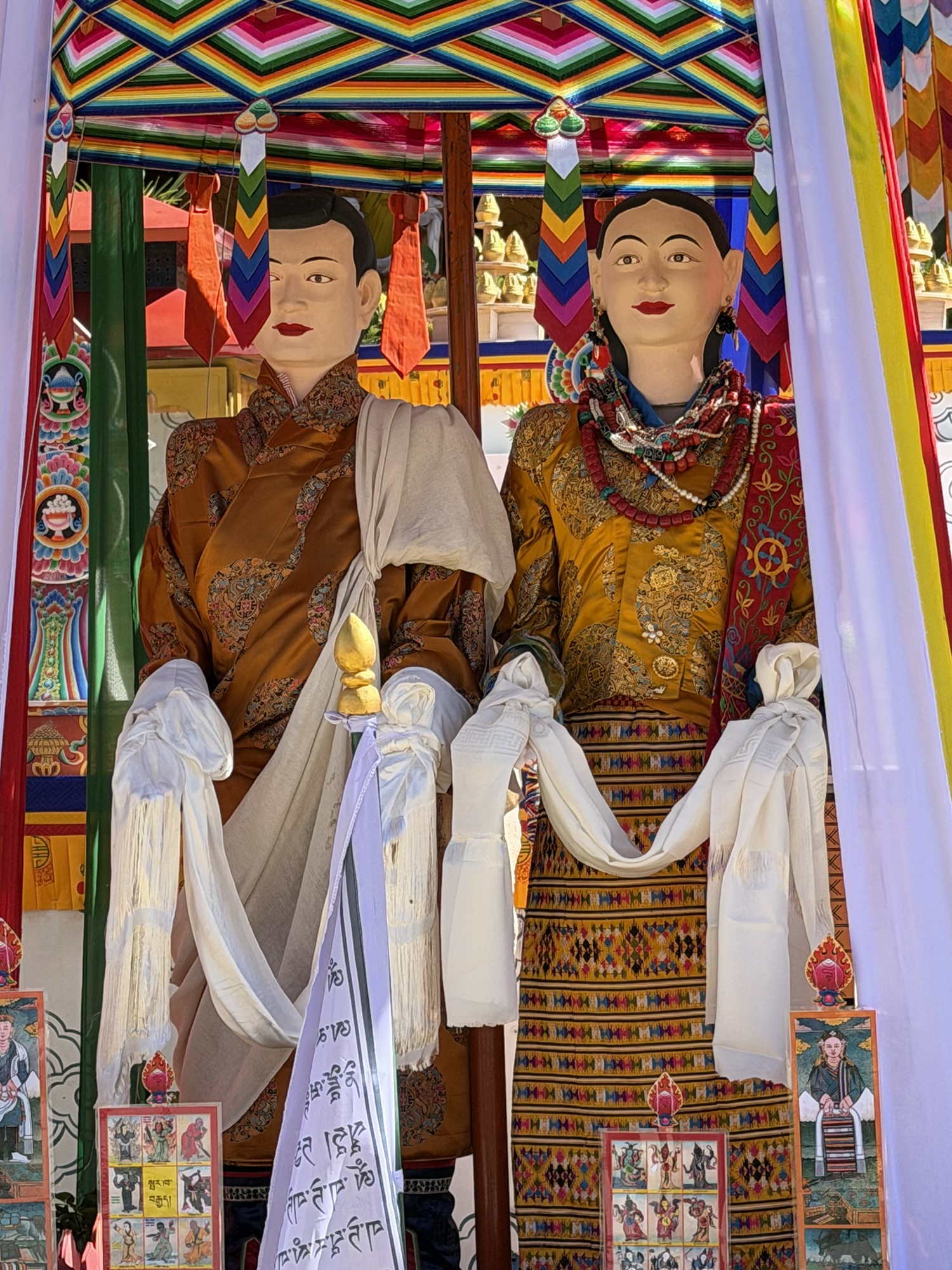
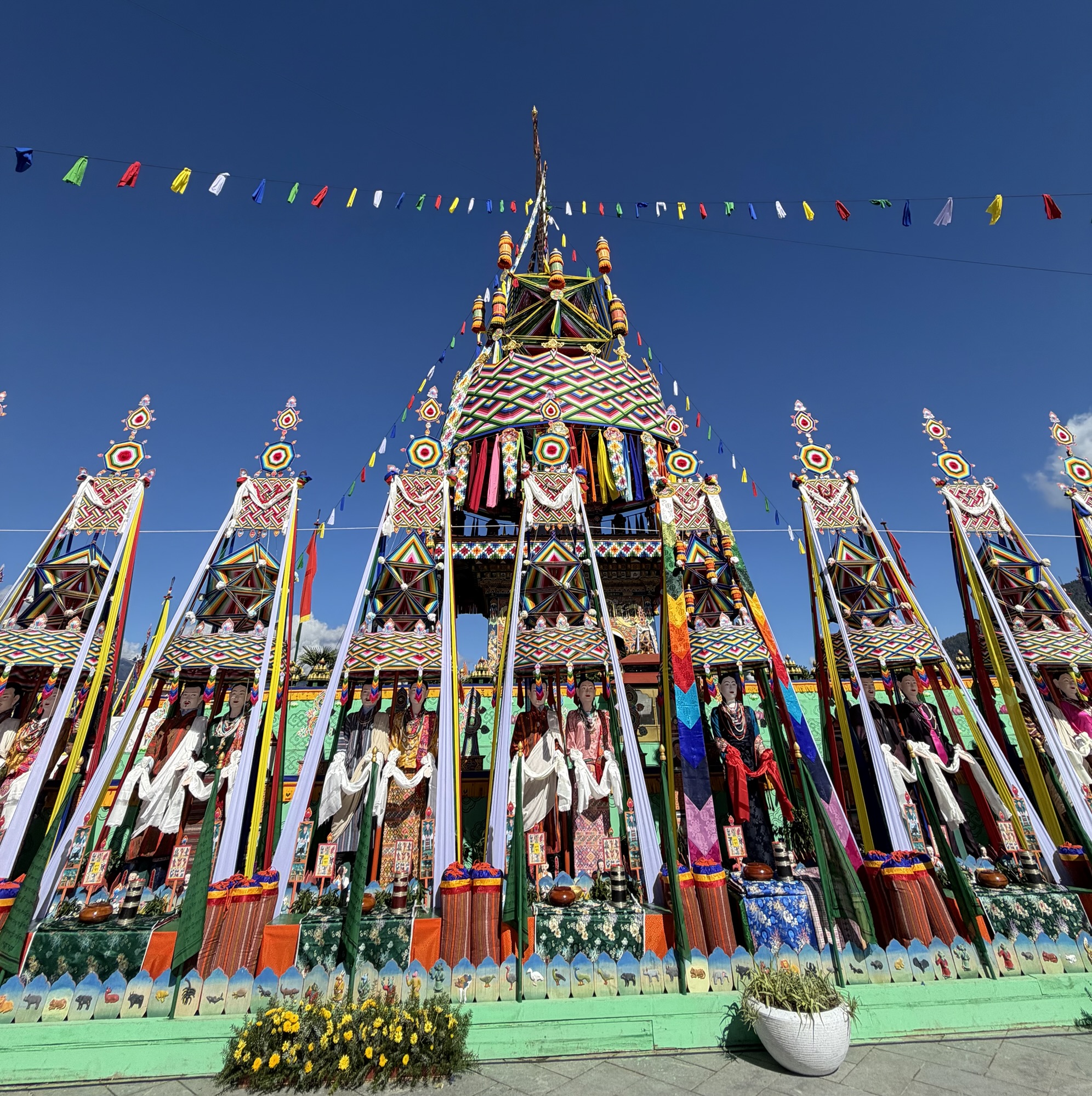
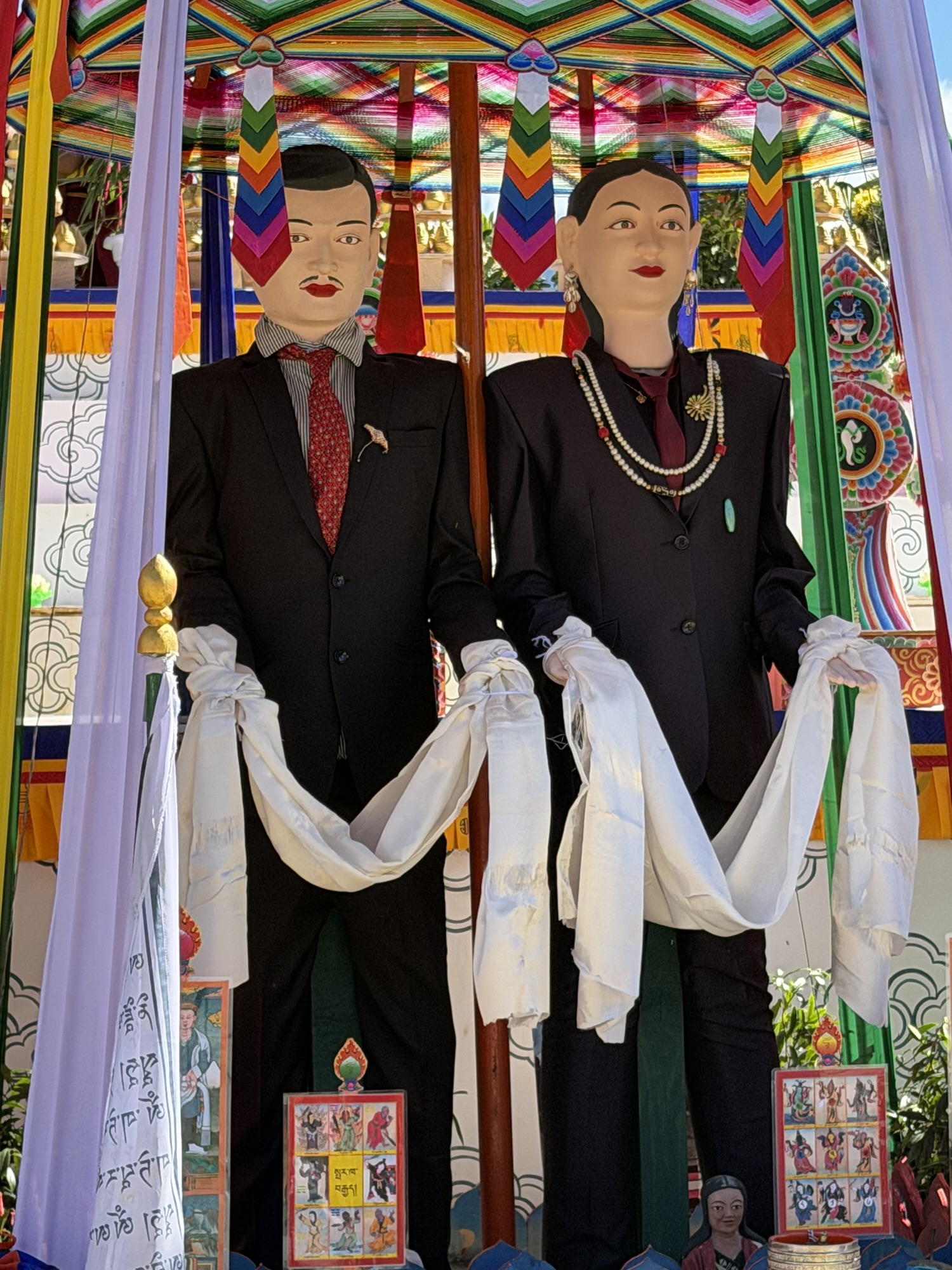
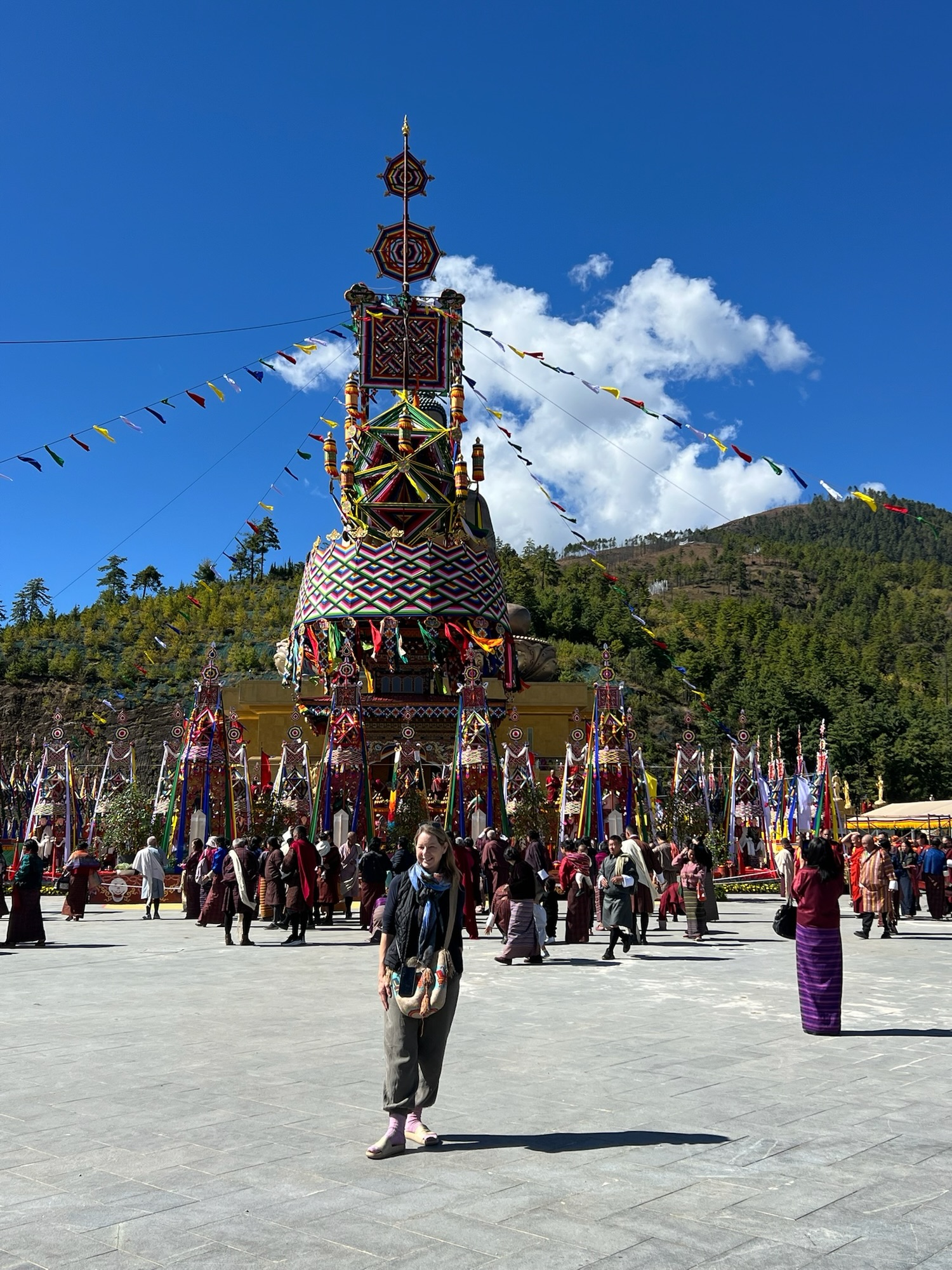
We were fortunate and very surprised to have gotten to Bhutan at the opening ceremonies of a Global Peace Prayer Festival – a 16-day festival to pray for world peace and the healing of humanity. We were able to visit the site of these colorful and spiritually rich proceedings, and even caught a glimpse of one of the most revered Buddhist monks.
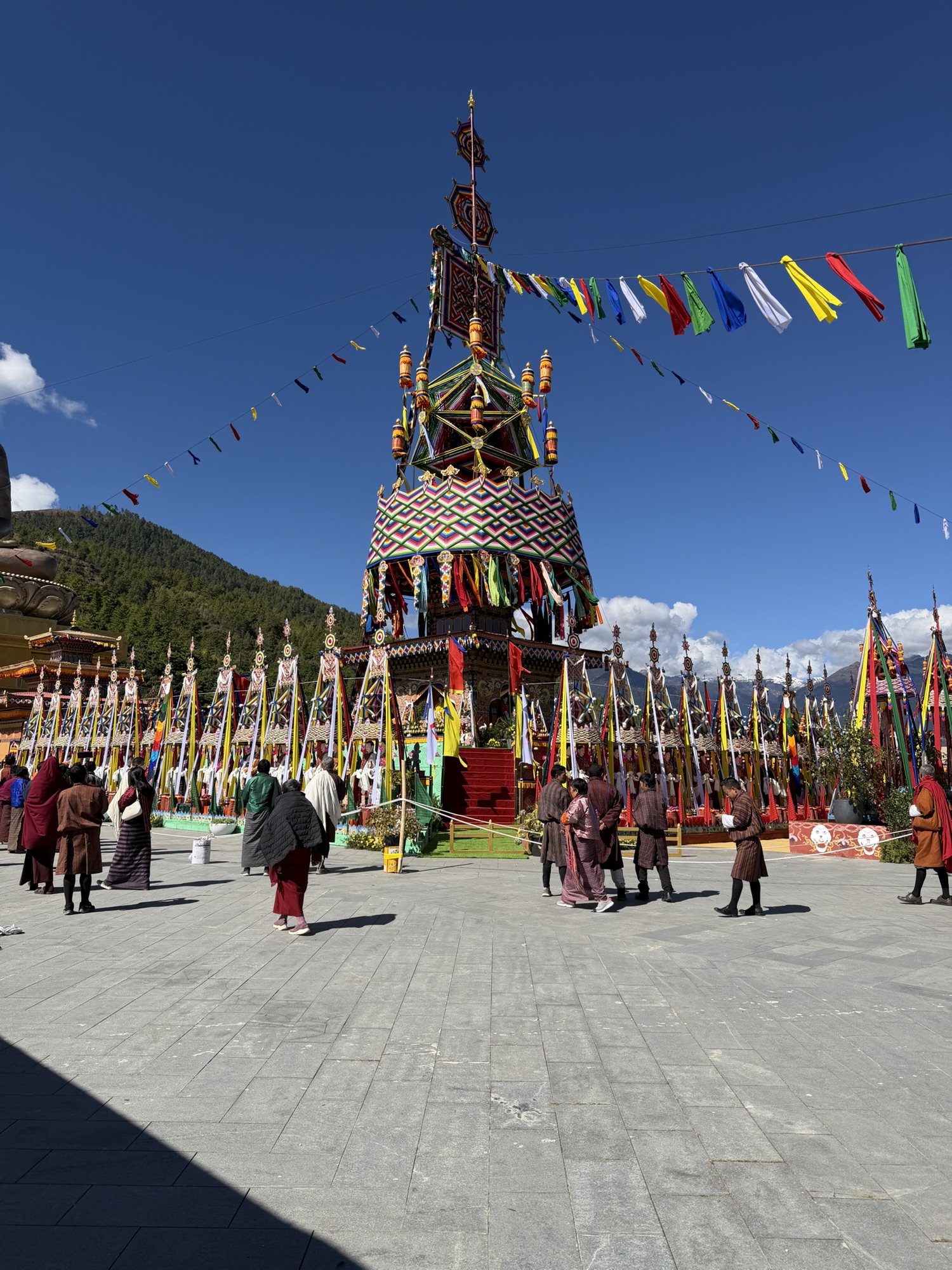
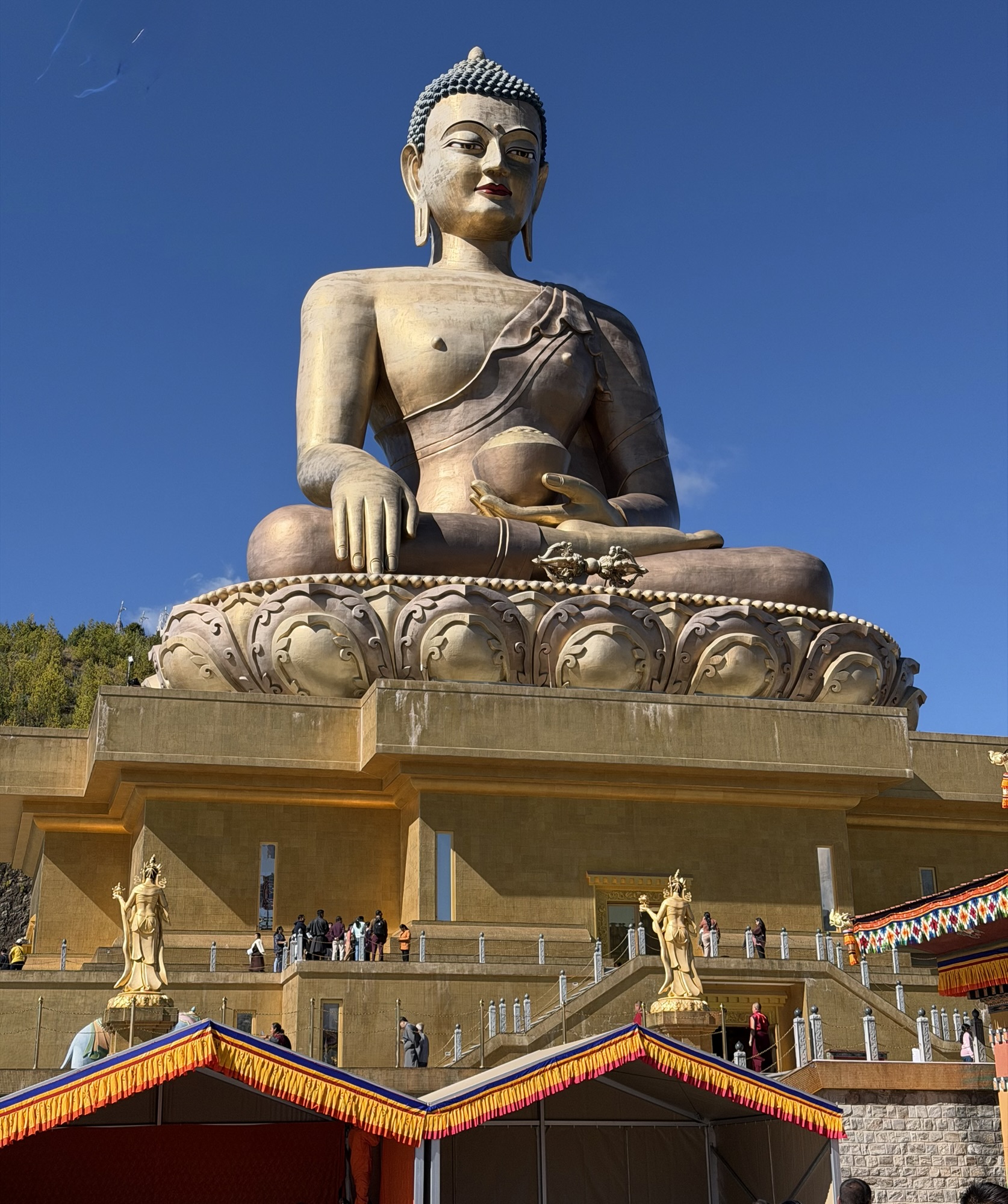
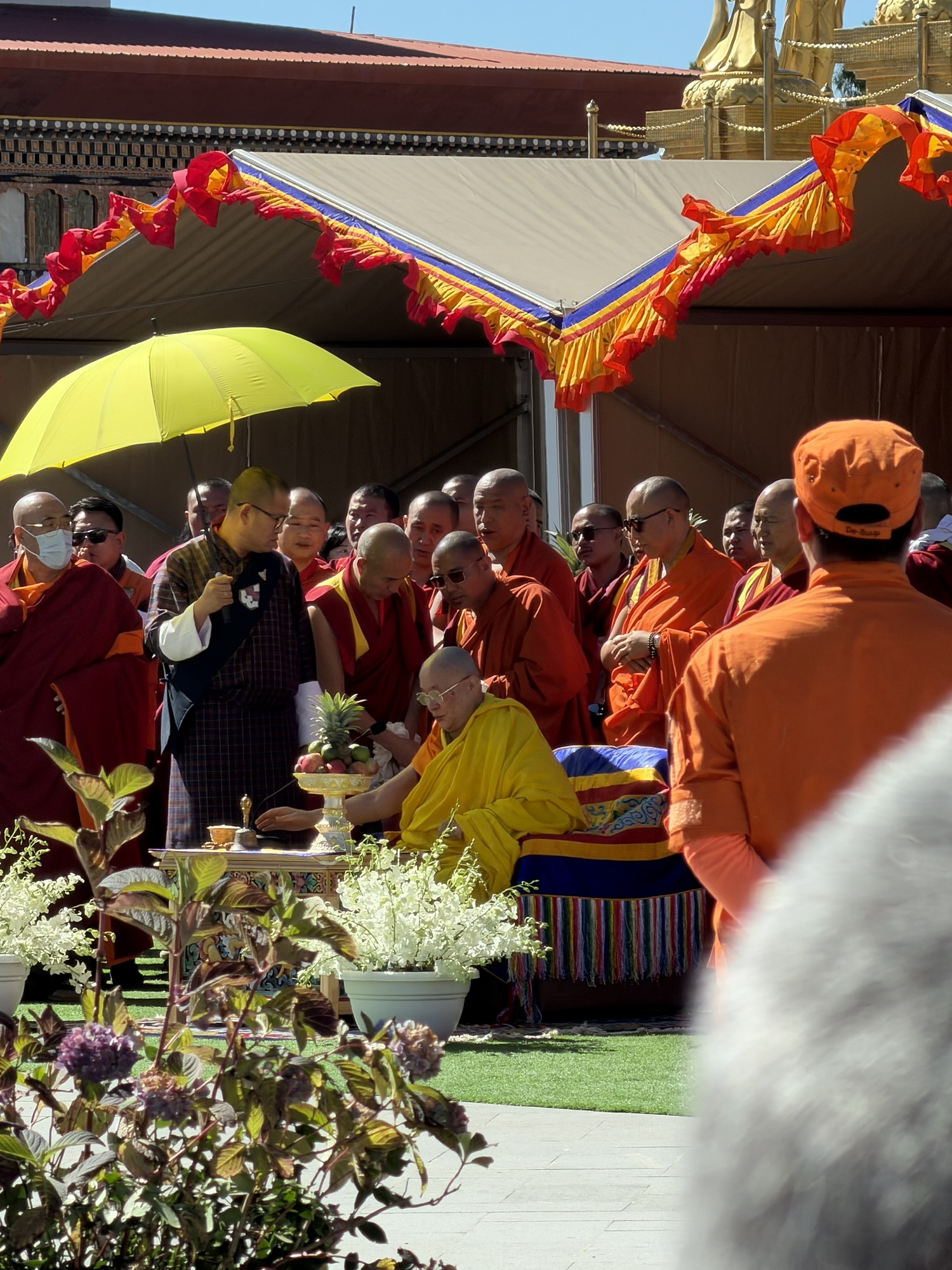
The huge tower erected across from one of the most sacred sites in Bhutan played a major role in the opening ceremonies. Life-sized figures of men and women from around the world circled the tower, each pair dressed in garb reflective of their country or region. Thousands of monks as well as local people and tourists gathered the day we were there to witness processions by the dignitaries and take part in some of the ceremonies.
Unlike in Nepal where we basically had free reign to explore the country, meet people from all economic strata, chart our own course, it was the opposite in Bhutan. Our guide was wonderful, but the “agenda” of where we would visit, where we would stay, and what could be discussed was very clear from the outset. We each paid a daily fee to visit the country, and it appeared that all the guides worked for the government and basically took groups to all the same places with a little slack here and there (not much).
However, to Bhutan’s credit, tourism money is said to go to the extensive eco-friendly projects always in the works. Bhutan is the only “carbon-negative” country in the world and they are deep into making best use of hydroelectric power from water resources they have. Since 2009, the constitution has enshrined environmental protection – at least 60% of Bhutan’s total land must remain under forest cover for all time.
One other interesting fact: Only 12% of the population in Bhutan lives below the poverty line. This is mostly in rural areas we didn’t get to explore. We were told that NGO’s do help these communities and the Queen helps with funding for housing, etc.
The rest of our first full day in Thimpu…
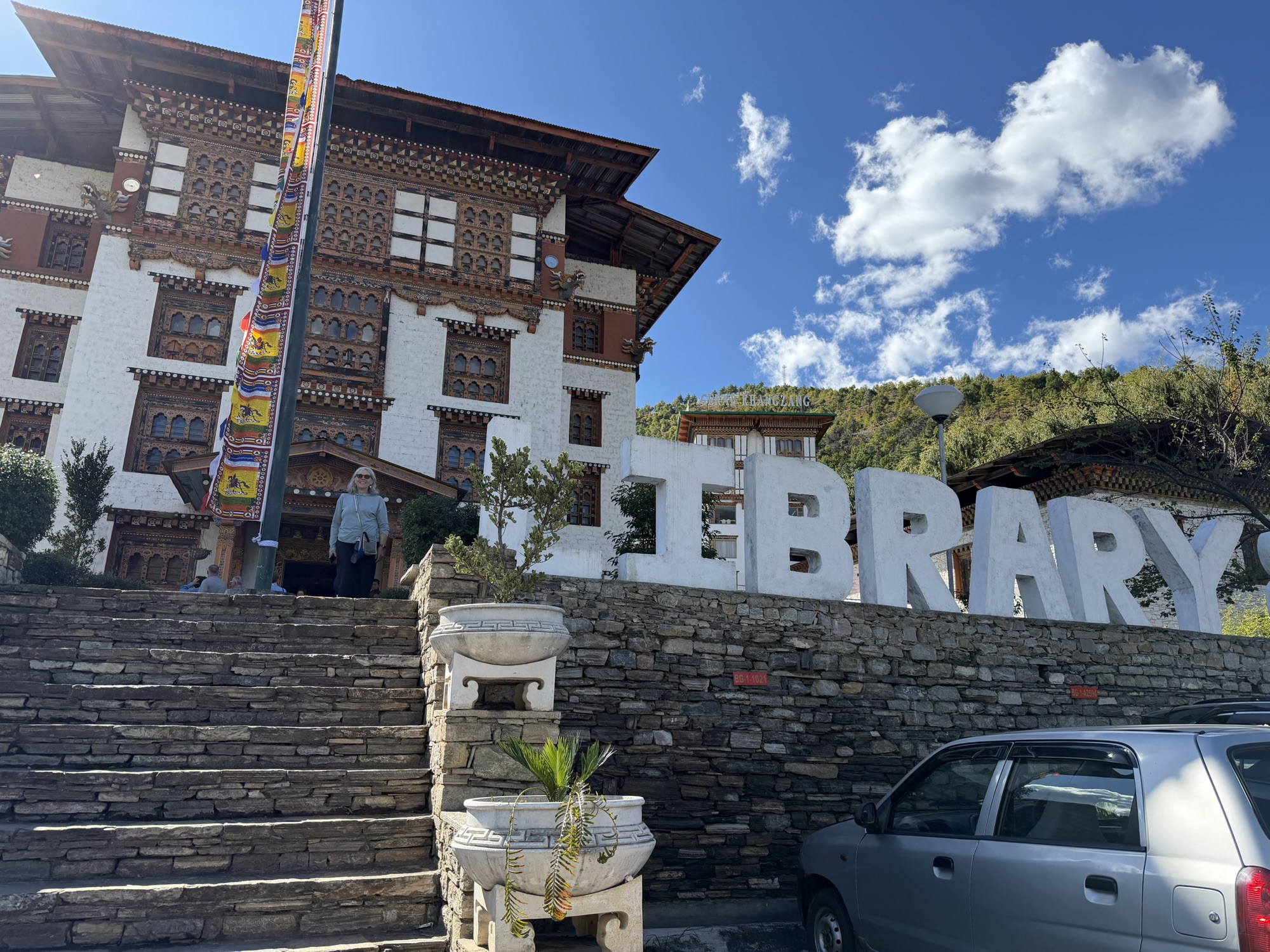
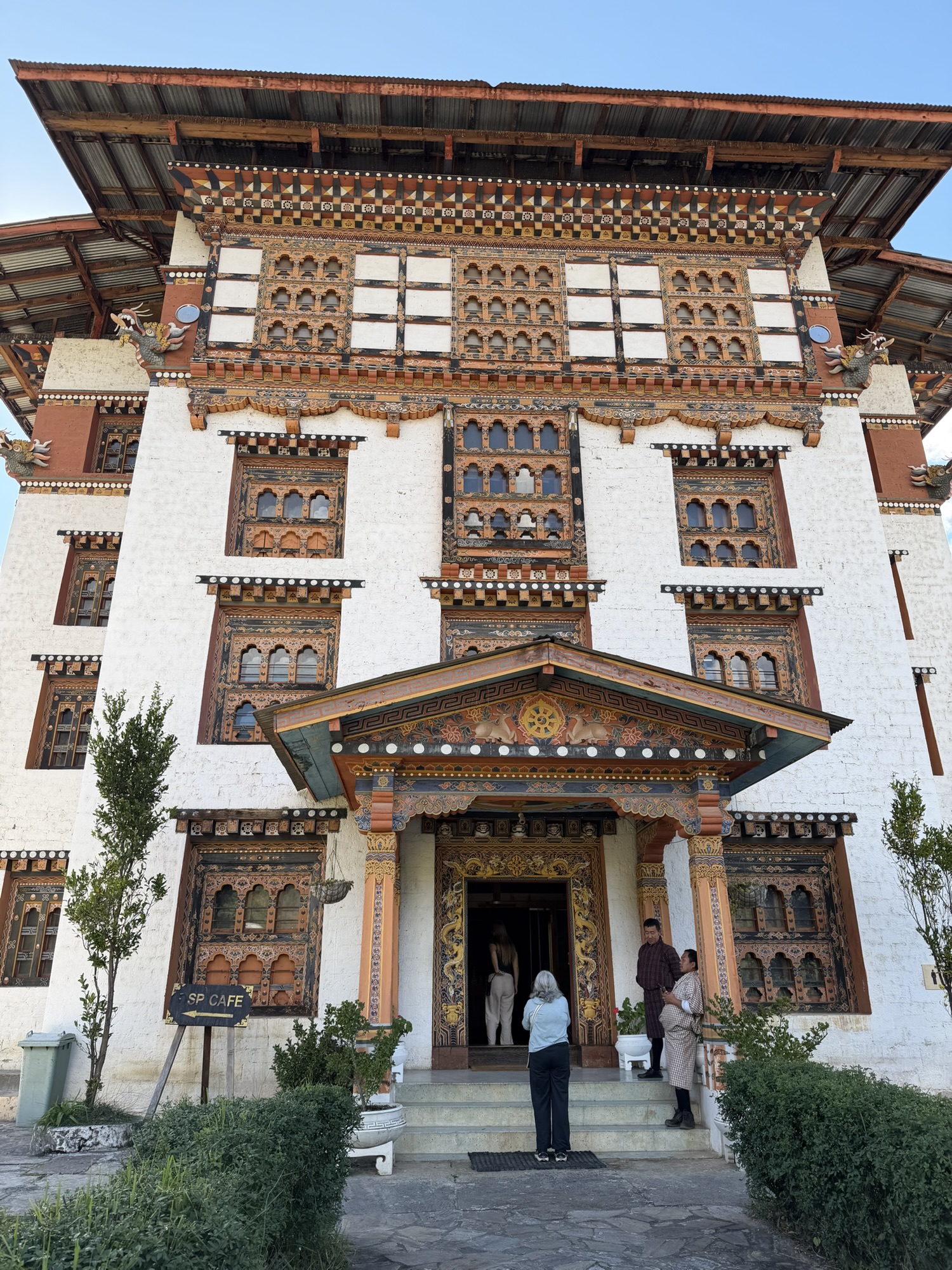
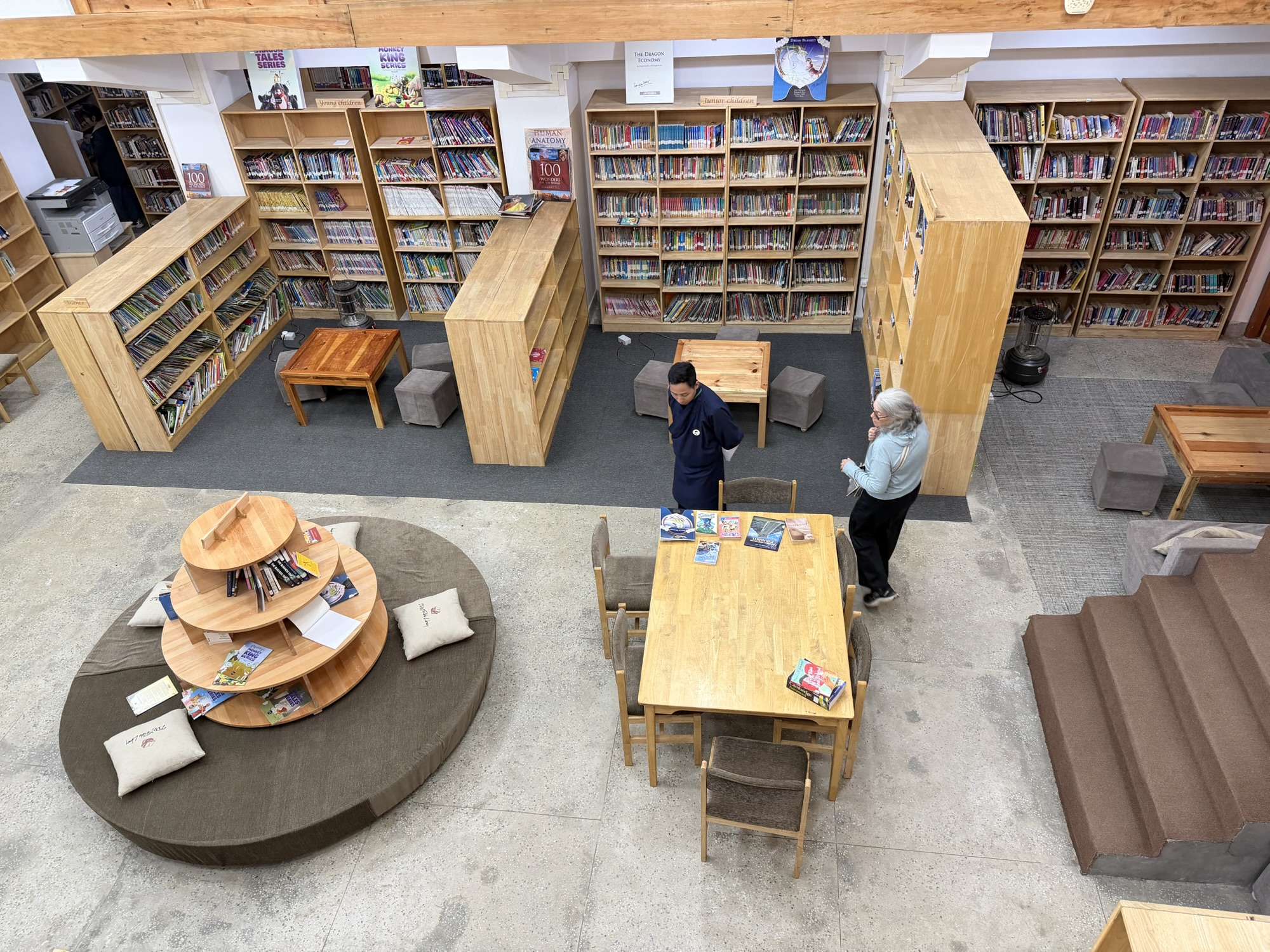
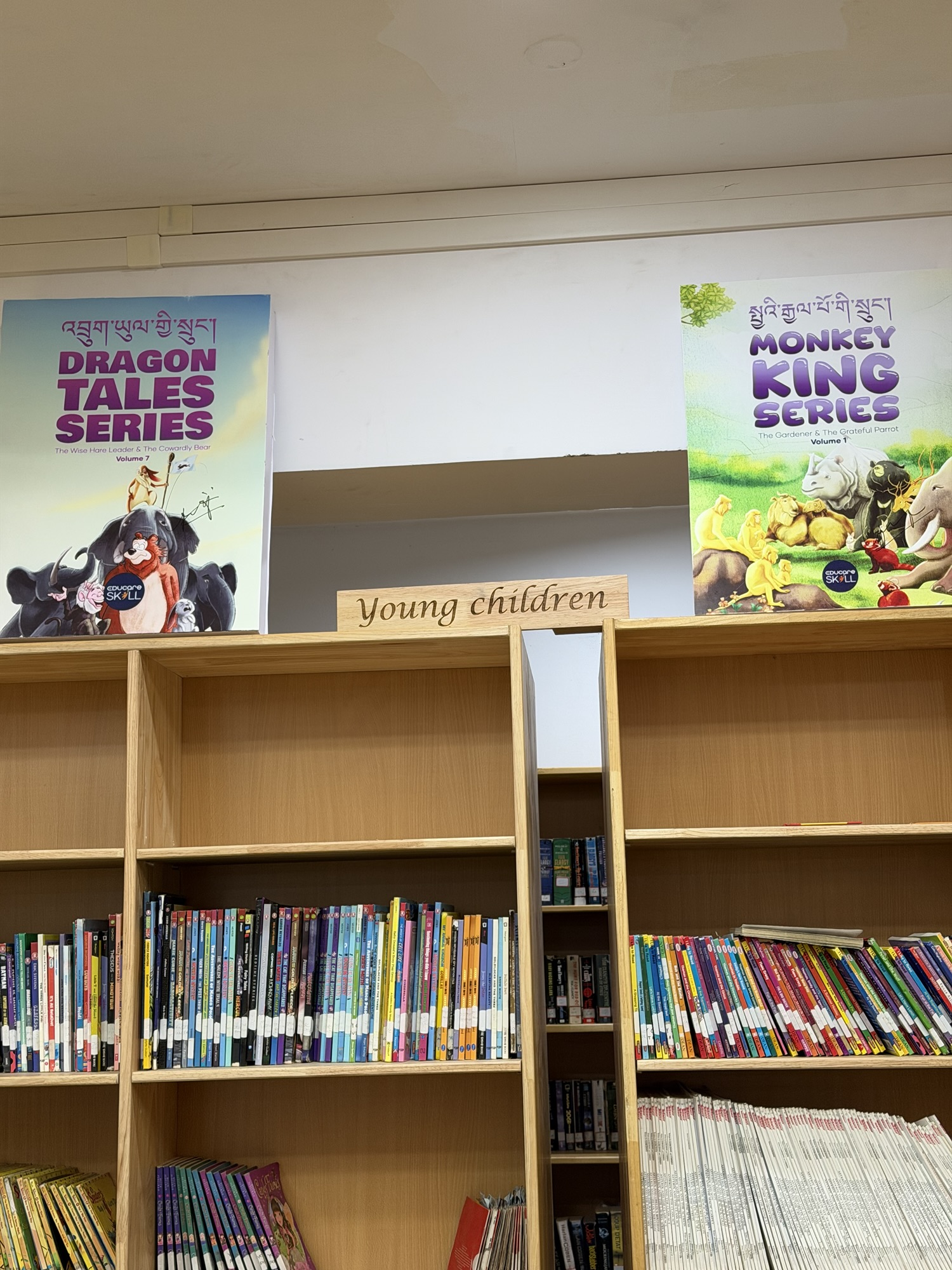
We visited the Thimpu public library. While small and apparently never really crowded, it is a lovely building with resources of all kinds easily available. Fascinating to me – most of the books housed here were in English. English is the language children are taught in school and tourism has driven the adoption of English-speaking throughout most of the key areas of the country that outsiders visit. It does make interacting with local people a bit easier.
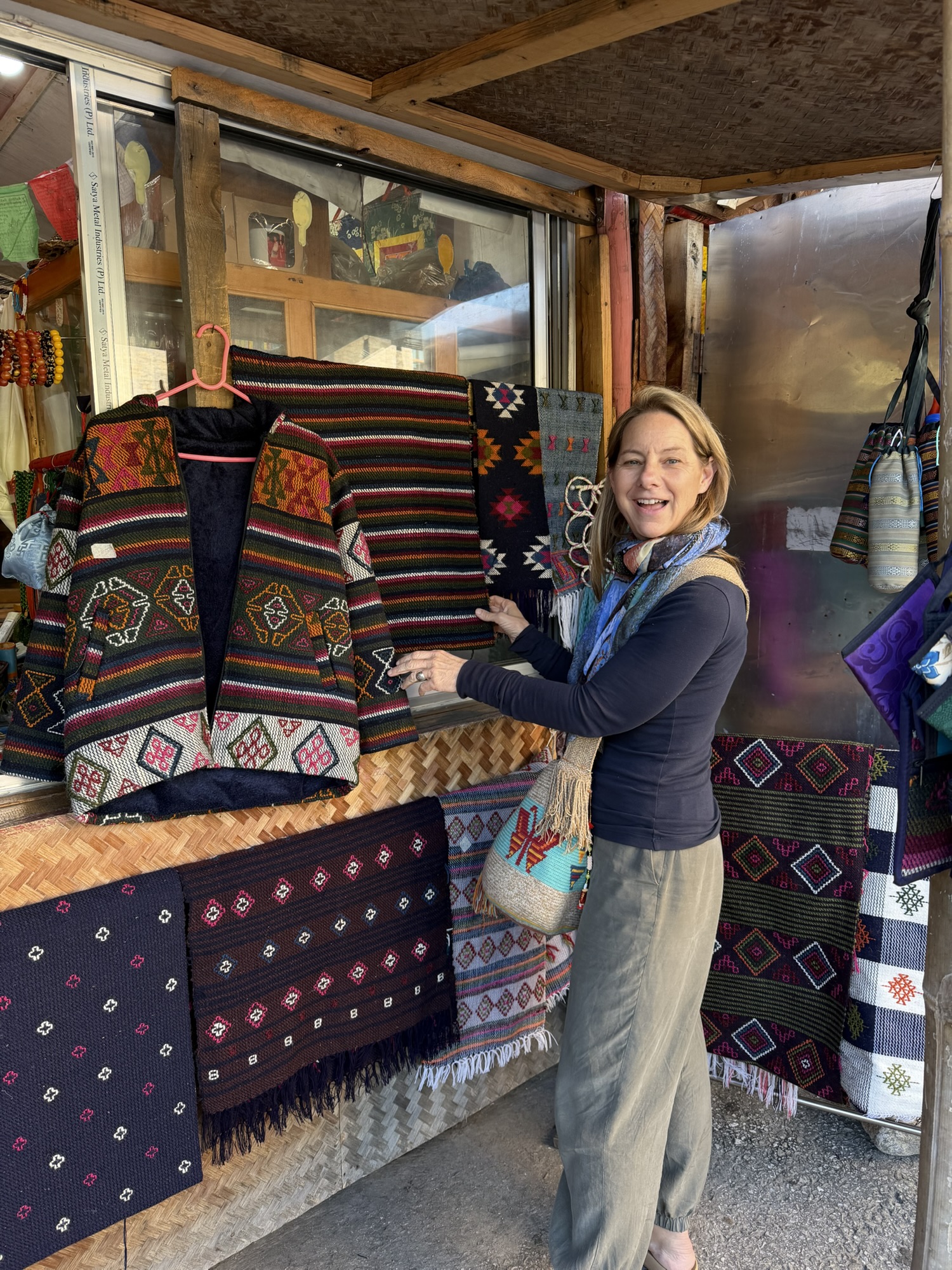
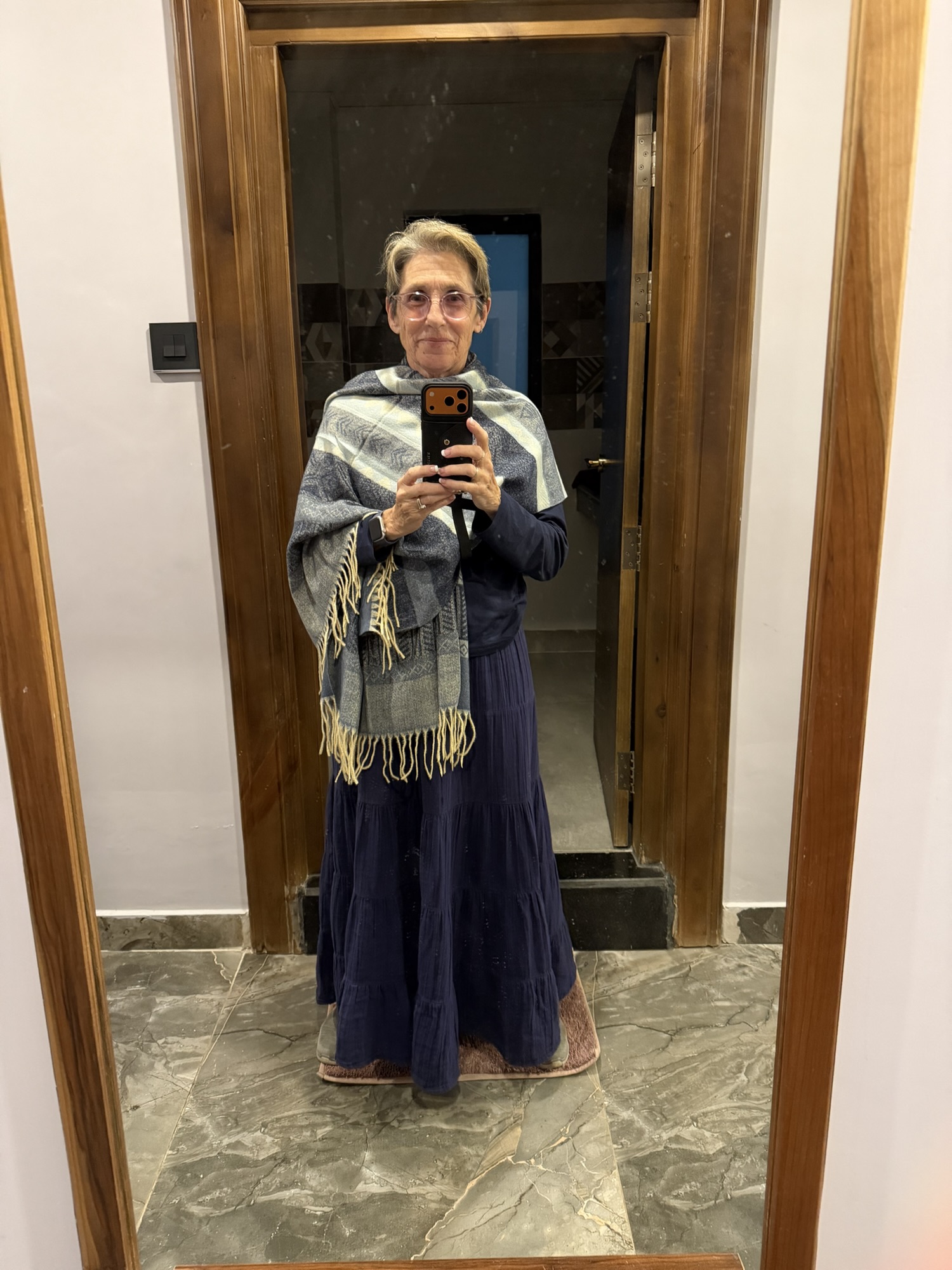
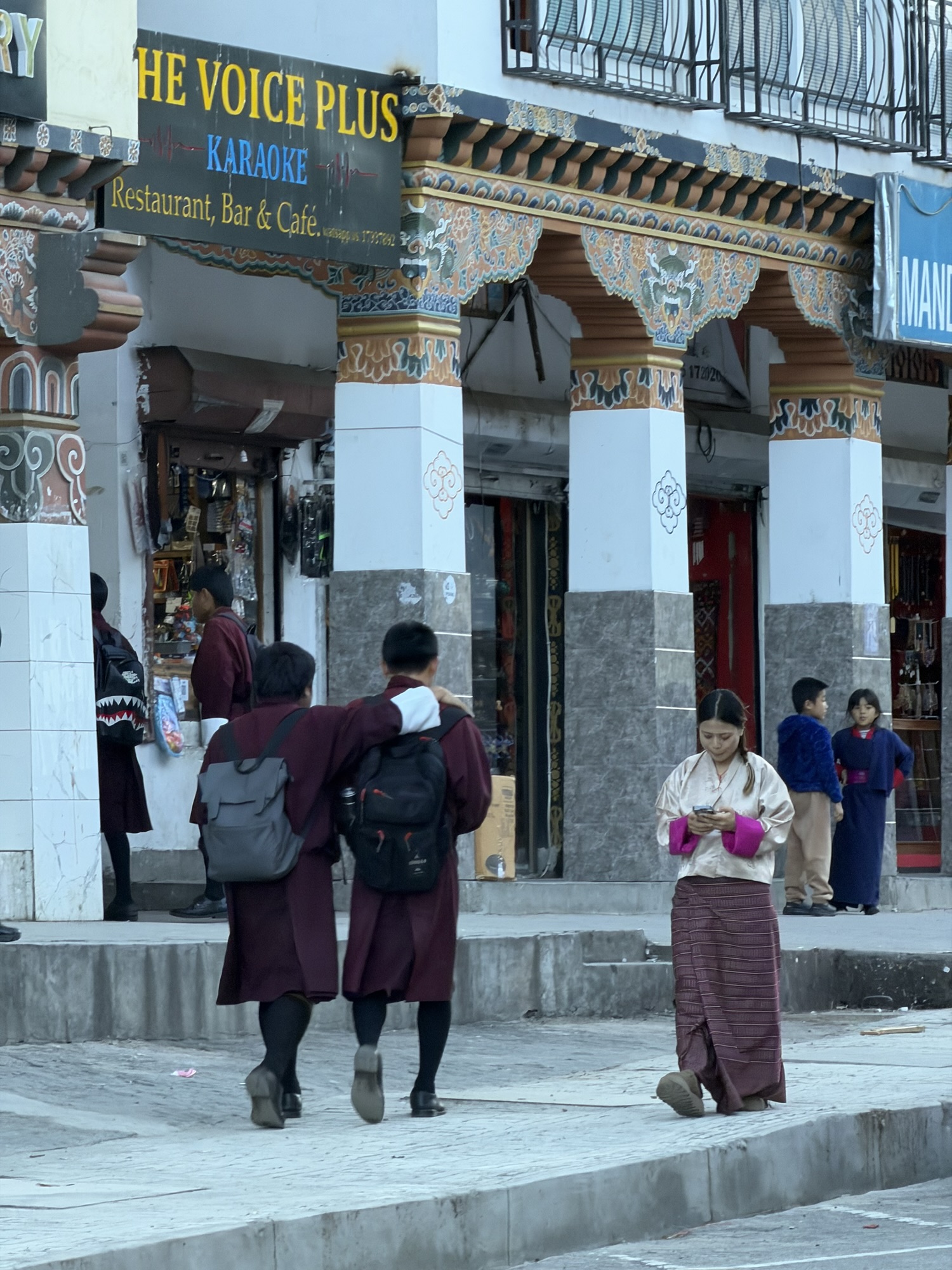
We got the chance to wander through a daily craft bazaar that runs the length of one of the main streets in Thimpu. The handicrafts are beautiful. I fell in love with the handwoven yak hair scarves and wraps and brought a few home. Also, there are traditional outfits for both men and women that the vast majority of people wear. For women, a short top pairs with a nearly floor length skirt and they come in gorgeous vibrant colors.
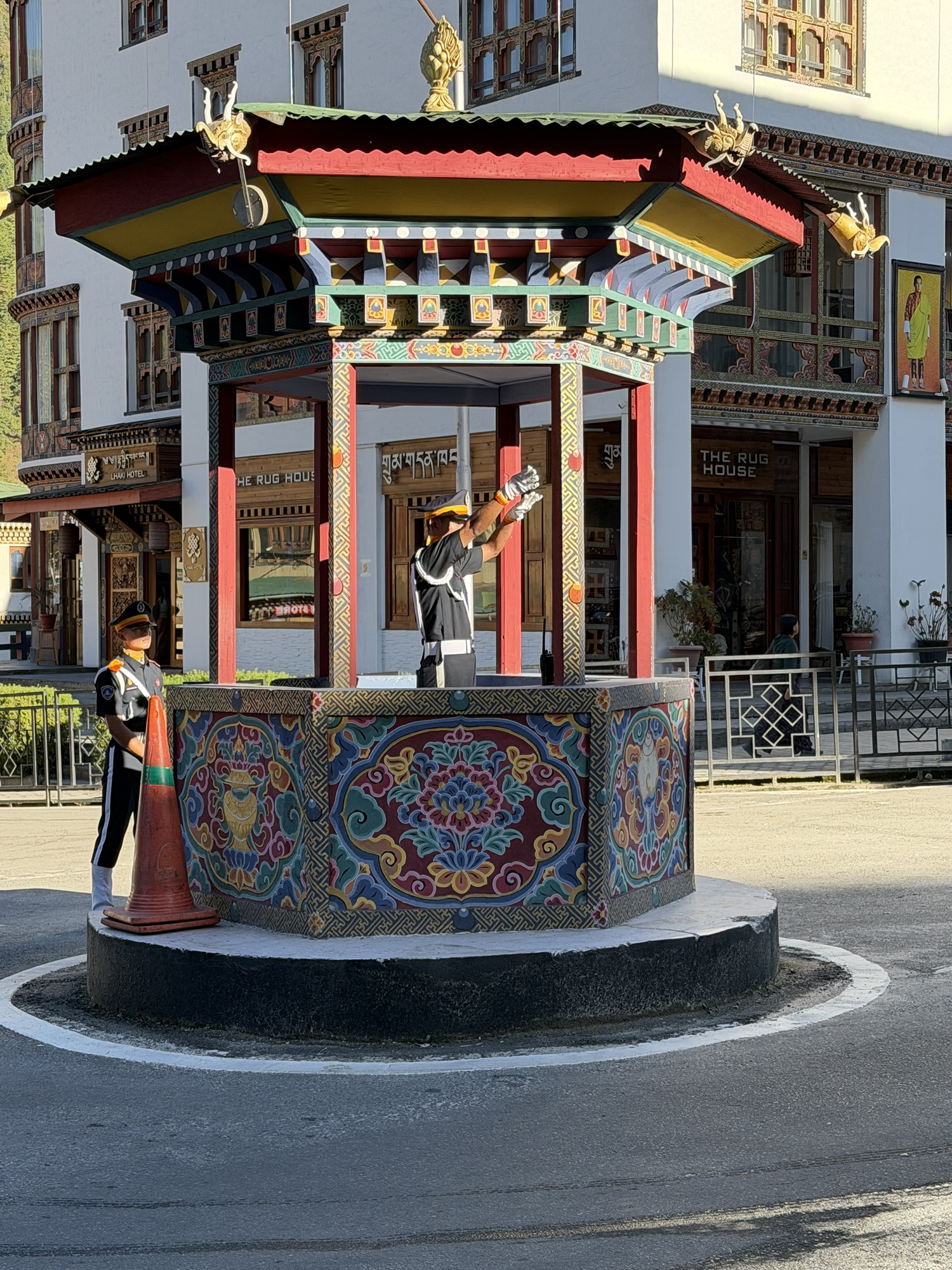
We then took a stroll through the central city. With very little and well-behaved drivers, there was only one traffic “guide” at a main intersection. He stood inside a small, raised gazebo in the middle of the intersection and directed cross-traffic. Very simple.
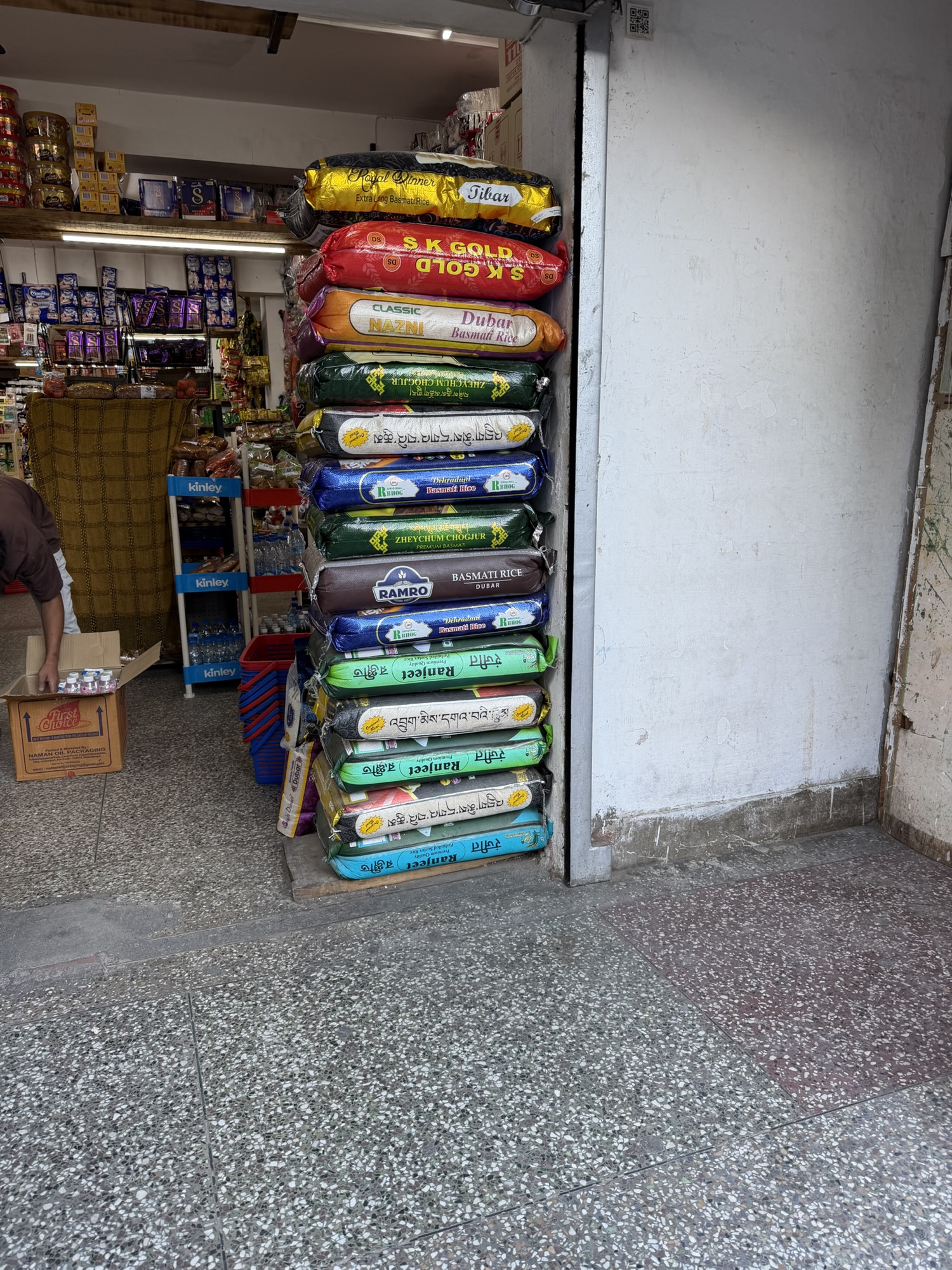
Watching afternoon flow I saw a group of students – all boys – heading home from school…arm-in-arm many of them, all wearing uniforms, no girls in sight. I also had an interesting encounter with a shop owner – his store chock full of huge bags of more rice than I’d ever seen in one place. After determining that I was American, he launched into a loud diatribe about how wonderful President Trump is for being a “tough guy” and fixing problems in the U.S. I had no reasonable response.
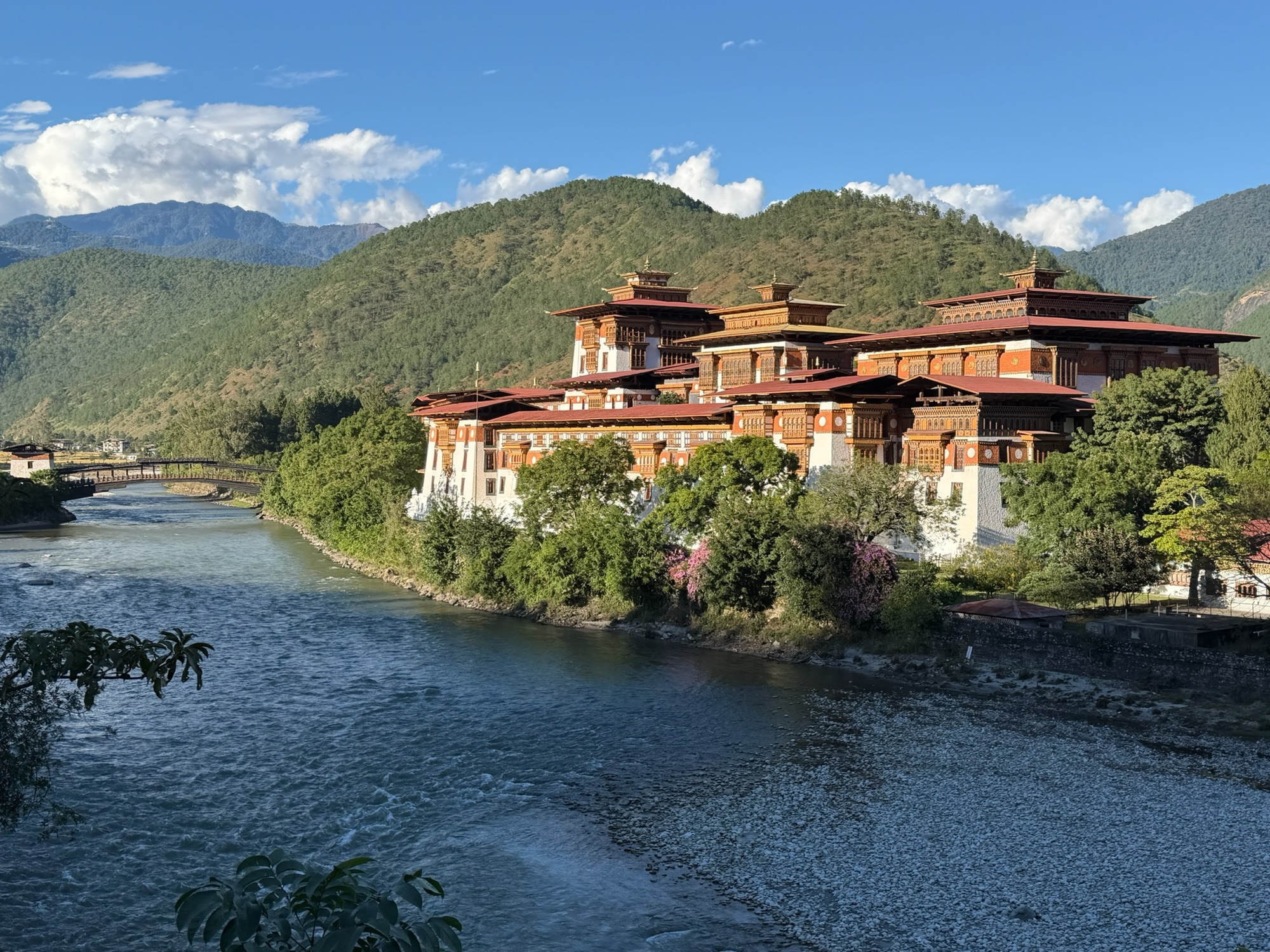
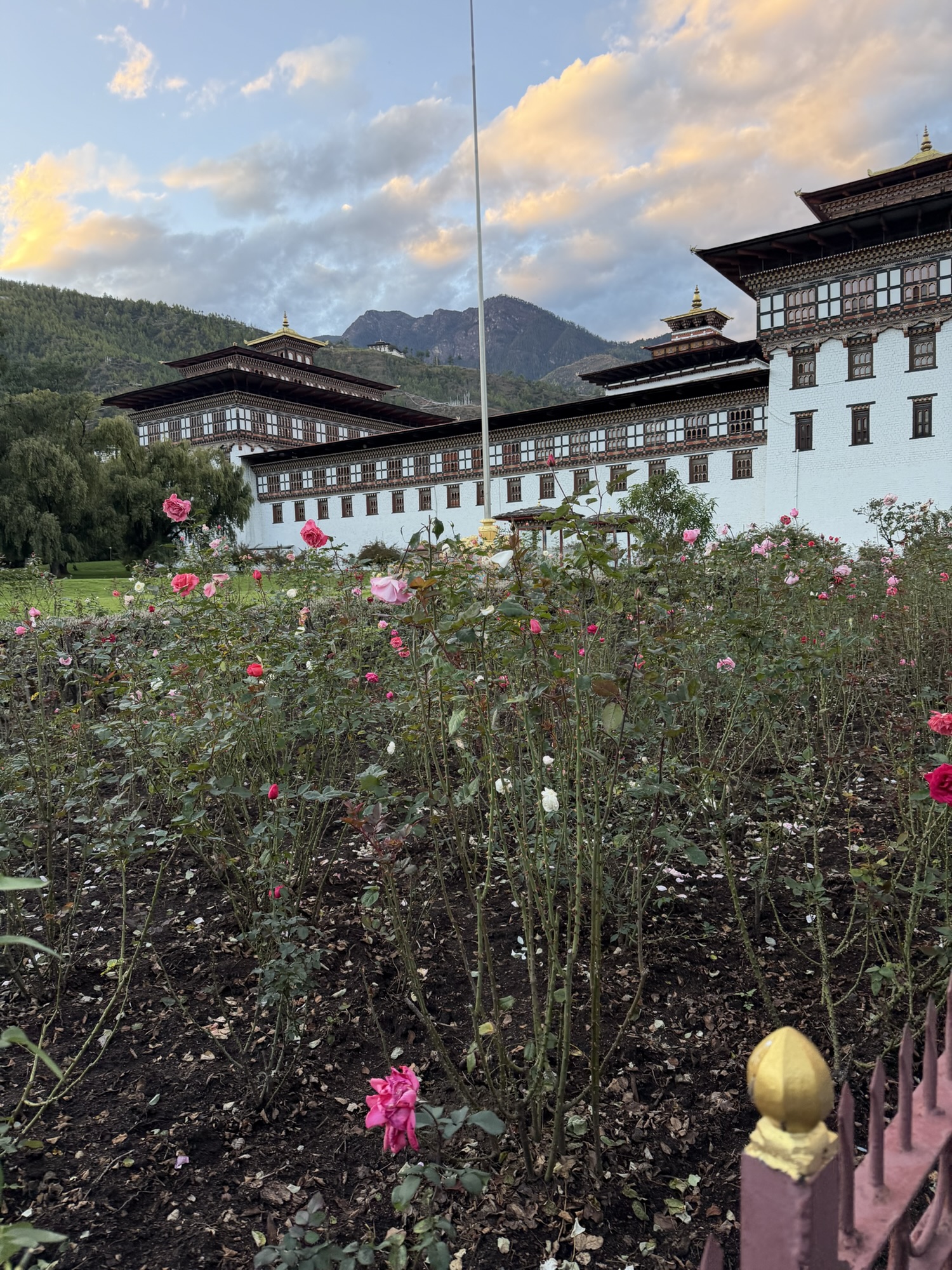
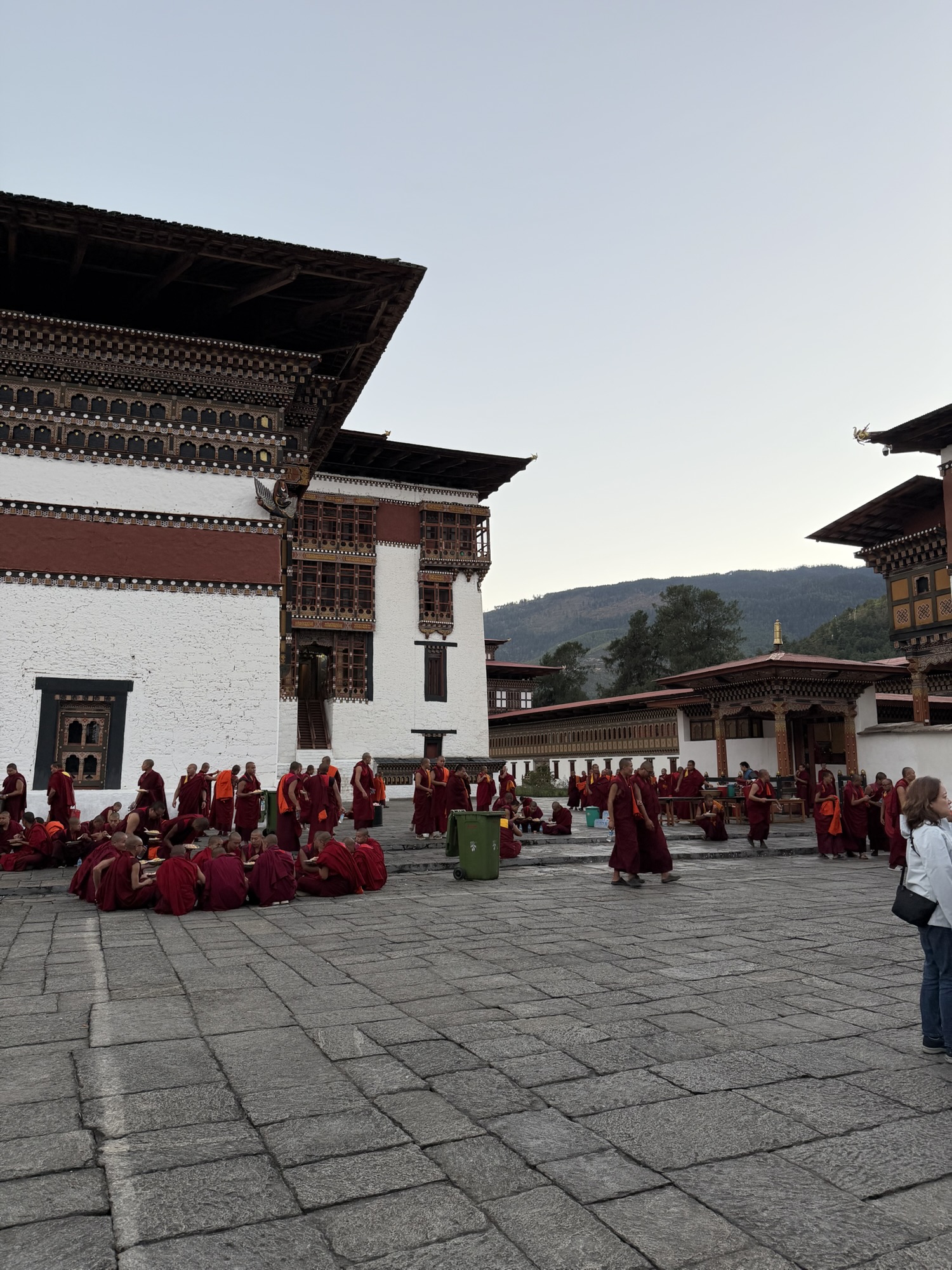
Our last stop of the day was at the Punakha Dzong, one of Bhutan’s most important and striking fortresses. Built at the crossroads of the Pho Chhu and Mo Chhu rivers, the view we had on approach was incredible. The structure sits on the very banks of the river and really is breathtaking. It’s built in classic Bhutanese style — whitewashed walls, carved wooden windows, and tiered golden roofs. It was the seat of government until the mid‑20th century and still hosts major religious ceremonies. It houses sacred relics and is the winter residence of Bhutan’s central monastic body.
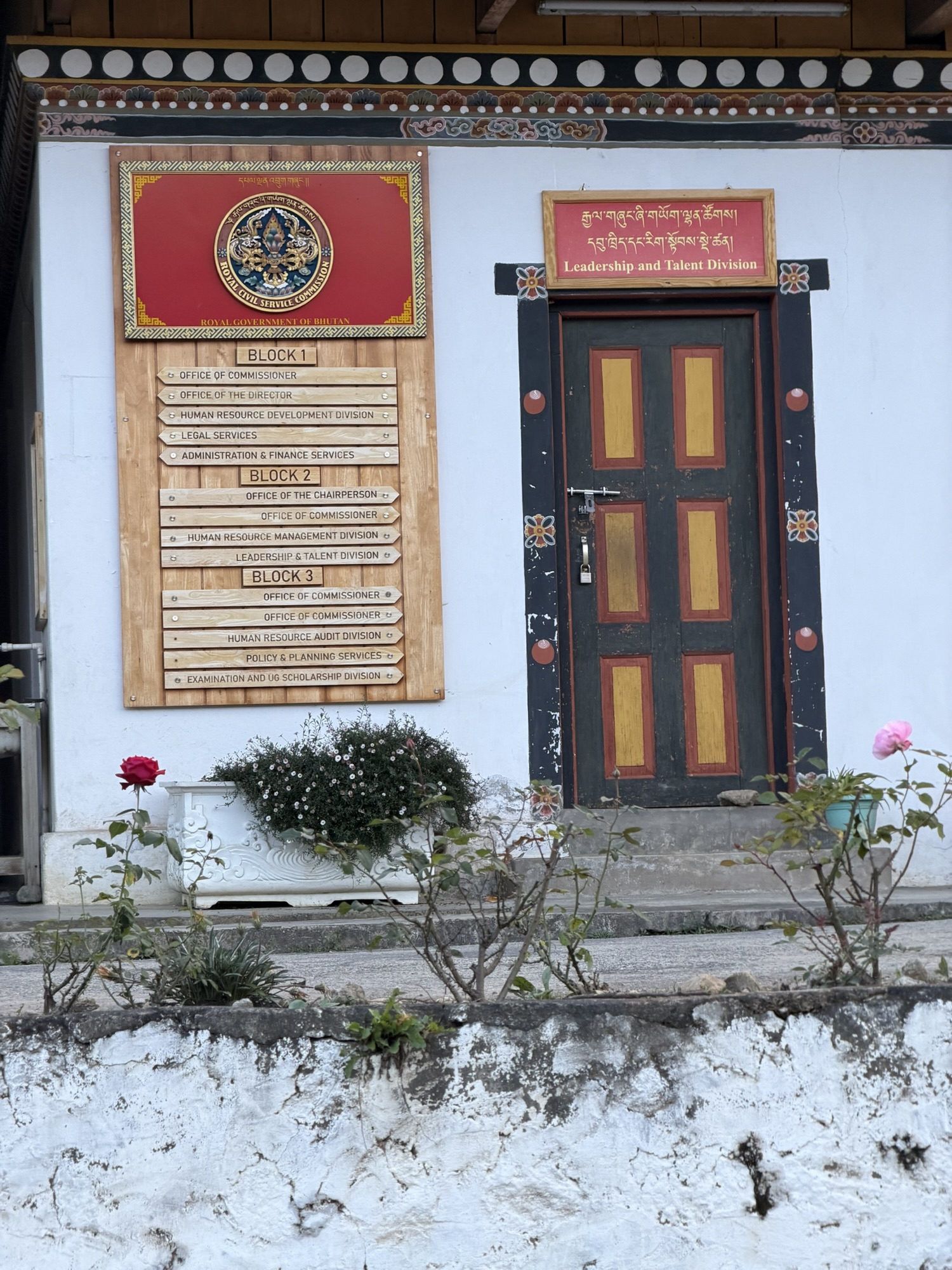
An interesting side note…as we walked from the parking area to the fortress, we passed a long row of what were government administrative offices. We were clearly told that we could not peek in or speak with any of the administrators. Hmmmm…Here was a clear example of the governmental and spiritual centers of life being together – but insights on the administrative side not to be explored.
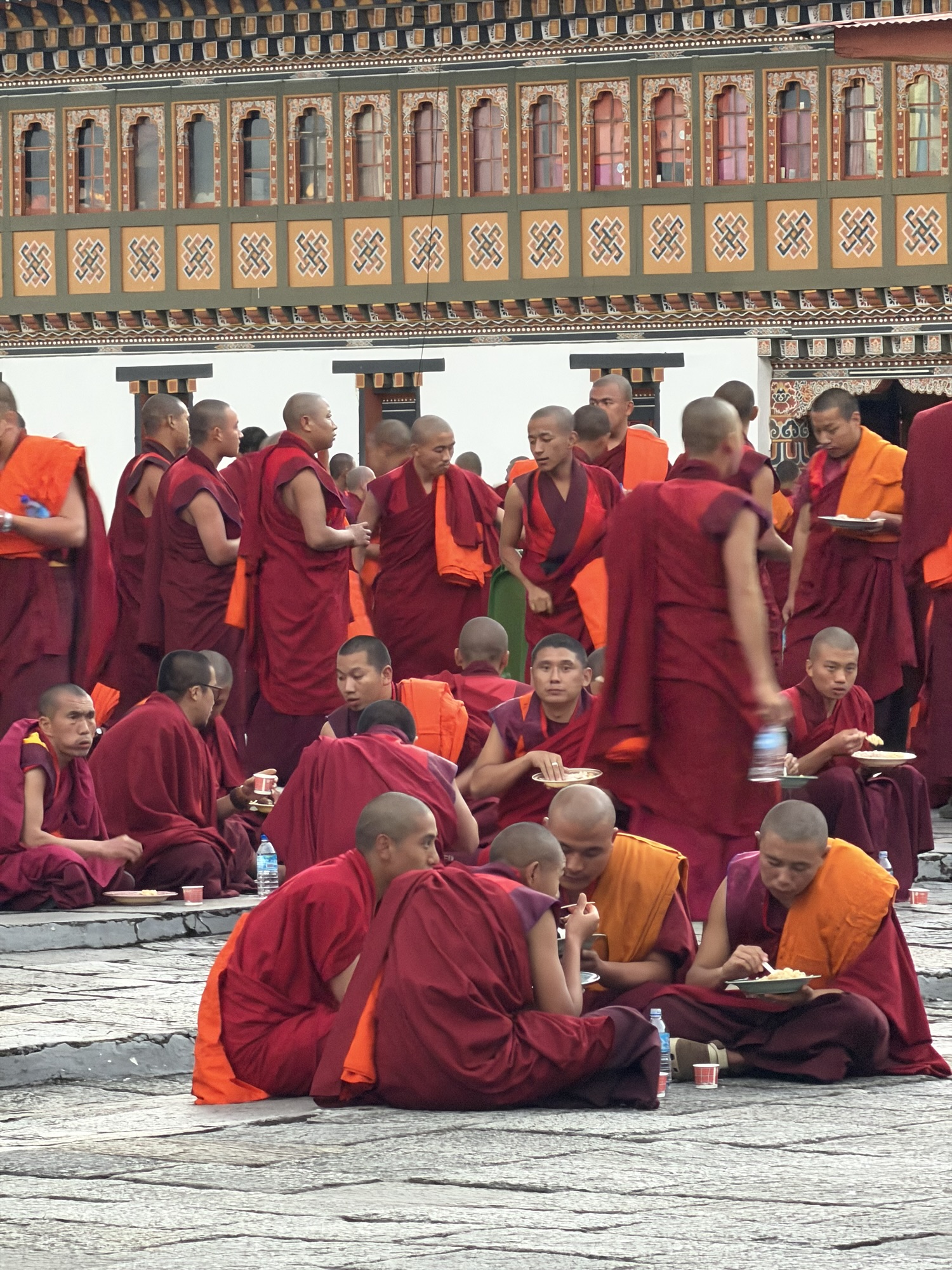
While we strolled the grounds, there were hundreds of monks receiving ceremonial garb for the global peace festivities and having a communal meal in one of the huge courtyards.
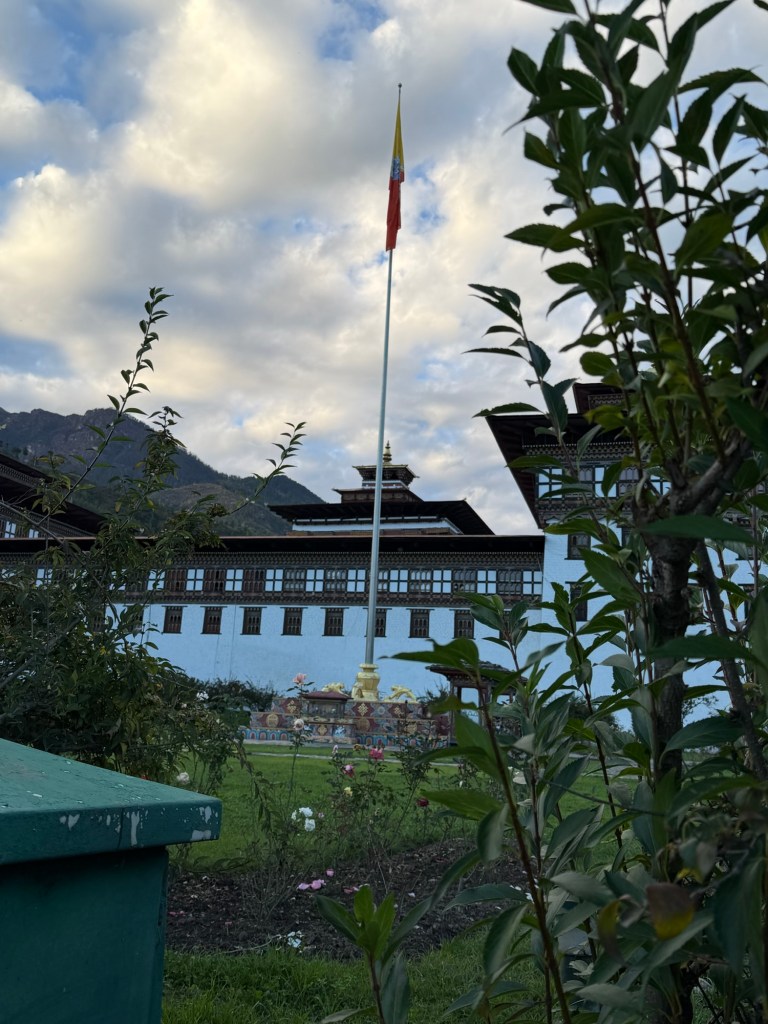
Before departing we were able to catch a glimpse of the daily ritual of lowering the country flag – a ceremony that included monks, administrators, and military personnel. Interesting.


 Living La Vida Loca
Leave a reply to Jane Cancel reply