
“Until we extend our circle of compassion to all living things, we will not ourselves find peace.” – Albert Schweitzer
Today was our day to learn – up close – what some of the animal conservation challenges are in Nepal, and how some people are working hard to reverse negative impacts of “man meets nature”. We set out on a main road toward our first stop and at one point the lane going in our direction simply ended. Our side of the two-lane road was a massive hole with some construction blocks around it. There was no way for our van to pass on our side so the answer apparently was simple. We just crossed over the center remnant of a divider and continued on the side of traffic facing us. Ummmm…fortunately this seemed to be a normal workaround and our driver navigated well. I’m glad that road rage is not a “thing” in Nepal!
We were told that our first stop would be at the Vulture Restaurant. My first thought was: “I’m adventurous but heck no…NOT eating vulture!”. Thank goodness I was mistaken. We ended up at a vulture conservation center deep in a remote village. Diclofenac had been used to treat diseased cows in the past, but it ended up killing local vulture populations. The estimated vulture population in 1980s was over one million in Nepal. It was drastically decreased to around 20,000. In 2006, the Nepal government banned the use of diclofenac. Nine species of vulture are found in Nepal. This “restaurant” is designed to help repopulate these birds that are a part of the natural ecosystem. Here’s how it works:
The center buys old cattle such as cows, buffalos, and other livestock which have become an economic burden for the farmers and take care of them until they die. After they die naturally, the carcass is fed to the vultures. The carcass is prepared in a cage to attract vultures. Then the carcass is pulled by truck into a vast field…and the feasting begins.
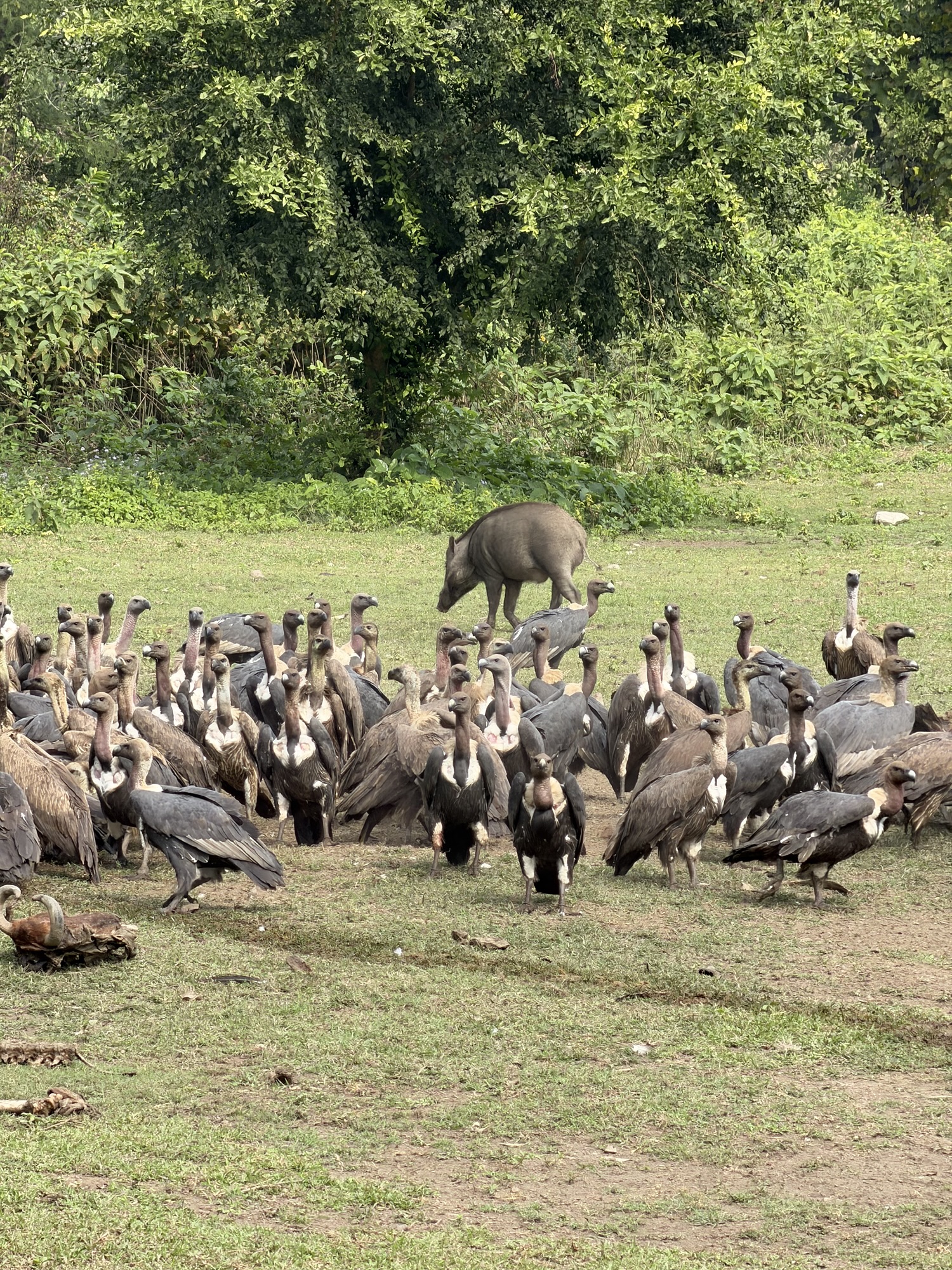
From an enclosed viewing station, we watched 409 vultures, one eagle and four wild boars descend on a cow carcass and literally pick it clean in less than thirty minutes. At the end – having been excluded by the vultures during the main feeding session – one of the boars made off with the spine and picked over bones. It was not clear whether the vultures were cool with that final action, but they did retreat to the surrounding trees.
The owner of the conservancy has seen increasing interest globally in this work and now has many visitors from other countries. That in mind, he is just completing construction on a nearby Tharu style hotel. He invited us to tea as he’s close to opening. We briefly toured the rooms and they are very lovely, each with a door that opens onto a jungle area for bird watching.
Our next stop was at Stand Up for Elephants (SU4E), an ethical elephant sanctuary focused on elephant welfare and conservation. It was started and is run by Laura’s friend, Michael Bailey, and another woman named Floriane Blot. Michael is a transplanted French Canadian who used to work on an oil rig off of Israel and lived in Tel Aviv for a number of years. He then ended up in Nepal and has been doing this work ever since.
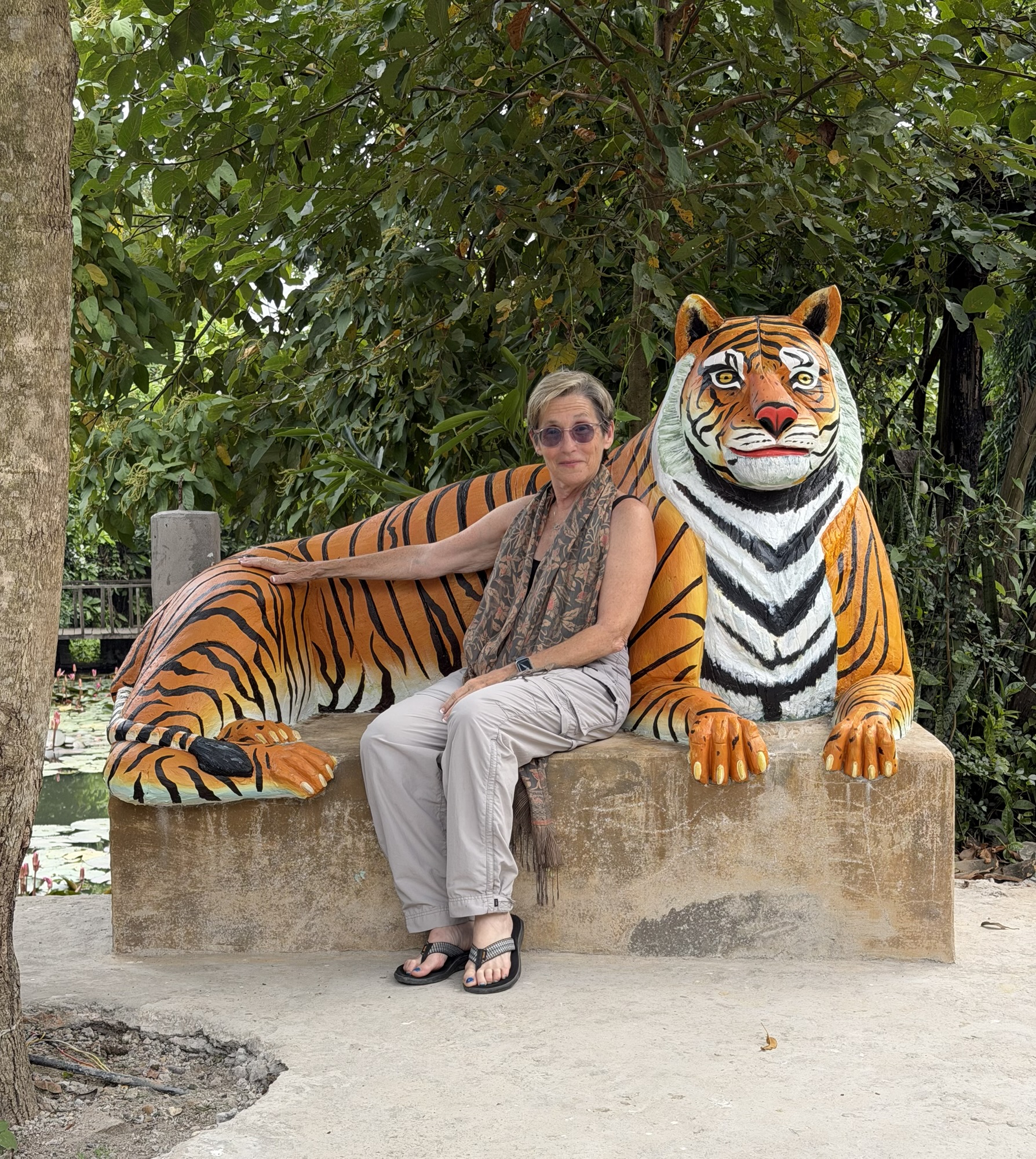
Before winding our way to the elephant sanctuary itself, we stopped to have lunch at a restaurant that Michael recommended but had never been to. It was right in the middle of a neighborhood village and had a quiet, shaded patio area where I met my first Bengal tiger…
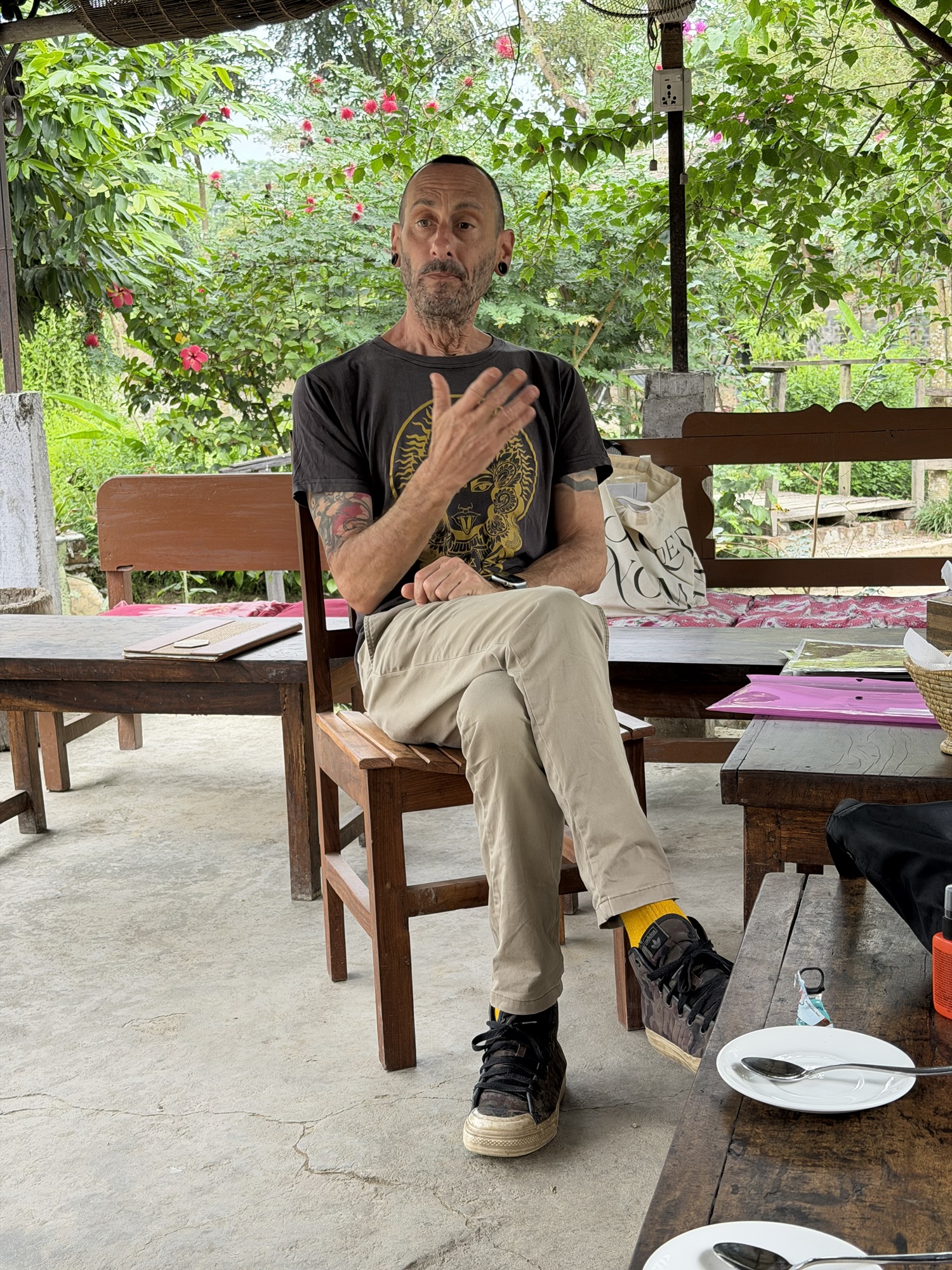
During our meal, Michael gave us an overview of the situation with elephants in Nepal. There are basically three kinds of elephants: Privately owned elephants, government owned elephants, and wild elephants. Most of the privately-owned elephants are put to work in hotels as entertainment for tourists, and they aren’t generally treated very well. The government-owned elephants are used to help patrol jungle borders and do some maintenance work in the jungle itself. Unfortunately, these first two types of elephants are shackled during the time they are not working, and the treatment can vary widely and not to the elephants’ benefit.
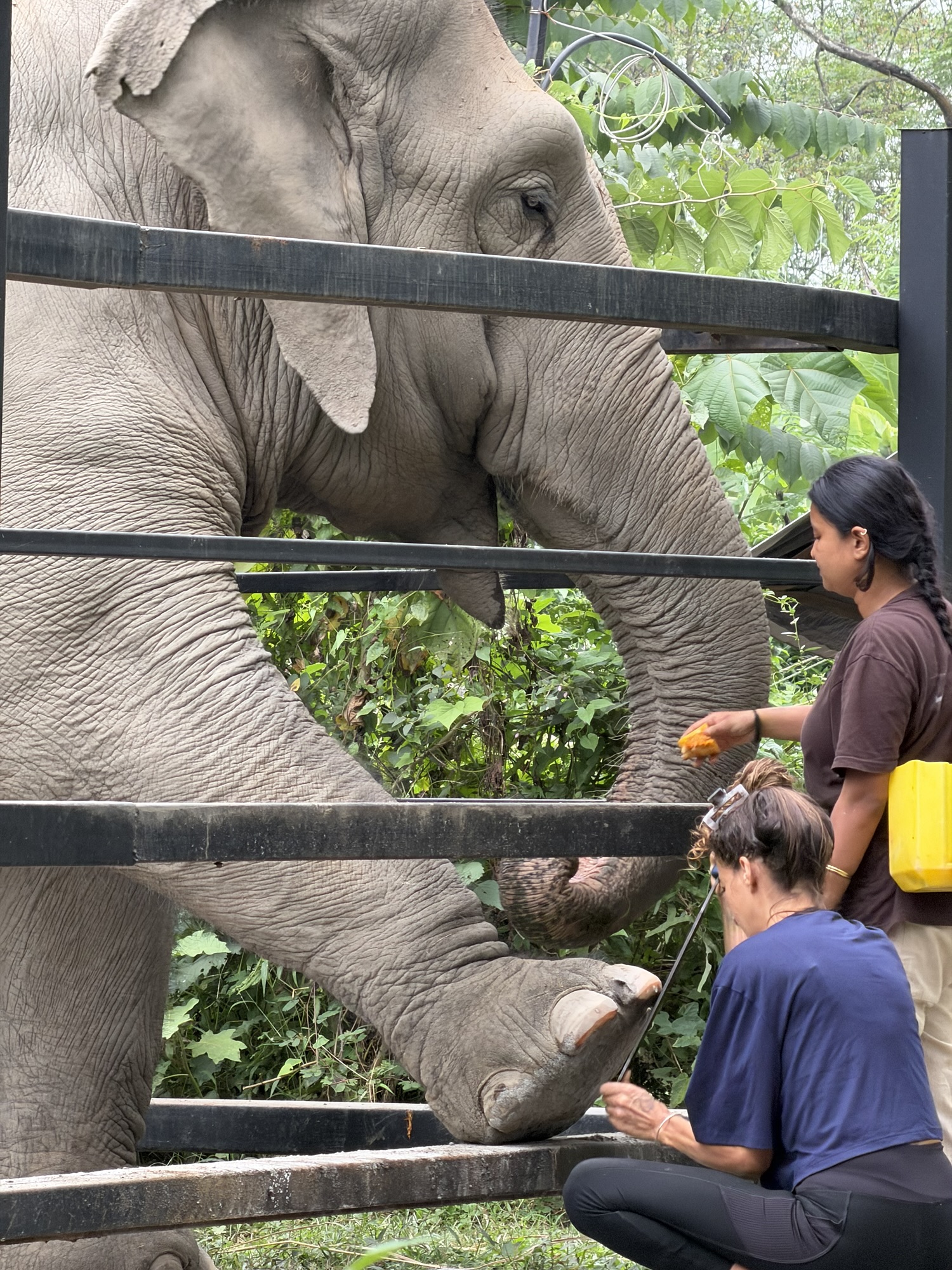
The two elephants at Michael and Florian’s sanctuary are named Eva and Lhamo. Both females were rescued from bad situations. Eva in particular was in very bad physical shape when brought to the sanctuary and had PTSD that Michael has been able to help her overcome and he’s built a unique and wonderful, trusting bond with her.
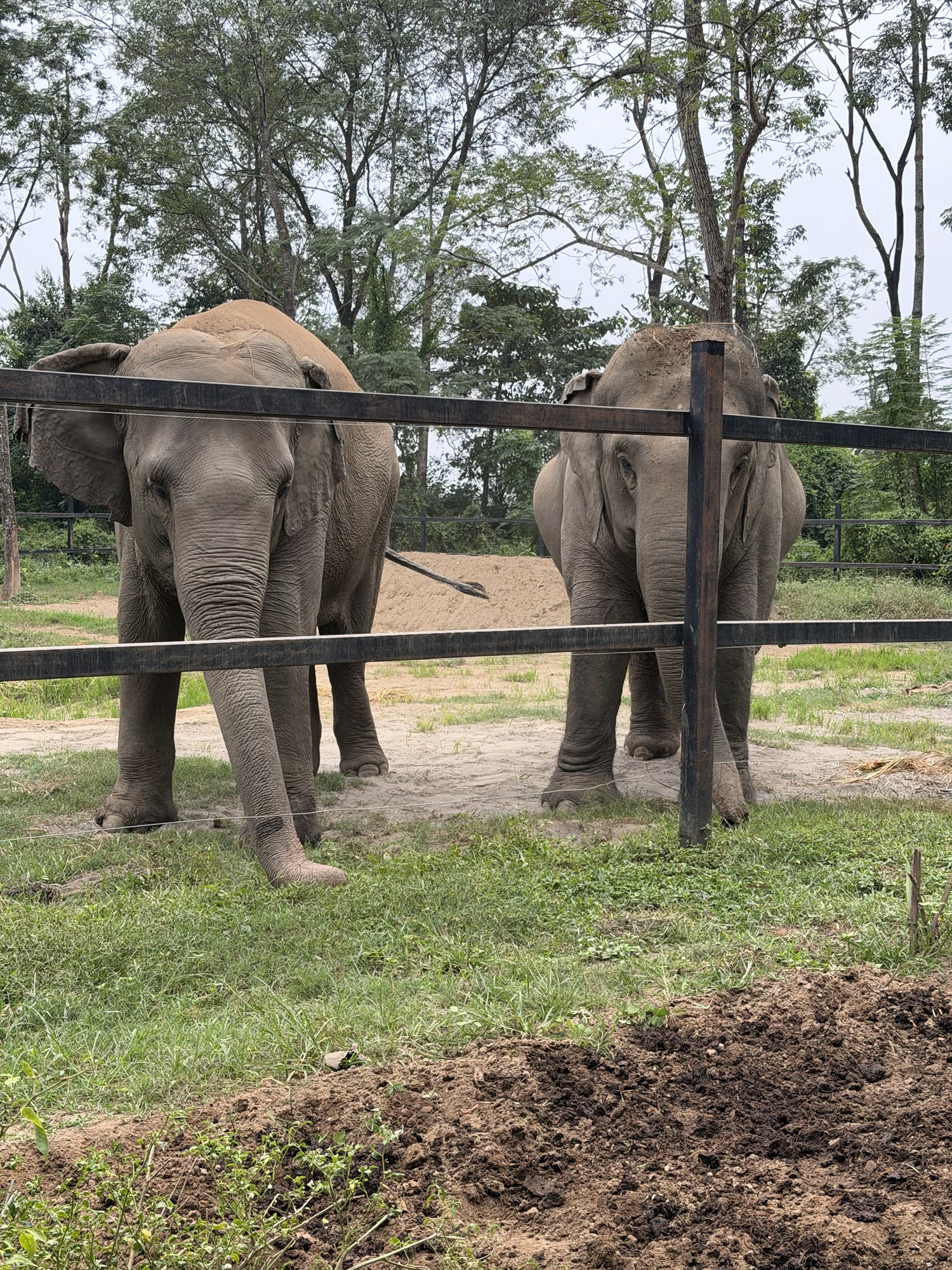
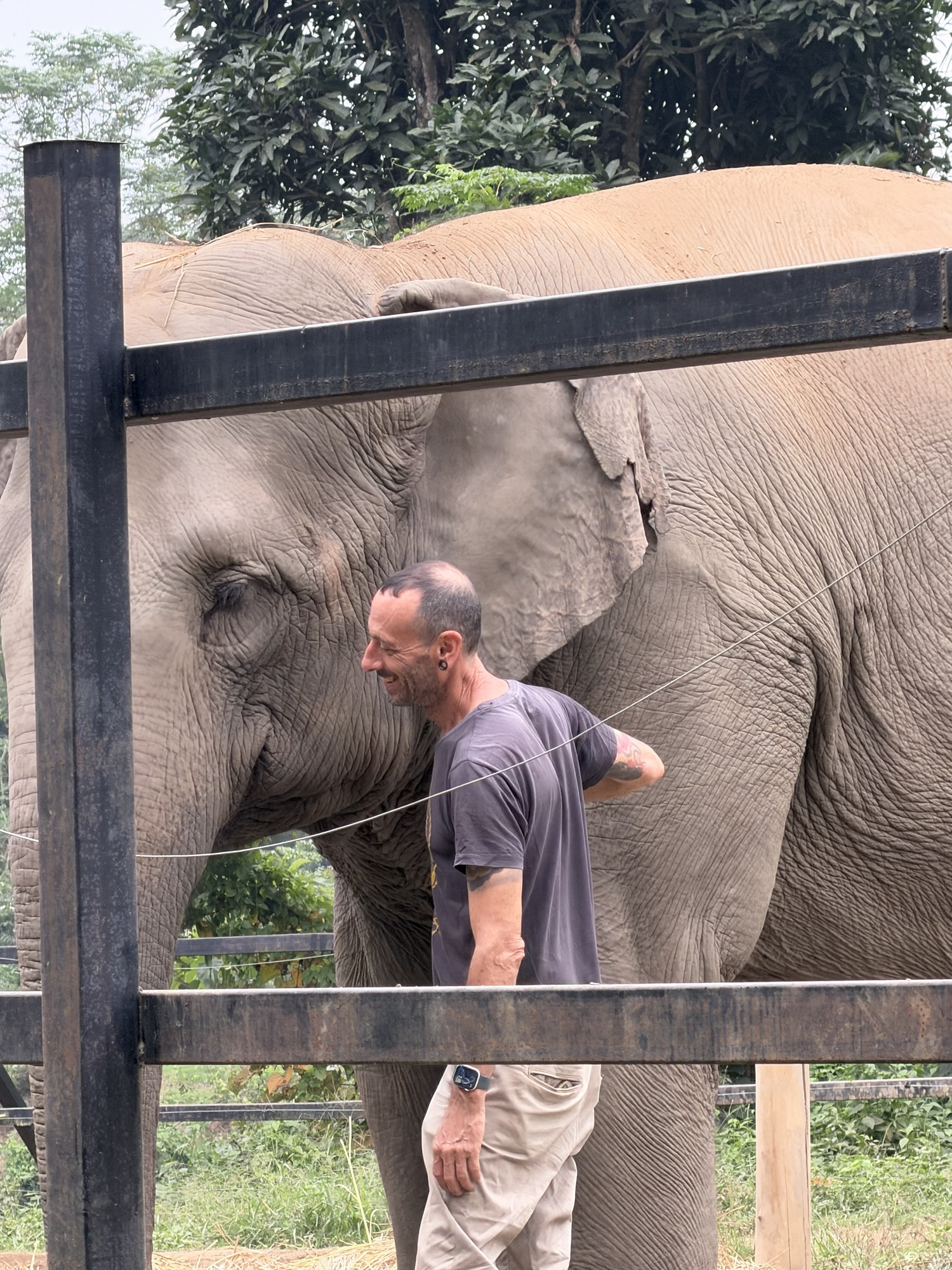
We got to watch Florian and her team give both the animals foot treatments that are necessary to keep them healthy. Eva actually has a leg injury that doesn’t allow her to bend one of her front legs. Nonetheless, she has thrived well with the excellent care she’s being given now.
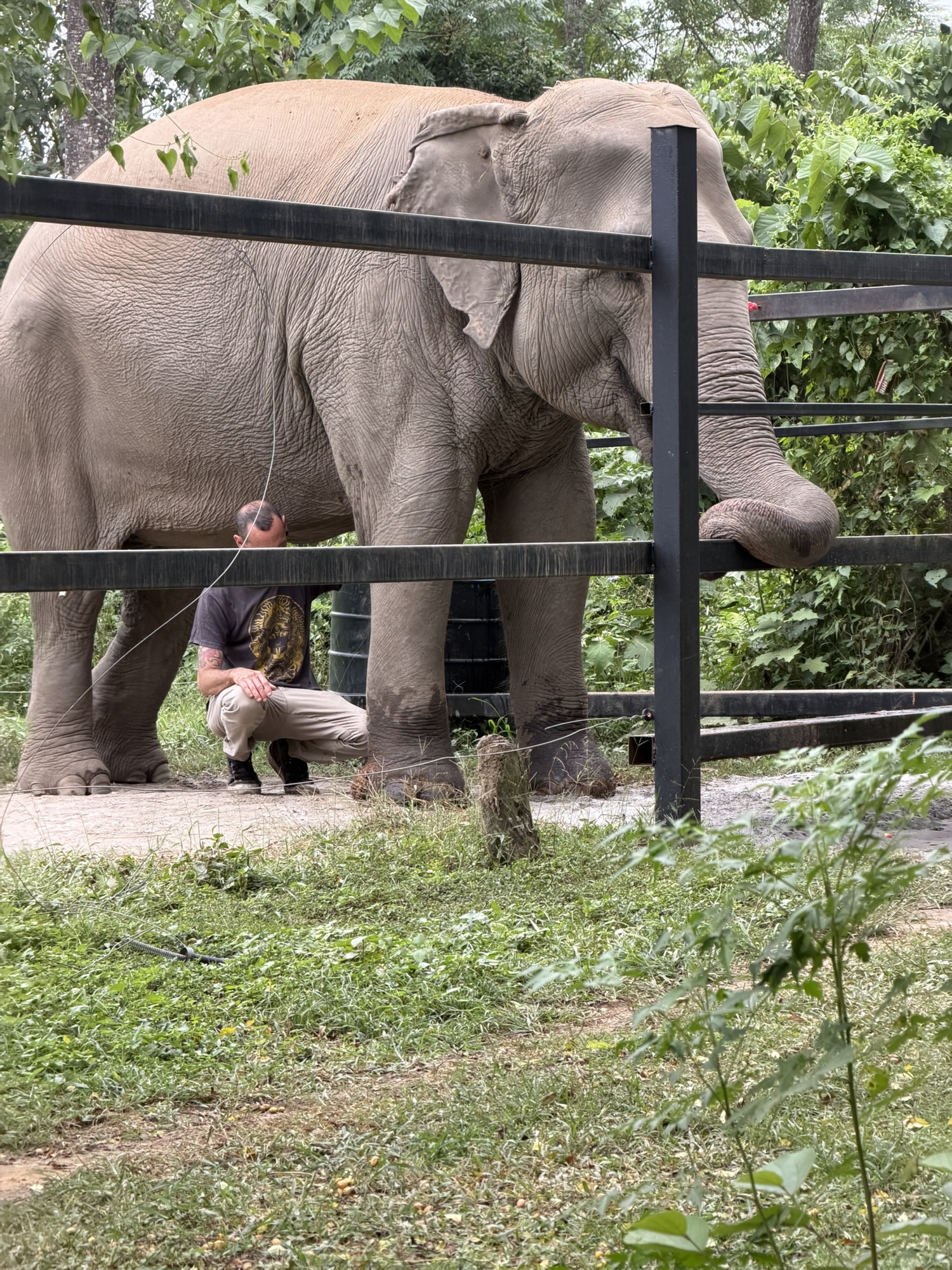
The goal of the conservancy is to educate the population about the damaging treatment of these wild animals. There is actually a governmental elephant breeding center that has been nicknamed the “elephant rape center” because captive female elephants are shackled and male elephants are allowed to mate with them without the female having a choice. Breeding elephants like this is a purely economic decision not taking into account the impact on the animals themselves. I love the work that Michael and Florian are doing. It is slow, but it is steady.
If it so moves you, any donation to this conservancy is greatly appreciated: https://www.su4e.org/donate-now


Leave a Reply