
Staying at a monastery guest house was one of the most peaceful, serene experiences I’ve ever had. Smack in the middle of chaotic Kathmandu sits this oasis of spiritual grounds, devout monks going about their business, and spartan but very quiet hosting rooms and cafe gardens….except this morning when a concert of what sounded like singing bowls in unison began at 5am, followed by a lively serenade of barking dogs an hour later! Deep breathing and a realization of the different world I’d entered made this all just fine.
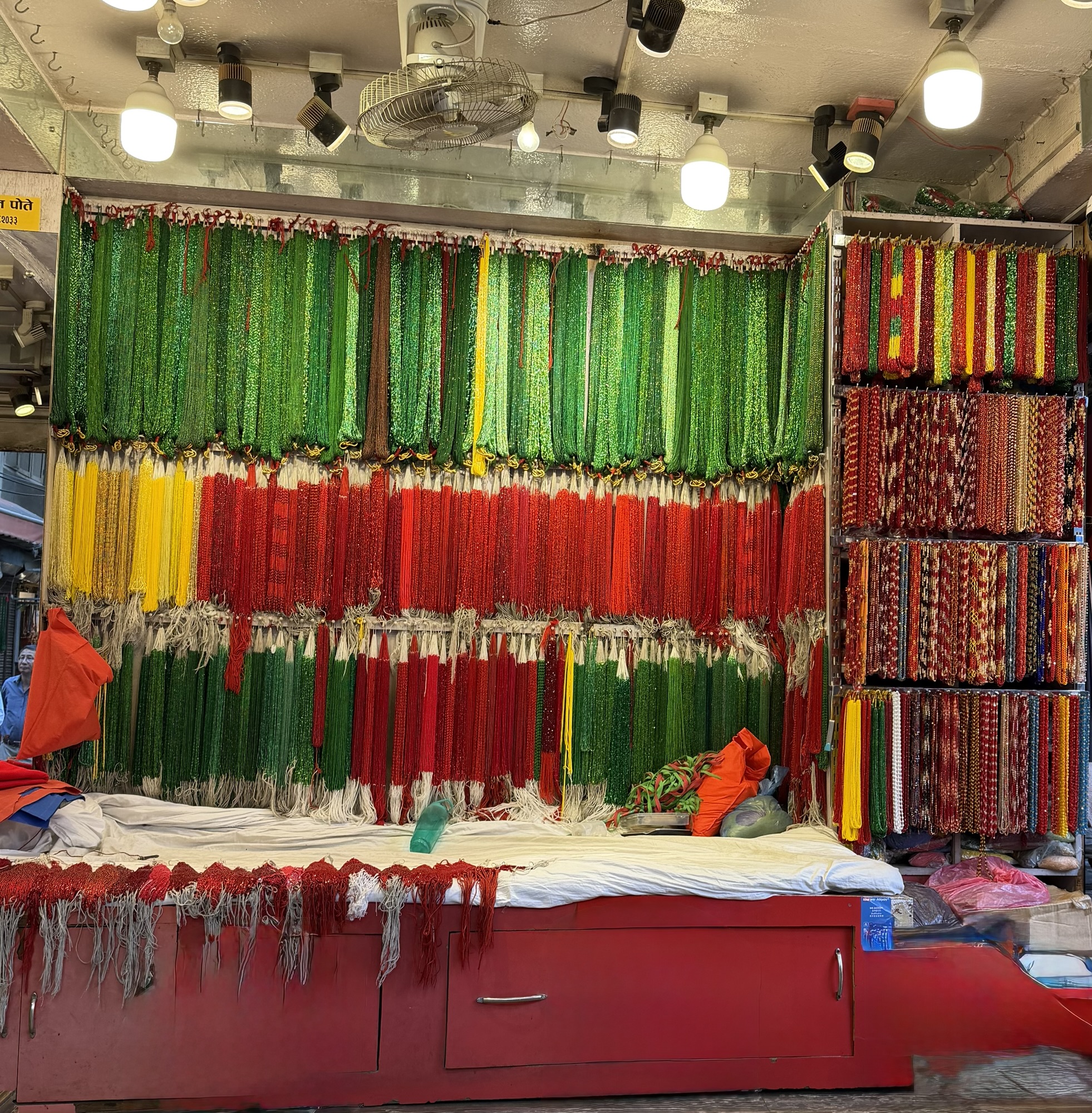
First on the agenda was a walk with Laura through the winding streets nearby to do a little shopping. Laura took us into some of the more authentic stores (versus the “touristy” ones), including one that sells antique pieces dating back many centuries. Another store carried very soft and cozy blankets made of yak hair. I fell deeply in love with the feel of this pelt and ended up bringing back some scarves made of this that ended up keeping me very warm when we later visited New York City in December. Yak are raised in the Himalayas and their meat, milk, and fur are basic staples of the Nepalese diet and clothing. We also stopped into a store that specializes in beads of all types, shapes and sizes. Laura quickly made friends with the lovely shop owner who ended up inviting us to his home for tea. Laura now has a nice new contact for when she brings people to Nepal.
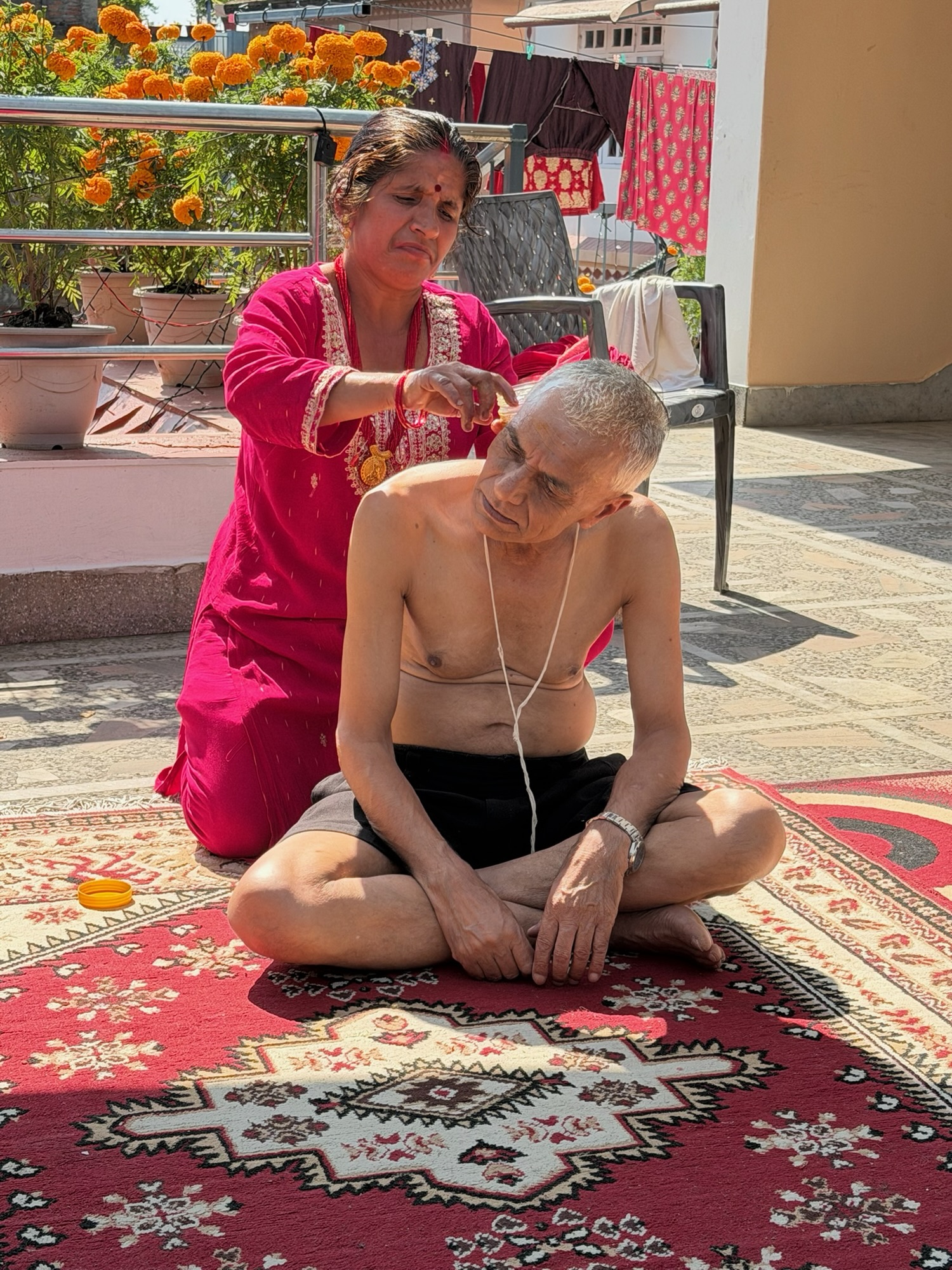
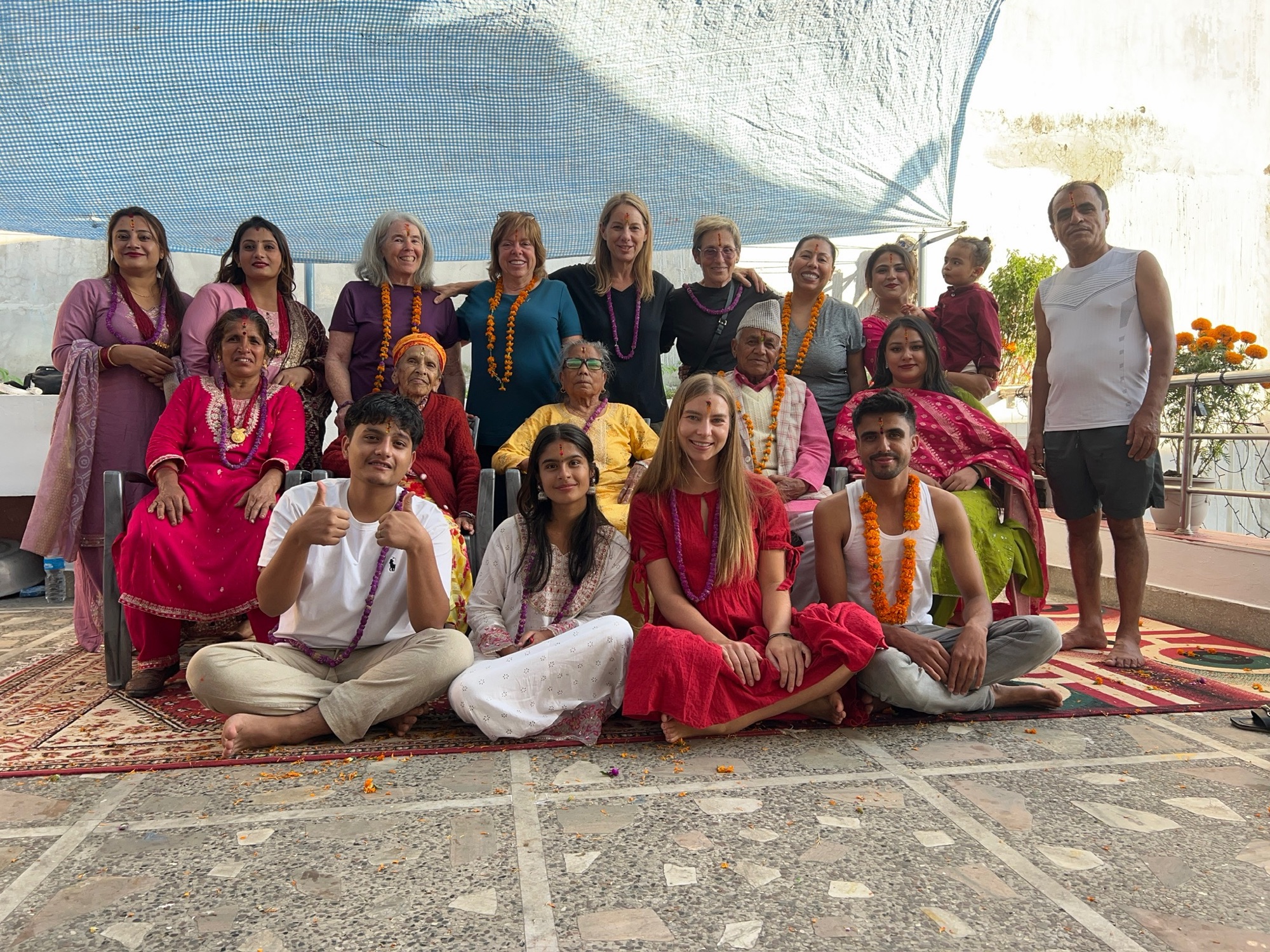
This was the last day of the Tihar (or Deepawali) festival. Tihar is an annual event spanning five days, with each day having its own unique rituals, customs, and celebrations. It coincides with the harvest season and aims to bring people together, strengthen relationships, and celebrate the bond between humans, animals, and nature. On this final festival day, Bhai Tika takes place celebrating the unique bond between brothers and sisters. In this case, sisters in a family honor their brothers and pray for their longevity, prosperity and well-being. In return, brothers promise to protect and honor their sisters. We were invited to participate in this ritual at the home of one of Laura’s friends who runs a foot massage business. He obviously has some wealth as the home he built and shares with his family is quite lovely and modern by Nepal standards. Four generations of his family arrived during the many hours we spent with them. The ceremony itself included women who are sisters painting a circle with water and oil around a line of assembled brothers, massaging their brothers with mustard seed oil, showering them with fragrant flowers, and painting a special rainbow-colored tika on their foreheads. If a woman in the family did not have brothers, they “adopted” one of the brothers in the family to participate in the ceremony. The ceremony was really all inclusive, ranging from the oldest to the very youngest in the family. There was one little two-year-old who was a perpetual motion machine, and despite this he was helped to settle down and participate as well.
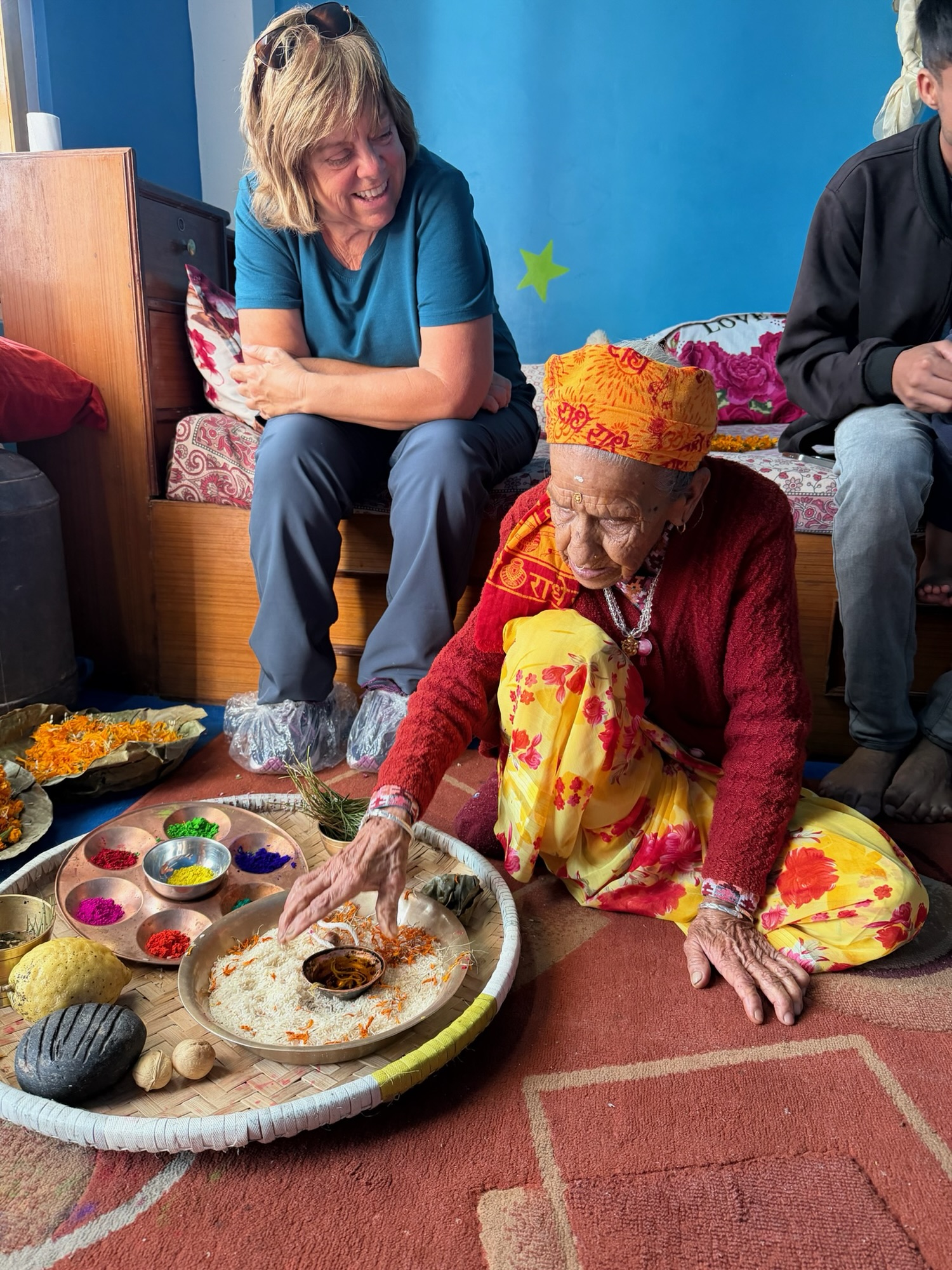
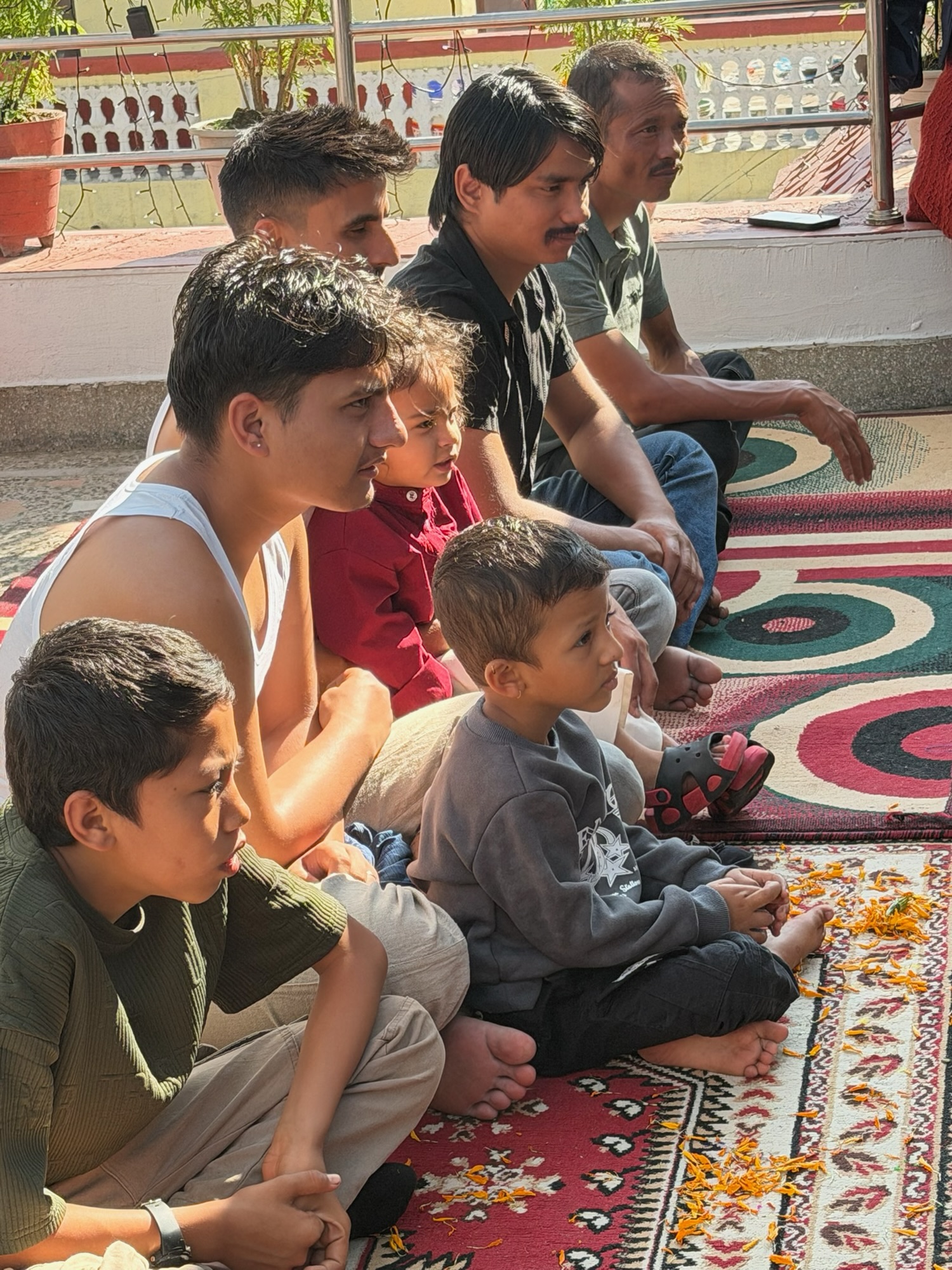
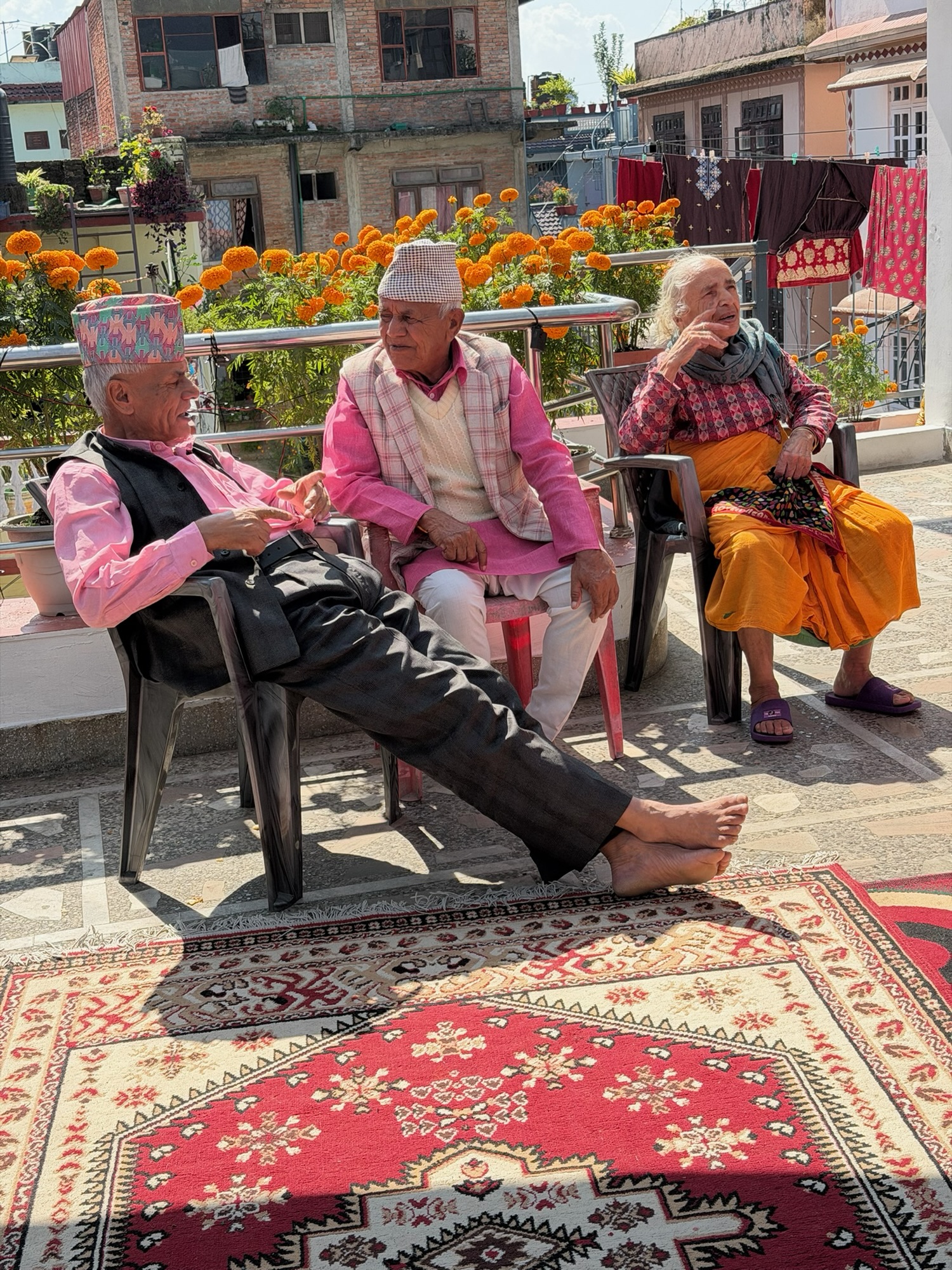
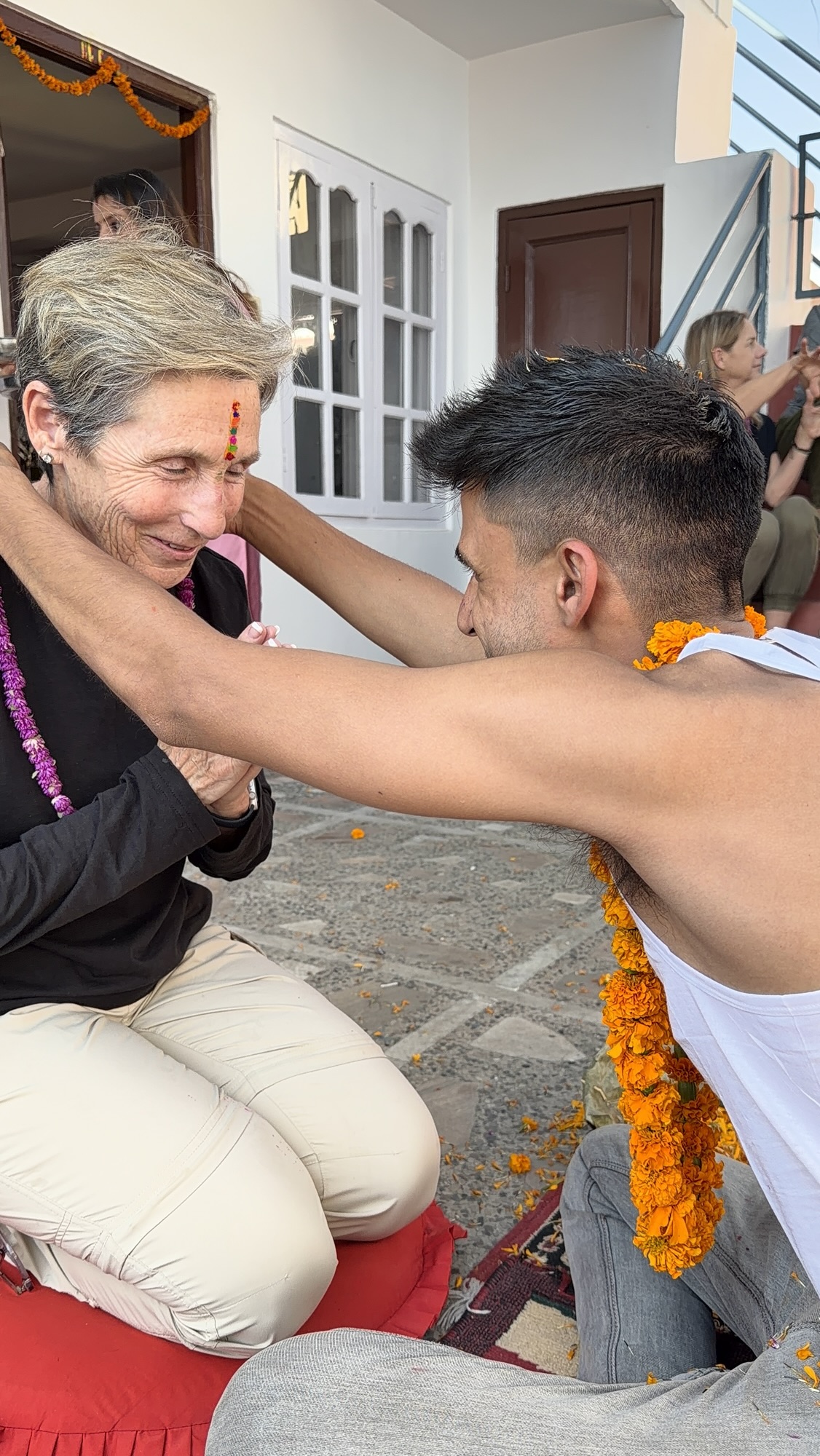
It was an honor to have the family include us in the ceremony, and we became the “sisters” of Laura’s dear friend as he performed the painting ceremony on each of us. This was very special.
We were served a very traditional Nepali meal and learned how to eat with our hands. It included white rice, dal, Chana (garbanzo beans), pickled vegetables, and a tasty chicken dish that you mixed together with your hands after pouring the dal on top. A bit messy but very tasty.
Our final activity was a cooking class at the kitchen that serves a guest house and an orphanage owned by some Swedish people. We learned how to make vegetable momos and butter paneer. I was exhausted, so I opted out after the momos but we got to taste all of it afterwards.


 Living La Vida Loca
Leave a comment