

Andrew and I agreed that it was important to bear witness to what happened at Hiroshima while we were in Japan. Admittedly, this was not on our original itinerary, but something about the current state of the world and the recent rise in global unrest, divisiveness, and antisemitism had us rethinking our tourist priorities. There are just times when it feels very urgent to look at the past and reinforce lessons learned as a pathway to making better decisions and supporting peaceful solutions to world crises.
We took the Shinkansen (bullet) train to Hiroshima which was a delightful experience. Very comfortable seating and of course, super-fast! We took a taxi to the grounds of the memorial park and were struck by how beautifully the city of Hiroshima had “regrown”. There are modern buildings, grassy strips along main roads with walking and biking paths…it was good to see normal life reborn there.
The Hiroshima Peace Memorial Park is a spacious and manicured sanctuary dedicated to promoting peace and remembrance of the tragic events of August 6, 1945, when the atomic bomb was dropped on Hiroshima during World War II. The park is right in the center of Hiroshima city, close to the epicenter (or “hypocenter”) of the bomb explosion. There is a natural waterway that runs through the park that adds a measure of peacefulness to the area.

The A-Bomb Dome was formerly the Hiroshima Prefectural Industrial Promotion Hall. The building was one of the few structures left standing near the bomb’s hypocenter. It’s preserved in its ruined state as a reminder of the destructive power of nuclear weapons.
The Peace Memorial Museum (you can’t see it in this photo) gave us an overview of the events that led up to the bombing, and then graphically presented its immediate and long-term effects on the city and its residents and detailed the global efforts towards nuclear disarmament and peace since this horrific event. Exhibits include artifacts, personal belongings, and photographs. Most moving and heart wrenching were a digital simulation of the instantaneous destruction of the city population, infrastructure, and all natural resources, and very graphic photos of the physical impact of exposure to the blast and all the fallout. The latter reminded me of the horrific photos of concentration camp victims that emerged post-war…the incredible loss of innocent lives was both emotional and angering.
The Cenotaph for the A-bomb Victims is shaped like an arch and holds the names of all known victims of the atomic bomb. Its inscription reads, “Let all the souls here rest in peace, for we shall not repeat the evil.”
The Children’s Peace Monument (it’s on the far left where all the school kids are standing – there’s a children’s garden too) is dedicated to Sadako Sasaki, a young girl who died from radiation-related illnesses after the bombing, and this monument serves as a tribute to all children who were victims of the atomic bomb.
The Flame of Peace has been continuously burning since it was lit in 1964, and will stay lit until nuclear weapons are abolished worldwide.
Visitors can ring the Peace Bell (not seen here) as a symbolic gesture of their commitment to peace and nuclear disarmament.
The park also houses various sculptures, monuments, and green spaces that give you opportunities for reflection, education, and paying respects to the victims of the atomic bombing. In all, this was a very humbling, troubling, and meaningful day I won’t soon forget.
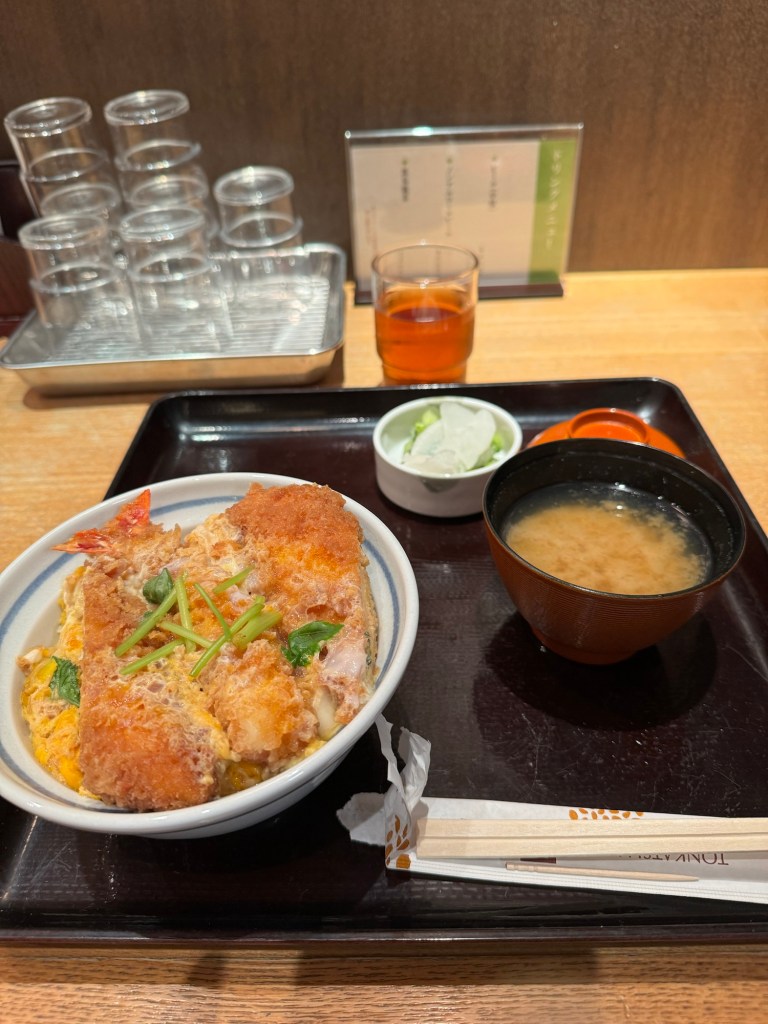
Before heading back to Kyoto we decided to find a place to try katsu – a local delicacy of breaded chicken and sometimes shrimp on rice topped with egg). We looked up Yelp recommendations and ended up in the smallest restaurant we’ve ever been in. It was run by one elderly woman behind an order counter and we were seated in a space next to the counter that might squeeze in maybe four people… facing a wall! Incredibly, the food was very tasty and reinforced the old adage of not judging a book by its cover.

 Living La Vida Loca
Leave a reply to Jane Cancel reply