
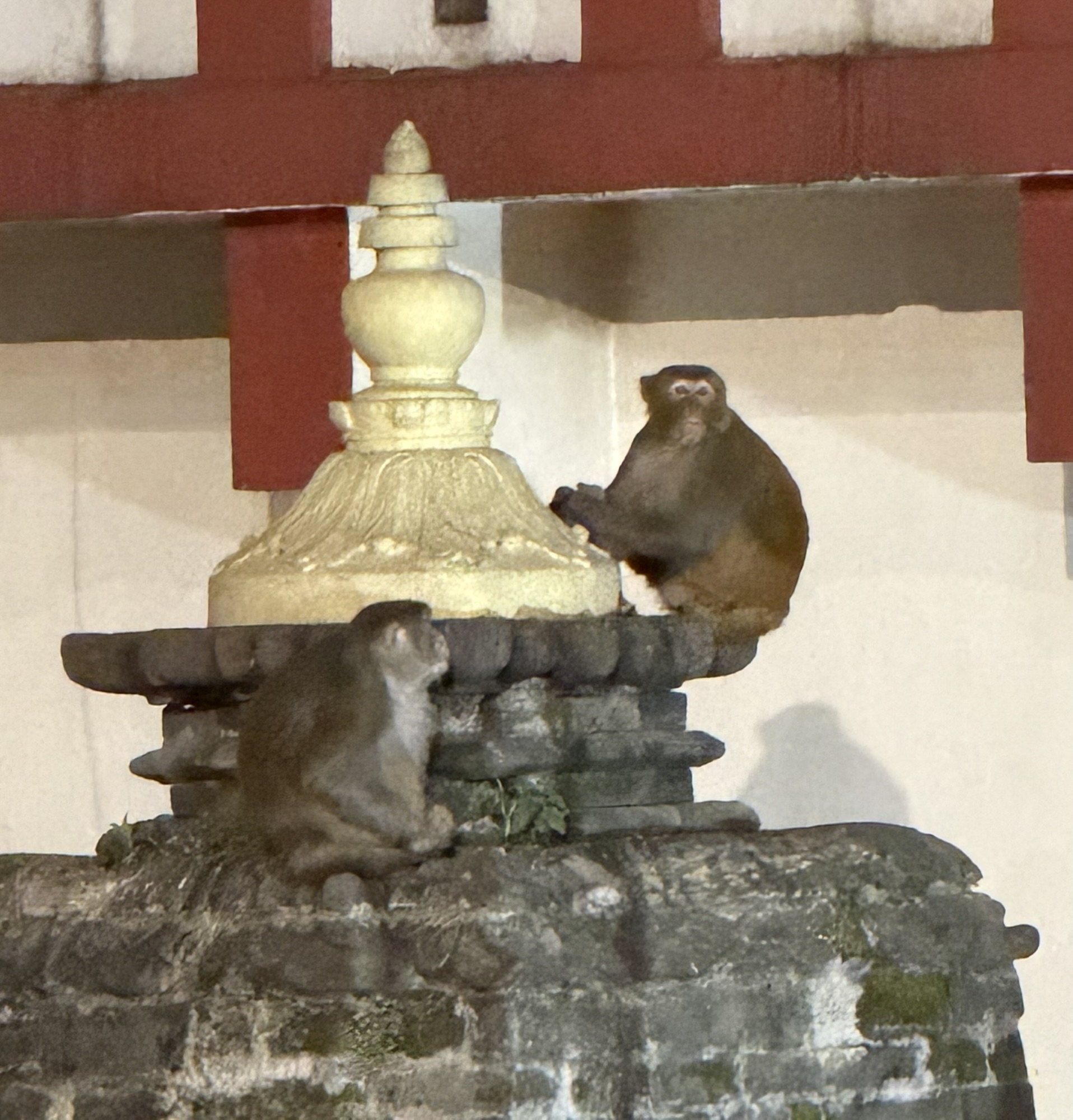
After a good night’s sleep of more hours than I’d had in a while, I thought I’d try my hand at early morning meditation. On the rooftop of the guest house as I sat on my yoga mat, I found myself very frustrated that I could not quiet what’s been called the “monkey mind”. It’s nearly impossible for me to totally clear my mind of thoughts about what’s next, what I hear, what I think I need to do, the business that is everyday life. I think I understand that the practice of meditation is exactly that… a practice… it takes practice. I’m still unclear as to the benefit, but I’m hoping that spending a little time each day clearing my mind, resting my mind will be a healthy thing.
We went to the central area of the city that has the most famous royal palace remains – Patan Durbar Square. This UNESCO World Heritage Site contains the historic royal palace complex of the ancient Patan Kingdom (also known as Lalitpur, meaning “City of Beauty”). The architecture – despite having to be rebuilt after major earthquakes – are amazing examples of Newari (central Nepal culture) craftsmanship, with multiple temples, palaces, and courtyards featuring intricate wood carvings, stone sculptures, and metalwork that date back to the 17th and 18th centuries. The square houses many temples including the Krishna Mandir; the Vishwanath Temple; and the Jagannarayan Temple (dedicated to Vishnu as Narayan, the creator of the universe). Dating from 1565, this is the oldest temple in the square. The temple completely collapsed in the 2015 earthquake, but restoration has been done with recovered and new components.

Right next to that complex was a street with some of the more upscale artisans and authentic textiles, etc. We ended up at a studio that both created and sold singing bowls. A singing bowl is a type of bell that produces sound and vibrations. Singing bowls sit with the bottom surface resting on a table or the floor. When you strike or circle the rim of a singing bell with a mallet, it emits a rich, harmonious tone that resonates for a long time. The sounds are believed to help with meditation by helping you focus and creating a tranquil environment. The vibrations from the bowl can also be felt physically, adding a tactile element to the meditative experience. Singing bowls are usually made from metal alloys, including a mixture of bronze, copper, tin, iron, and other metals. They’re often handcrafted, which makes each bowl produce a unique sound and can also be made from crystal, which tends to produce a purer, more sustained tone. Larger bowls typically produce lower, more grounding tones, whereas smaller bowls create higher, more uplifting sounds. We learned how these bowls are used for therapeutic purposes. A few of us bought bowls – the one I purchased for my brother was a “full moon” bowl that was created only on days/nights of full moons…it took at least four months to make it.
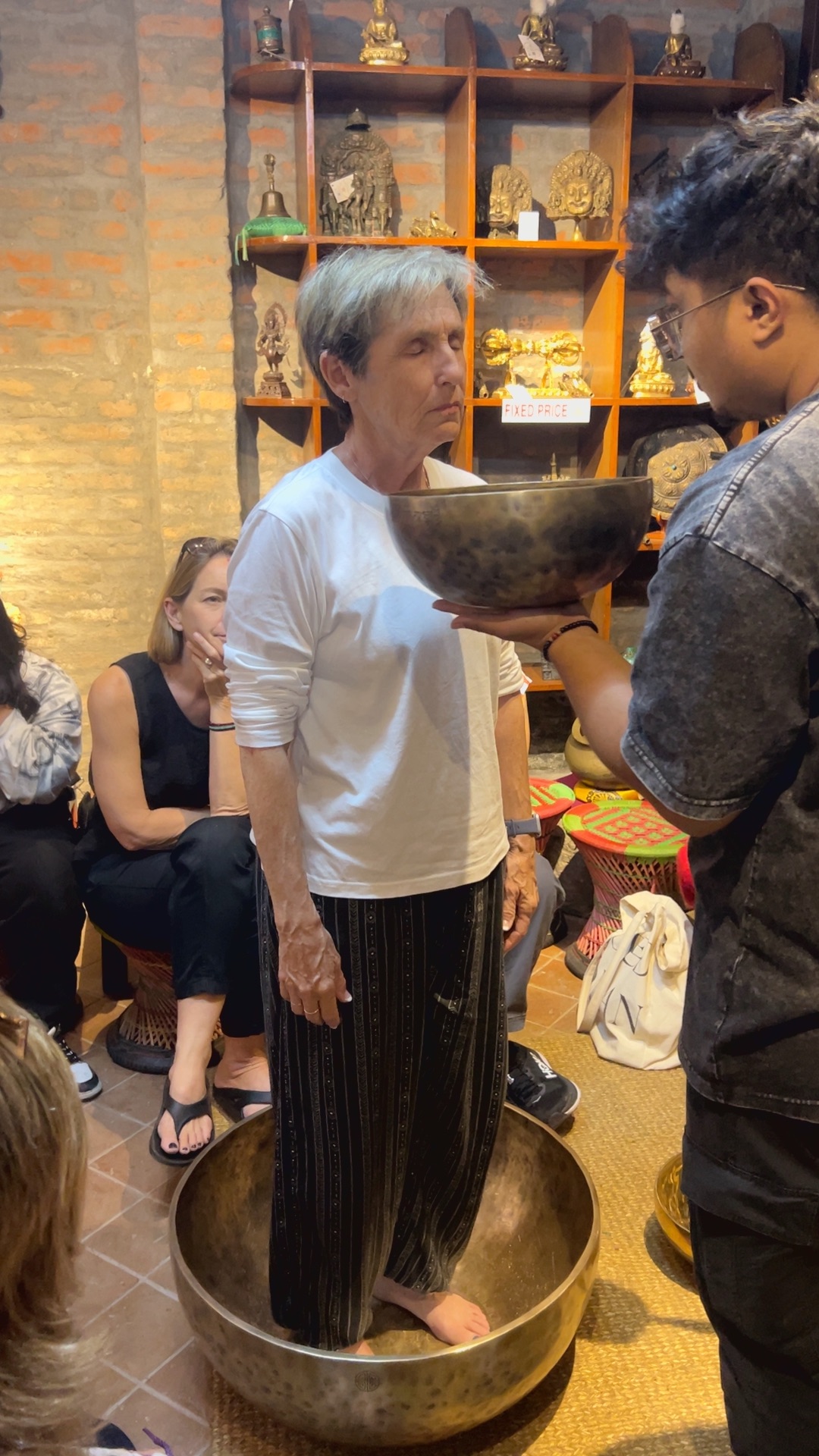
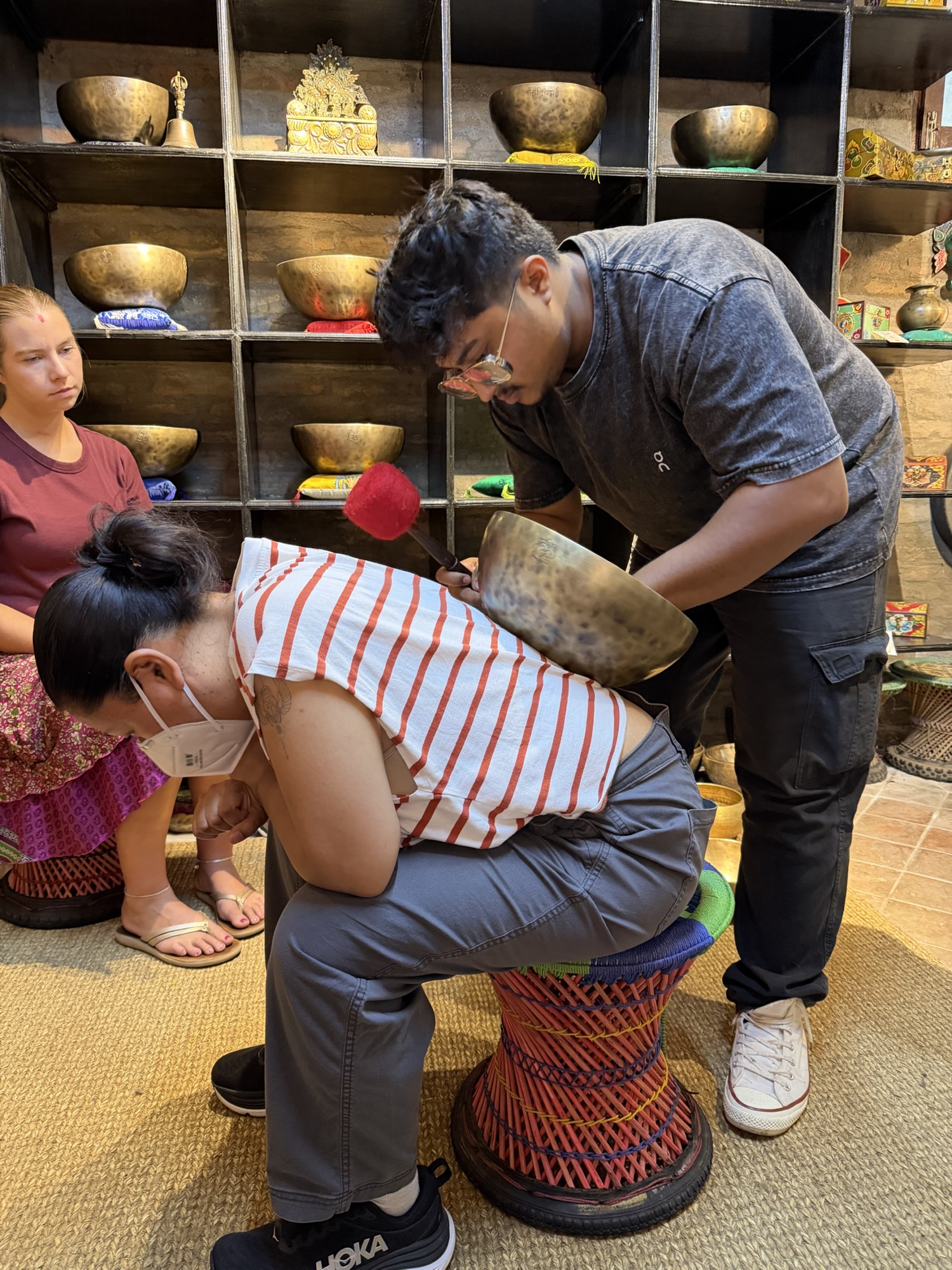
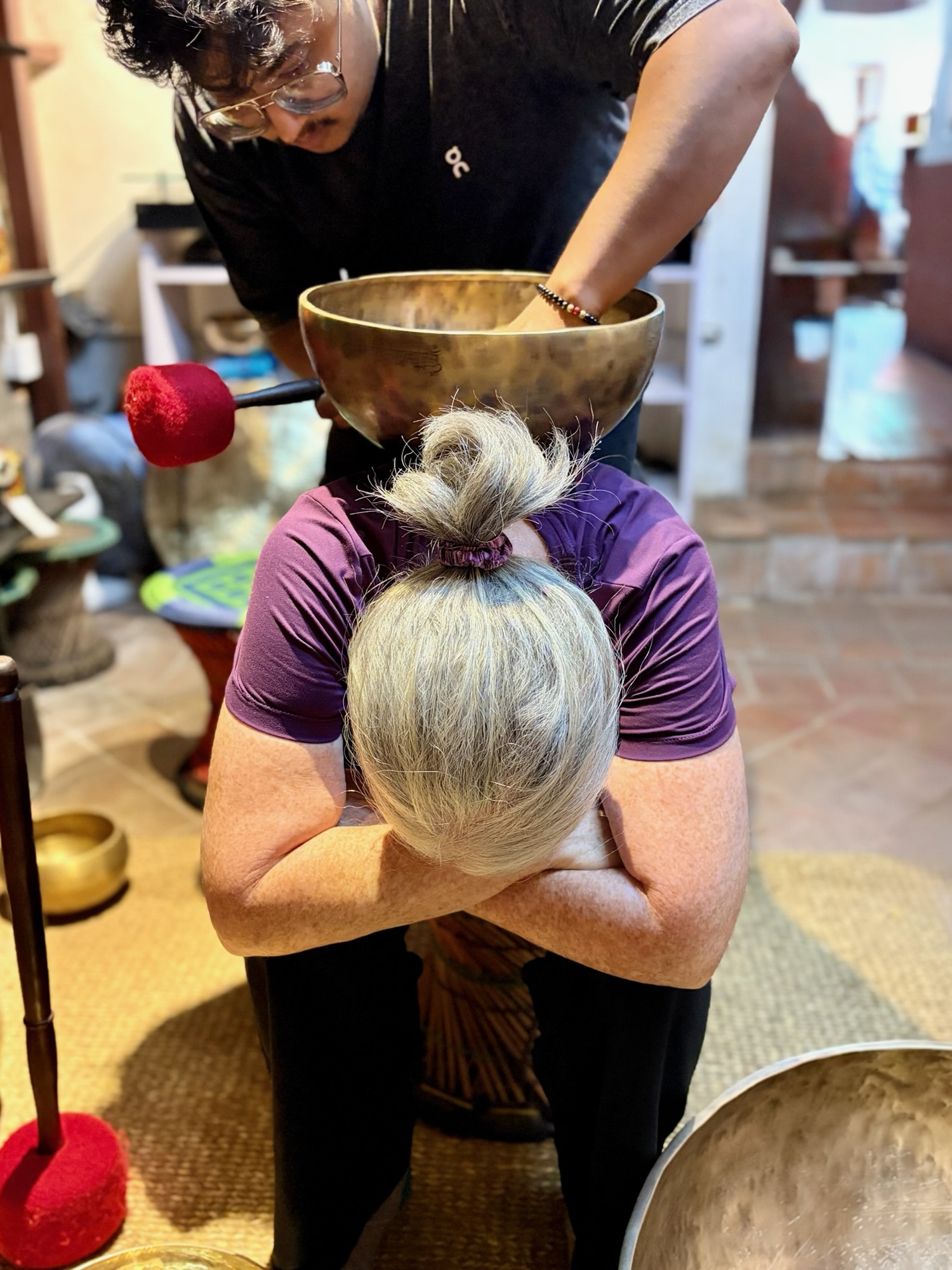
A few of us bought bowls – the one I purchased for my brother was a “full moon” bowl that was created only on nights of full moon…it took at least four months to make it.

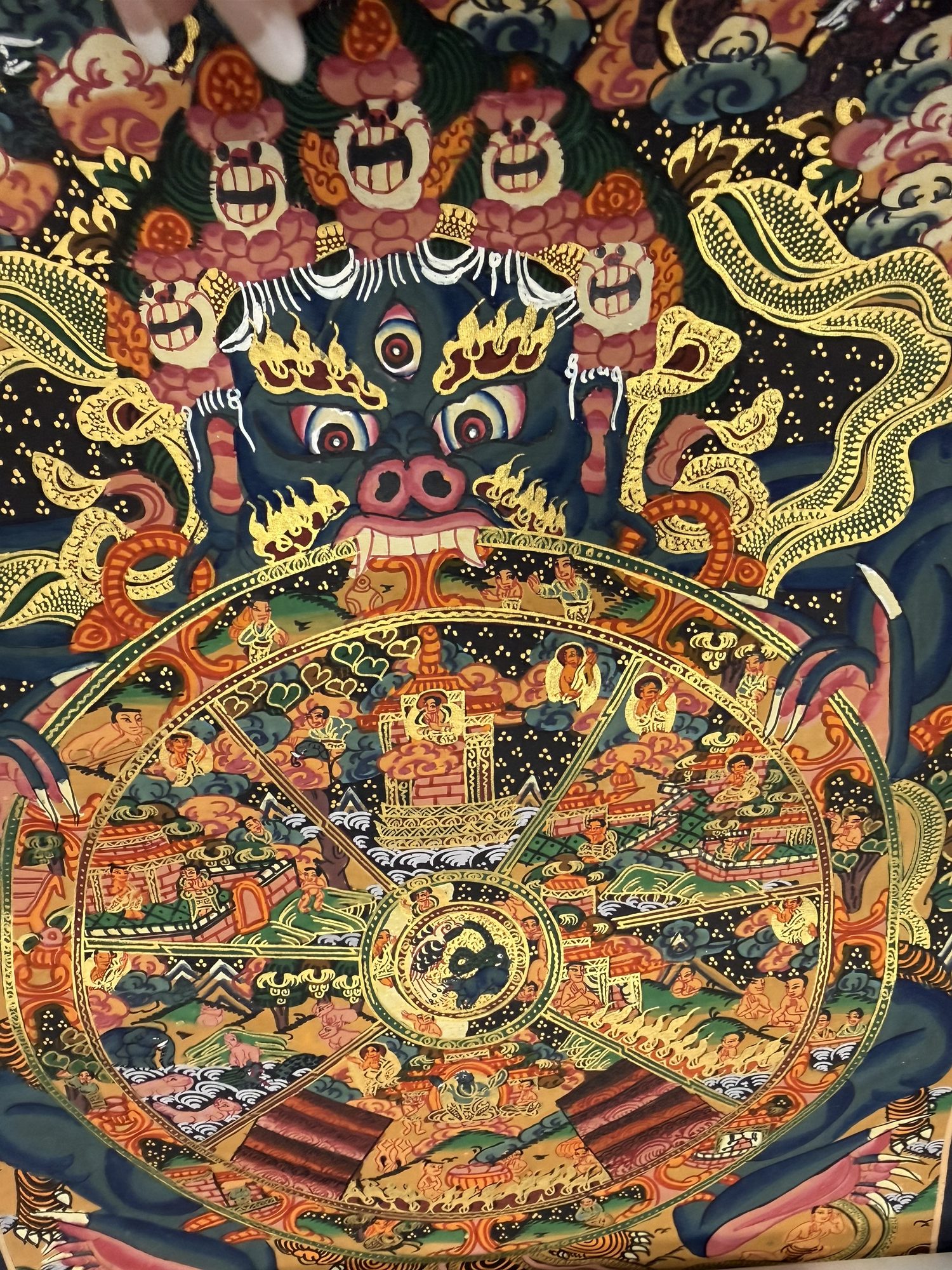
Strolling the side street near the square, we spoke with an expert in Buddhist philosophy who is also a painter of mandala‘s and other symbolic items. I had a long conversation with this expert and ended up purchasing two small paintings – one of the Wheel of Life and one of a traditional mandala. He was kind to text me explanations in English about the symbolism in each of the paintings.

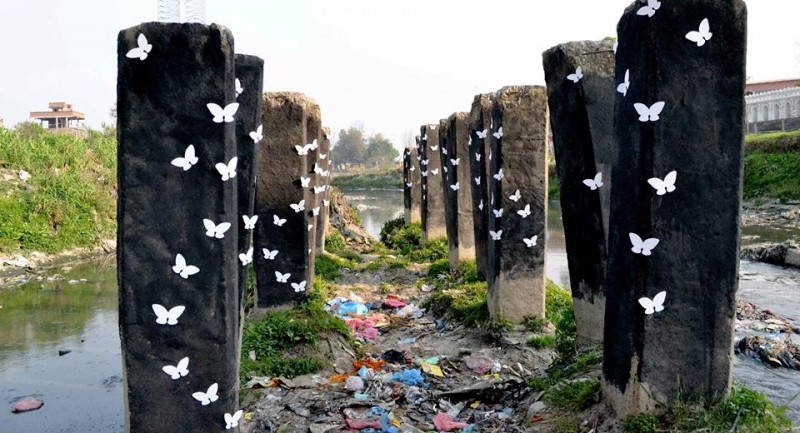
We had lunch at a small hotel that Laura had stayed in on one of her early visits to Nepal. Attached to it is a lovely café where we had an incredible conversation with Milan Rai, a Nepalese contemporary visual artist, based in Kathmandu. Milan is best known for his white butterfly project, which has been employed across the globe. His white butterfly movement focused on bringing random joy to those who receive small white butterfly cut outs that he created. The white butterflies have come to represent values such as hope, peace and harmony. Mila shared his incredible personal journey from being what he described as a “lost soul” to spending most of his adult life trying to realize his creative side. He’s now written a book about this journey, and I hope to read it at some point.
Pashupatinath Temple and Aarti Ceremony
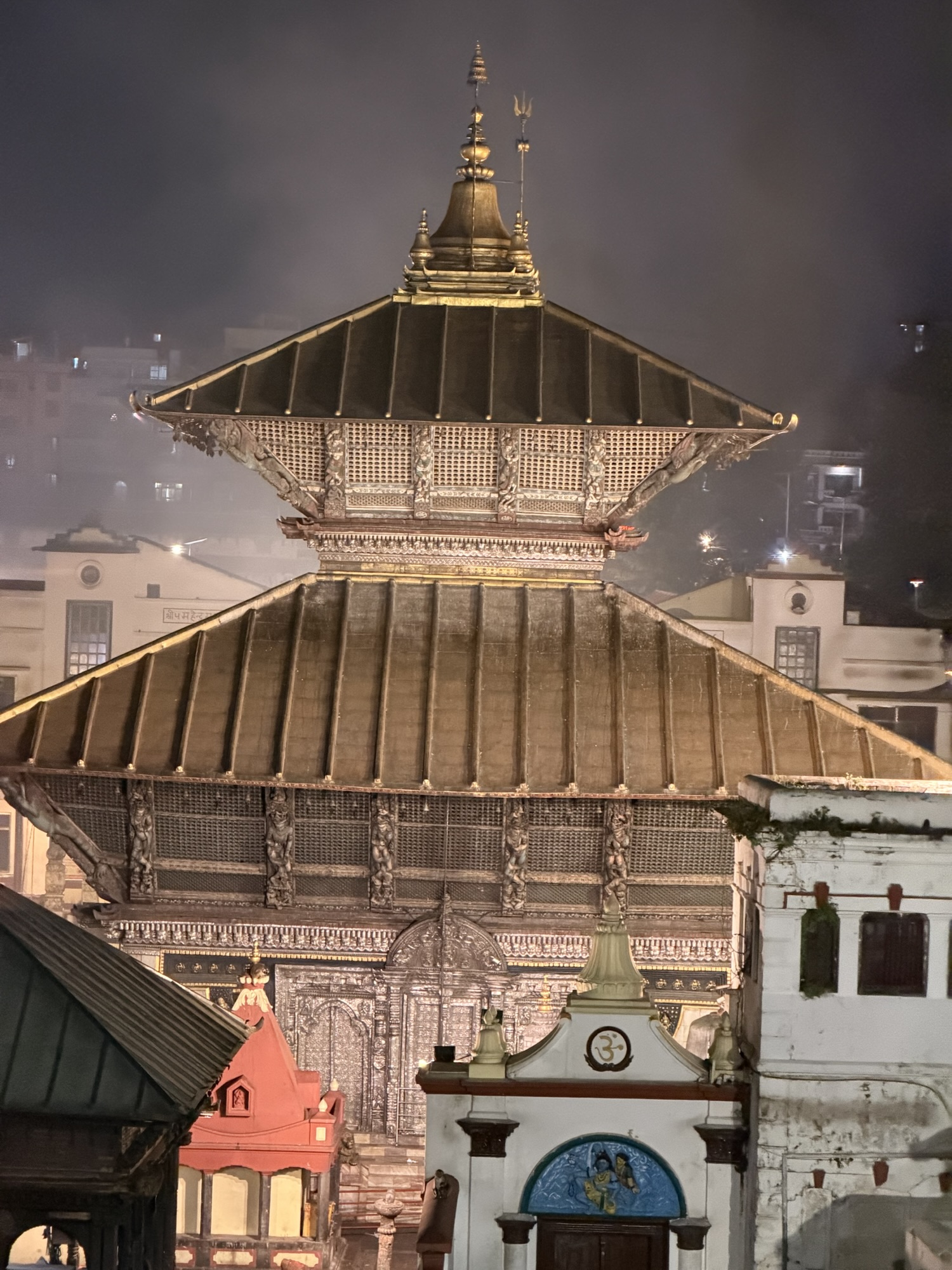
We spent the evening at Pashupatinath witnessing the very sacred rituals surrounding the death of Hindu people. This is one of the most sacred Hindu temple complexes in the world and a UNESCO World Heritage Site, dedicated to Lord Shiva in his manifestation as Pashupati (Lord of Animals). Located on the banks of the sacred Bagmati River, this is Nepal’s most important pilgrimage site for Hindus, and devotees come from all over South Asia.
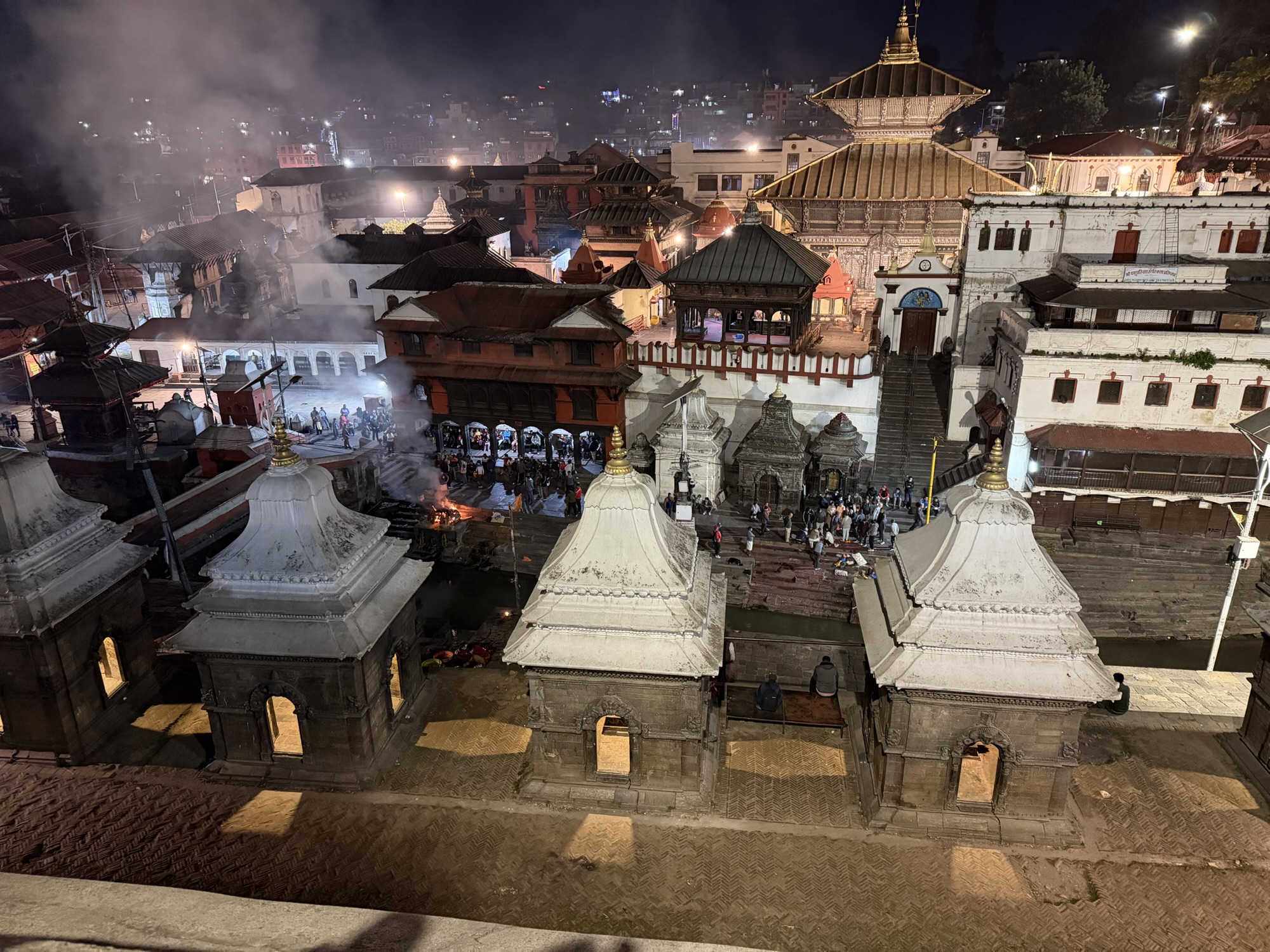
The main temple is restricted to Hindus only, but the surrounding complex is open to all visitors. There are many smaller shrines, ashrams, and sacred bathing spots along the river. The Bagmati River, though much smaller than the Ganges to which it flows, holds similar sacred significance for Nepalis. We were all sitting on huge concrete steps that are part of the temple complex going back thousands of years. This particular site is considered extremely powerful in terms of the energies that circulate and are released during these rituals. We saw people meditating by the riverbank.
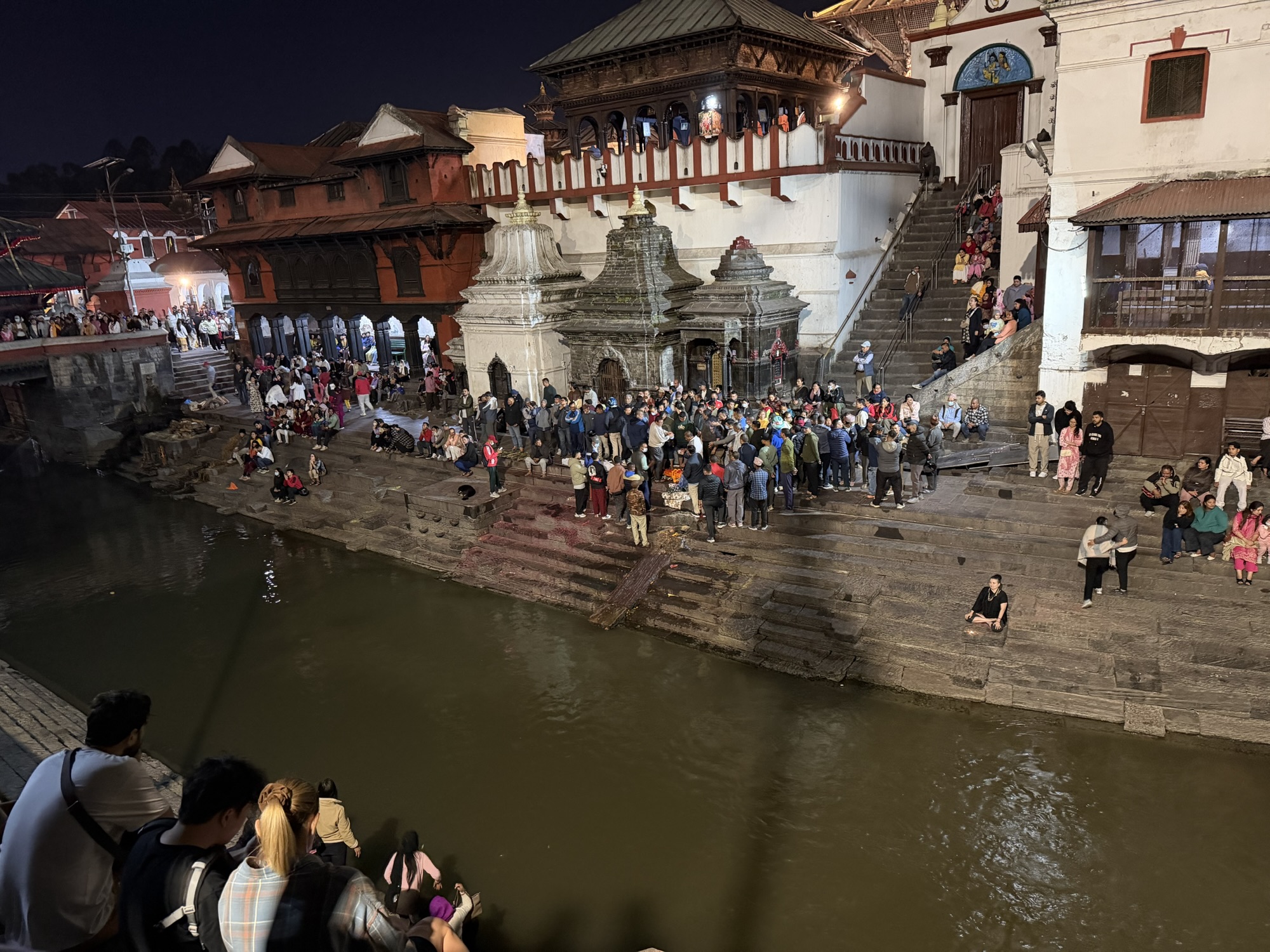
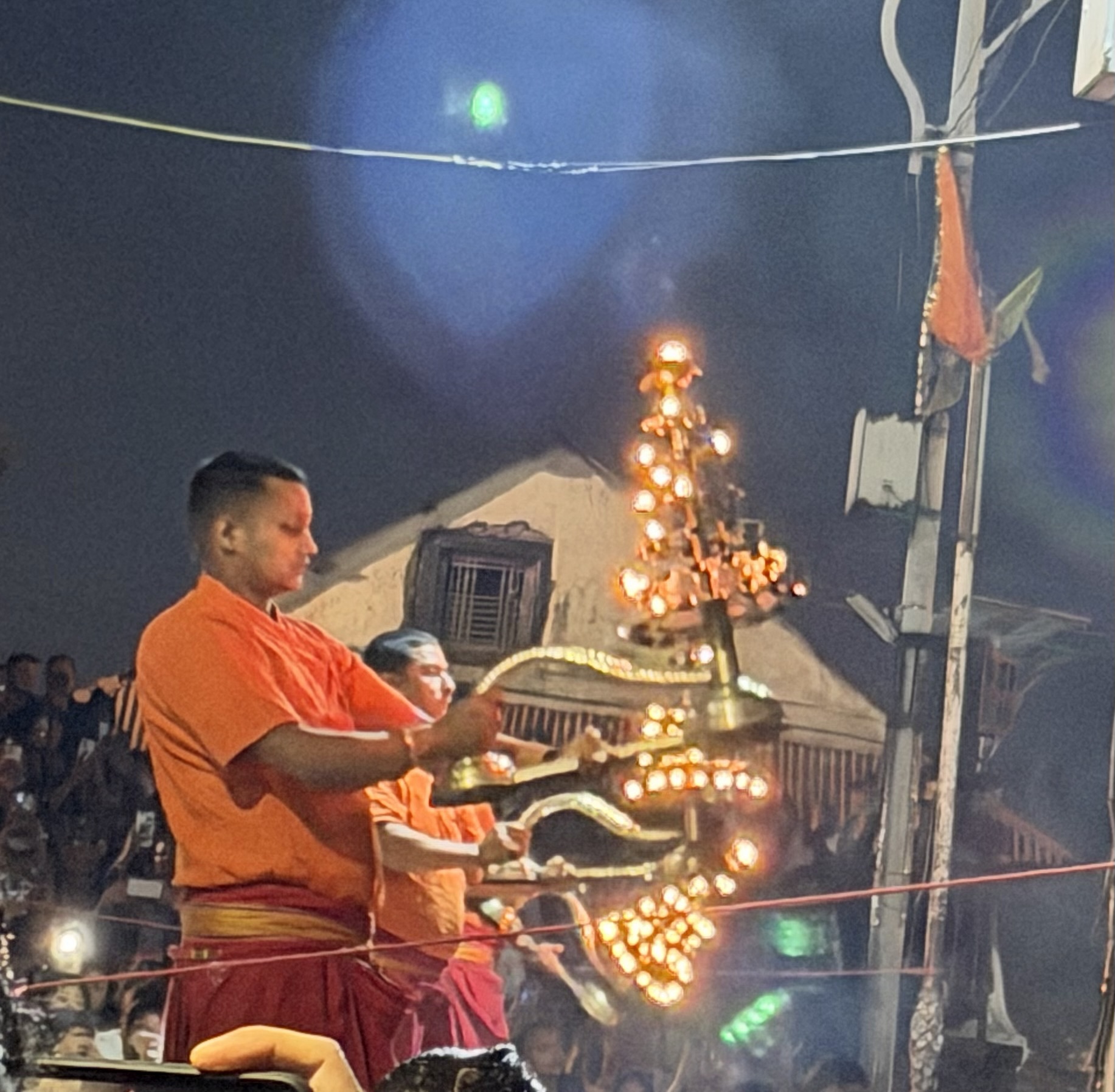
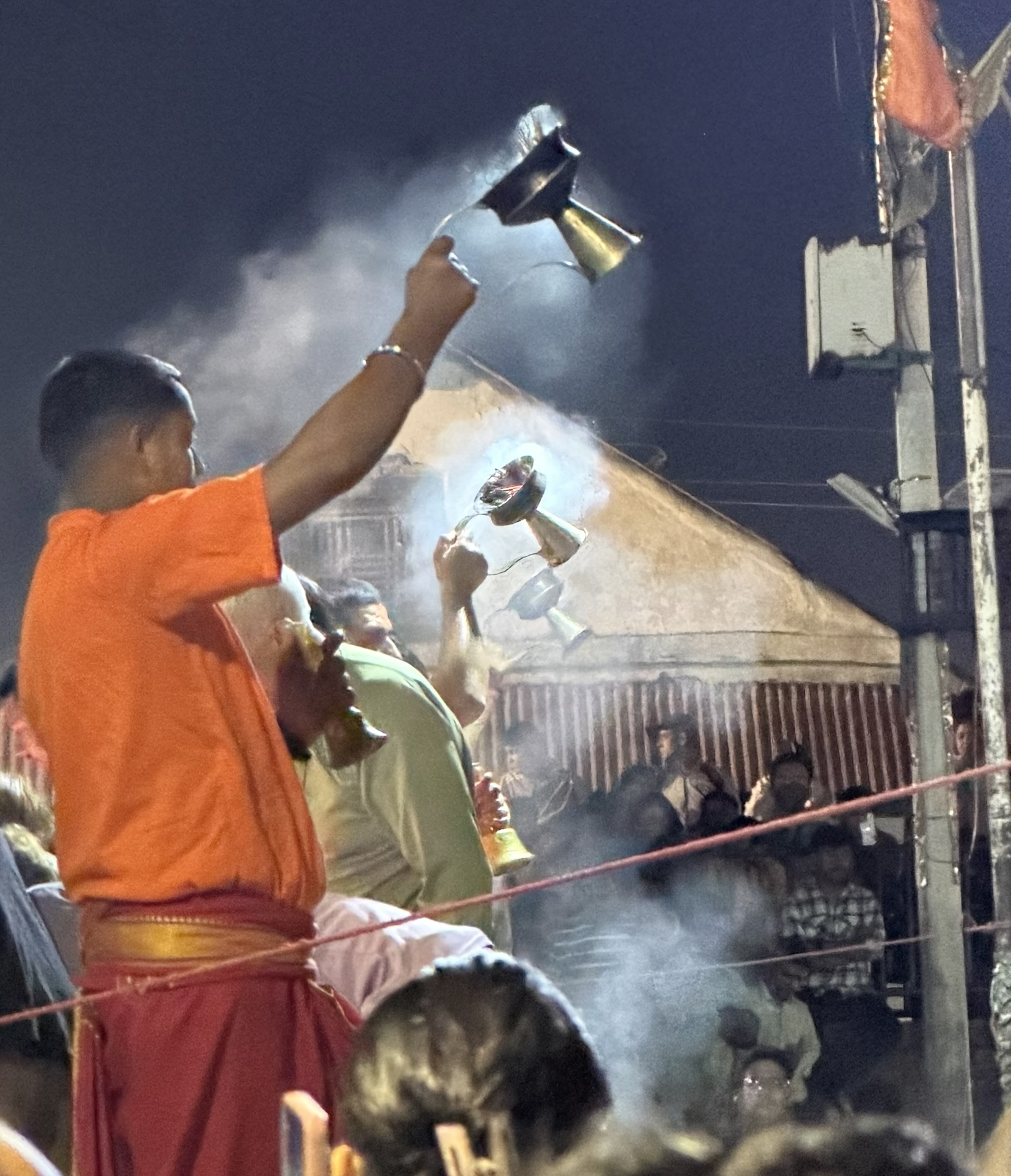
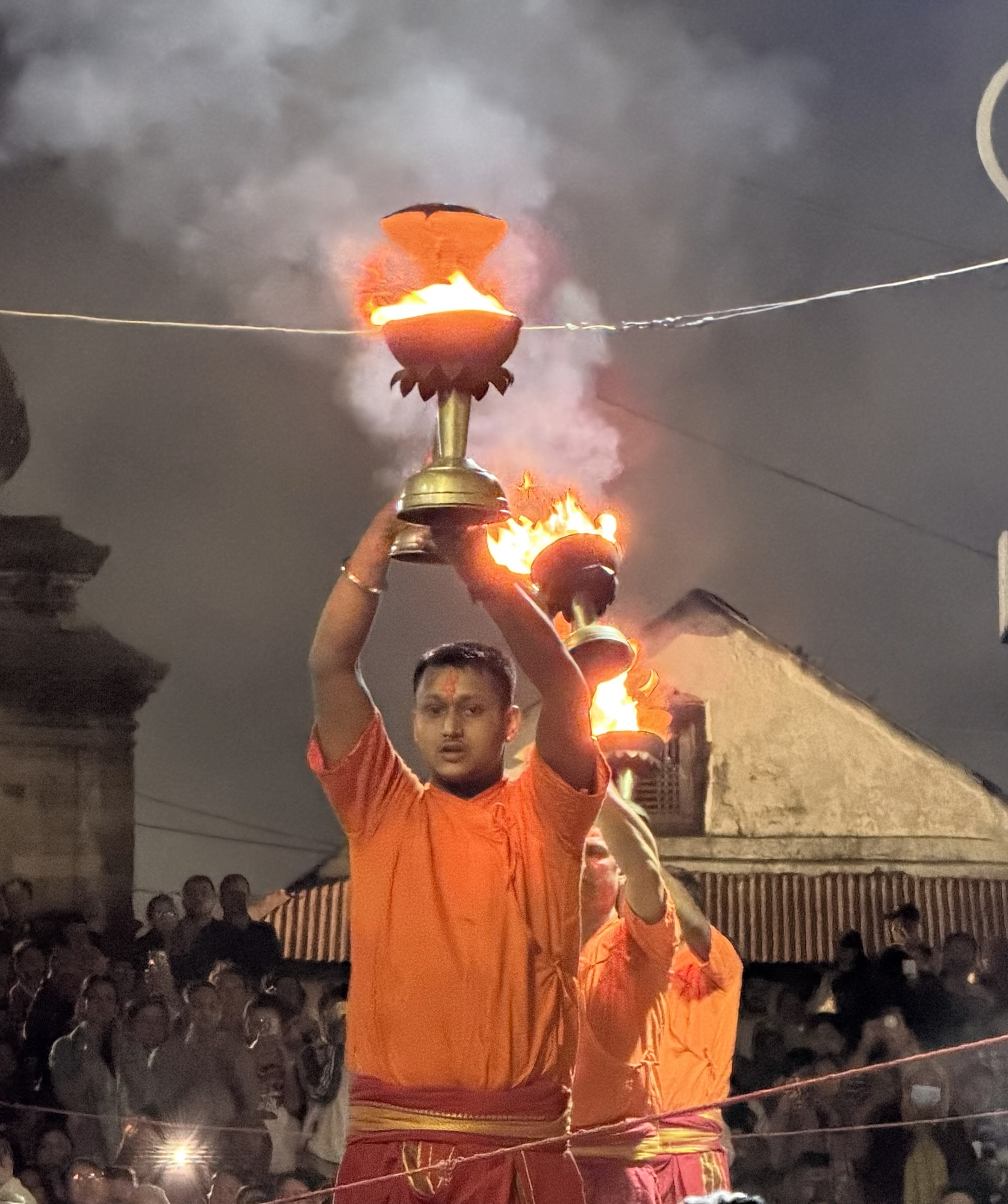
The Aarti devotional ritual is performed at dusk when priests in traditional dress offer elaborate prayers with fire lamps, bells, and chanting. This daily ritual connects participants to an ancient tradition that has been performed for centuries, offering visitors a deeply spiritual experience regardless of their own religious background.
Along the opposite riverbank, cremation ceremonies took place – echoing Hindu beliefs about the soul’s journey and the impermanence of physical existence. This involves a processional that must take place within 24 hours of death. The body is wrapped in white sheets and brought to the riverside. It is cleansed by family members, then the body is re-wrapped and taken to a platform where a fire is built and the body is burned. This whole process is witnessed each night by thousands of people lining the riverbank. Atop one of the temple buildings we spotted some monks performing what is called the “death meditation” where one must watch with open eyes the entire body burning process.

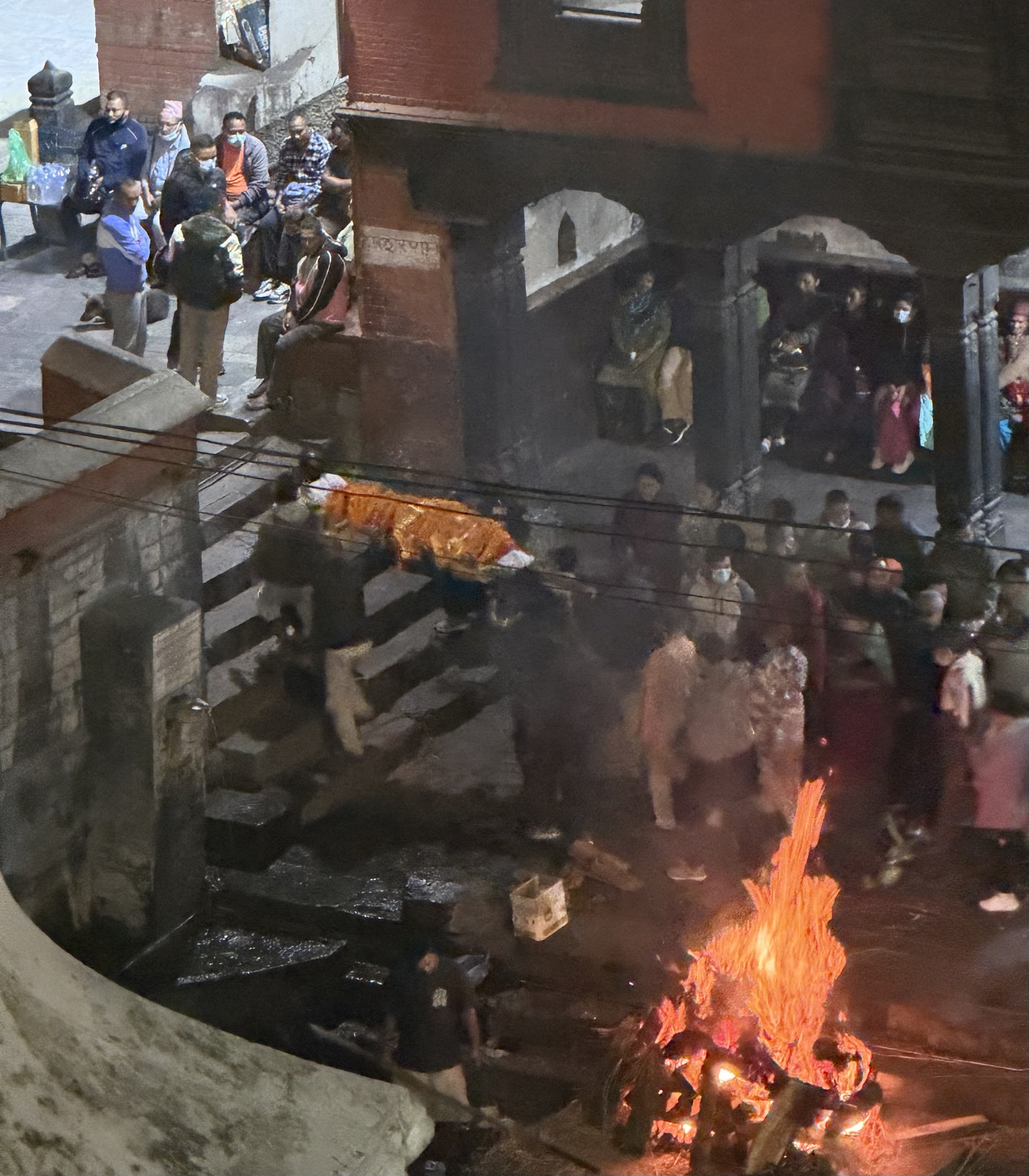
I walked away from this evening with the sense that this part of the circle of life is intentionally shared by the entire community and it appears to be both supportive for the families Involved as well as an opportunity to gather as a community.


 Living La Vida Loca
Leave a comment