
It would take a Herculean effort at this point to document all the incredible experiences we had and sights we saw while in Puglia. We visited a number of lovely smaller cities during the week we were there, and I’ve collected a few choice photos to share. The memories that stick with me…
Trani: A small city with an incredibly rich Jewish history. Dating back to the 11th century there were 200 Jewish families living there. By the 12th century, Trani already housed one of the largest Jewish communities of Southern Italy and was the birthplace of one of the greatest medieval rabbis of Italy. While still a lovely city to wander through, only one of four synagogues is still in use by a very small enclave of Jews still there. We arranged in advance to visit the tiny sanctuary and our guide was a knowledgeable (but non-Jewish) woman who gave us a great overview of the history of this enclave. Incredibly, behind the sacred place where the scrolls of the Old Testament (Torah) are kept is a hidden portrait of the Virgin Mary! Why? It was a condition of the Jewish community taking back the venue after it kept changing hands over many centuries and wars and had been a church. Go figure.


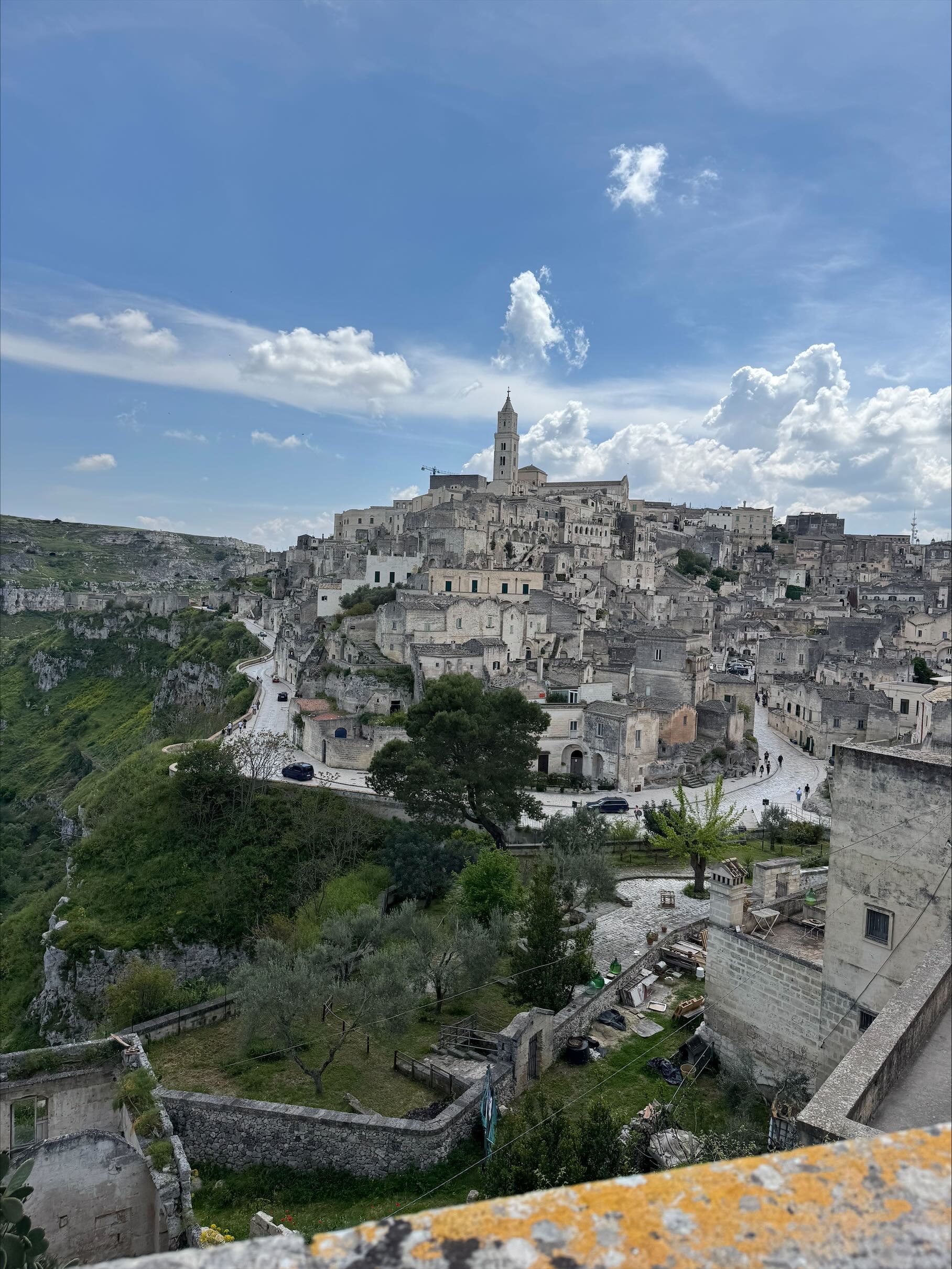
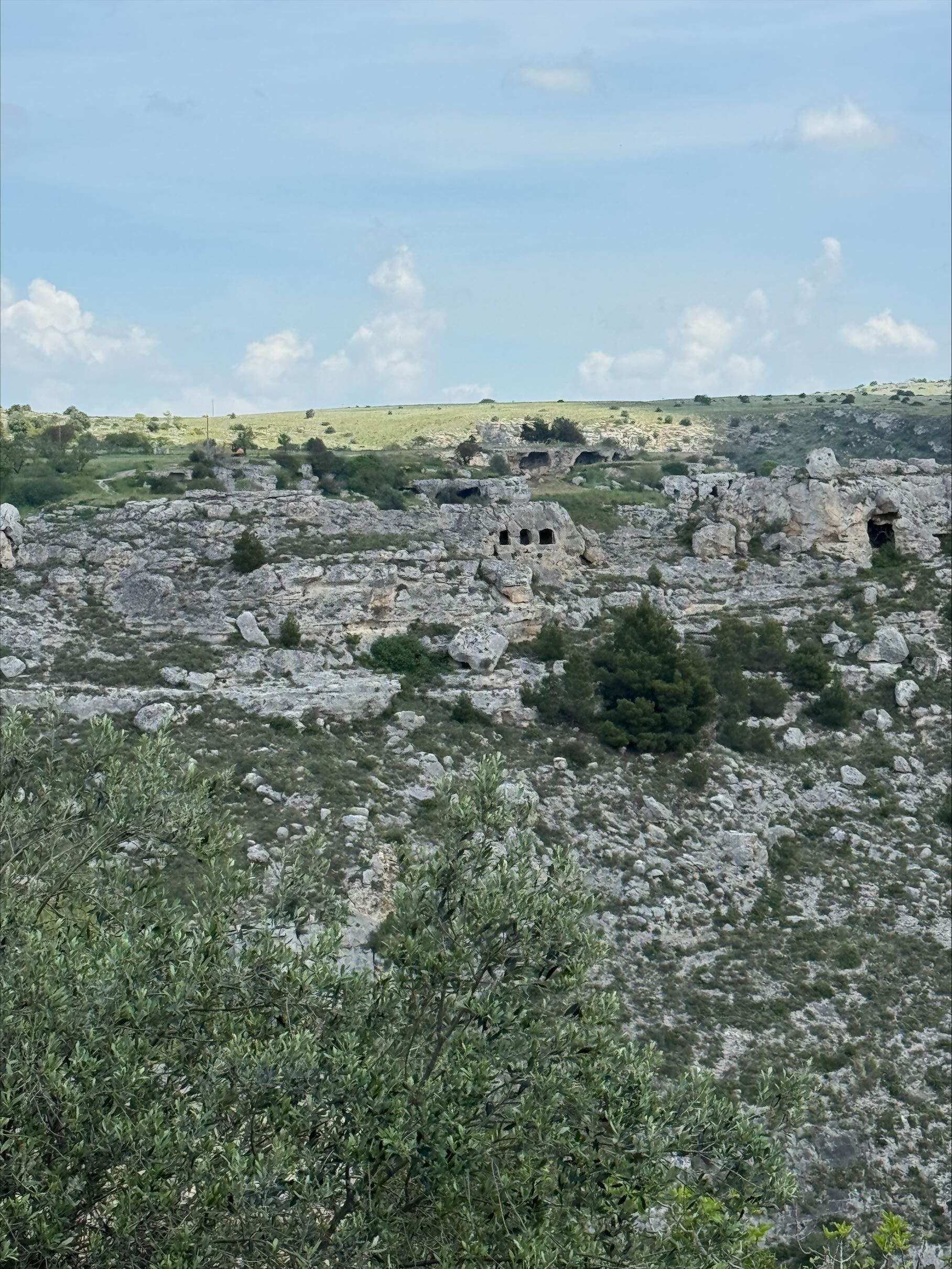
Matera: This is a fascinating city that was a series of cave dwellings many centuries ago – over time developed into a vibrant combination of ancient churches, well-preserved cave homes that tourists can look in on, upscale B & Bs, hotels, restaurants, and incredible vistas across gorges that surround the city. The city of Matera had been considered the “shame of Italy” for centuries because the infant death rate was very high and people were very poor. It was a city of cave dwellers with the city itself carved into the mountain sides. Some of the cave areas cannot be accessed but large portions of the city can be wandered through.
In the 1950’s the government offered residents homes in newer areas, but people had to pay to renovate/maintain them. Of 15,000 residents, only 2,000 now remain.
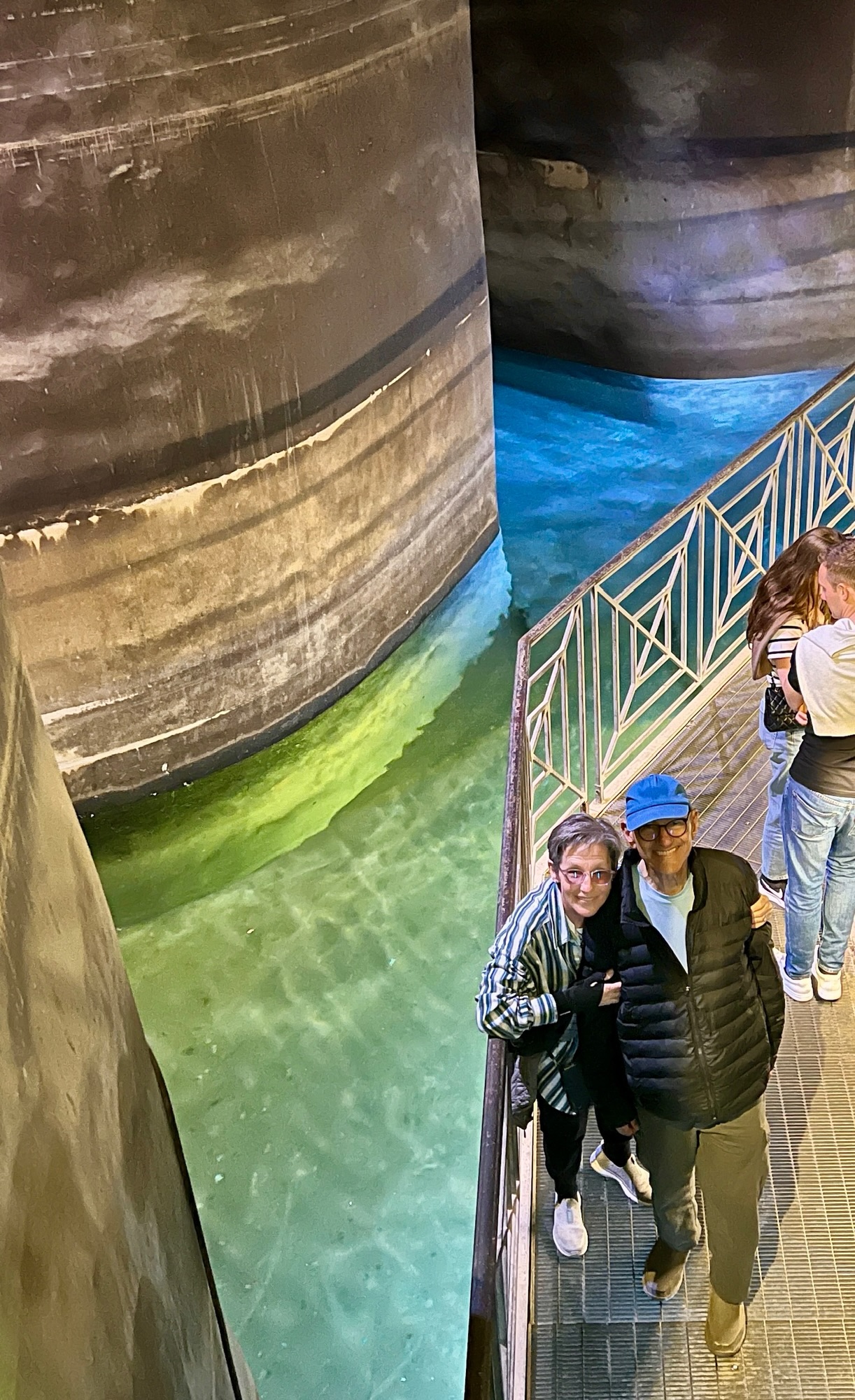
One very cool feature we visited was the underground water harvesting system in the central part of the city. The city itself and this amazing matrix of water channels is a World Heritage site. These natural cisterns/aquifers go back to Roman era.
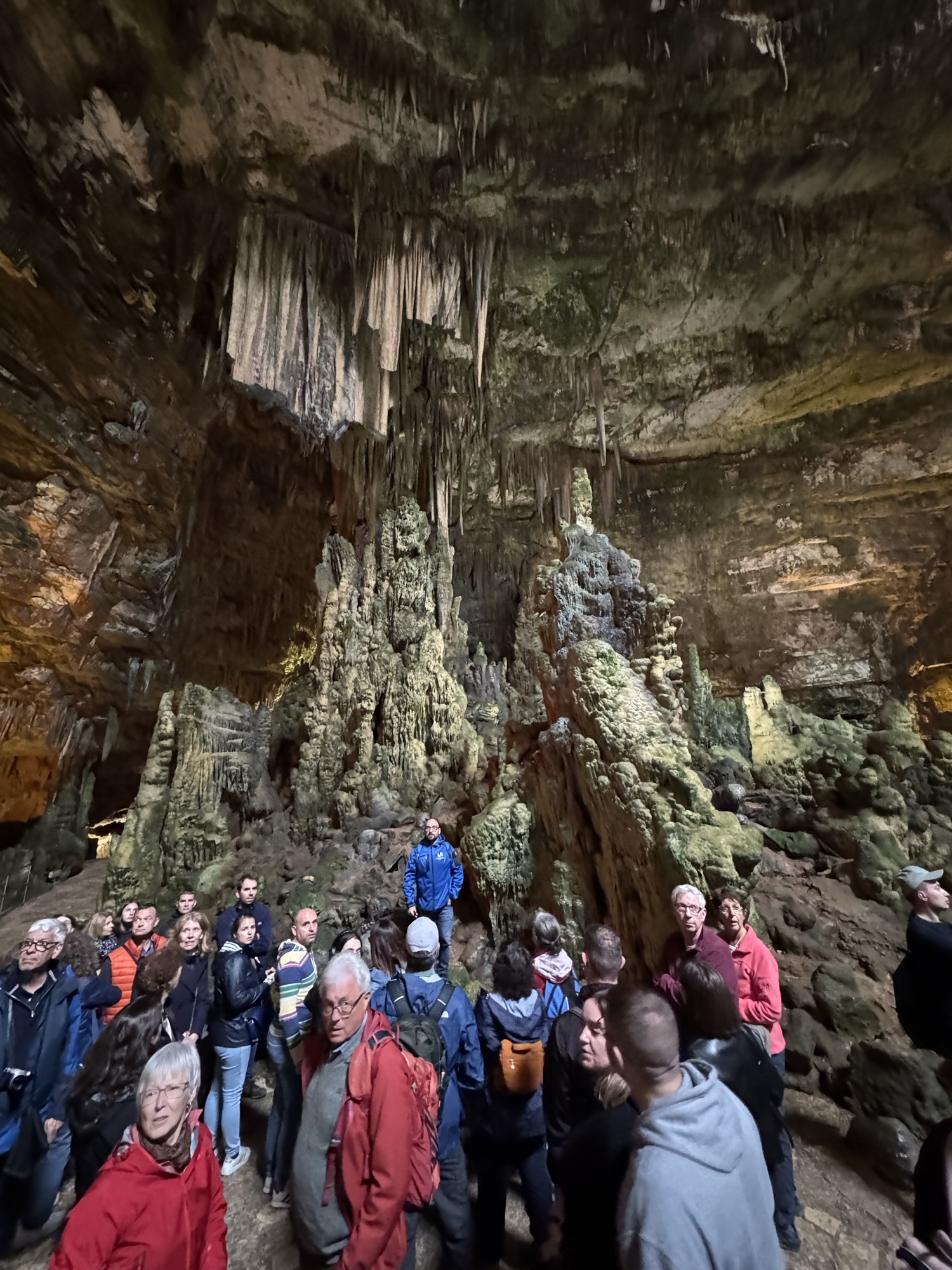
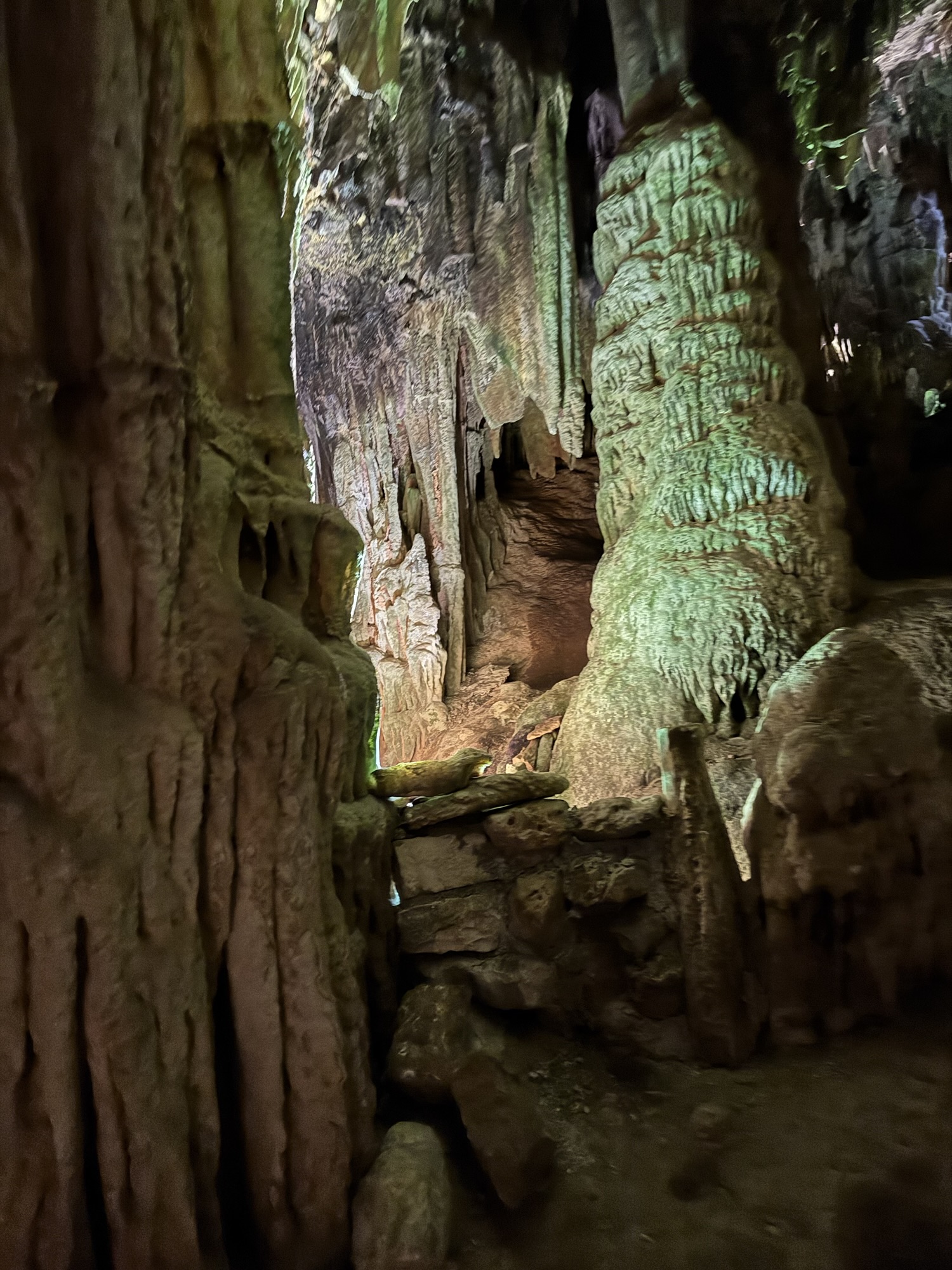
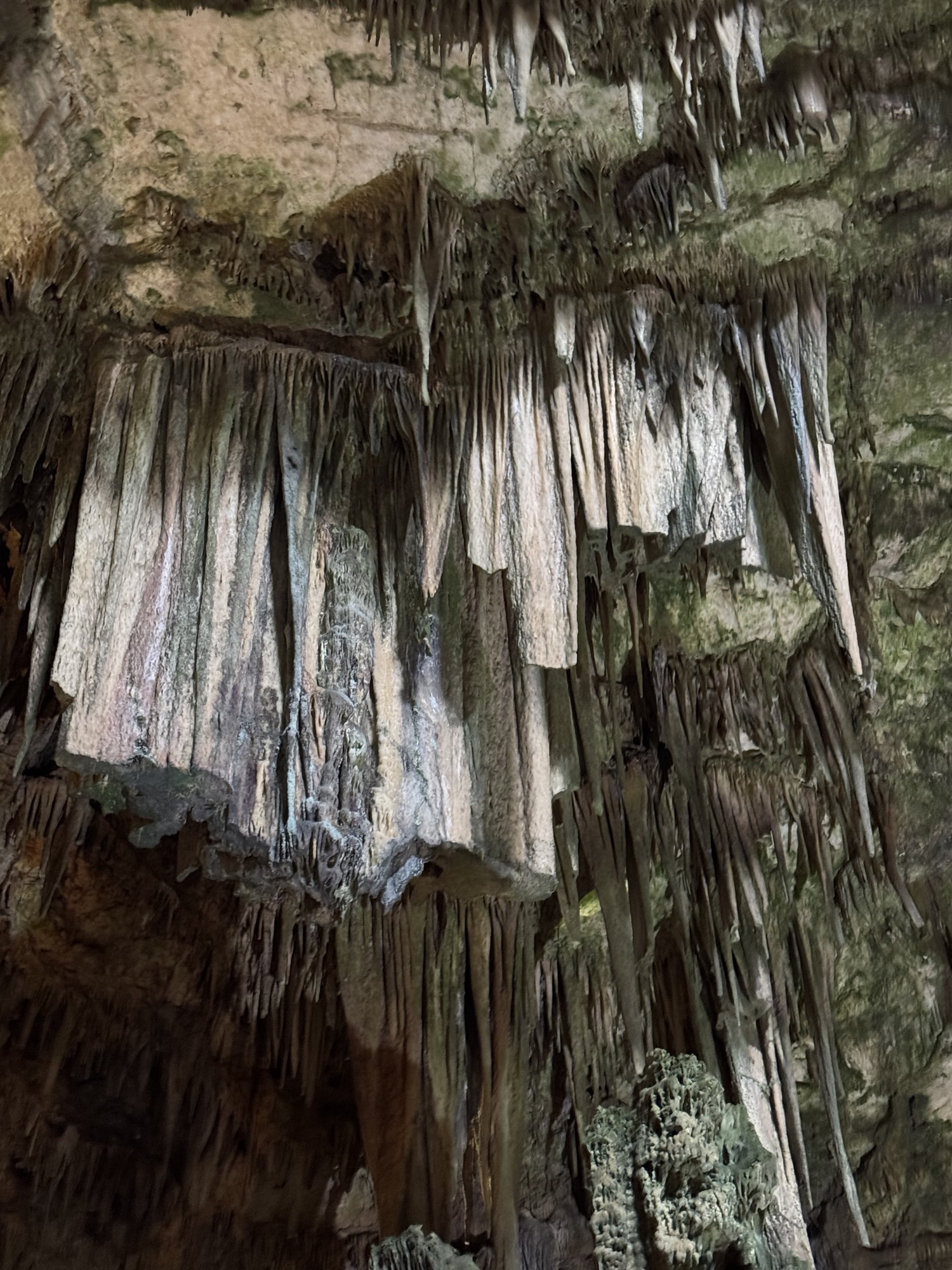
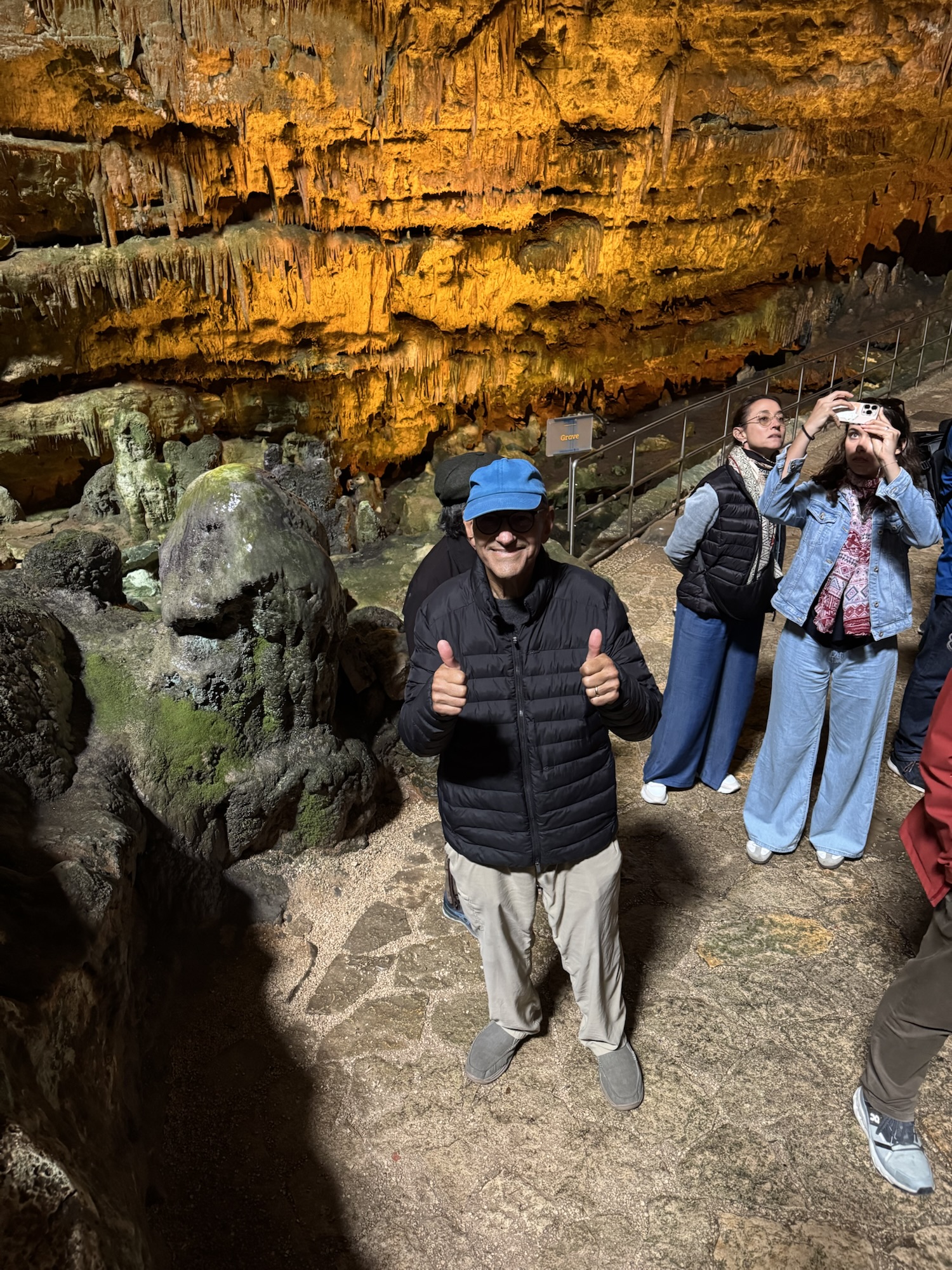
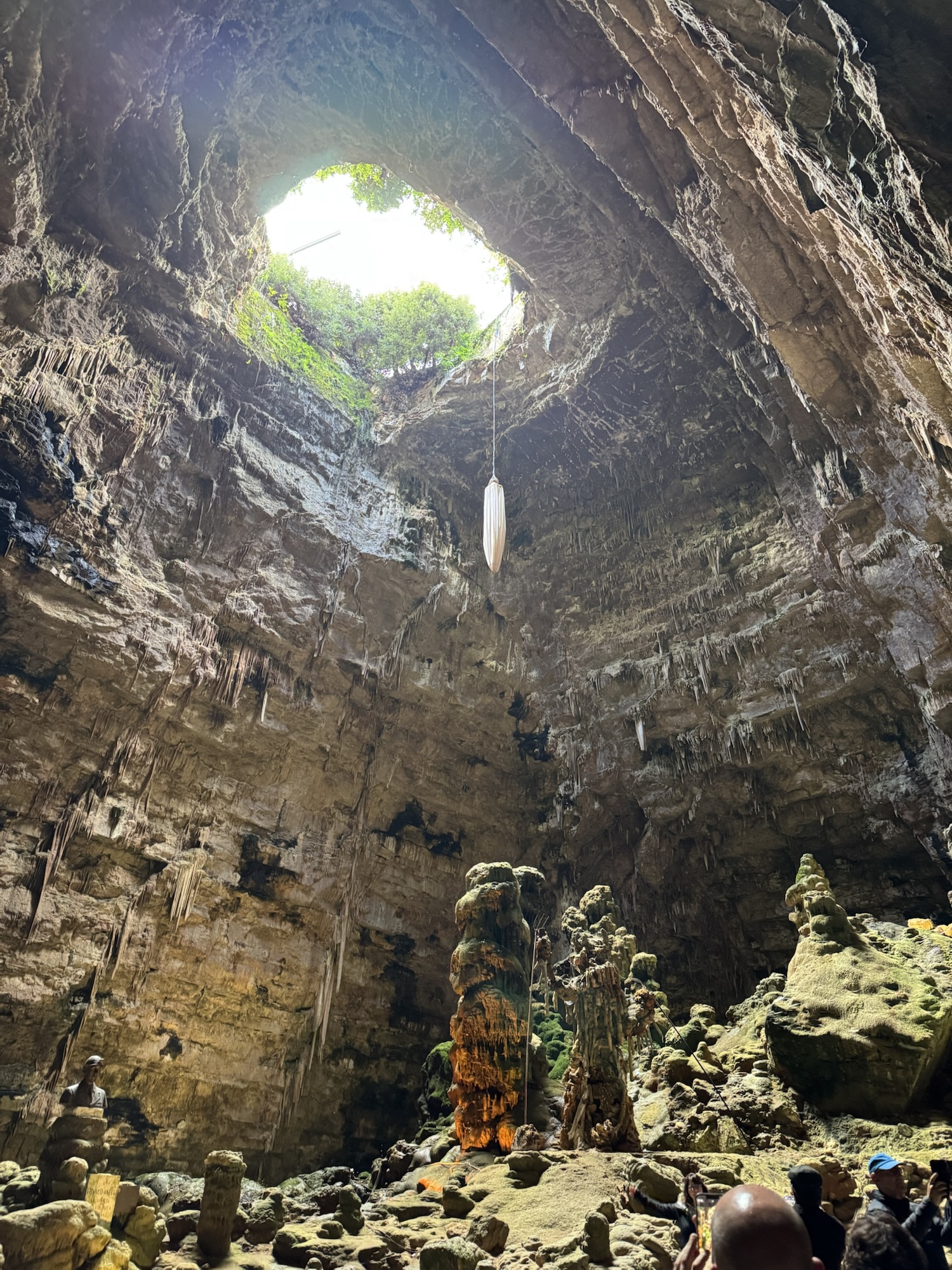
The Castellana Caves: This is a complex of underground cavities of karst origin, of considerable tourist interest, among the most beautiful and spectacular in Italy. They span a length of 11,000 feet and reach a maximum depth of 400 feet from the surface. The temperature of the indoor environments is around 61 degrees F. with amazing scenery of stalactites, stalagmites, fossils, cavities, and smaller caves. We walked down through the labyrinth that would surely make a great movie set, and there are concerts that are done in one part of the network…love to see that!
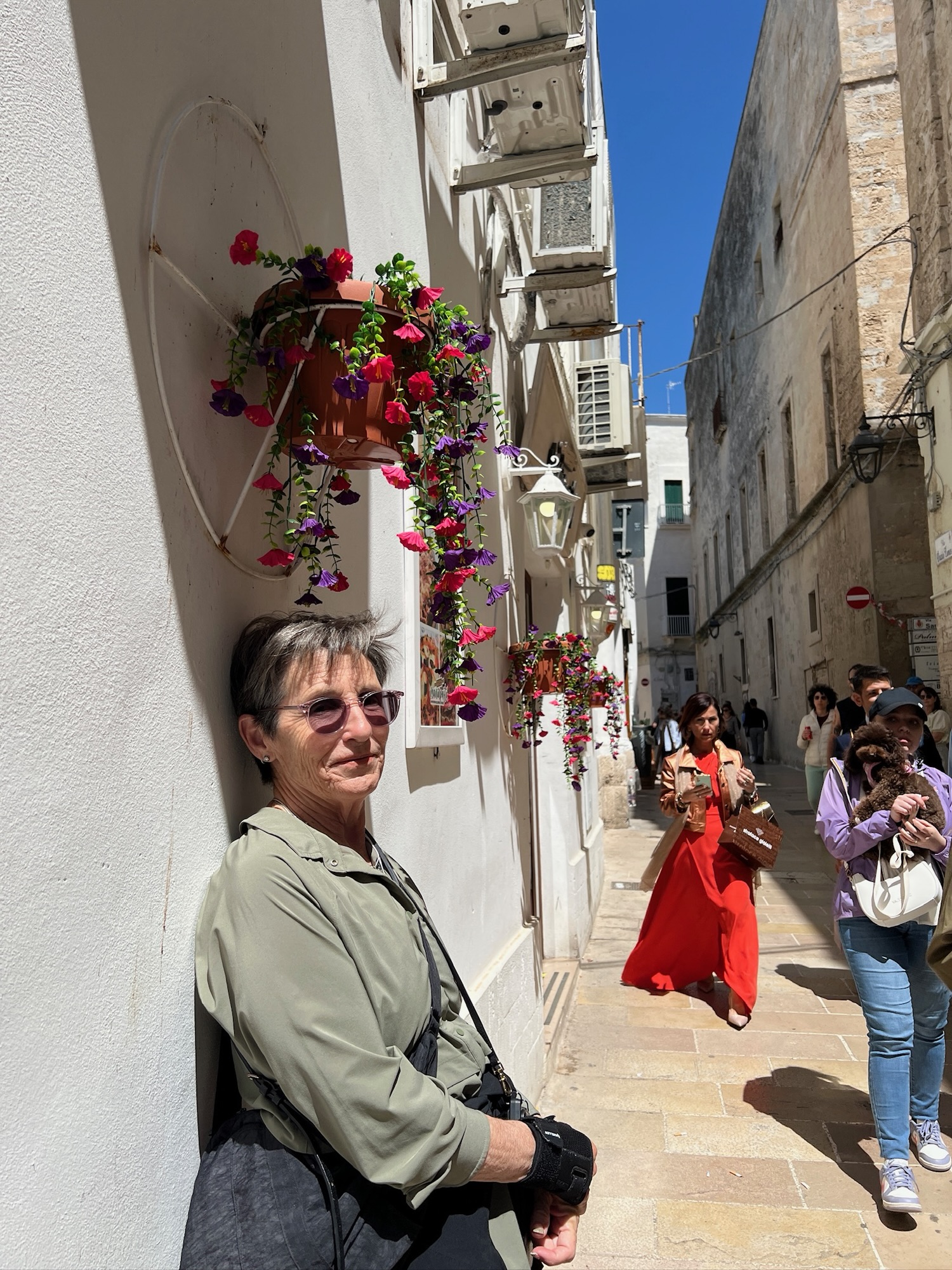
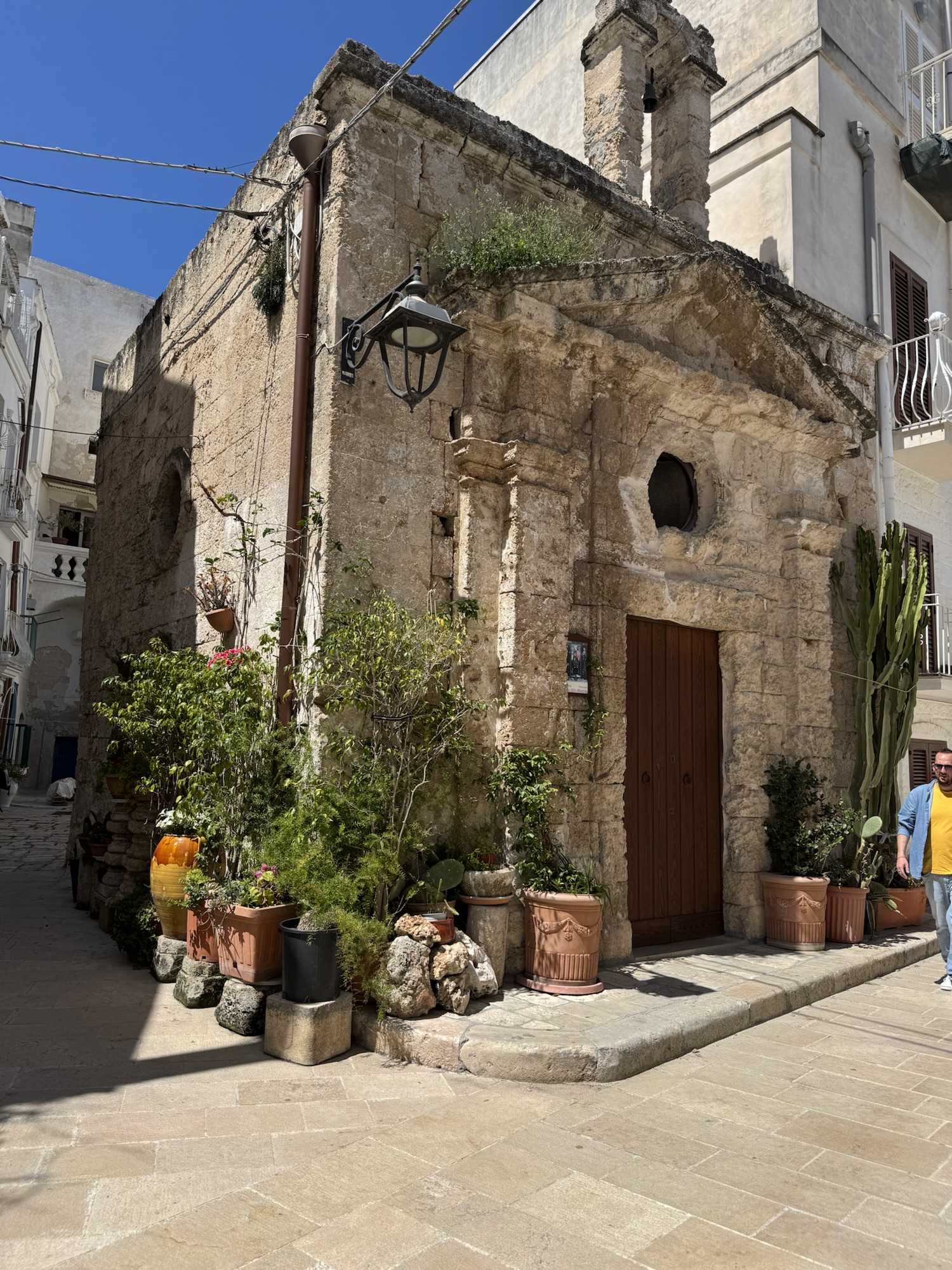
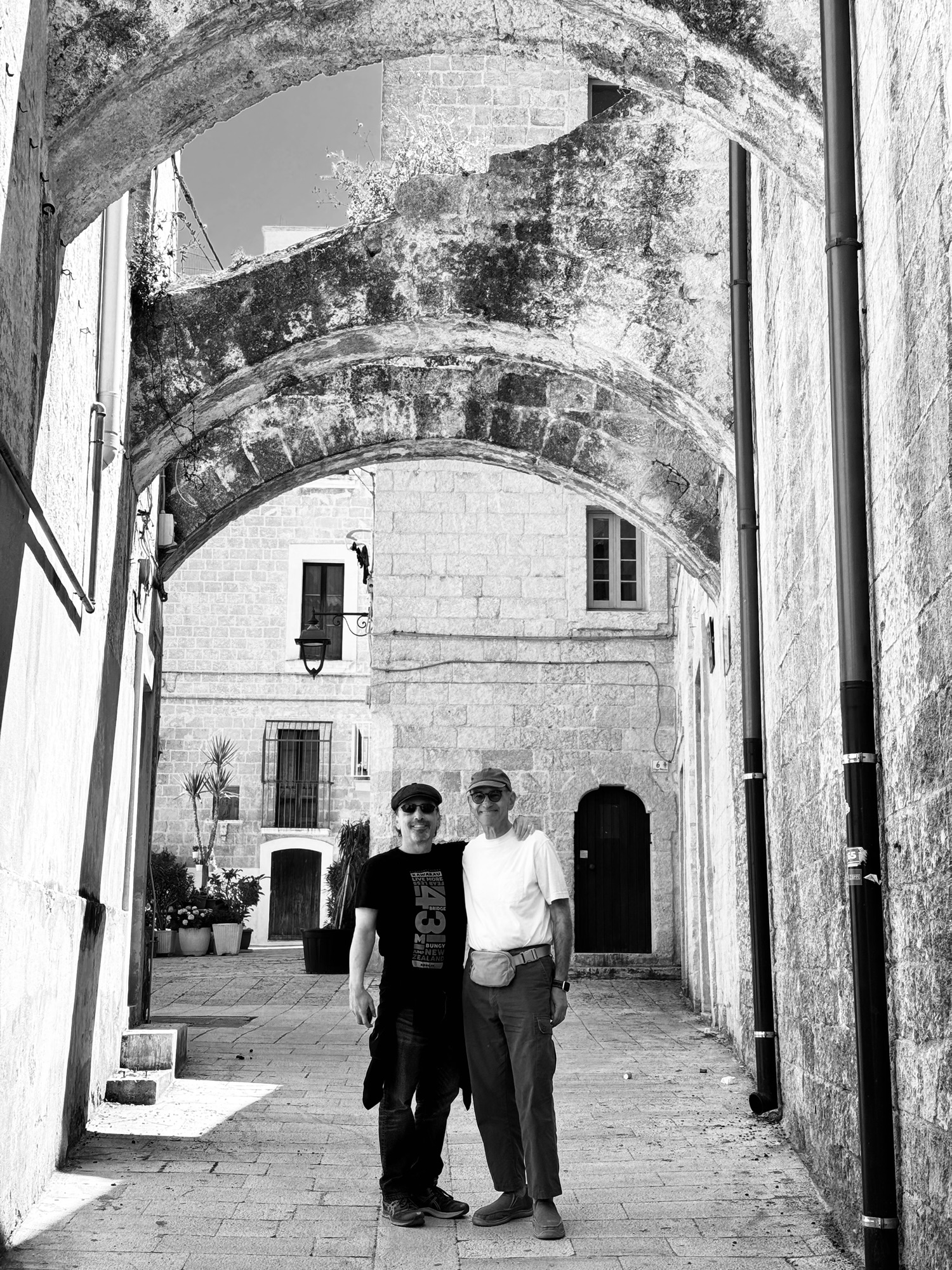
Monopoli: On our last full day in Puglia and we decided to spend it by the water. There are a few fishing villages along The Adriatic, sea – San Vito, Polignano de Mare, and Monopoli are all in a row. Since the day we wanted to visit the set of seaside villages was May Day – A big family holiday here – we aborted our attempt to go to the first two villages along with many locals. We got a quick look at one of the public beaches, which was very crowded, and decided to head to Monopoli which is a larger and apparently less crowded town. For sure, there were many Italian tourists wandering the streets as we were as the day progressed but nowhere as crowded as the beaches seem to be. As with many of the other small cities that we visited this week, Monopoli has its share of buildings dating back many centuries, overlaid with some more modern buildings that almost seem superfluous. Walking through the ancient archways and cobblestone streets really felt like we were walking back in history.
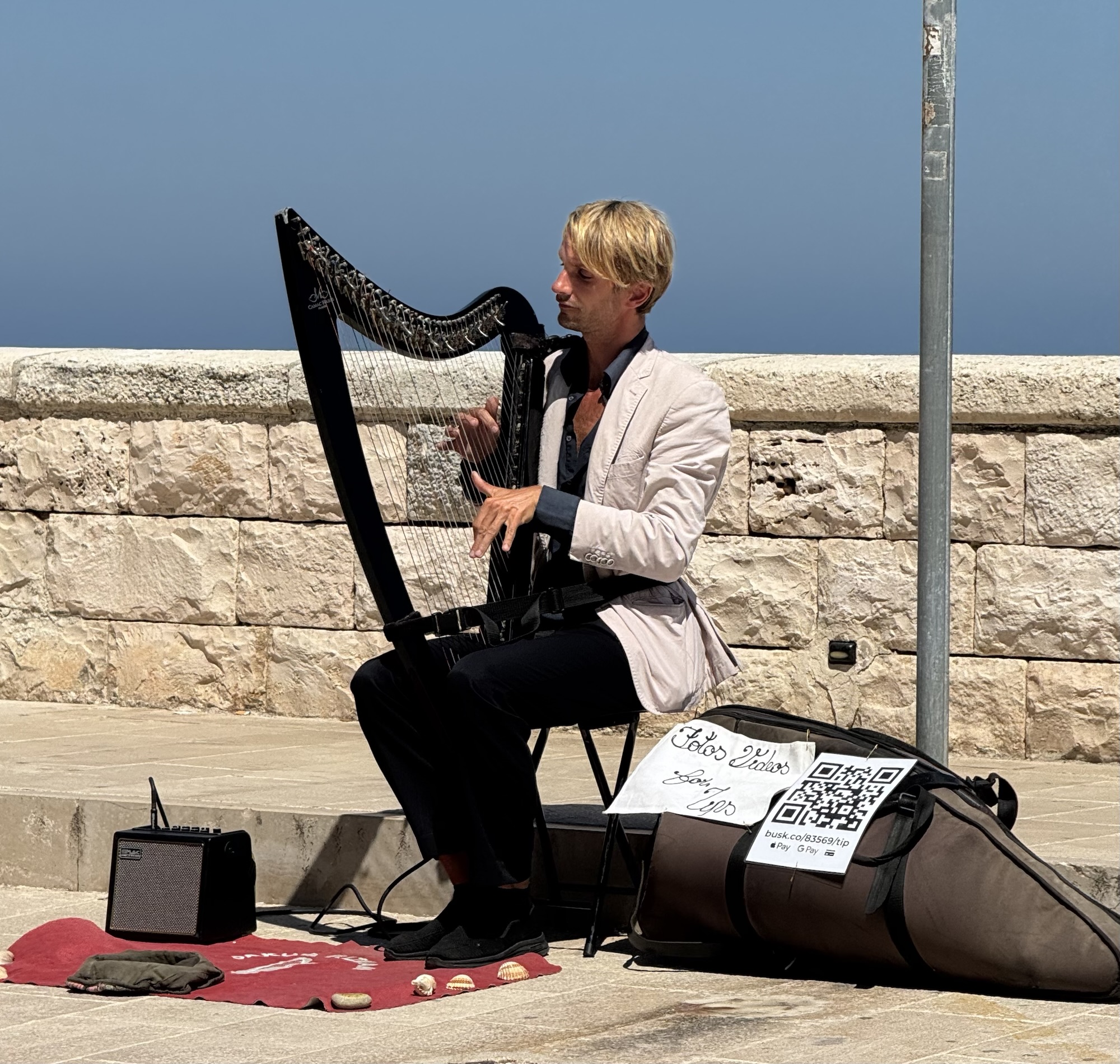
Another treat came as we rounded a corner to a small plaza, where a duet of a saxophone player and amazing singer or performing for a small café nearby.
Since the villages are known for amazing fresh seafood, we ended up in one of the quieter piazzas at an upscale restaurant sitting outdoors. The food was wonderful and fresh and the meal leisurely.
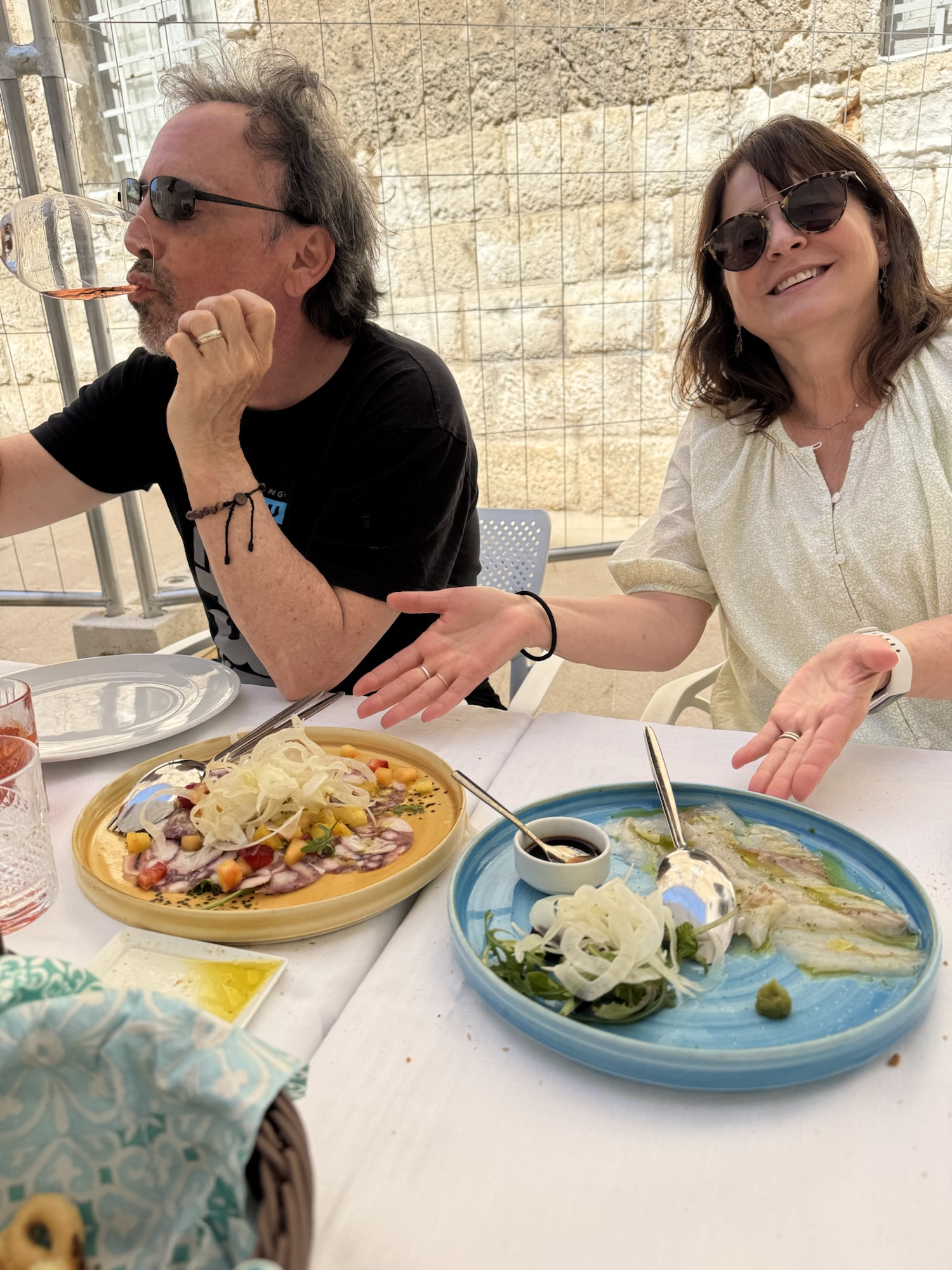
We are all very glad to have had the opportunity to explore this part of Italy. Less crowded, simpler cuisine, lush, green countryside, and really lovely people. Now onto our river cruise down the Danube!
 Living La Vida Loca
Leave a comment