

When Andrew and I first mentioned to friends and family that we were thinking about visiting Medellin, there were many raised eyebrows.
“Have you seen Narcos?” “WHY would you want to go where the cartels are shooting each other and innocents who get in the way?” “Are you going to buy cocaine???”
The fact is we had watched Narcos on Netflix and knew very well that the reputation of the city was of a drug-filled war zone. And this was true in the late 70’s through the early 90’s. The Medellín Cartel (Spanish: Cártel de Medellín) was a powerful and highly organized Colombian drug cartel and terrorist organization originating in Medellín, founded and led by Pablo Escobar. The years that this cartel reigned over Medellin were violent – bombings in public venues and squares, shootouts between warring cartels, the Colombian government, and guerrilla groups…Pablo Escobar used his wealth and power to woo the poor to view him as a Robin Hood of sorts by giving them money and land in exchange for support, thereby fractioning the violence ridden city even more as the schism between the wealthy and the poor grew starker. Fortunately, this period of intense violence is a thing of the past in the city, and we’re told that while the drug production (cocaine) is still vibrant -unfortunately – it has moved to the outlying jungles. Certainly, like any big city, there are still areas where you watch your belongings and stay aware of your surroundings more diligently, but we felt extremely safe the entire time we were visiting.
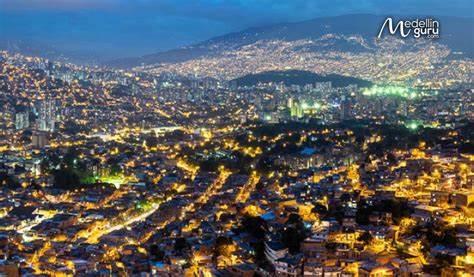
Medellin is much bigger than I imagined. Four million people live in this city that crawls its way up the sides of the Andes mountains that surround it. The drive into the city center was a beautiful spectacle of lights when we emerged from an 8-kilometer long tunnel that cut through the mountainside.
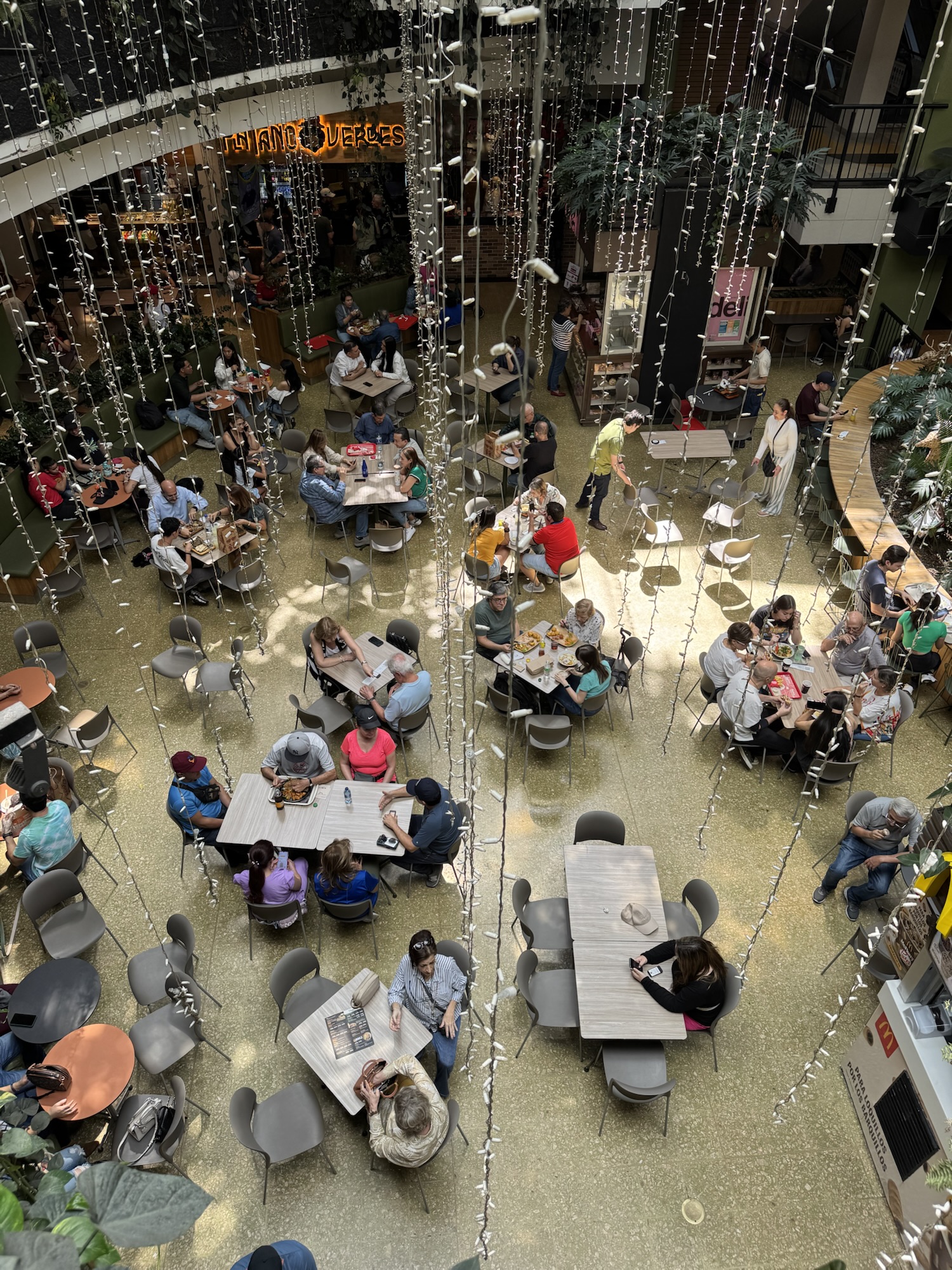
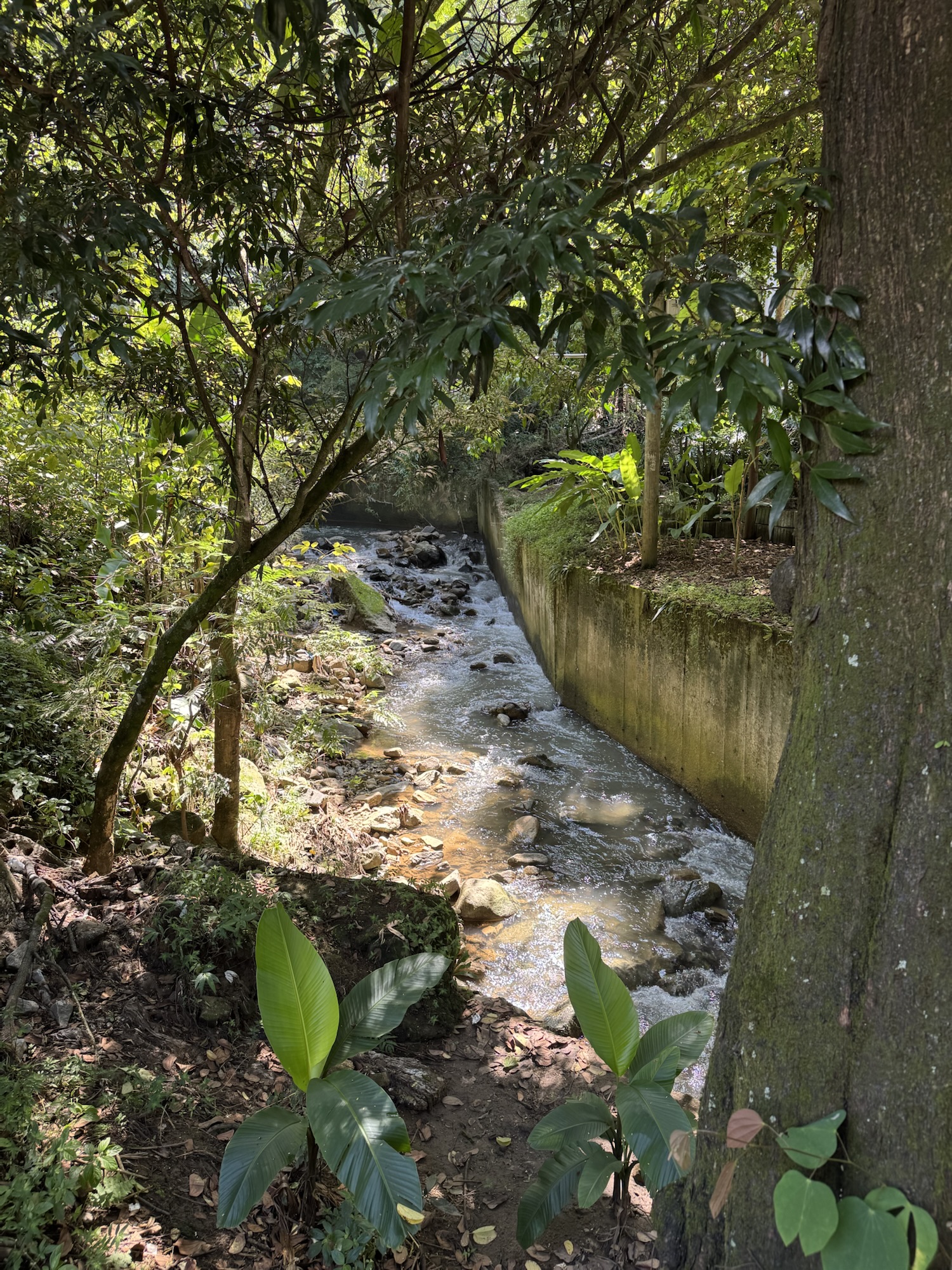
The city is blessed with lush tropical vegetation – it’s as if the city was built in between stands of bamboo groves and meandering riverbeds. Many of the central gathering places – restaurants, shops, malls, public squares – are nestled in the palm trees and other green patches.
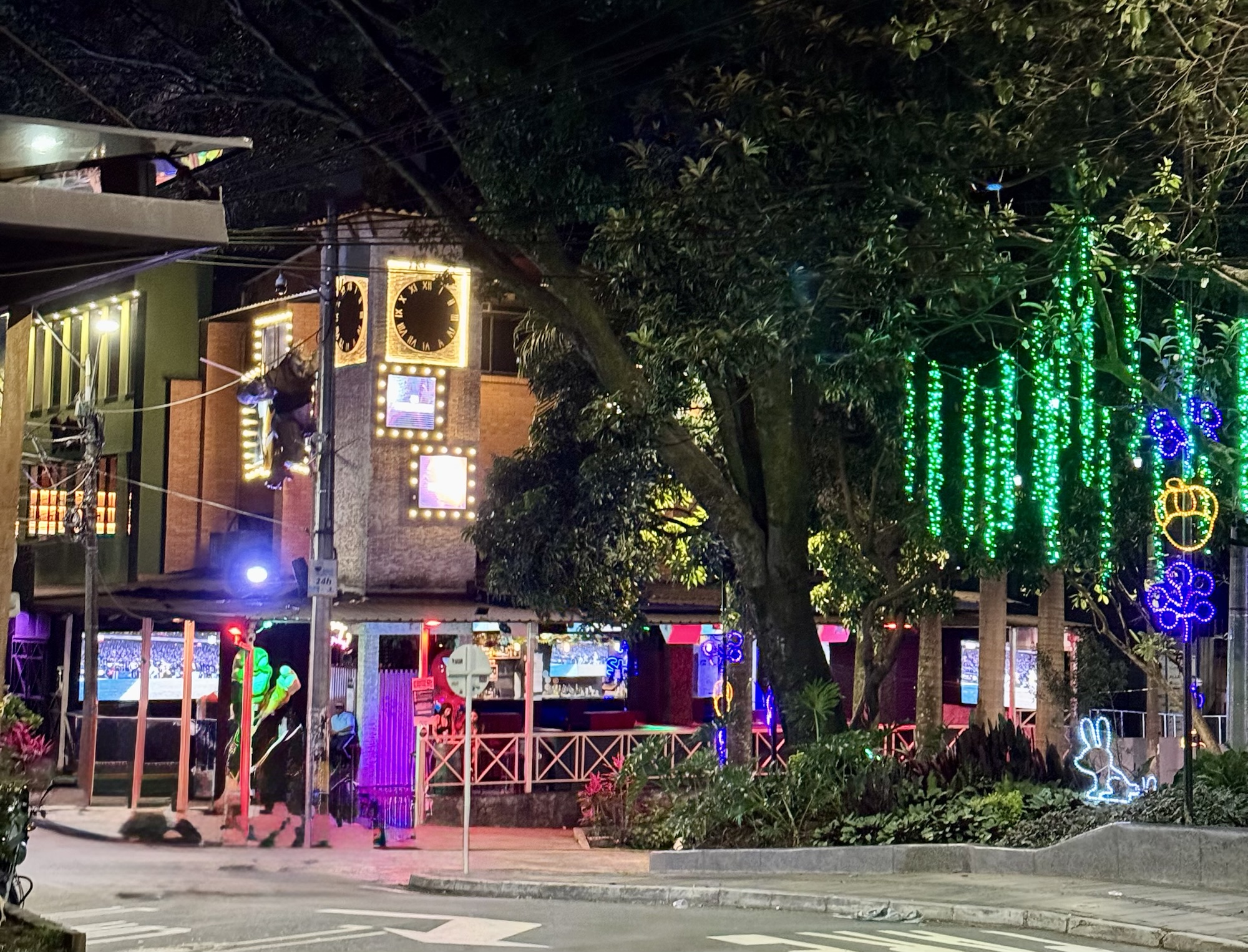
Since Colombia is very close to the Equator, weather year-round is very mild, a bit humid, and rain at night refreshes the air. In our January trip we wore mainly short sleeved shirts and light pants. The city is not super “formal” from what we could see – except the glitz in the evenings at popular bars.
Seeing the Sites
El Poblado – the area where we stayed – is clearly the upscale area of the sprawling city. Many cafes, restaurants, and all services are easily available. Monied ex-pats have generally settled outside the center of the city and El Pobolado is one area that is very beautiful with very upscale services. We stayed in an aparthotel that was well-located and not terribly expensive (not much is pricey by American standards) – we could walk to what became our regular morning stop (Pergamino in El Poblado) and Ubers got us everywhere else. Interesting…Until this February 2025, Uber was illegal in Medellin and there were many legal battles related to its use. The only way we could use it was to call through the app and one of us sit in the front with the driver as if it was a friend picking us up. Sounds like things have settled now.
Based on the tons of construction sites throughout the city, it seems Medellin is growing. Tourism has definitely boomed – with both good and not-so-good effects.
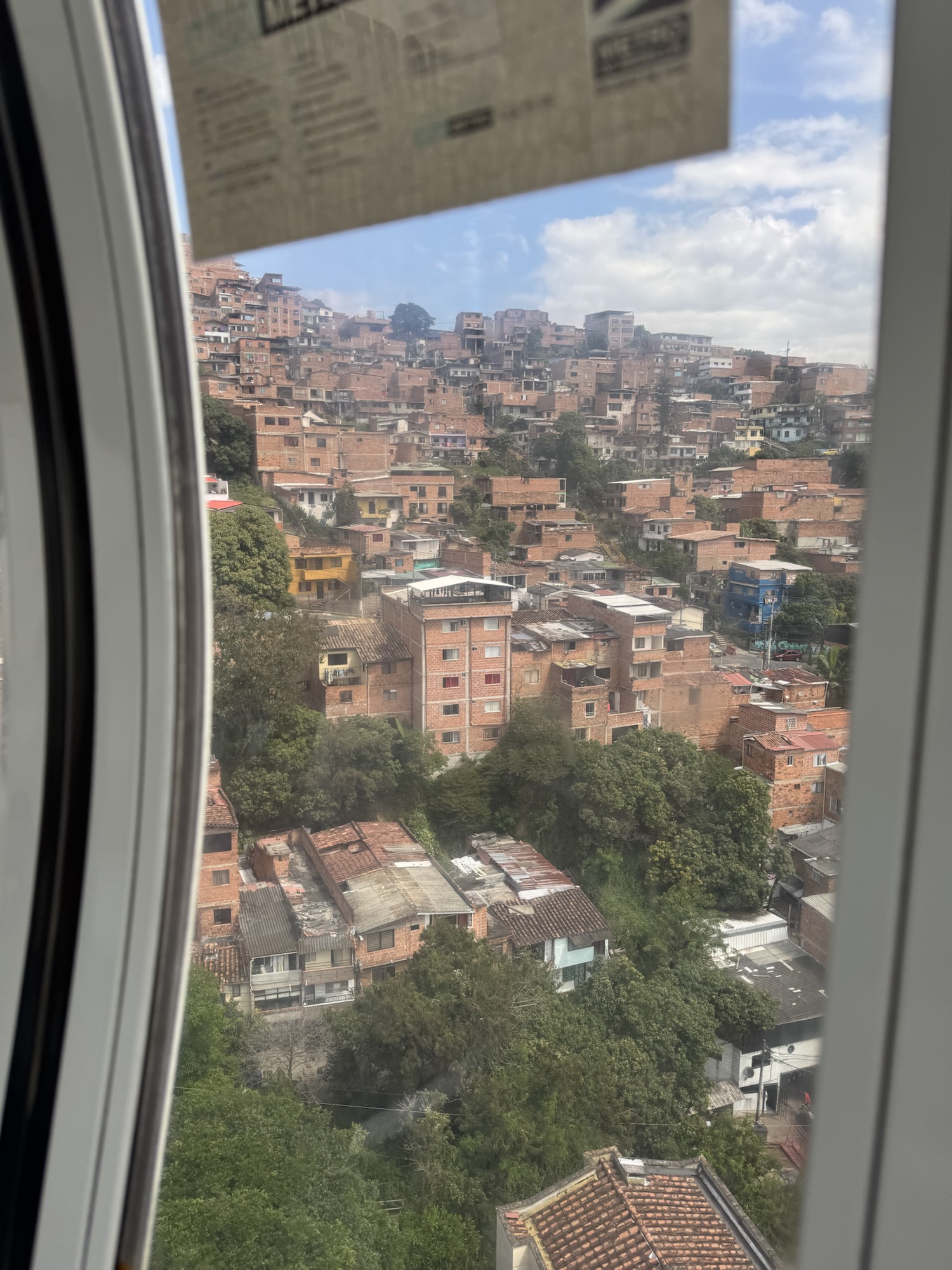
Not surprisingly, there is an incredible economic schism in Medellin. Millions live in poverty – massive “comunes” (communities) cover the mountainsides and until mass transit was built (see later in this entry) most people were cut off from even basic services. They could walk down huge sets of steps just to get to the center of the city and health and human services were difficult to access.
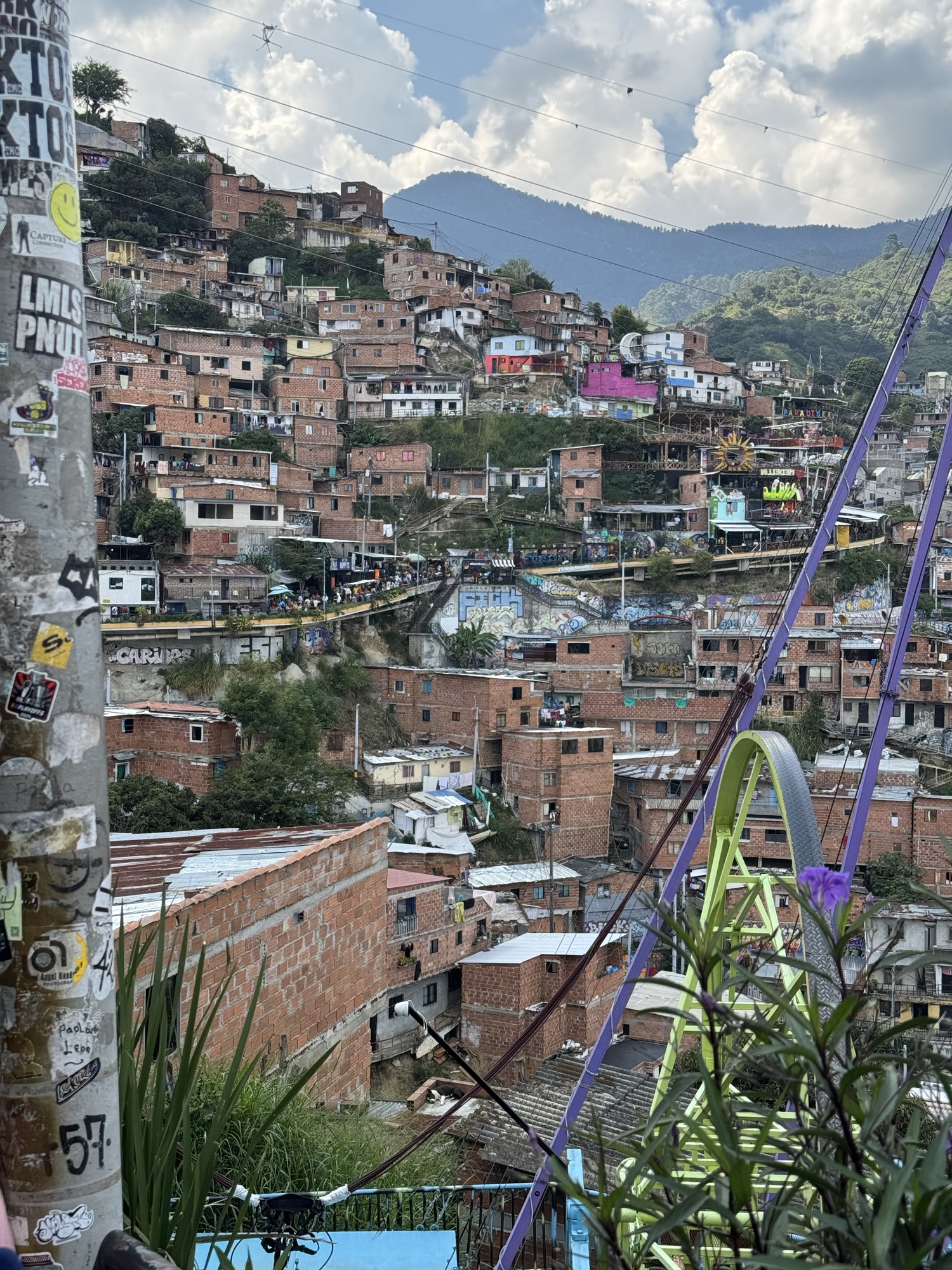
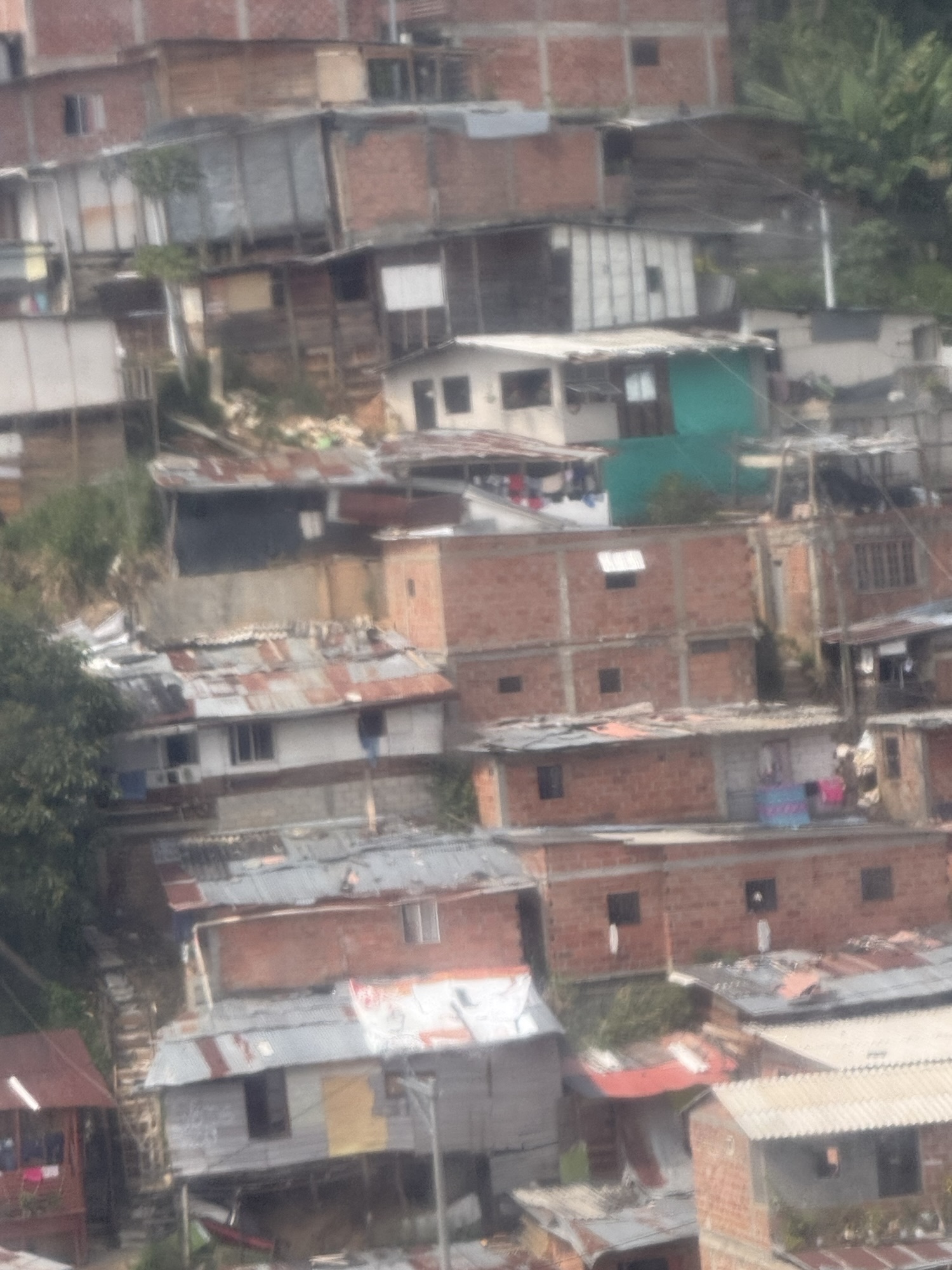
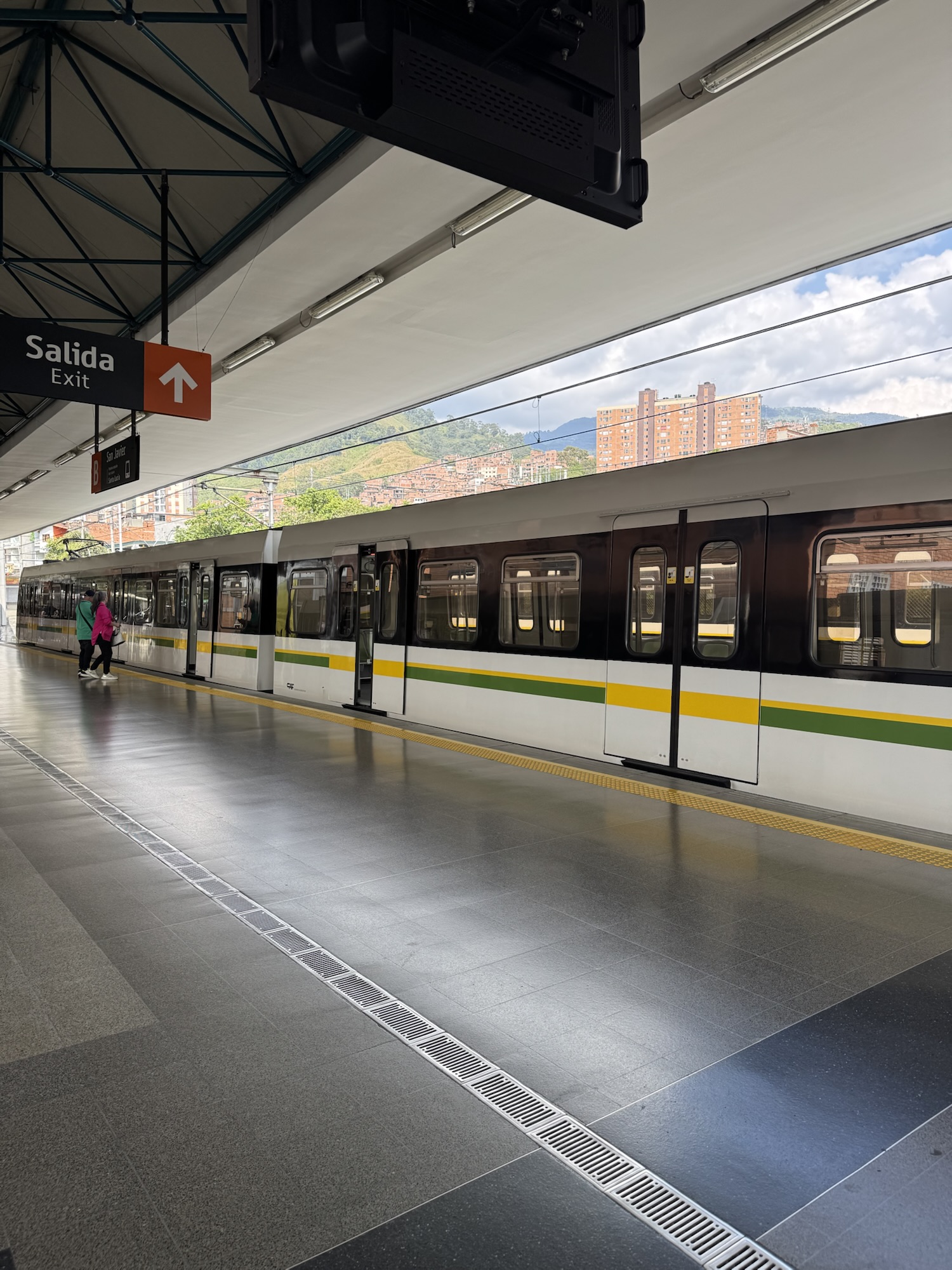
The city has focused on access issues and developed incredible rapid transit to connect the poorest people living up in the mountains to the center of the city for work and for basic services. They’ve kept the price low and there is clear pride in keeping transportation, clean and safe. Buses, trains and gondolas are all connected and it’s one low price to use them for connected service. All about access.

Comuna 13 is way up in the hills and was the center of some of the most heinous cartel and gang related violence for many years. It has become a real tourist attraction – unfortunately, to excess. The area was cleared a number of years ago from violence and a unique escalator system was installed to give all levels of the community access to each other and to the center of the city. The escalators became both a local and tourist attraction and beautiful street art is now covered with a cacophony of street vendors and loud music and food vendors. It is no longer a pleasant experience with wall-to-wall people. Despite the best of intentions, it’s hard to imagine what it’s like to actually live there now.
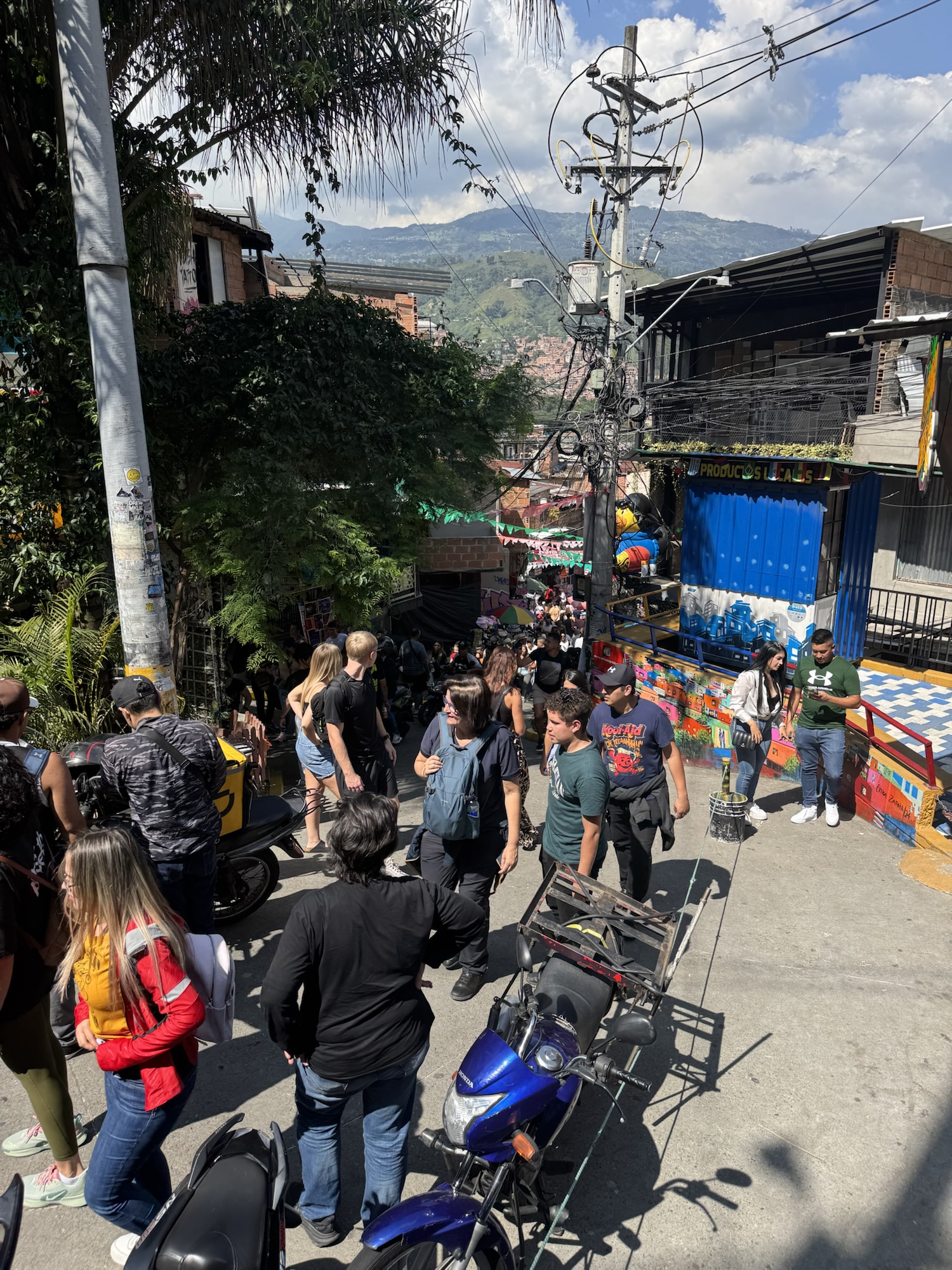
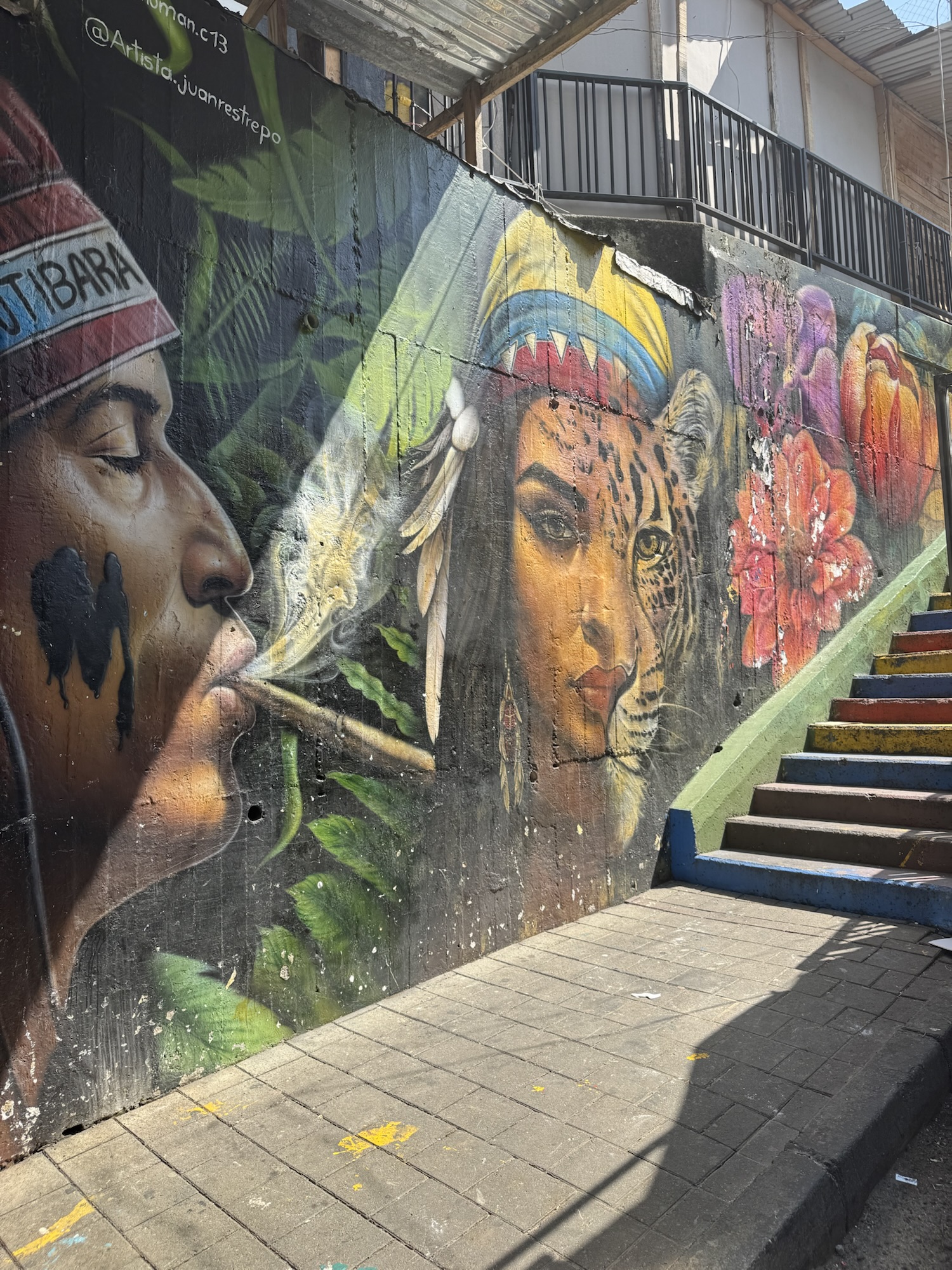
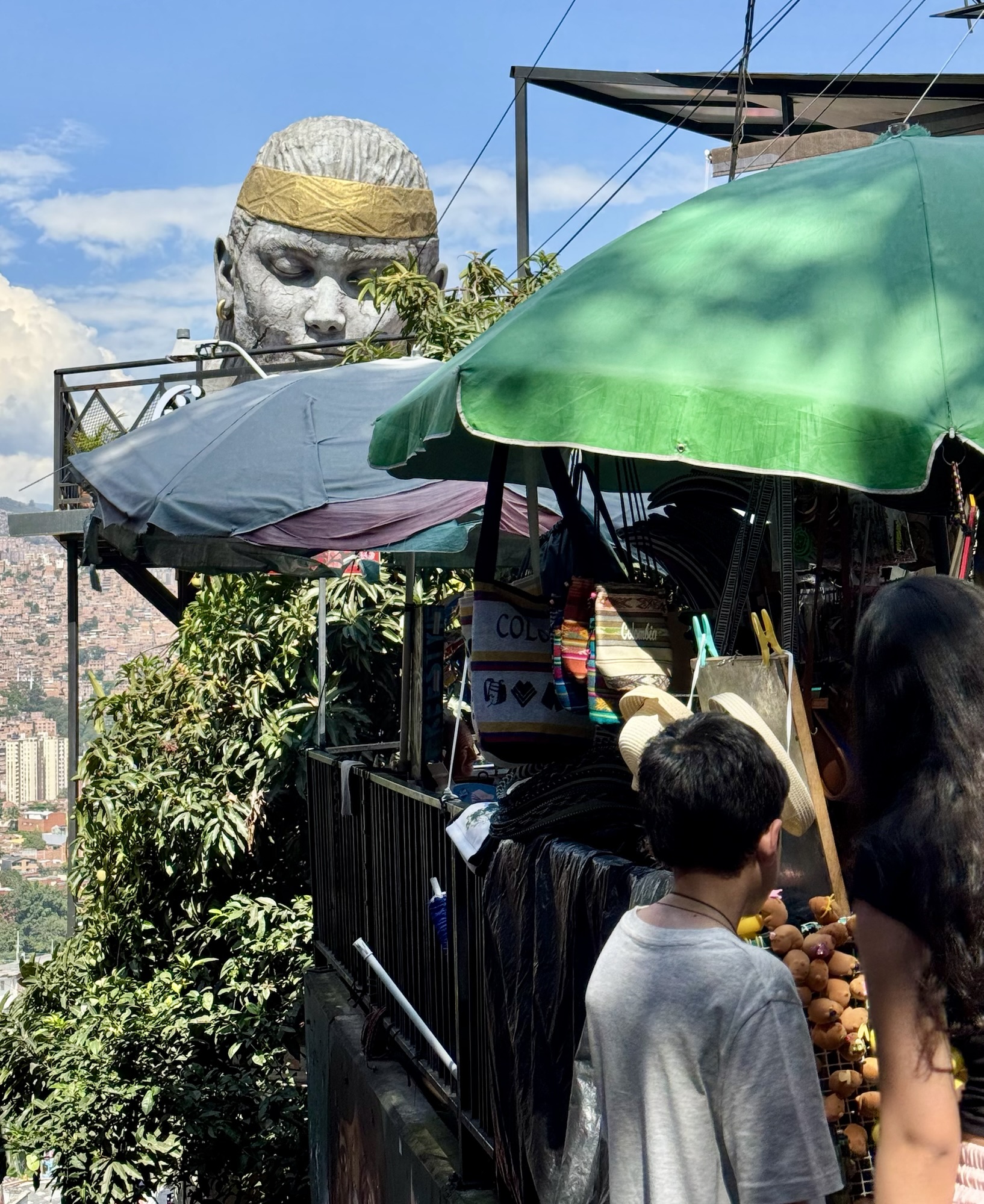
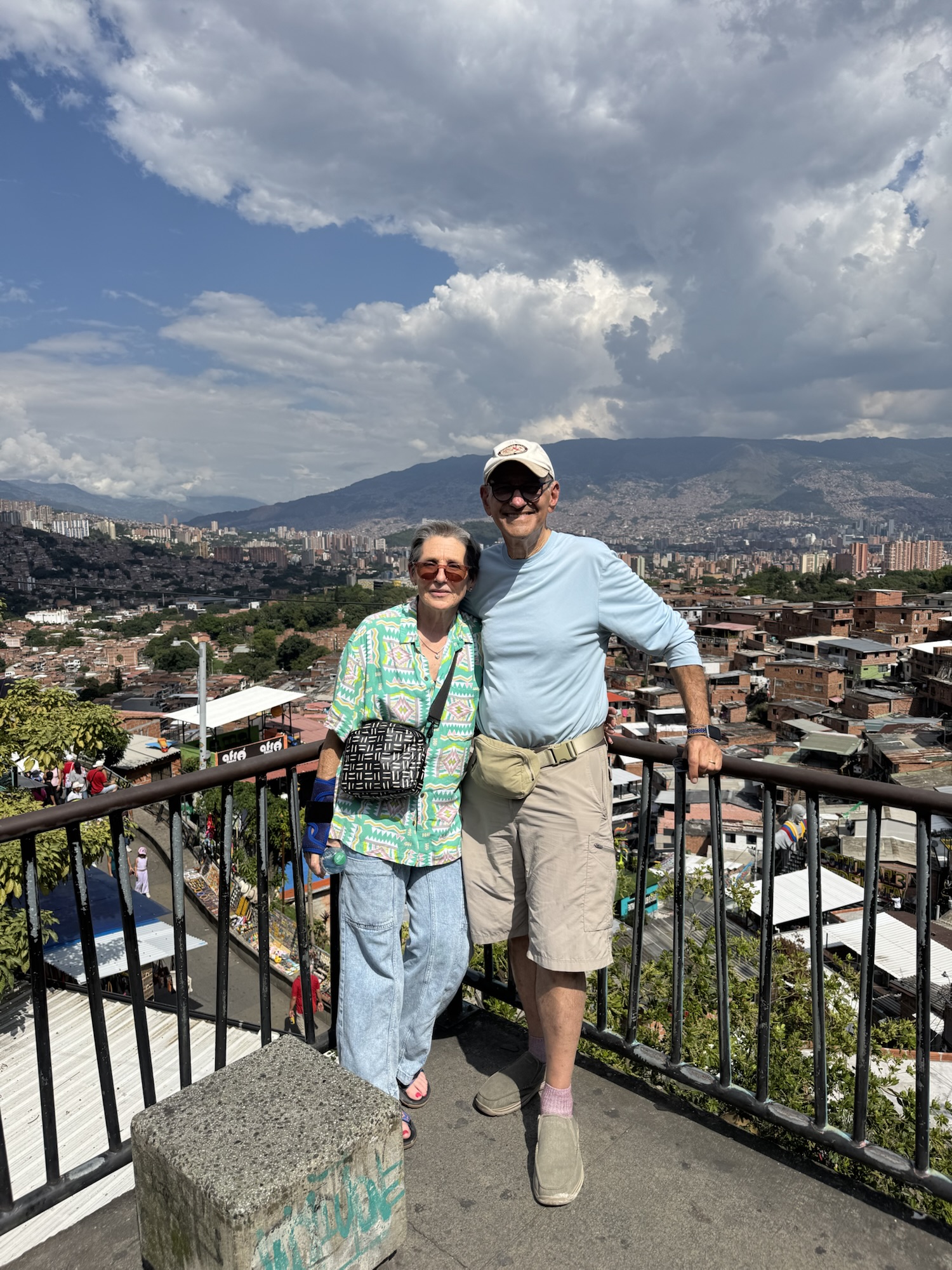
El centro / downtown is not so different than other large urban centers in Latin countries we’ve been to. Here are some of the things we experienced as we wandered, partly with a guide (there are free tours of the city by very experienced locals!)…
The Plaza de Botero pays homage to the most famous artist from Colombia – Fernando Botero . His signature style, also known as “Boterismo”, depicts people and figures in large, exaggerated volume, which can represent political criticism or humor, depending on the piece. He was considered the most recognized and quoted artist from Latin America in his lifetime. In the central district of Medellin is a lovely plaza dotted with many of Botero’s sculptures. Apparently, Colombians from all over come to take pictures with the statues – and Andrew decided to be as irreverent as is apparently acceptable by locals!
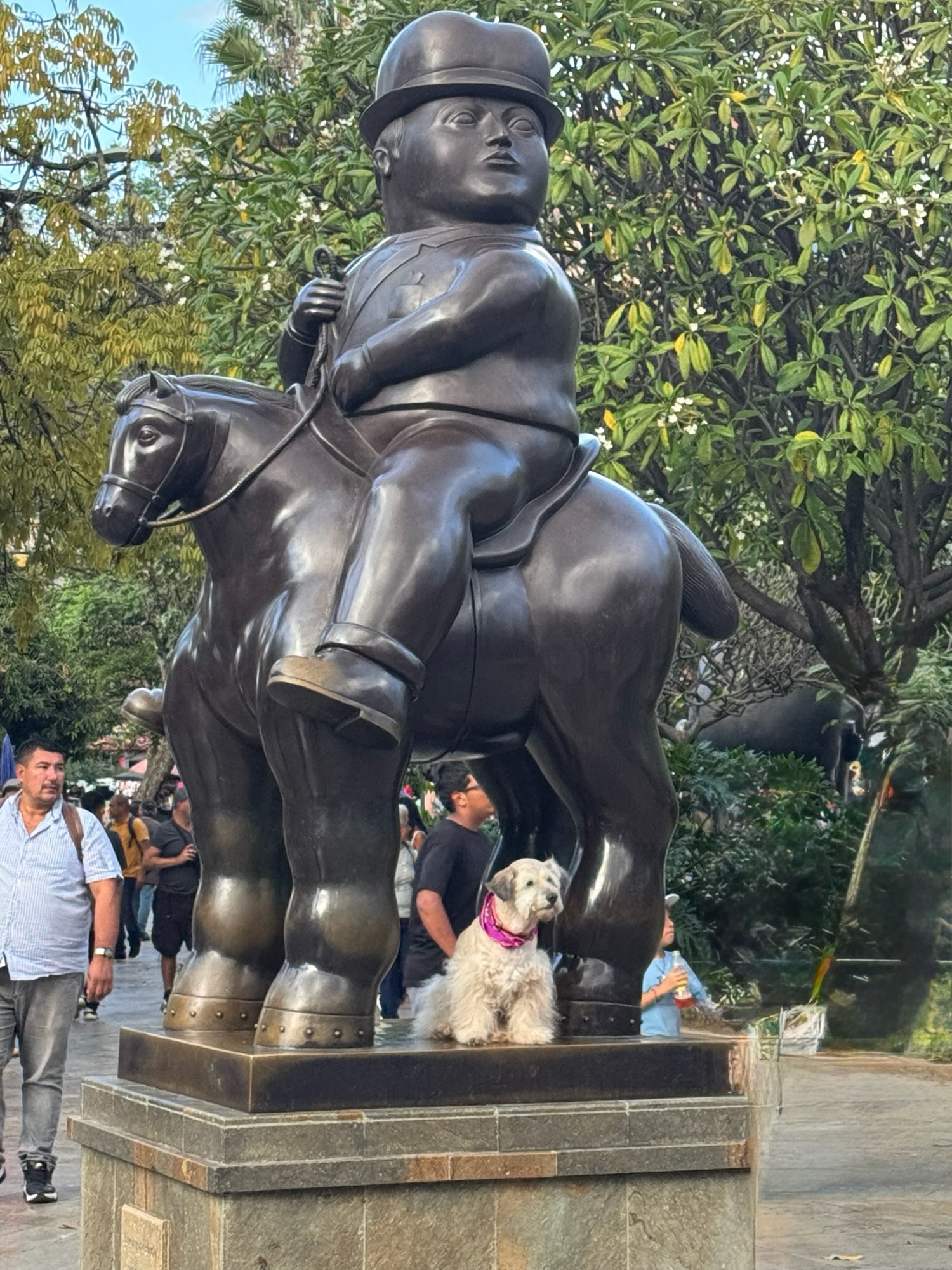
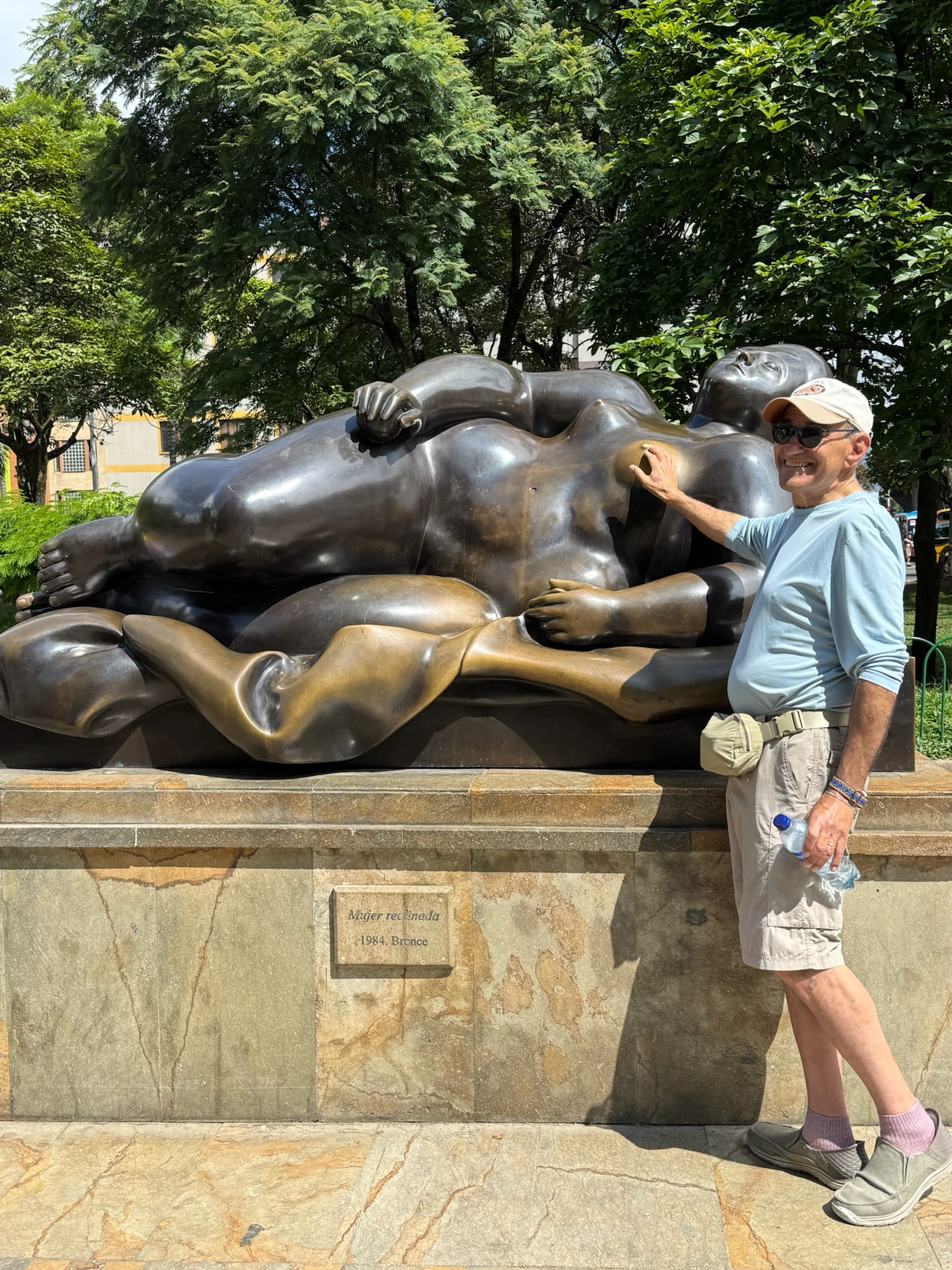
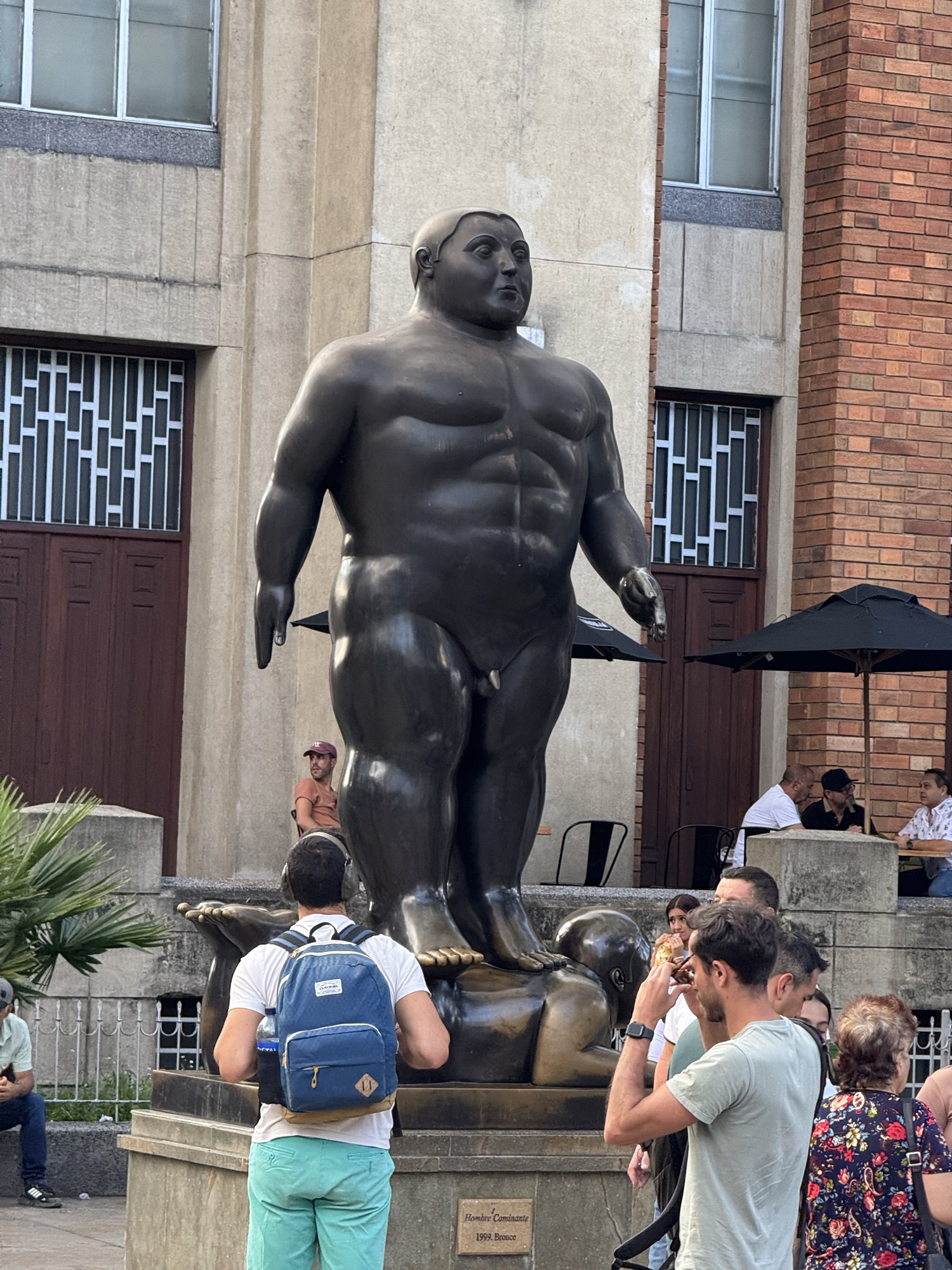
On a more serious note, there is a spot on one of the plazas where there are two Botero sculptures – one that is clearly disfigured, the other intact. The disfigured one was bombed during the violent period of the cartel wars, and some people standing near it were killed. Botero insisted that the remnants of the statue remain with a memorial to the fallen…and he created a duplicate of the statue that stands close by. Now the statues together are known as the Birds of Peace, one a symbol of Medellin’s violent past and the other a symbol of its bright future.

On our walking tour of El Centro we passed through a number of different indicators of the diversity of experiences and history in this city:
Sitting on the southern edge of the downtown core is Plaza Cisneros, aka Parque de las Luces, which is an open-air plaza that was retrofitted with a number of tall columns with lights that glow and change colors after dark. Apparently, this plaza used to be a dangerous homeless encampment – now it is a gathering place that is relatively safer that in the past.
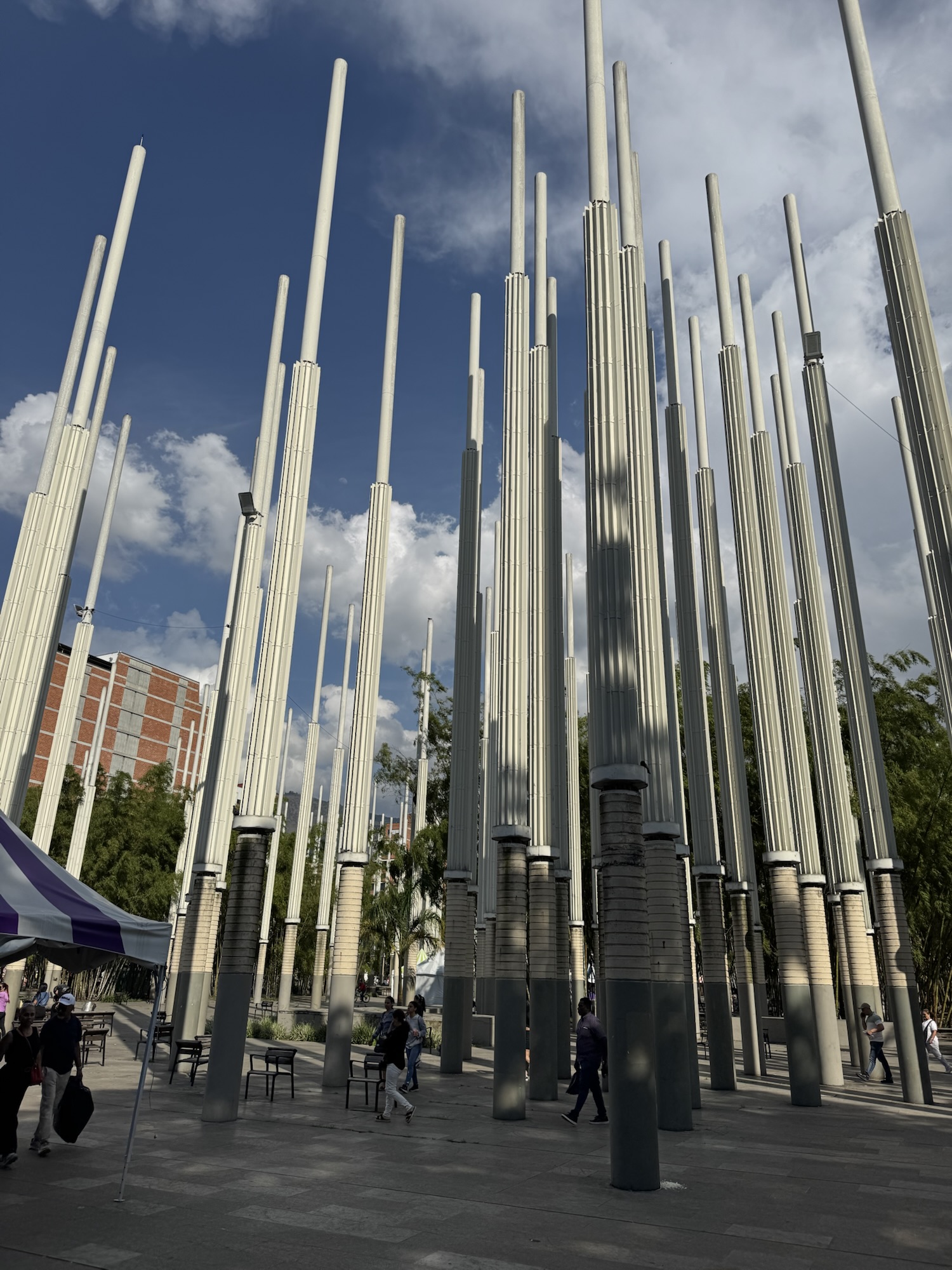
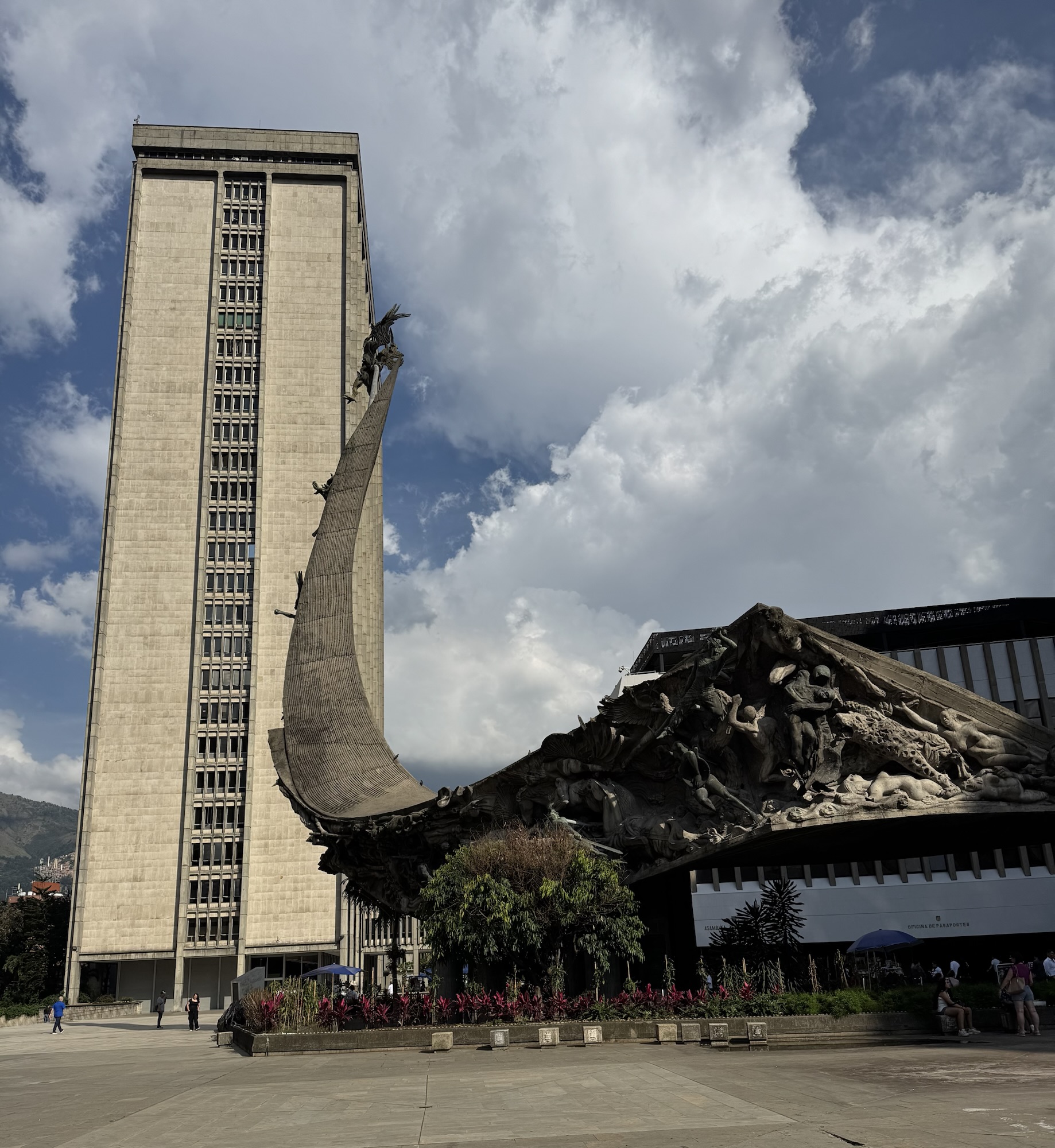
Across from Plaza Cisneros is an area known as Alpujarra, which is where the center of government for Medellin and Antioquia sits. The main draw here is the impressive Monumento a la Raza at the center of the plaza. This statue depicts the history of Colombia and the many struggles it has faced.
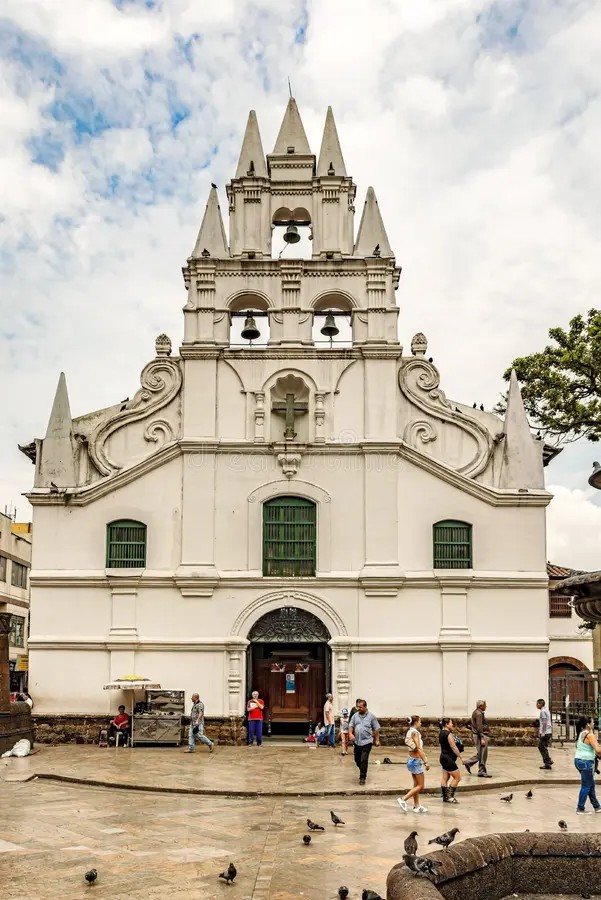
There is one district here that is known as a center for prostitution and a very active sex trade. The central meeting place is a small old white church called the Veracruz Church (Spanish: Iglesia de la Veracruz), a Roman Catholic church under the invocation of the “Vera Cruz” or Holy Cross. It is located in the center of the city on the western side of the Plazuela de la Veracruz. It is the only colonial church in the city. It is hard to see young women selling themselves this way, and there has been a crackdown in Medellin in the last few years to try to reduce the “sex tourism” here. Needless to say, the effort has been quite unsuccessful given the international demand for this sort of entertainment.
One other very moving site is a memorial to all those killed by the cartels under Pablo Escobar. On the site of one of Pablo Escobars homes (only one wall remains) in a beautiful neighborhood is Inflexion Memorial Park that traces the history of the bombings in the city that the cartel initiated, as well as a memorial wall that symbolizes all of the people who were killed during that time – incredibly sad.
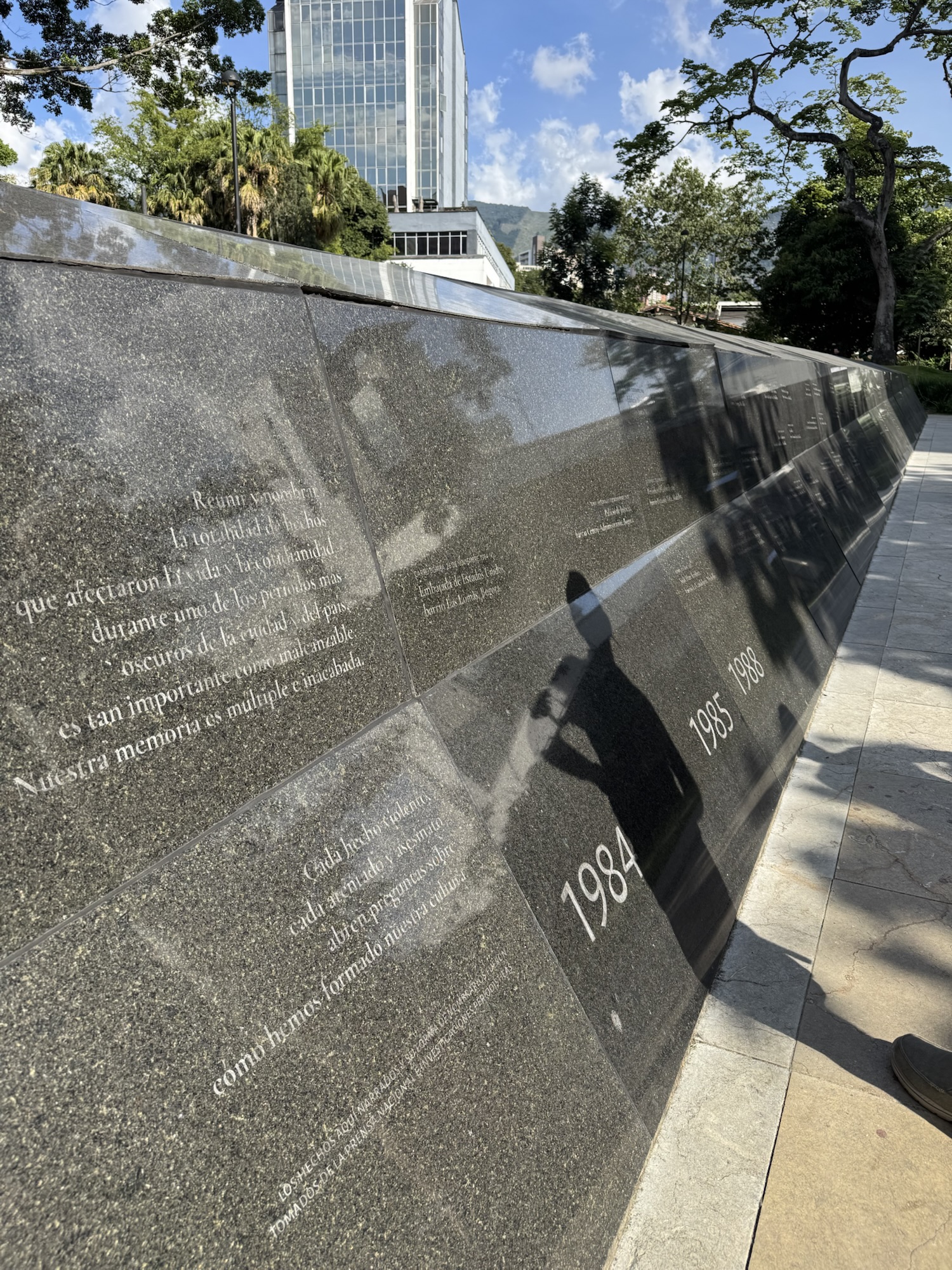
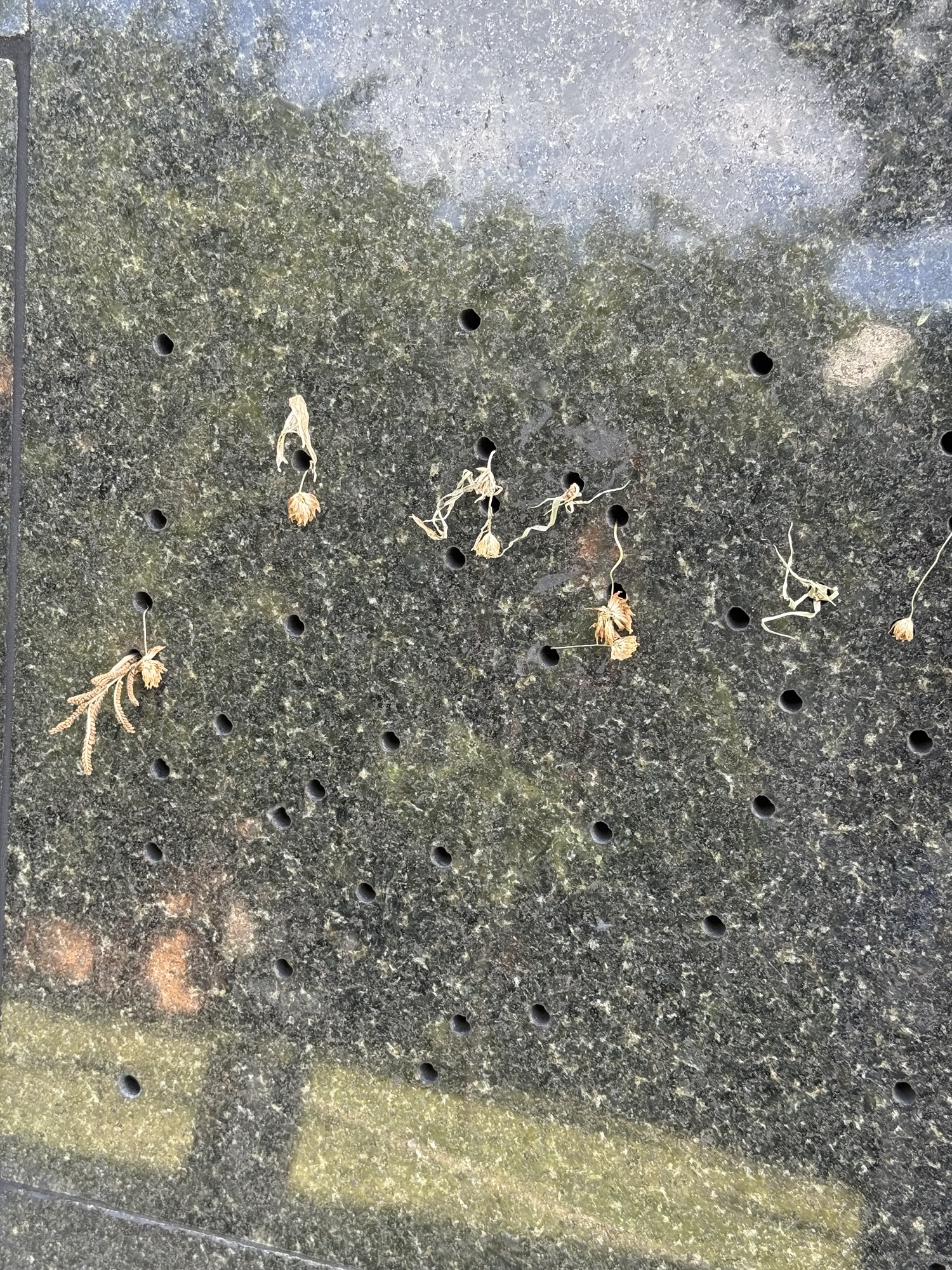
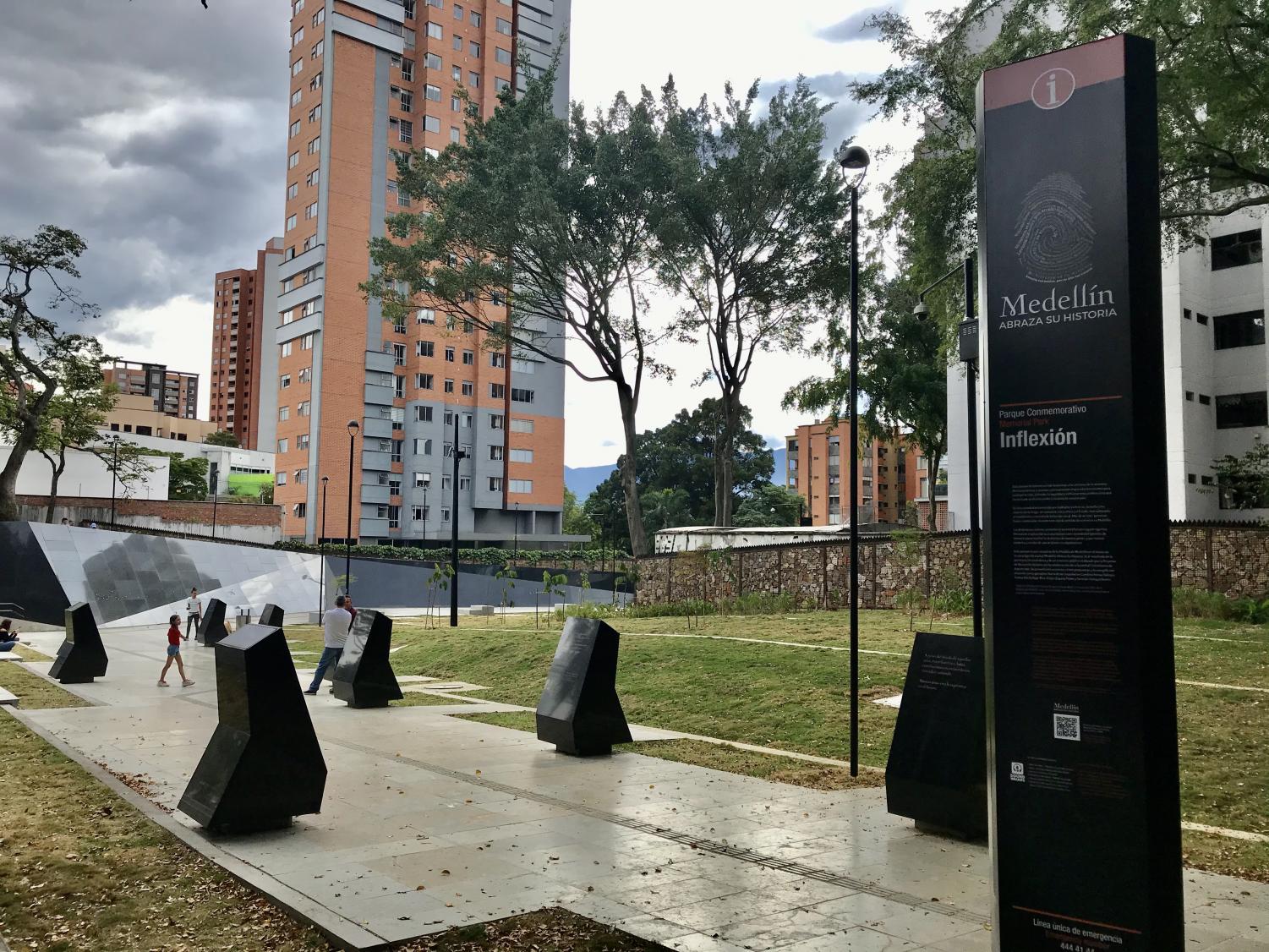
Left: Timelines of killings; Center: Each hole represents someone killed – flowers are placed in memorial; Right: Wall on right is what remains of Escobars house.
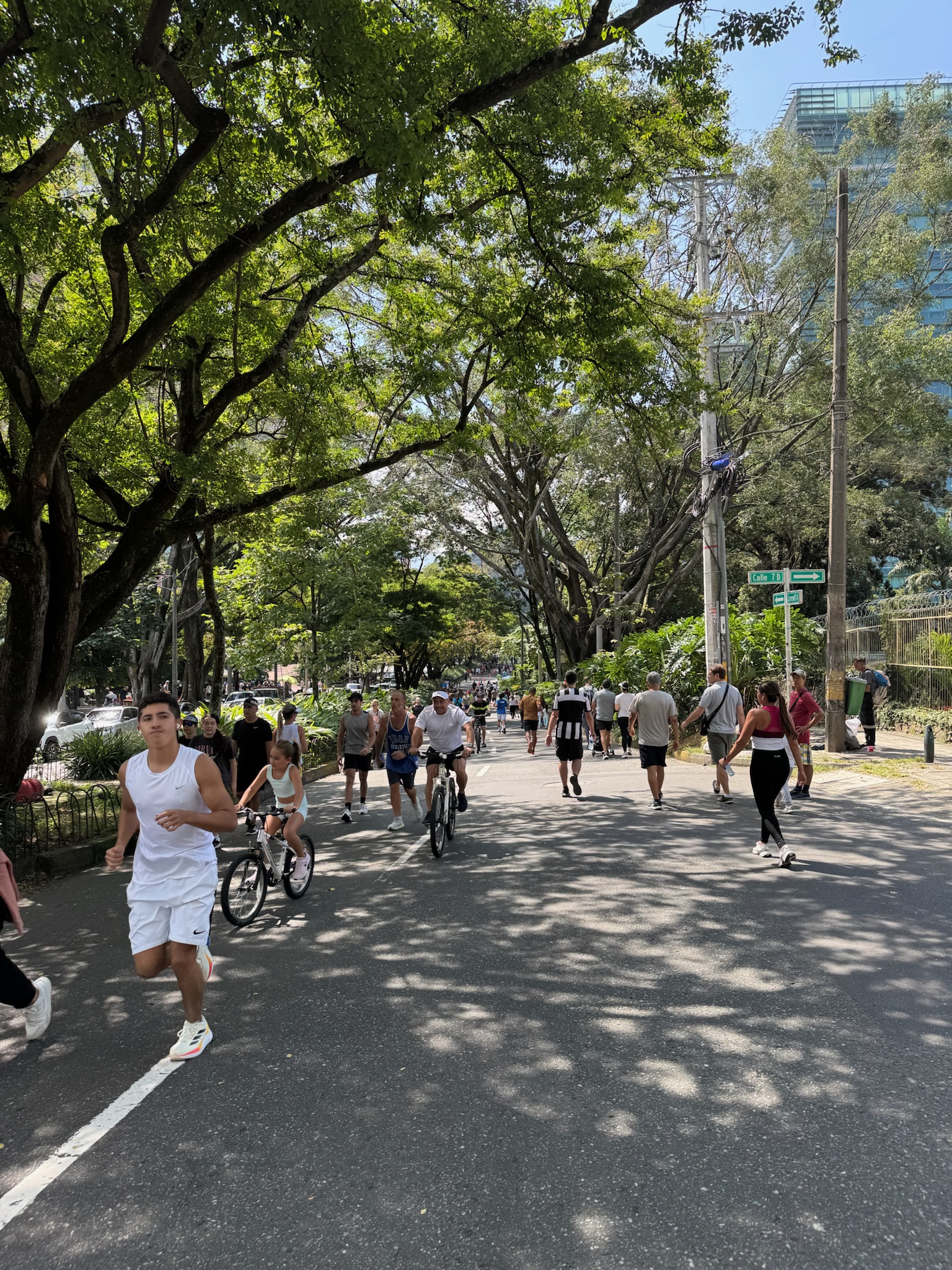
We got to experience a unique weekly tradition in Medellin (originated in Bogota), designed to encourage people to get out and enjoy the weather, fresh air, and be active. Called Ciclovia , a major thoroughfare is closed off on Sunday and people run, skate, jog, skateboard, BMX, and do aerobics! In addition, along the path, various fitness classes like yoga, Zumba, and dance classes take place along the route. The community comes out to enjoy the positive vibes and socialize. Although there is an emphasis on exercise, it’s also a space for people to meet up with family and friends. Of course, dogs can join in on the action as well!
Meeting Friends: Old & New
One of the key reasons we decided to return to Colombia was to visit with an old friend and her partner – someone Andrew knew when he lived in San Francisco. We’ve kept in touch over the years and, like us – Janet and Craig lived in a number of places during the last couple of decades and settled in Medellin a few years ago. They’d been encouraging us to visit so this was our chance. It was clear from spending time with them how happy they were with the city, the culture, the diverse ecosystem and the overall “livability” of the country. They were great guides! They introduced us to some of the local holiday traditions (we caught the Christmas lights and light show as they were about to end); we drove into the countryside to a lovely pueblo called Concepción that has retained the rustic and traditional feel of Colombian culture; and introduced us to some of their ex-pat friends who we really enjoyed getting to know.
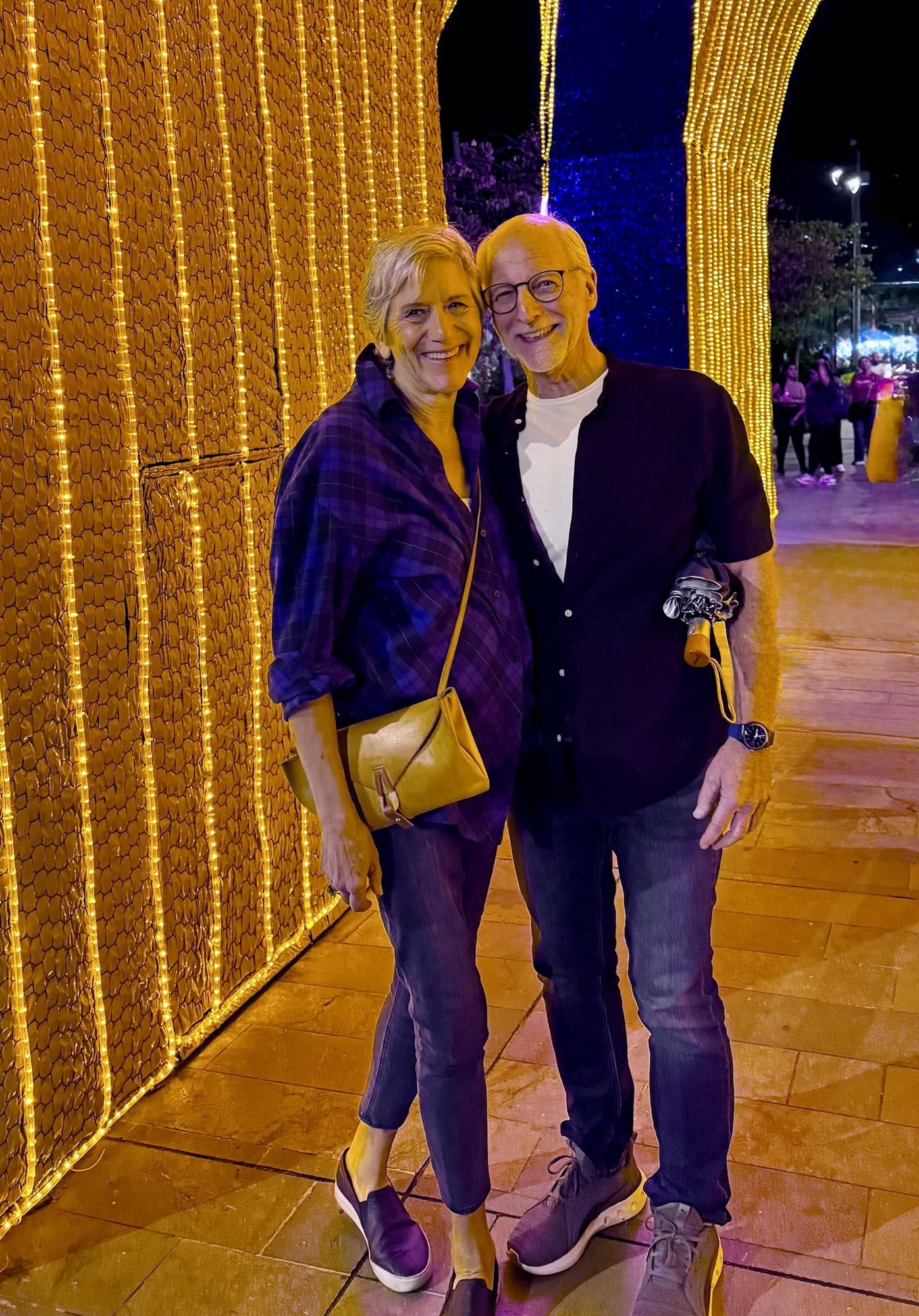
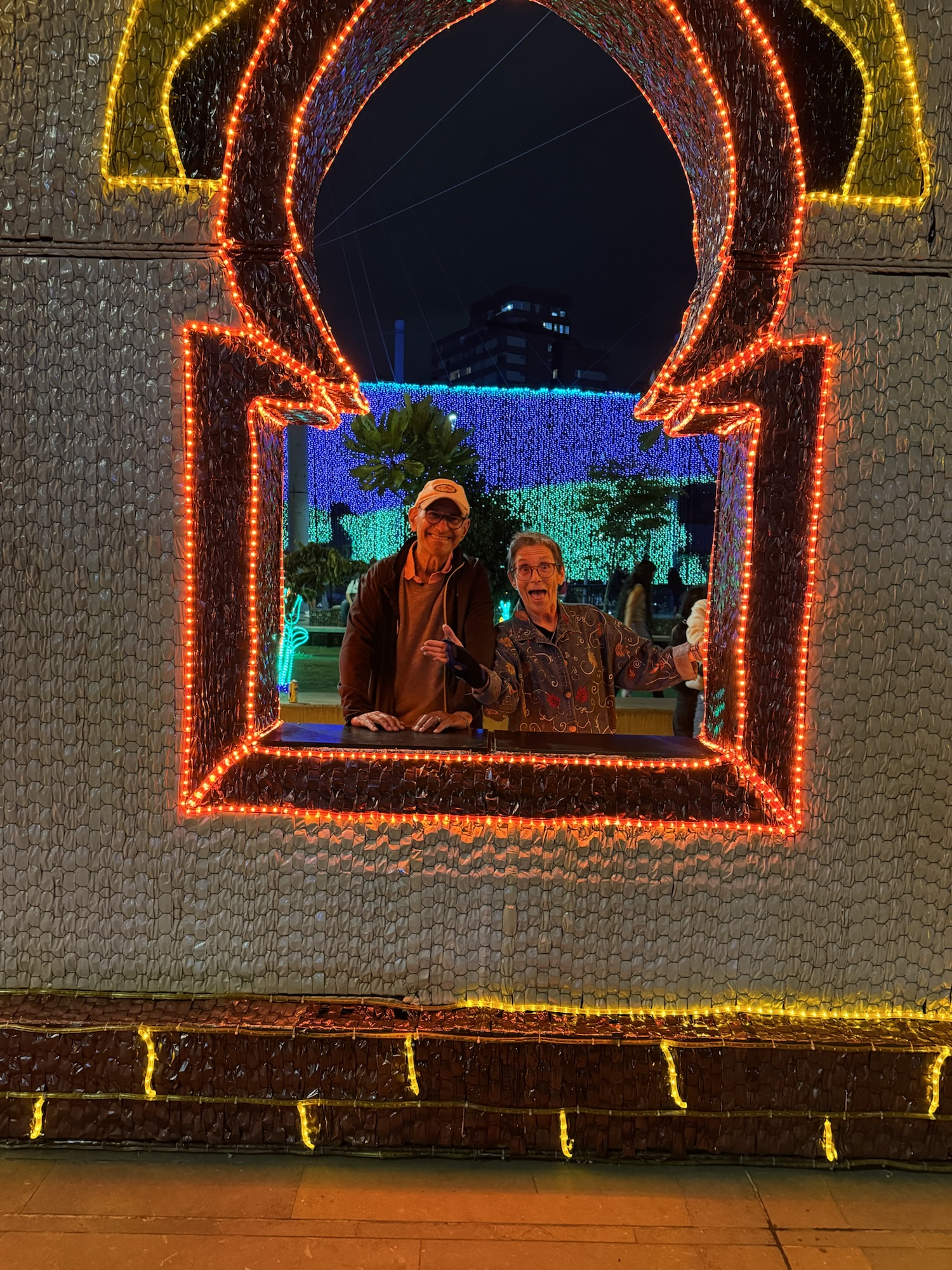
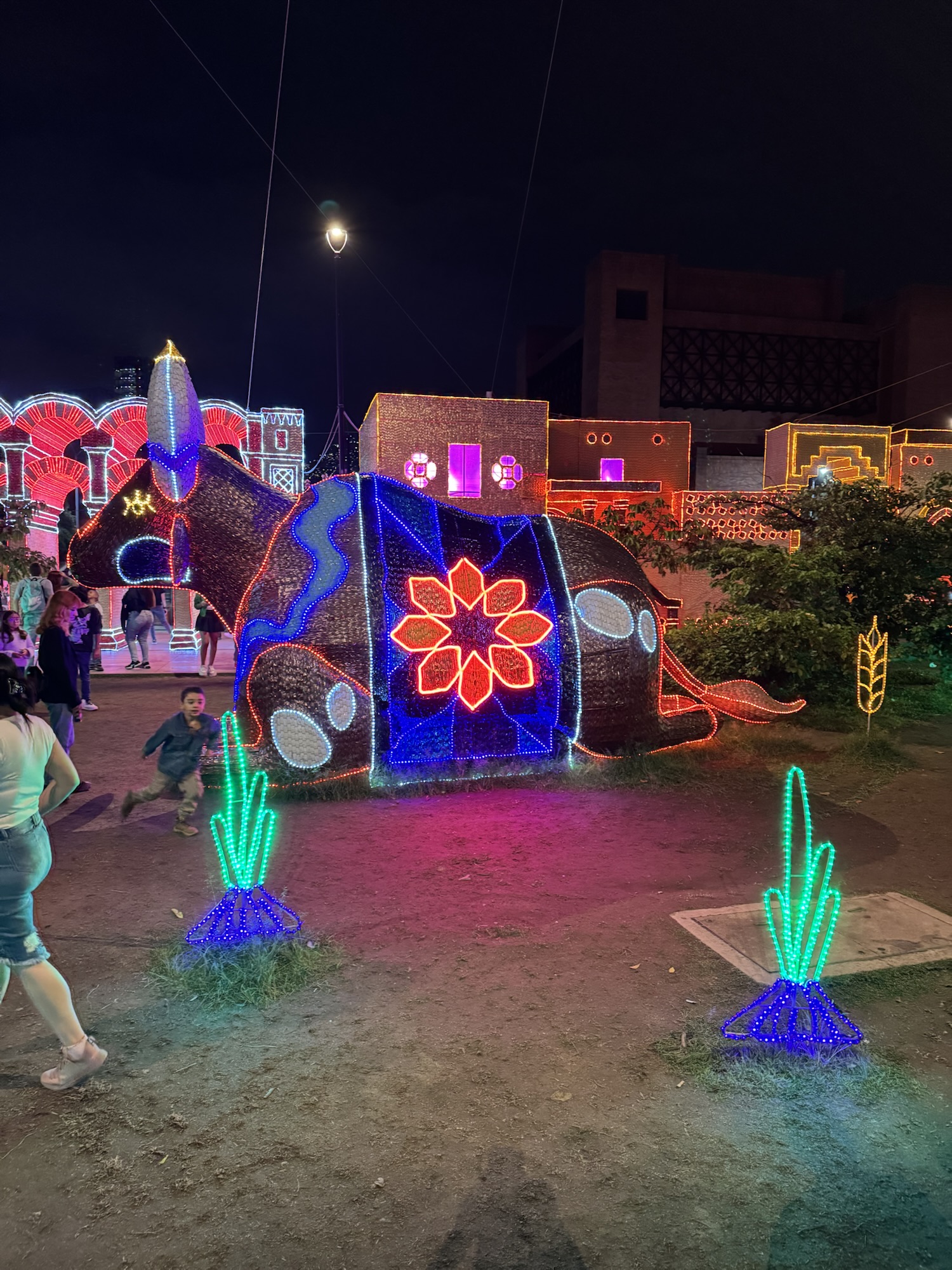
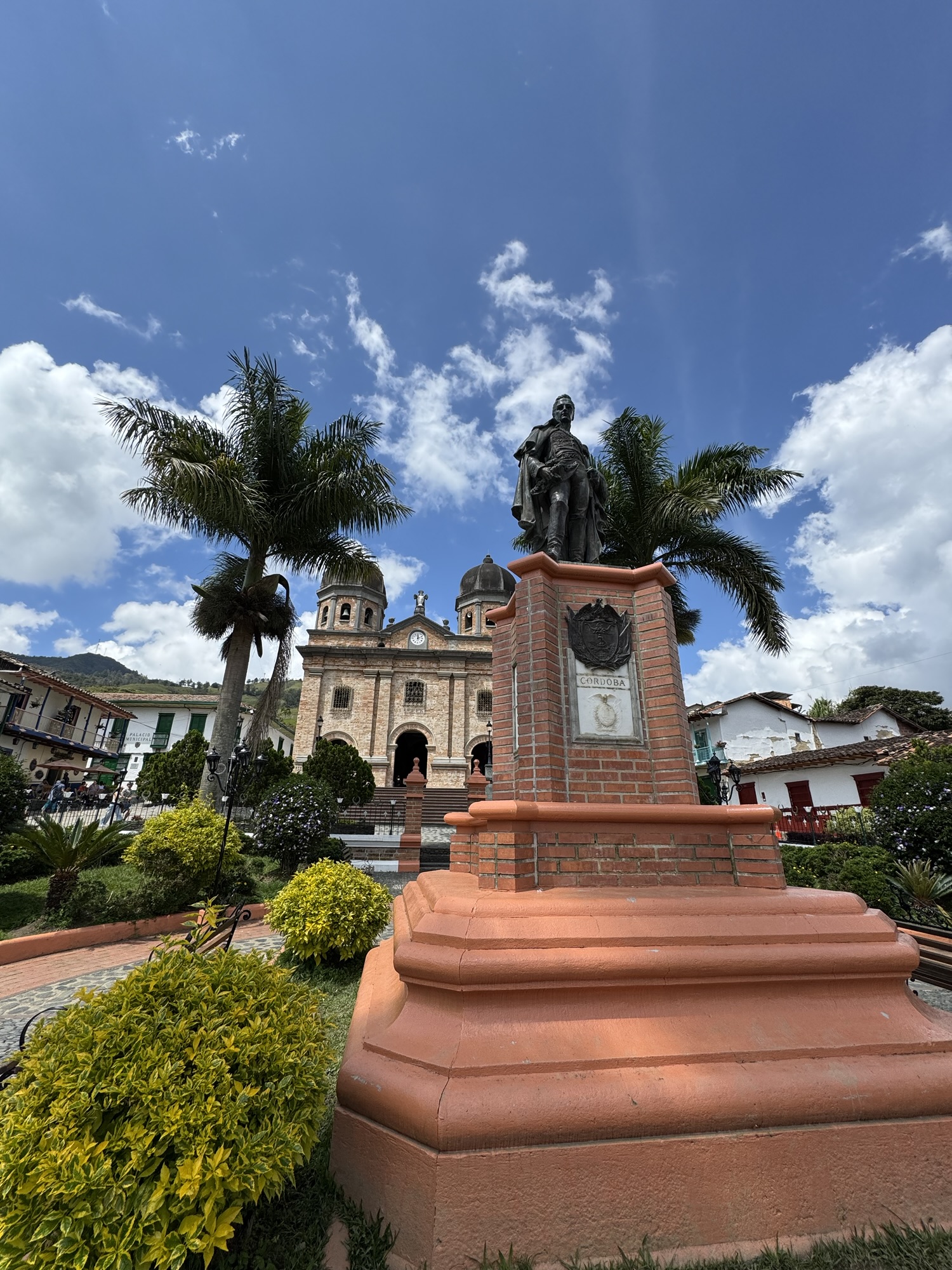

Top: Janet & Craig and the Christmas lights | Bottom: Concepción and local waterfall
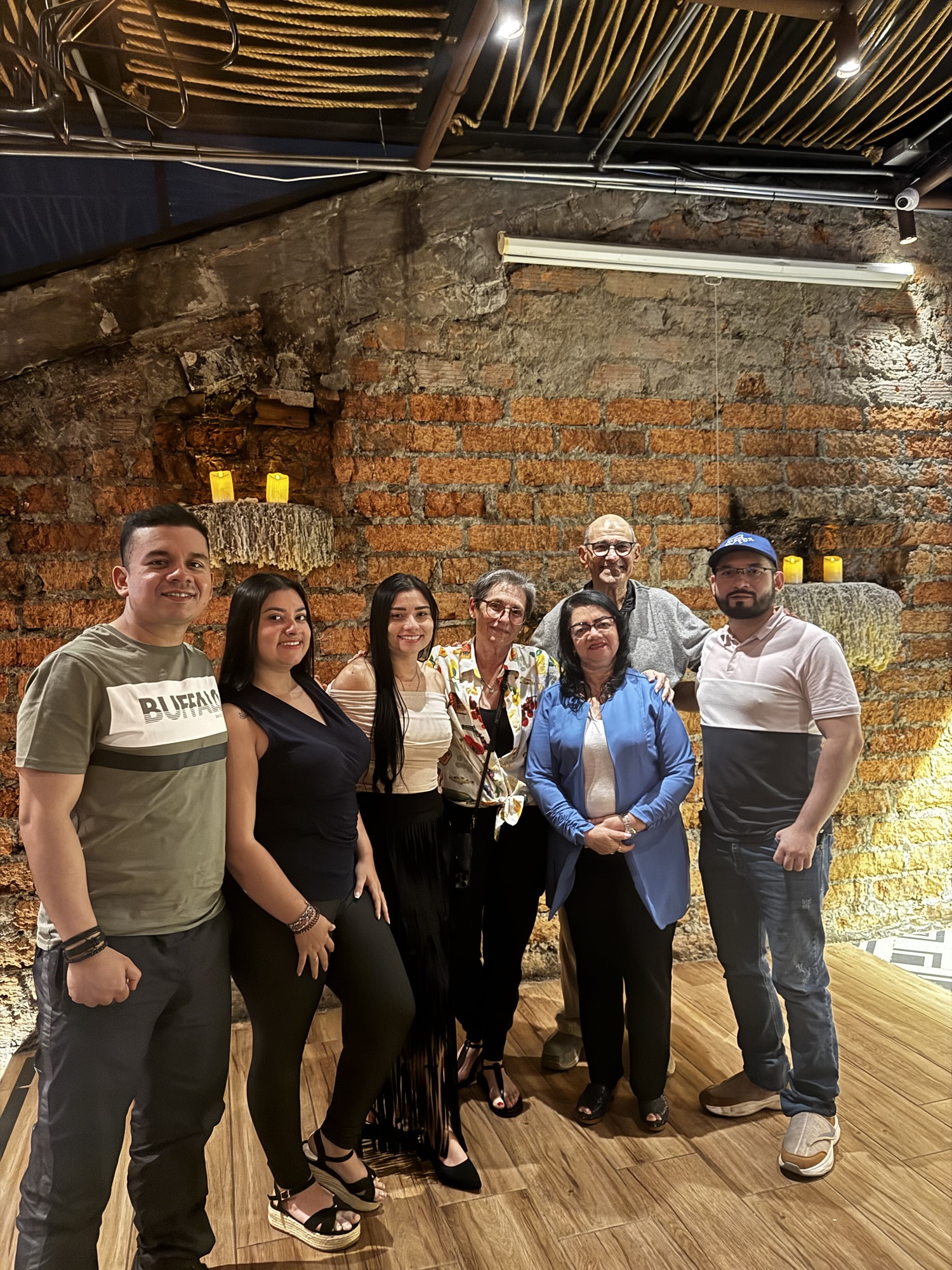
We had another wonderful encounter while in Medellin. We recently began using an app called Trusted Housesitters that connects us with people who love animals and are willing to take care of pets and house sit for the opportunity to work/chill in a new place and be with animals. Truly, it’s been incredibly positive! We engaged with a young woman who we chose to stay at our home in a few months while we are on an extended trip and it turned out that she is originally from Medellin. Luck had it that she was headed to visit her family during our time in Medellin…and we got to meet her and her entire family. It was a special treat to have a meal with a local family and get to know our future dog sitter.
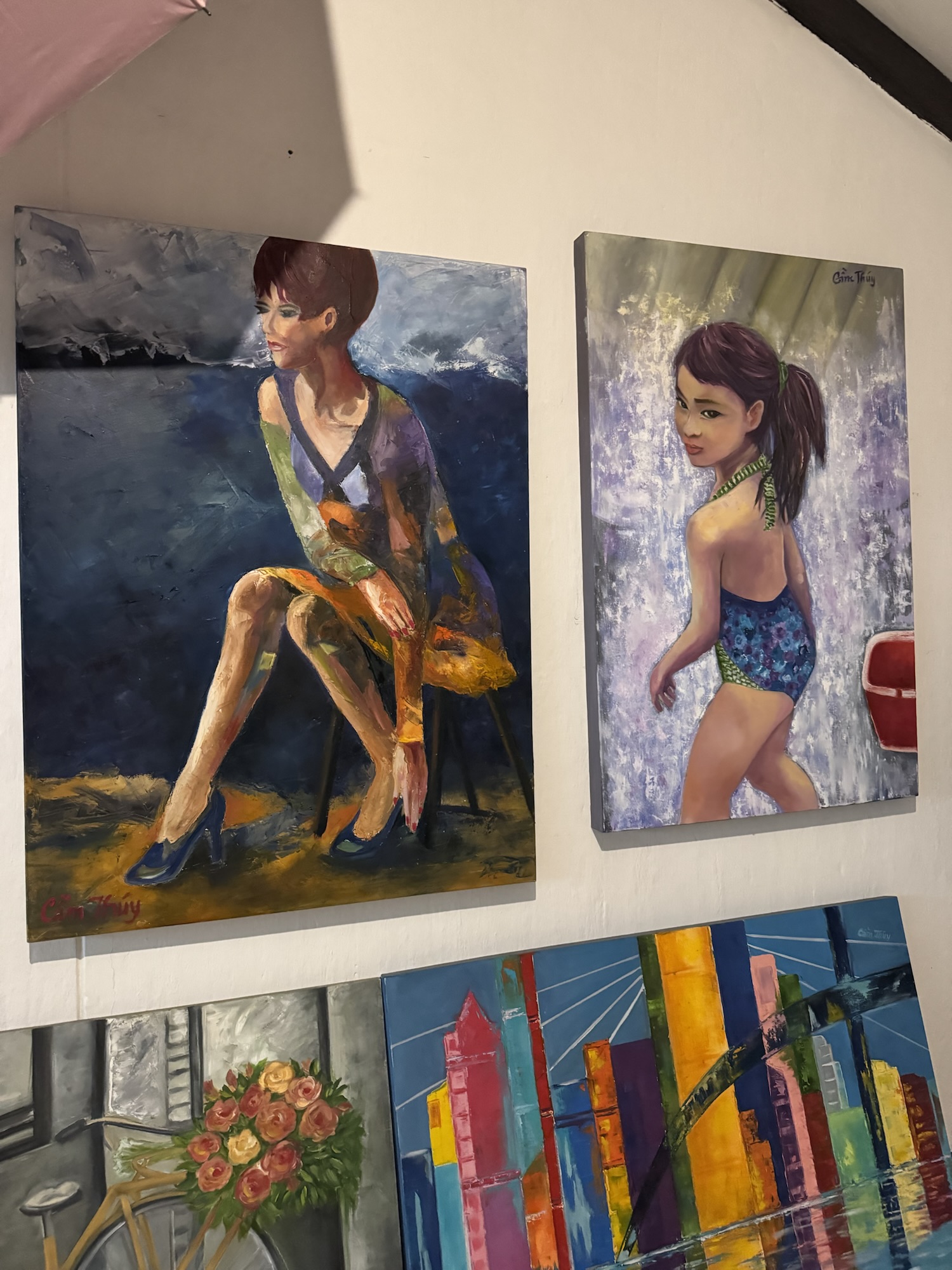
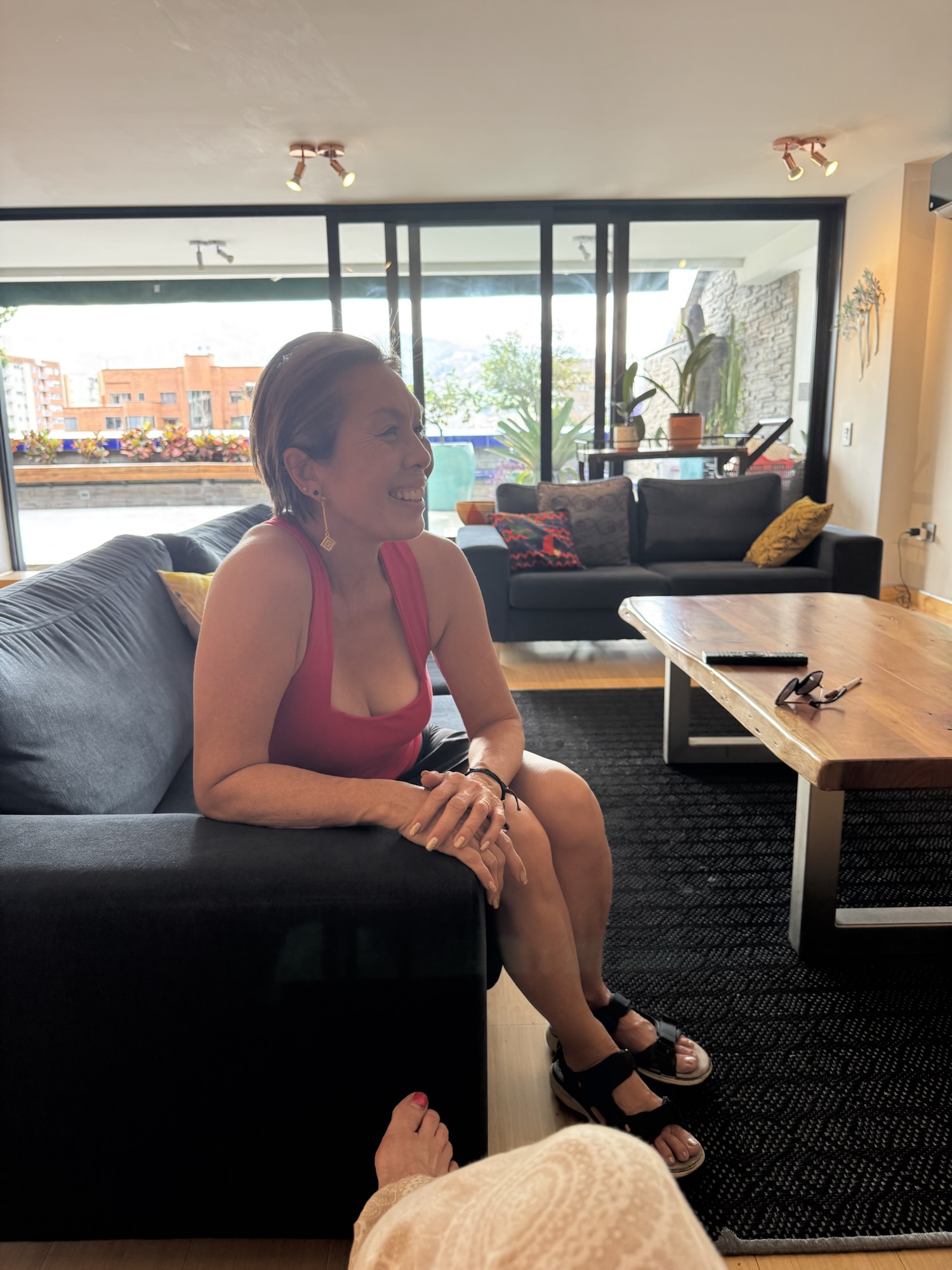
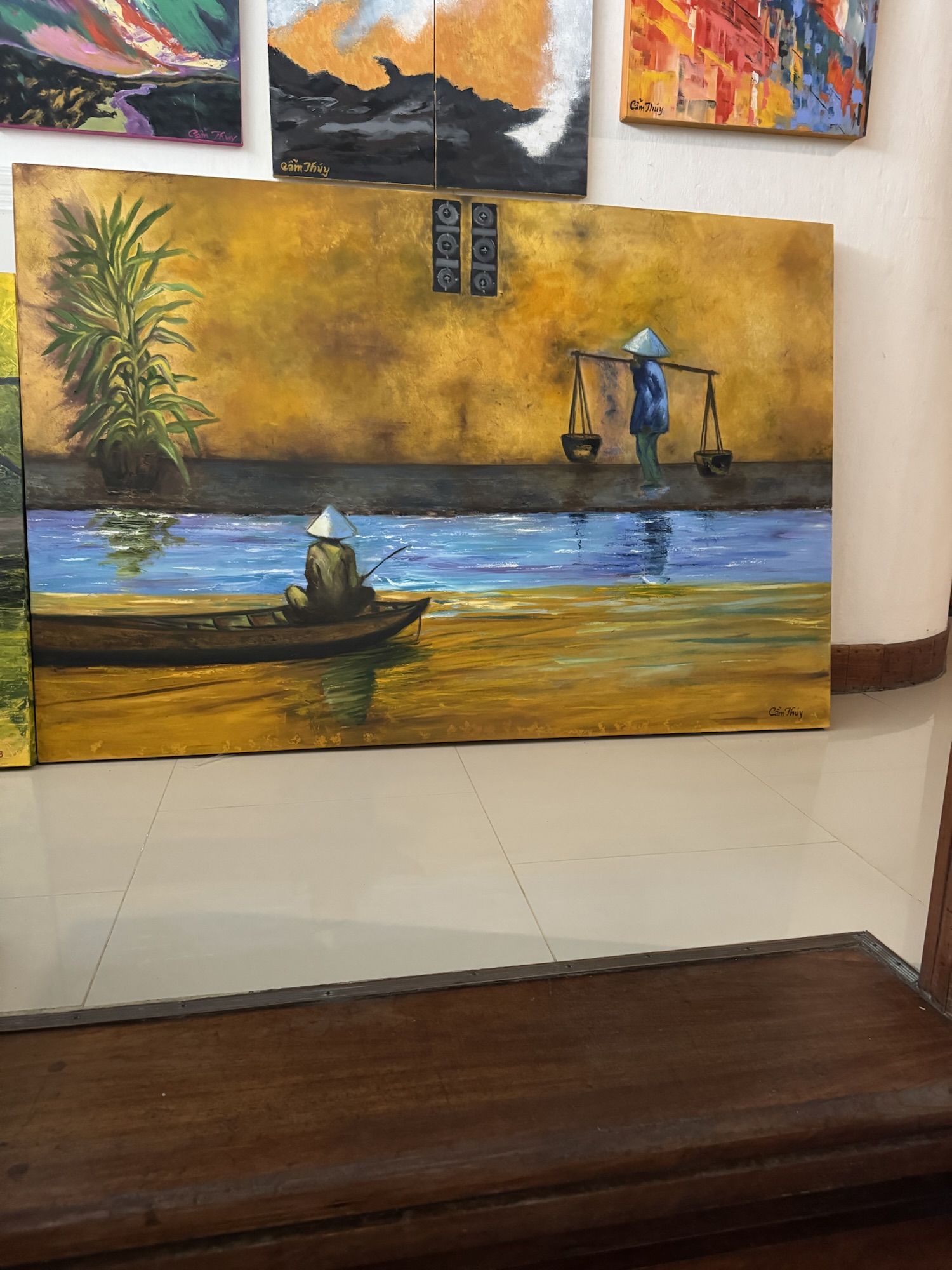
One other small world story: One of Janet and Craig’s friends in Medellin turned out to have lived in Seattle and belonged to the same synagogue as dear friends of ours. Cam is a fascinating person – originally from Vietnam. She married a Jewish man and they settled in Medellin a few years ago. With the move to Colombia she discovered a new pastime – painting – and what a talent she is! We feel honored to have gotten to spend time with Cam and see the prolific and beautiful work she does.
Medellin was a wonderful place to get a taste of Colombian culture and a lovely break from the current insanity of living in the US. I’ll leave it at that.
Hasta pronto!
 Living La Vida Loca
Leave a comment