
When we said goodbye to Tokyo, we didn’t in just a few days get to explore all the diverse aspects of this megalopolis, but in hindsight we did get a good sense of the unique neighborhoods, corporate versus local business, and the incredible variety of food and experiences available. Conversely, we did clearly see the ethnic homogeneity that Japan takes pride in. Over 95% of Japanese residents are Japanese, with a small smattering of Koreans and other groups. There’s no value judgement here...it does help explain our experience of the closely held cultural norms. While our experience as tourists was incredibly positive, I can imagine that the influx of so many people from around the world – coming from so many different backgrounds, traditions, and standards of behavior – has got to be very challenging for the locals. There was a clear language barrier. Except for some young people and service industry folks, most locals we met spoke little or no English or other languages – unless they’ve traveled extensively. There was a very specific set of norms that were expected to be adhered to:
- Riding public transportation of any kind was quiet. No music playing, no loud chatter, no chit-chat with neighbors. Orderly queuing at the train/bus platform – leave room for offboarding passengers and enter the car/bus when it’s your turn. No eating or drinking on the train/bus. Have correct change or your pass ready. Most often there were attendants willing to help if you weren’t sure where to go or what to do, and if you asked a local directly, they did try to help if they could figure out what you needed.
- No outside shoes inside. While there is acceptance in most public spaces – restaurants, shops, museums, etc – of walking in with your shoes on, any semi-private spaces (like a hotel room) and all private spaces (homes) you must remove your shoes at the door. Most places have a little ante room or entry area where you remove your shoes. Many places/homes provide indoor slippers or clogs, and we even had some places where there were special bathroom slippers to be worn only in toilet/bathing areas. A very civilized custom that we have now included in our home. Keeps the floors much cleaner and feels like a sign of respect in another person’s home.
- Say hello, please and thank you is habitual. Obviously in Japanese. While it’s unusual for strangers to look you in the eye while passing by, if you are engaging with someone directly a smile, a small bow, and a greeting is appreciated…again, feels like a sign of mutual respect.
- Overall, dressing with a high degree of coverage is most common. While we did see some Japanese young people and tourists wearing more revealing outfits, they were the exception for locals. Men would generally wear a dark suit/white shirt/jacket for work and more casually slacks and a long sleeve soft shirt. Women mostly worn long pants or a longer skirt with tops that covered all major attractions. Very few loud colors or patterns. This is a wide generalization, but we definitely saw the difference from the crazy range of dress in the States. This actually held true in all the areas we visited.
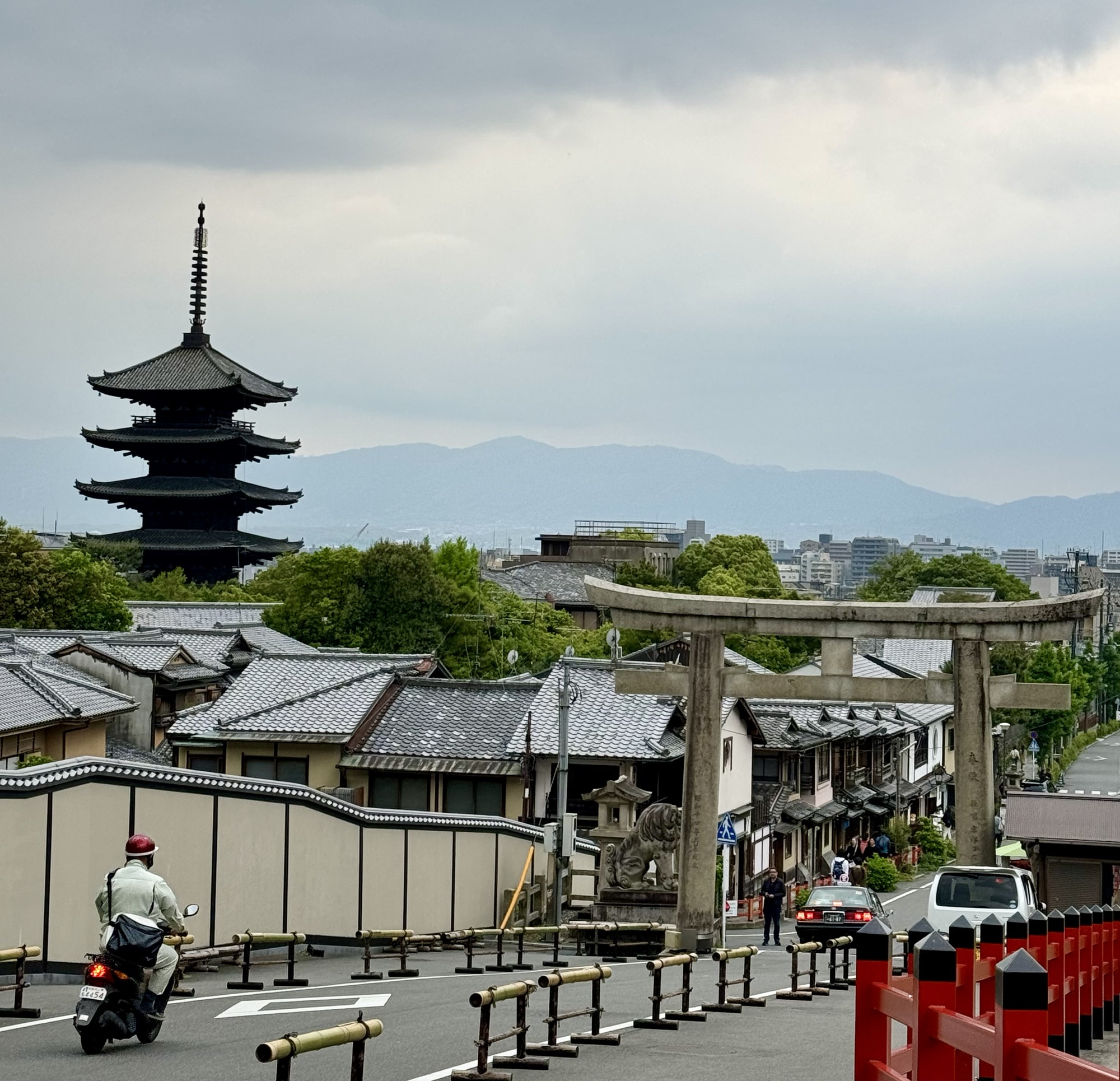
We were very fortunate to have booked into a nearly brand new, small hotel (Gion Elite Terrace) right in the middle of the historic district of Kyoto (the Gion). We loved being walking distance to the vast majority of historic and cultural sites, and the rooms were cozy…we even had an in-room dry sauna, a soaking tub, and a private little garden. The included breakfast buffet included both Western choices and some typical Japanese favorites, and there were abundant samples of Japanese skin care products that ended up converting me to one of the brands!
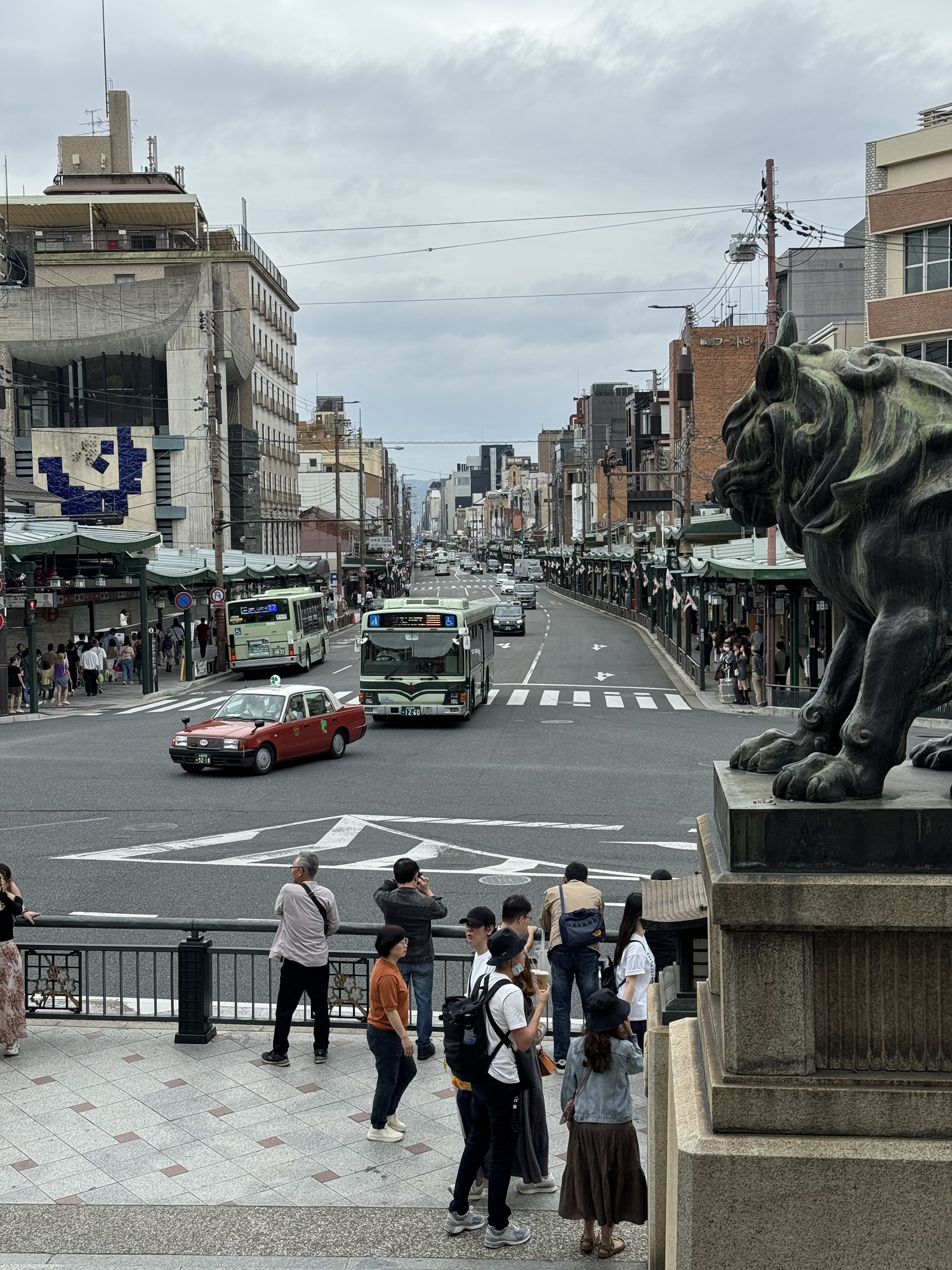
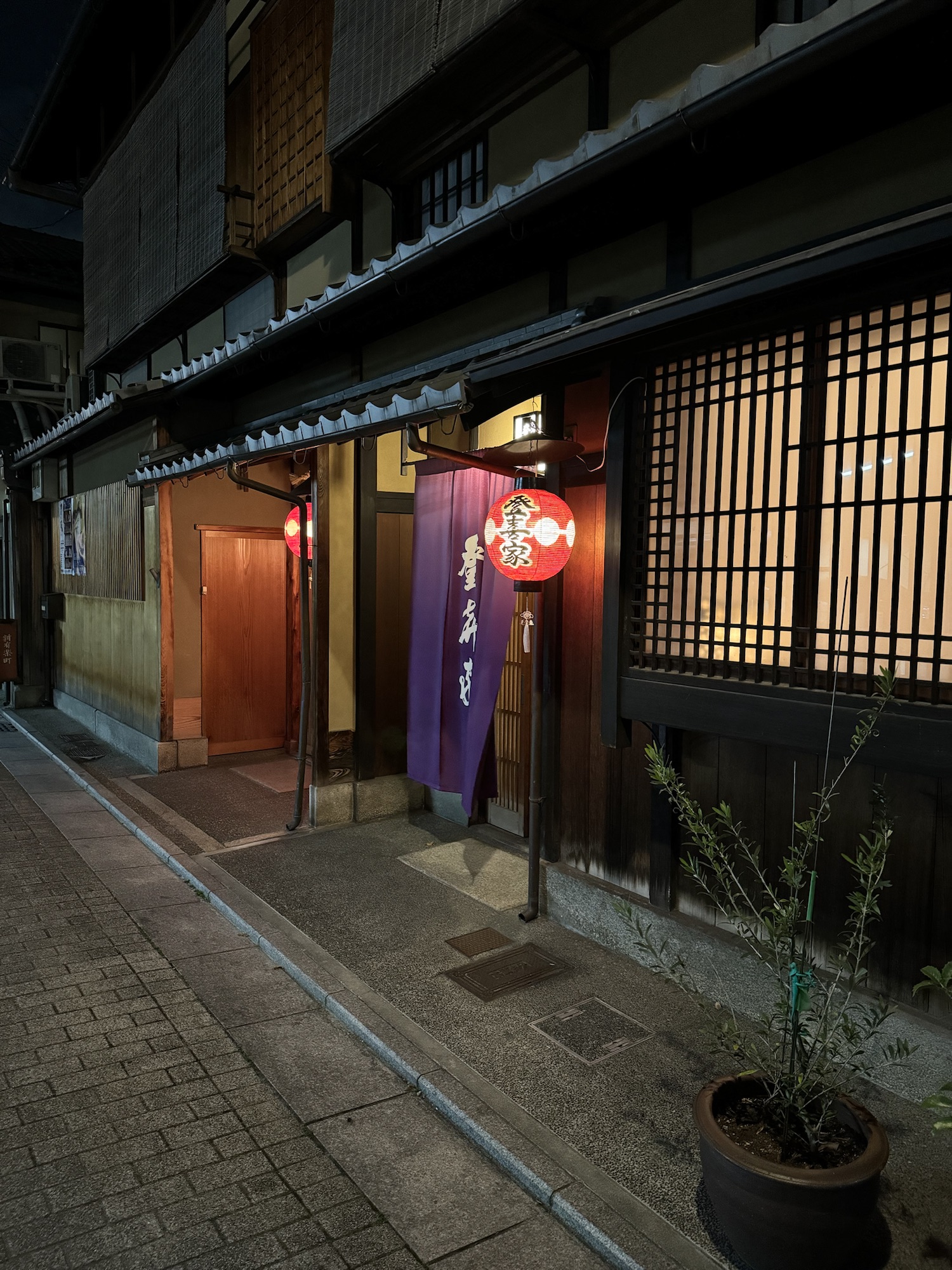
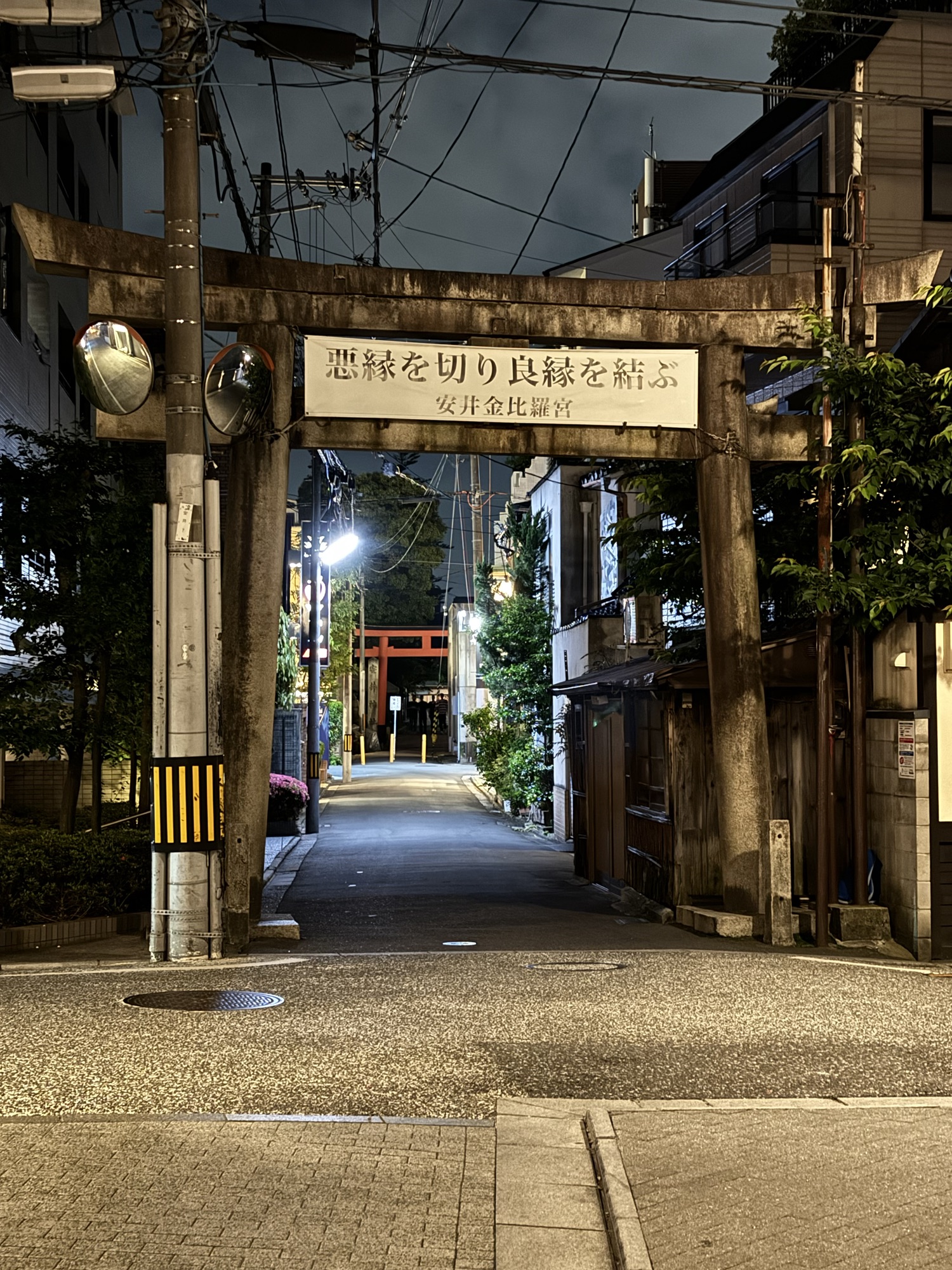
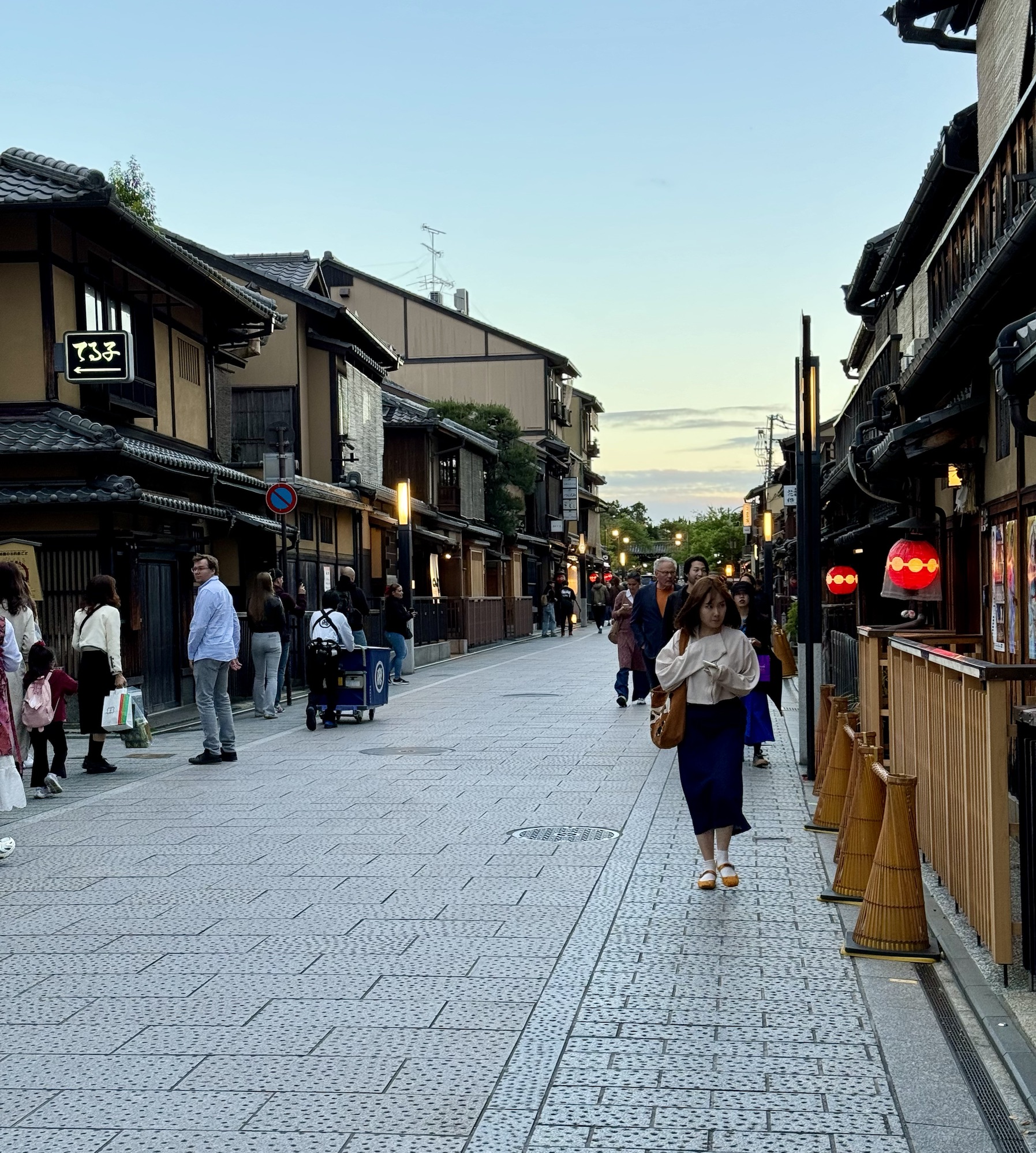
We spent our first day or two exploring the historic sites within walking distance of our hotel. Our first meal was at a typical ramen place where we had Wagyu beef ramen – yum! These very casual spots are all over Kyoto and the few meals we had at different ones were always plentiful and tasty.
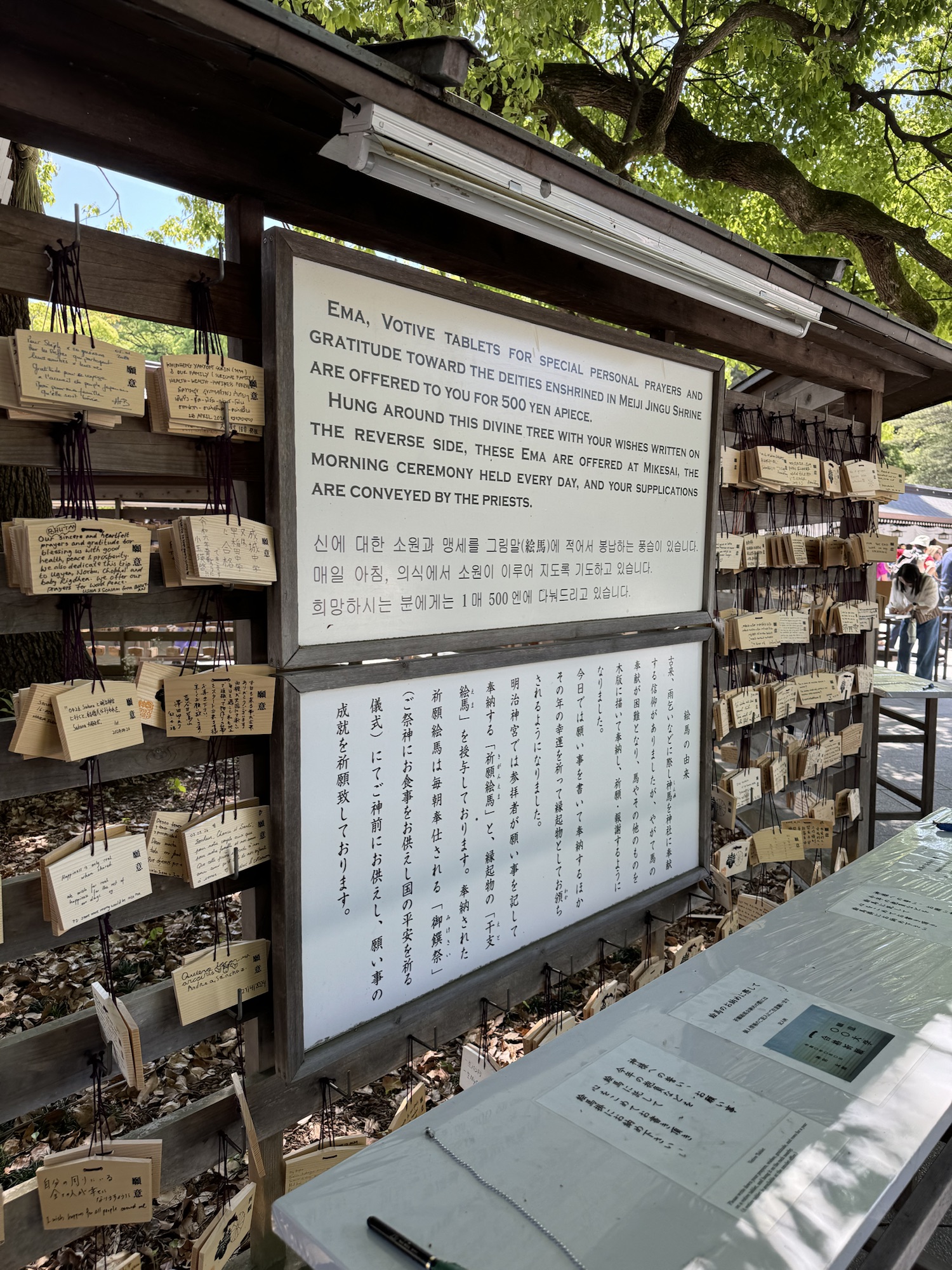
We visited the Shinto Yasaka Shrine. There are several theories about the origin of this shrine. According to the record of the shrine, the history of Yasaka Jinja Shrine may go back as far as 656 (Asuka Era), the second year of the reign of Emperor Saimei. Irishi, an errand from Korea, brought the spirit of Susanoo-no-mikoto to this place. In Japanese mythology, Susanoo-no-mikoto was banished from high heaven because of some bad behavior. After he went down into Izumo on earth, he met an old couple and their daughter, Kushiinadahime-no-mikoto, who was going to be a sacrifice to an eight-headed serpent, Yamata-no-orochi, which represents disasters. He defeated the serpent to save Kushiinadahime-no-mikoto, and married her. Susanoo-no-mikoto then became famous as a heroic deity. In the main sanctuary, Kushiinadahime-no-mikoto and eight children of Susanoo-no-mikoto, Yahashira-no-mikoto, are enshrined with Susanoo-no-mikoto. That’s just one example of the deep and mythical history we learned about in our travels in Japan.
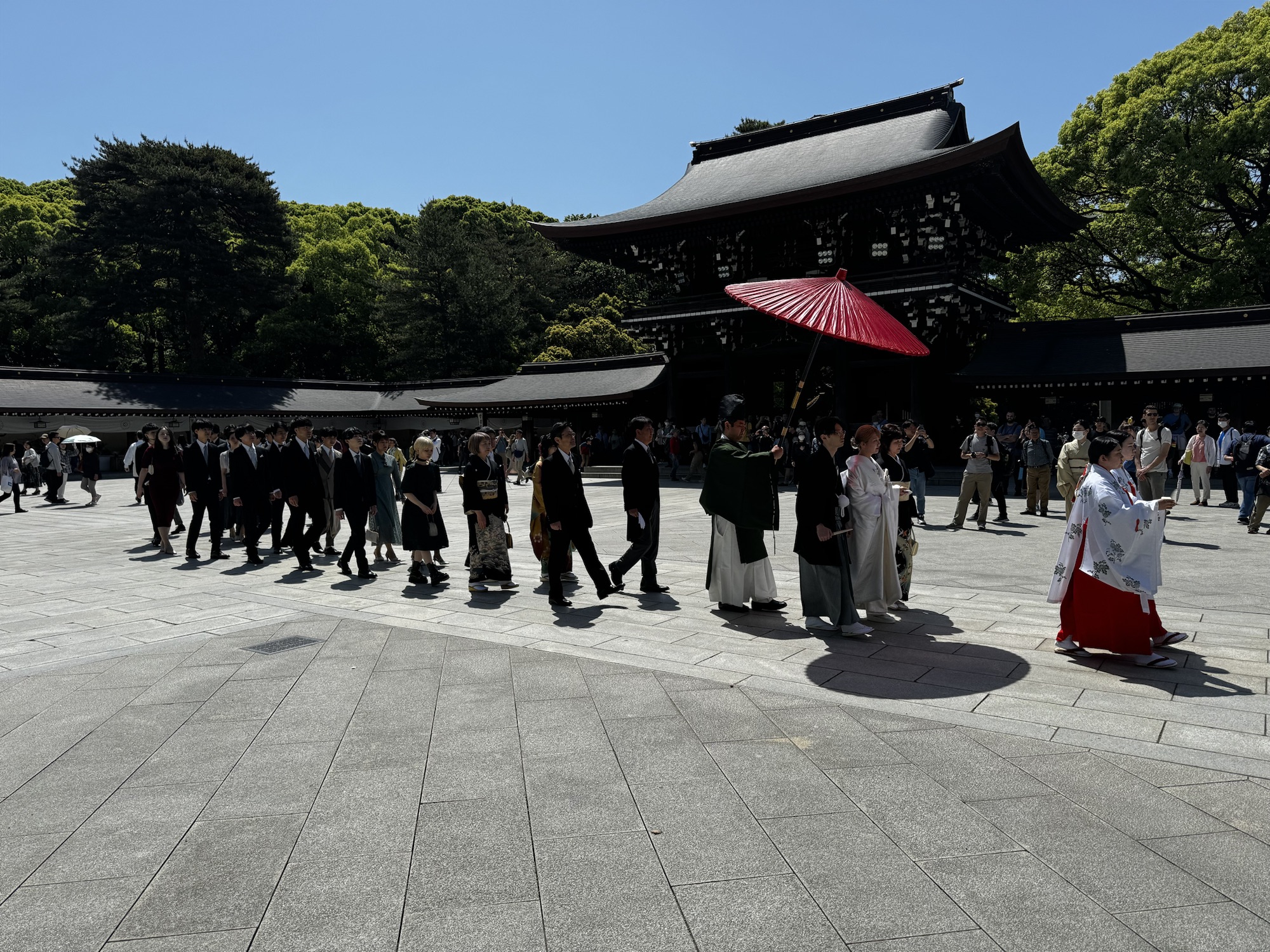
Since the Gion district of Kyoto is famous for being the center of geisha culture, many tourists rent traditional kimonos and related garb to get into the spirit of things – I think it also makes good social media fodder!

To get an overview of various key Japanese traditions, we went to a Gion Corner theatre program of seven different Japanese art forms. The program is one hour long and includes chanoyu (the art of preparing tea), koto music, ikebana flower arrangement, bugaku dance, kyogen comedy, and Kyomai dance. Really a brief smorgasbord. We got to sit in the very front row and the comedy segment was very funny. Unfortunately they didn’t allow any photography inside so we highly recommend attending when you are in Kyoto.

Since we like to experience the range of culinary choices when we travel, we don’t always want to go to the most upscale and expensive places (we like those in the mix). One of the young front desk clerks suggested for a local flavor that we go to a neighborhood Izakaya dinner in the Pontocho district. Pontocho is one of Kyoto’s most spirited and memorable neighborhoods. A narrow street straddling the Kamogawa River, it is Kyoto’s busiest nightlife spot. If you didn’t know this izakaya existed, you’d likely walk right by it amidst the numerous bars, “men’s clubs”, and small restaurants that line the main drag of this area. Down a narrow staircase, this little gem serves a ton of tasty “tapas” or small plates and is very inexpensive. Andrew and I were by far the oldest (and certainly the only tourists) there, and we loved it so much we returned a few nights later.
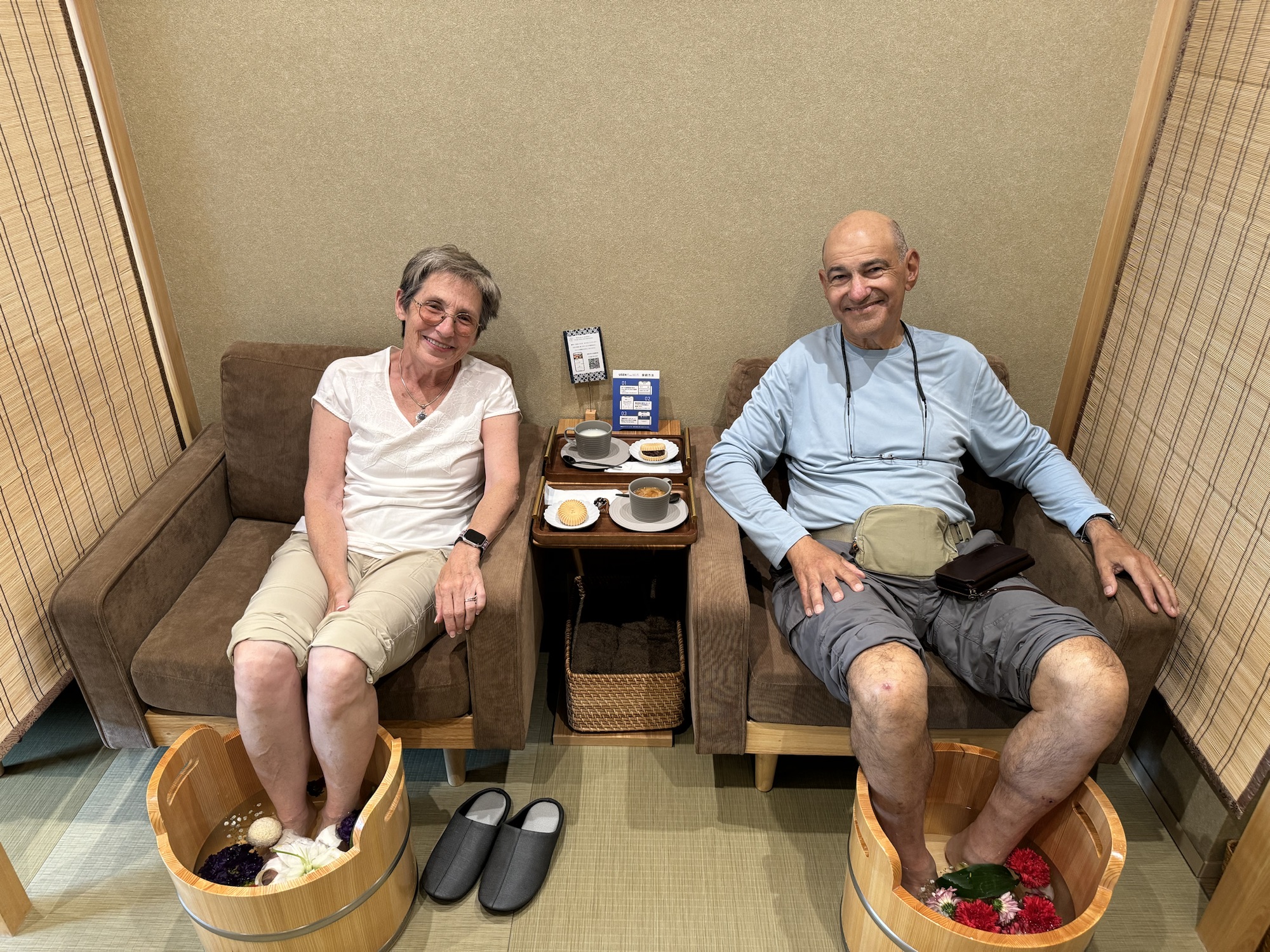
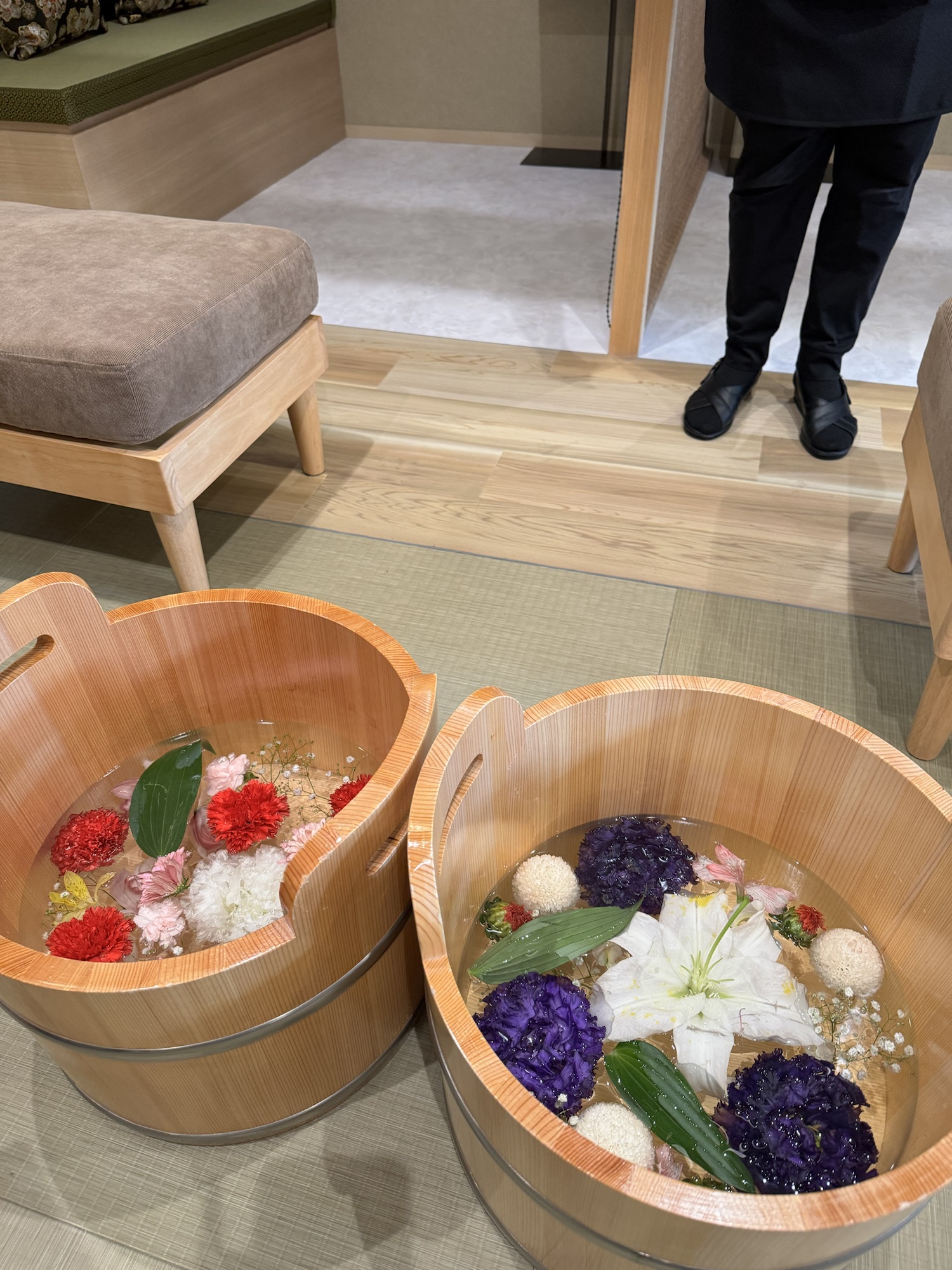
The next day was a very busy touring day…we started out by getting traditional foot massages around the corner from our hotel. Our feet got soaked in a milky water filled with fragrant flowers and then lovely young women massaged our feet while we drank tea and ate yummy traditional cookies.
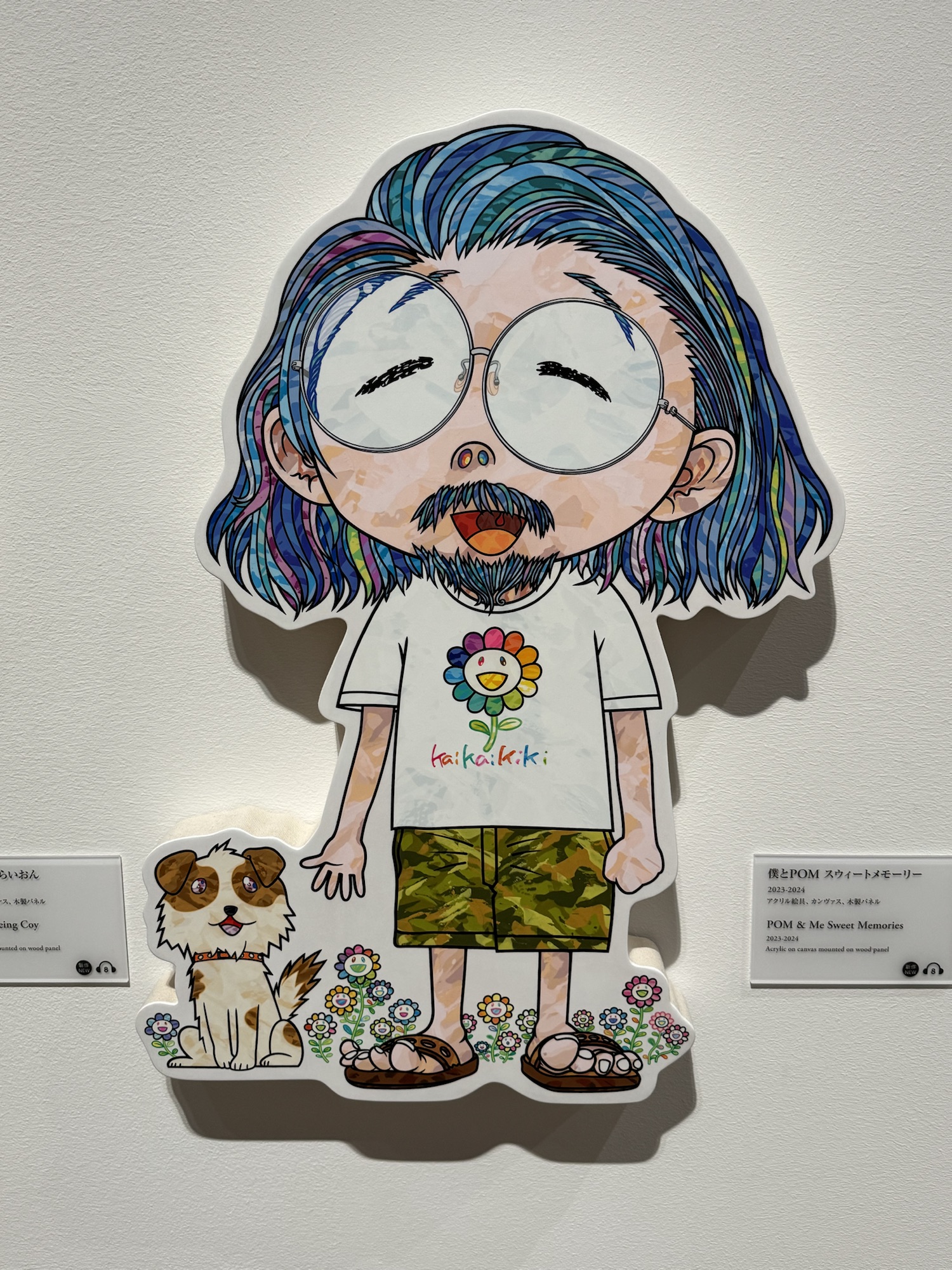
A dear friend of ours said we could not miss the Takashi Murakami art exhibit while in Kyoto. Murakami is a Japanese contemporary artist. He works in fine arts (such as painting and sculpture) as well as commercial media (such as fashion, merchandise, and animation) and is known for blurring the line between high and low arts. His influential work draws from the aesthetic characteristics of the Japanese artistic tradition and the nature of postwar Japanese culture. I’d seen his work elsewhere, but this seemed like a great opportunity to also visit the Kyocera Museum which turned out to be awesome. The exhibit did not disappoint! Murakami obviously has both a flamboyant and playful approach to his art and at the same time understands how to commercialize it.
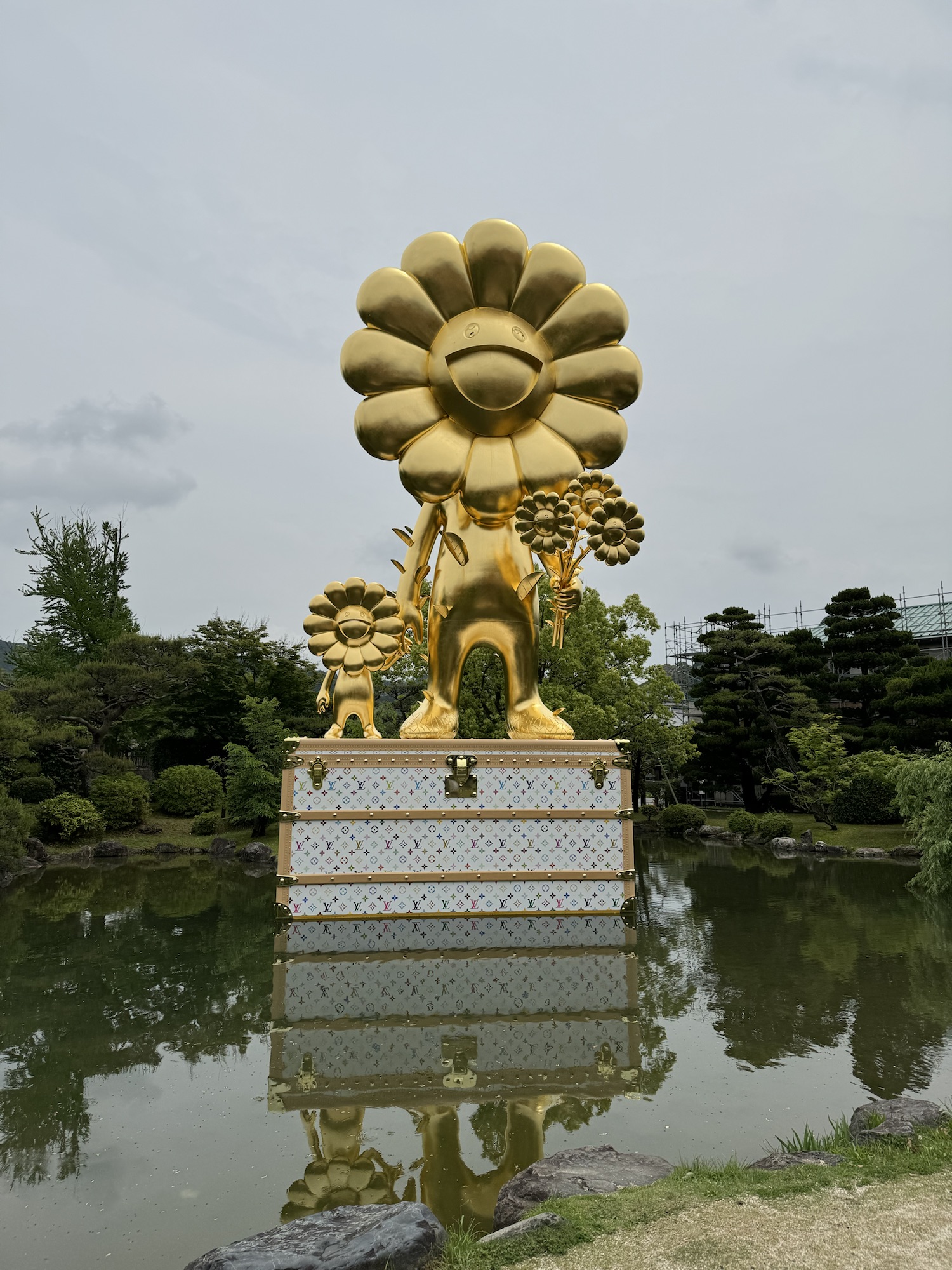
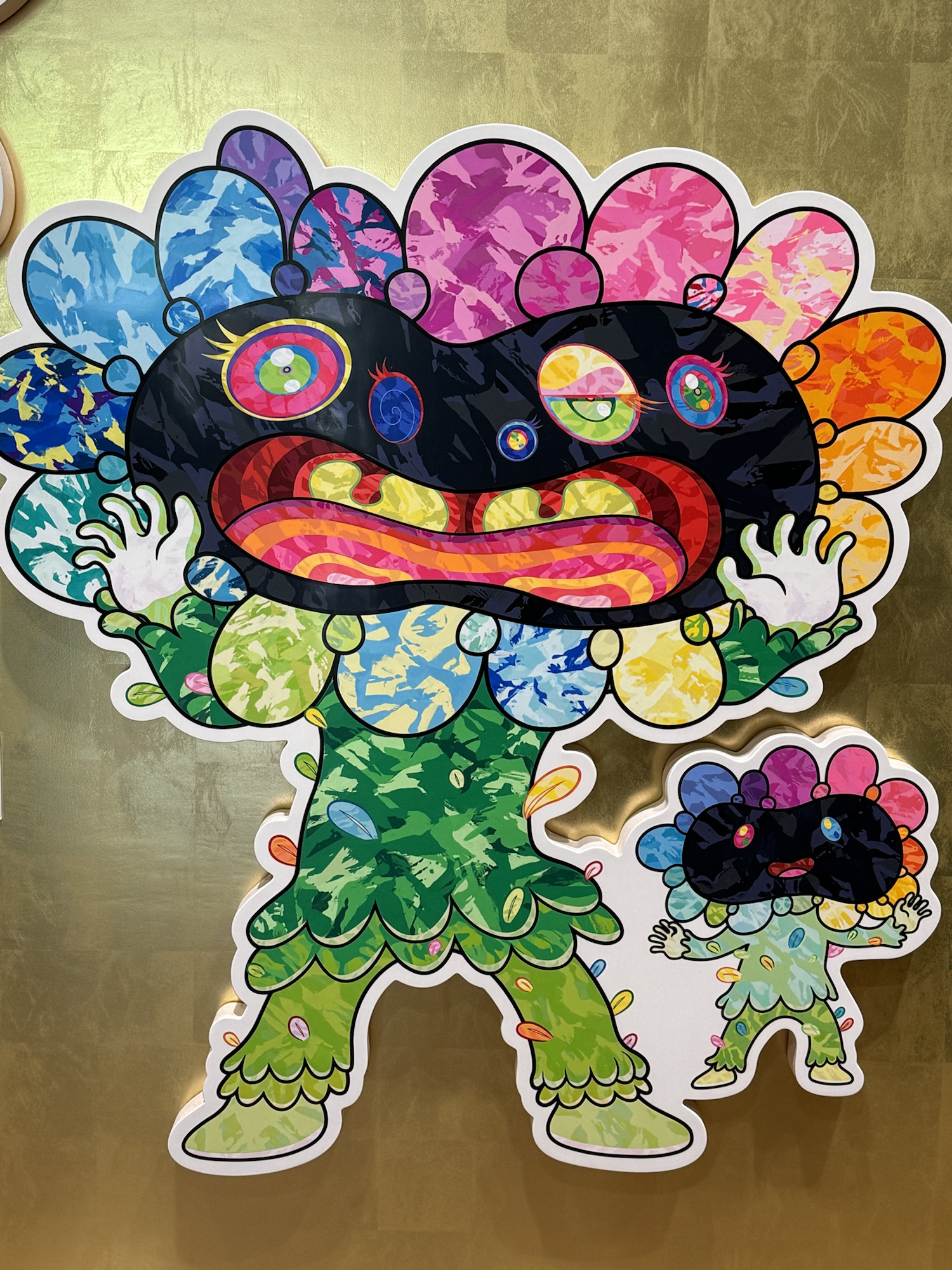
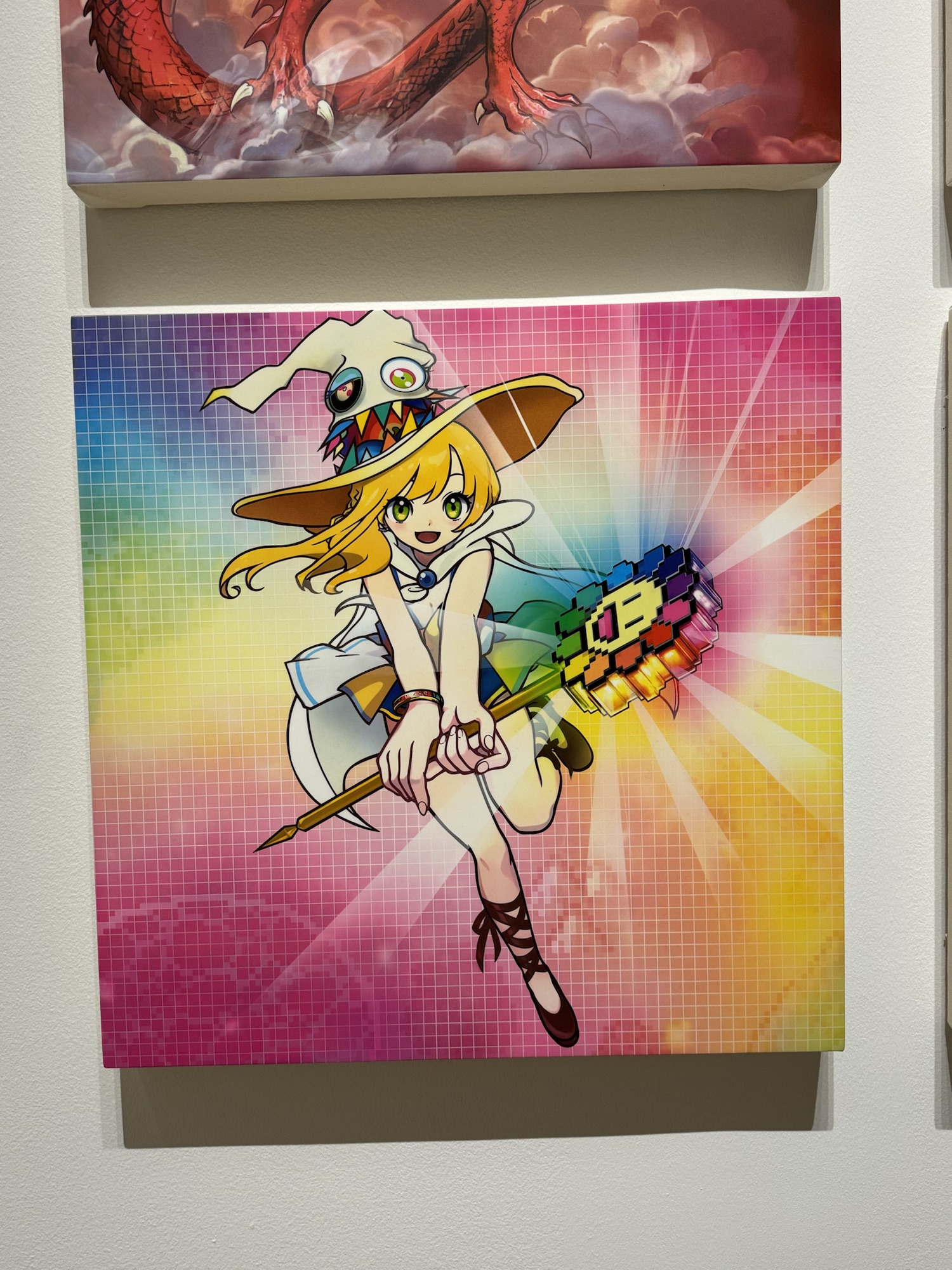
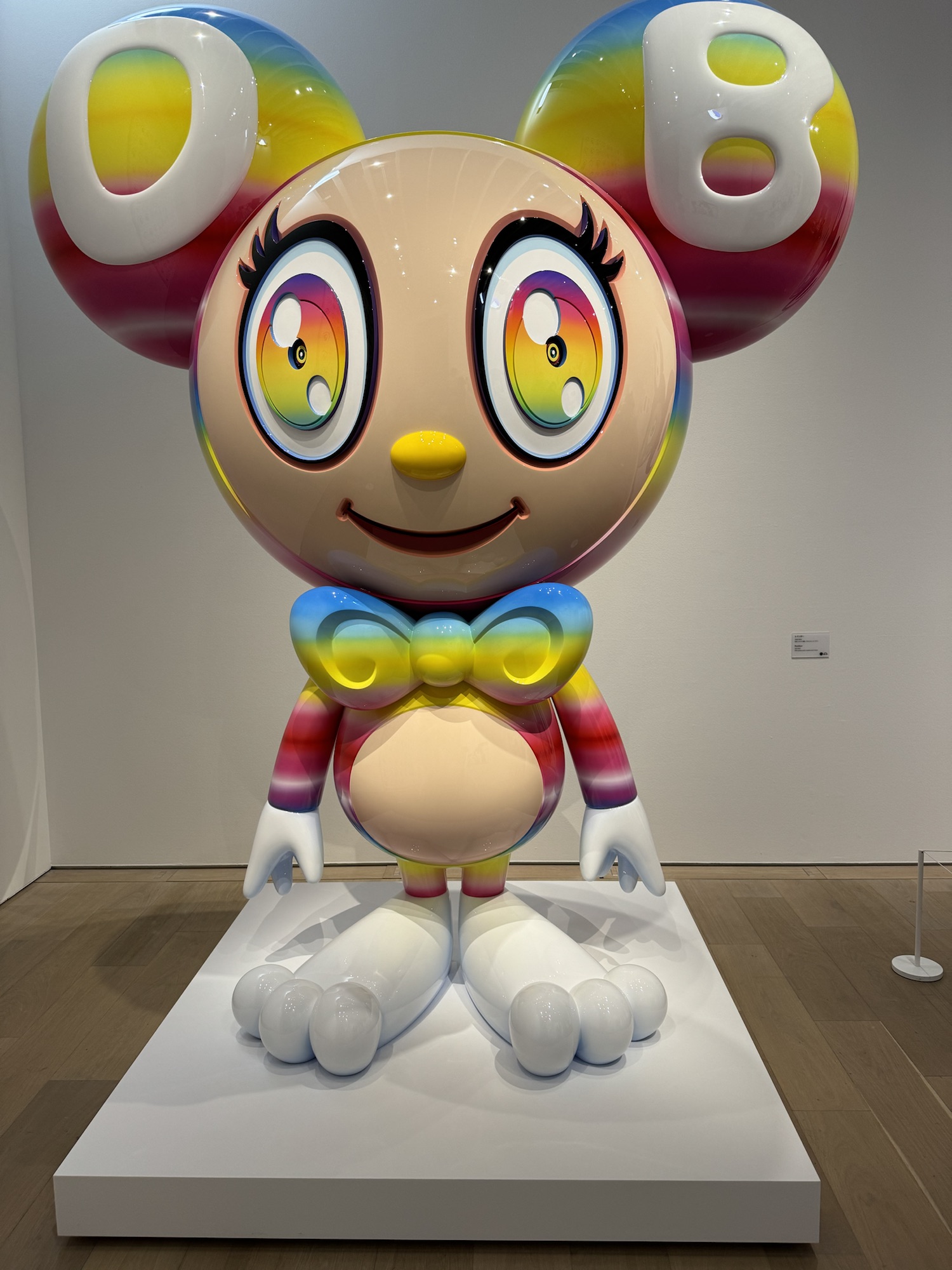
We visited the Imperial Gardens (aka Kyoto Gyoen National Garden) – the “Central Park” of Kyoto and a very peaceful respite from the city hubbub. The Kyoto Imperial Palace was the seat of Japanese imperial power for six centuries, and still sits inside the Kyoto Gyoen National Garden that is popular for leisurely strolls, jogging, picnics, and flower viewing. While we didn’t get to see the palace itself, the park was really lovely to wander through.
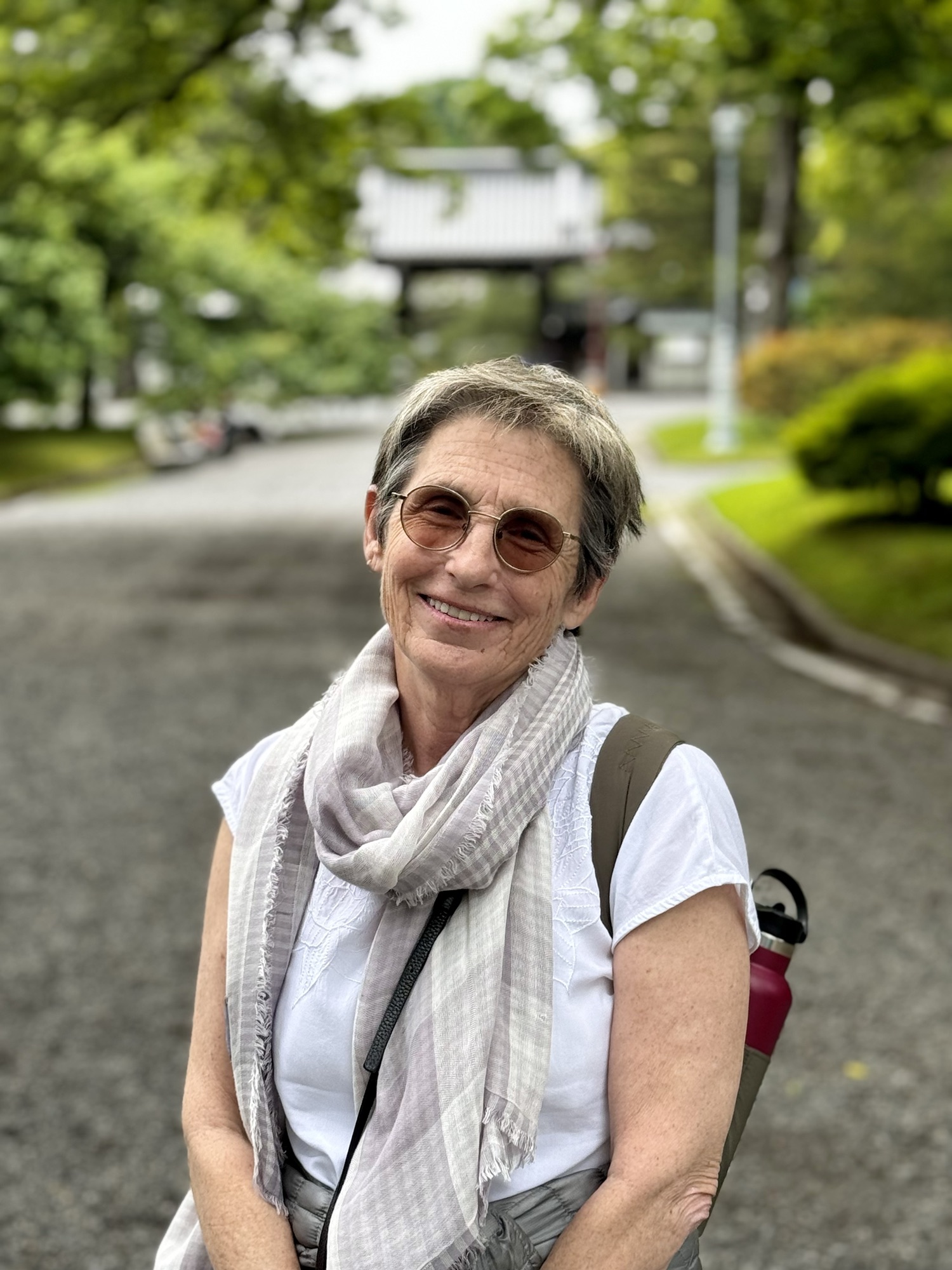
I’d arranged a few different activities for our time in Kyoto, and the Tea Ceremony was a highlight. Held with a small group in a tatami room, we learned the true art of making matcha tea. Every movement and action taken is prescribed and has significance in this ritual – all with the purpose to elegantly serve guests. Since I love matcha tea, I bought a set for preparing it plus some Japanese matcha powder to try at home.

We decided to try a “local” dinner at a very small restaurant recommended by the hotel staff…it’s run by one woman with a part time helper, and she only takes the first twelve people that show up at dinner time. We got lucky! It was not anything fancy but incredible to watch this woman take orders, cook the meals to order, and serve them herself. We had butter mushrooms and traditional pancakes with various meat and fish in egg batter. We noticed a couple of women who showed up after us did not get in and they were definitely tourists and very nonplused. We saw them lined up the next day to try again.
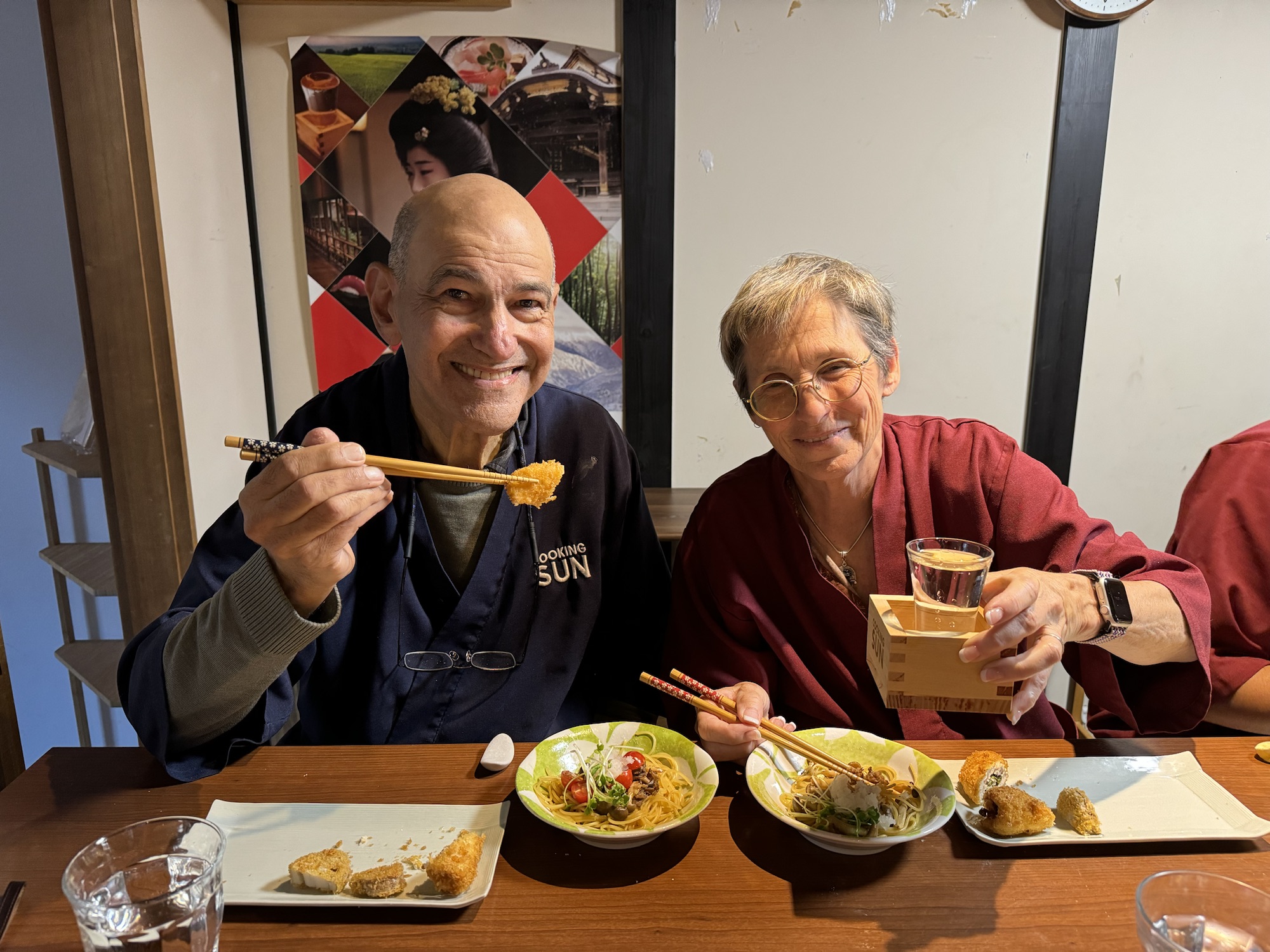
One other planned activity in Kyoto was a cooking class. There were about ten of us from all over with two local instructors with decent English. It was particularly fun sitting next to two guys who were professional chefs who were in Japan to specifically learn recipes they could take back home. They put us to shame on chopping, sauteing, and presentation! Of course, the very best part was that we got to eat what we cooked – made us follow instructions VERY carefully.
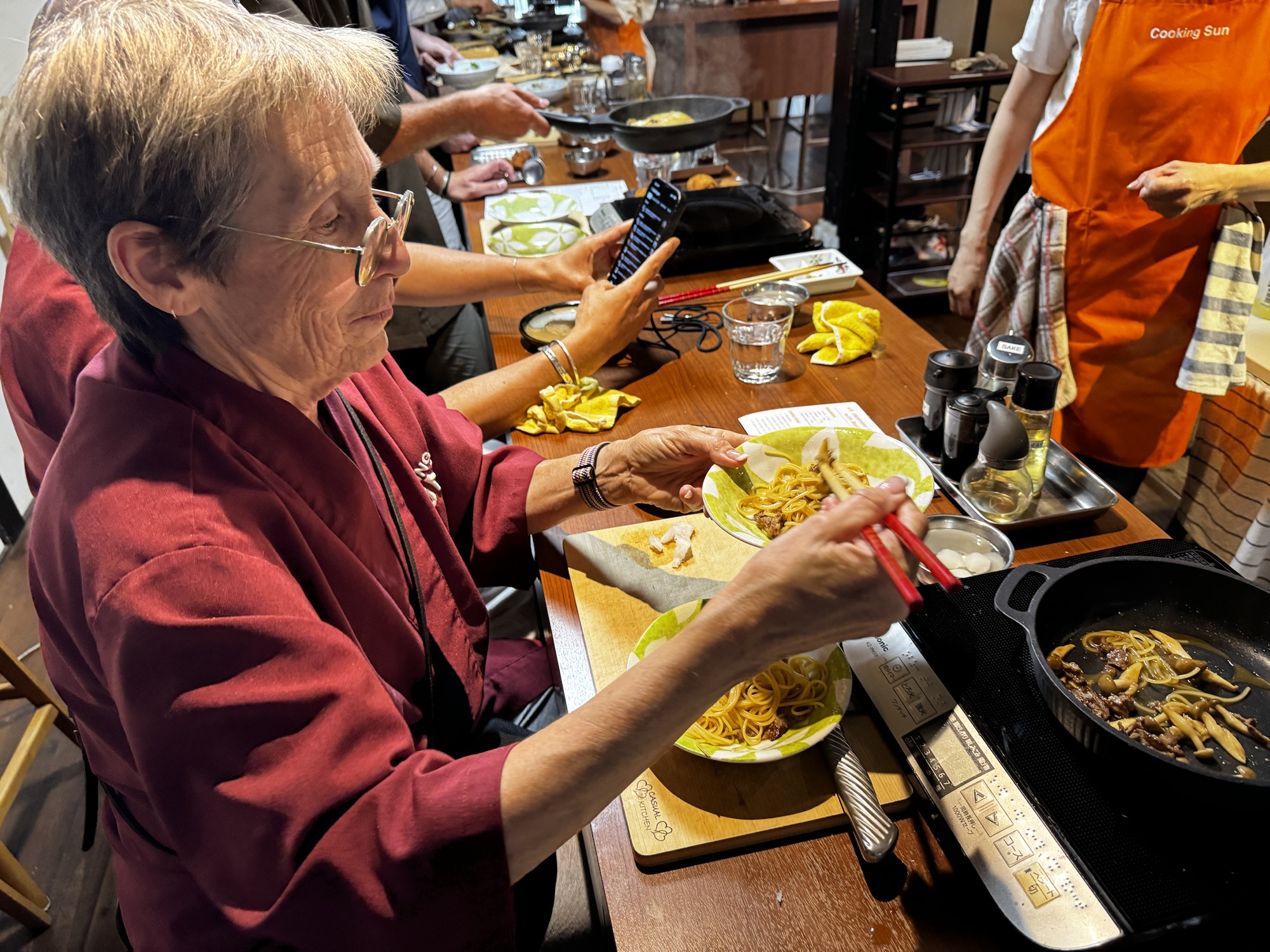
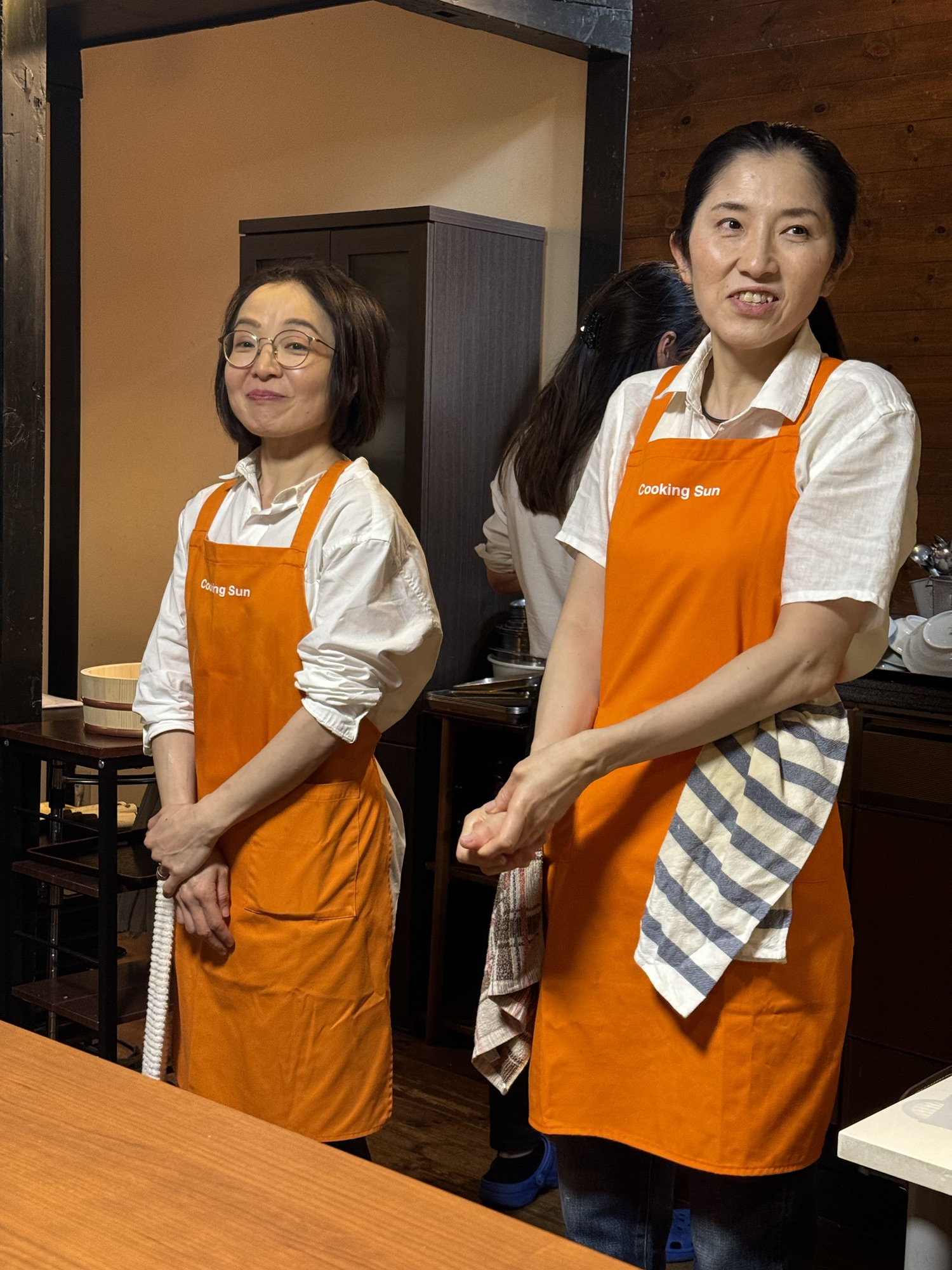

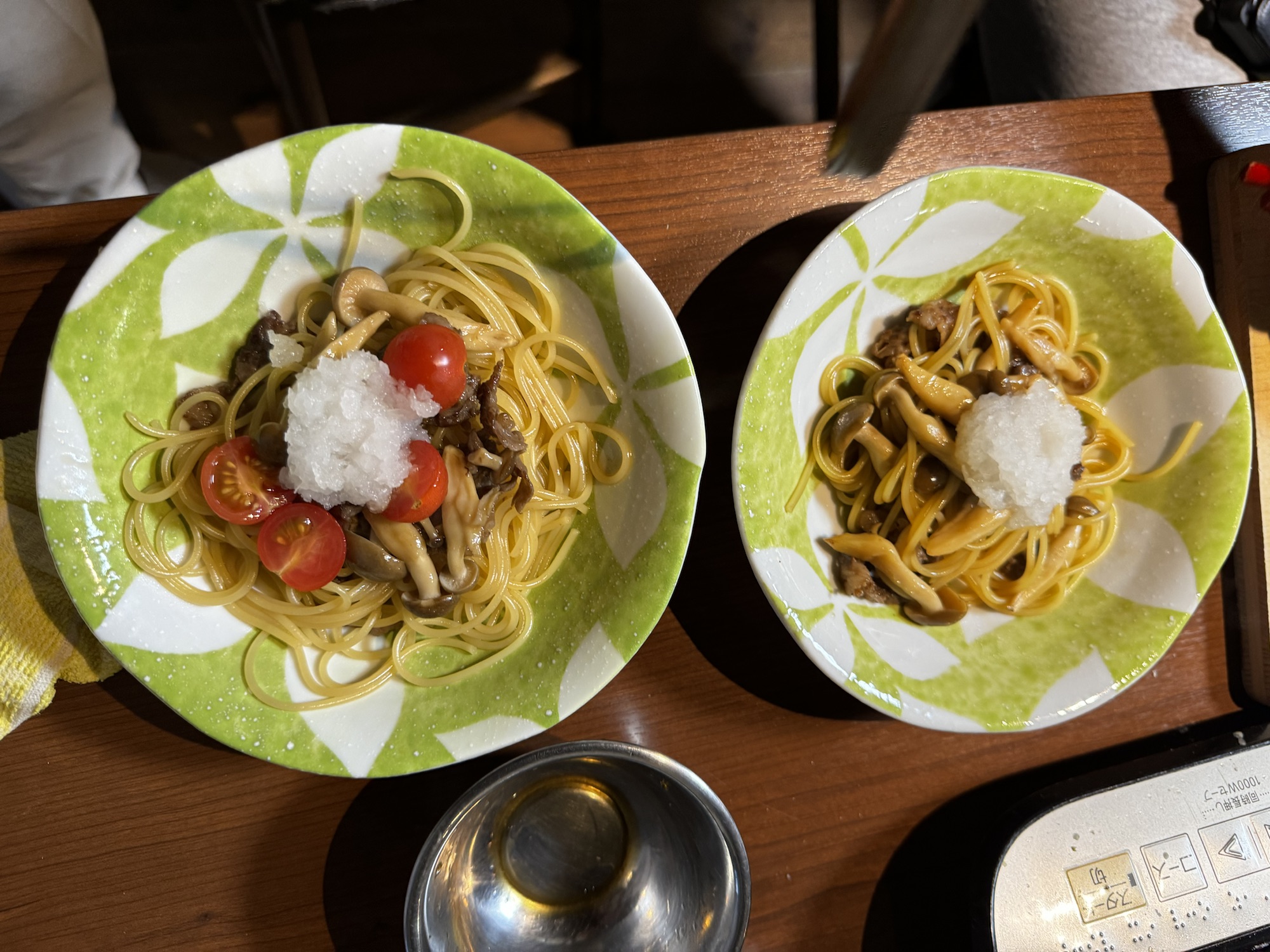
So much to share about Kyoto – stay tuned for part two!


 Living La Vida Loca
Leave a comment