
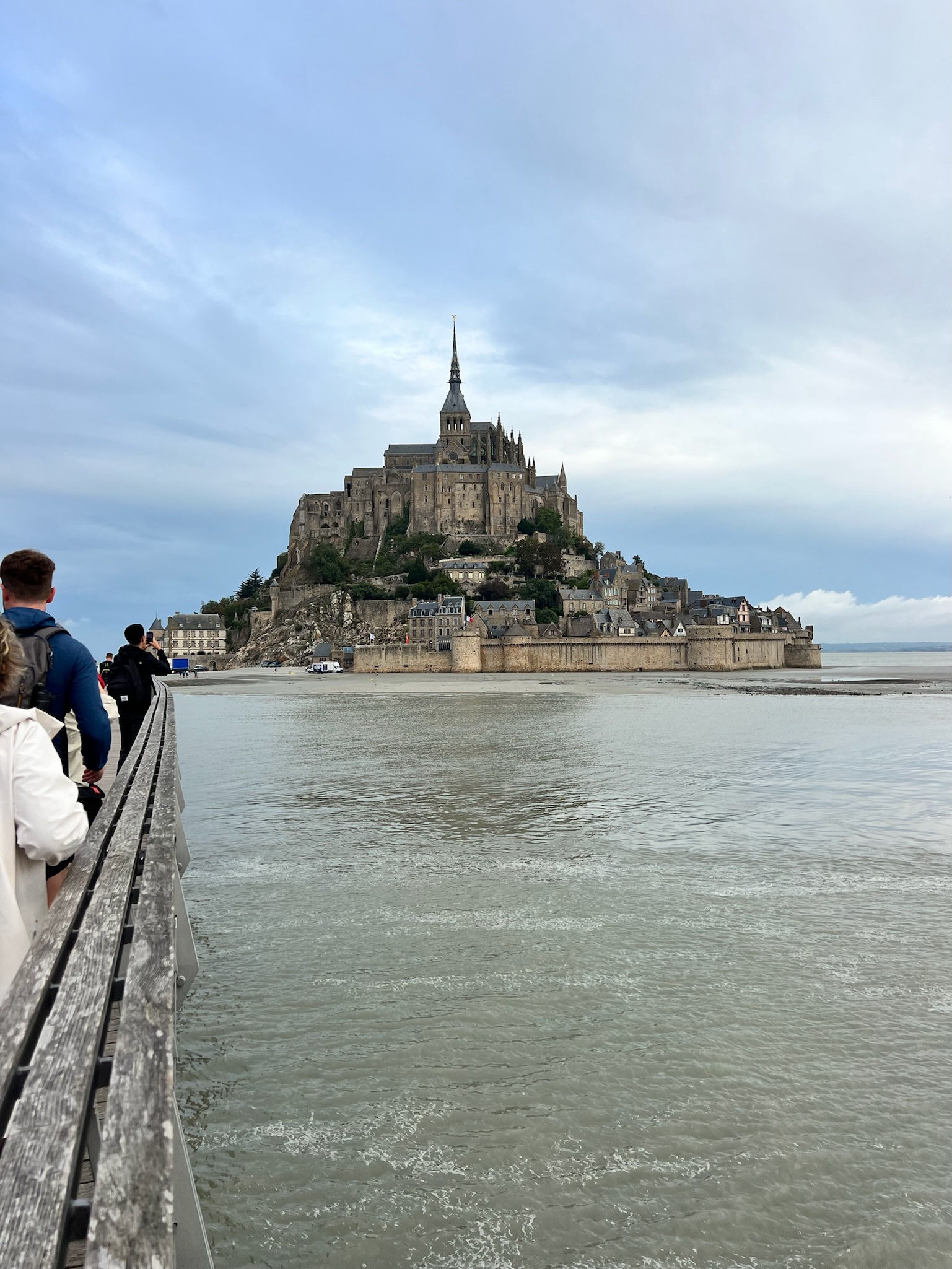
We started our day with a shuttle to the island monastery of Mont-Saint-Michel, a World Heritage site and one of three main pilgrimage sites in Europe. The view from our bus arriving at the far end of a bridge that crosses to the actual building was incredible. When the tide comes in, this walking bridge is under water so obviously the time when tourists can visit is dictated by the ebb and flow of nature!
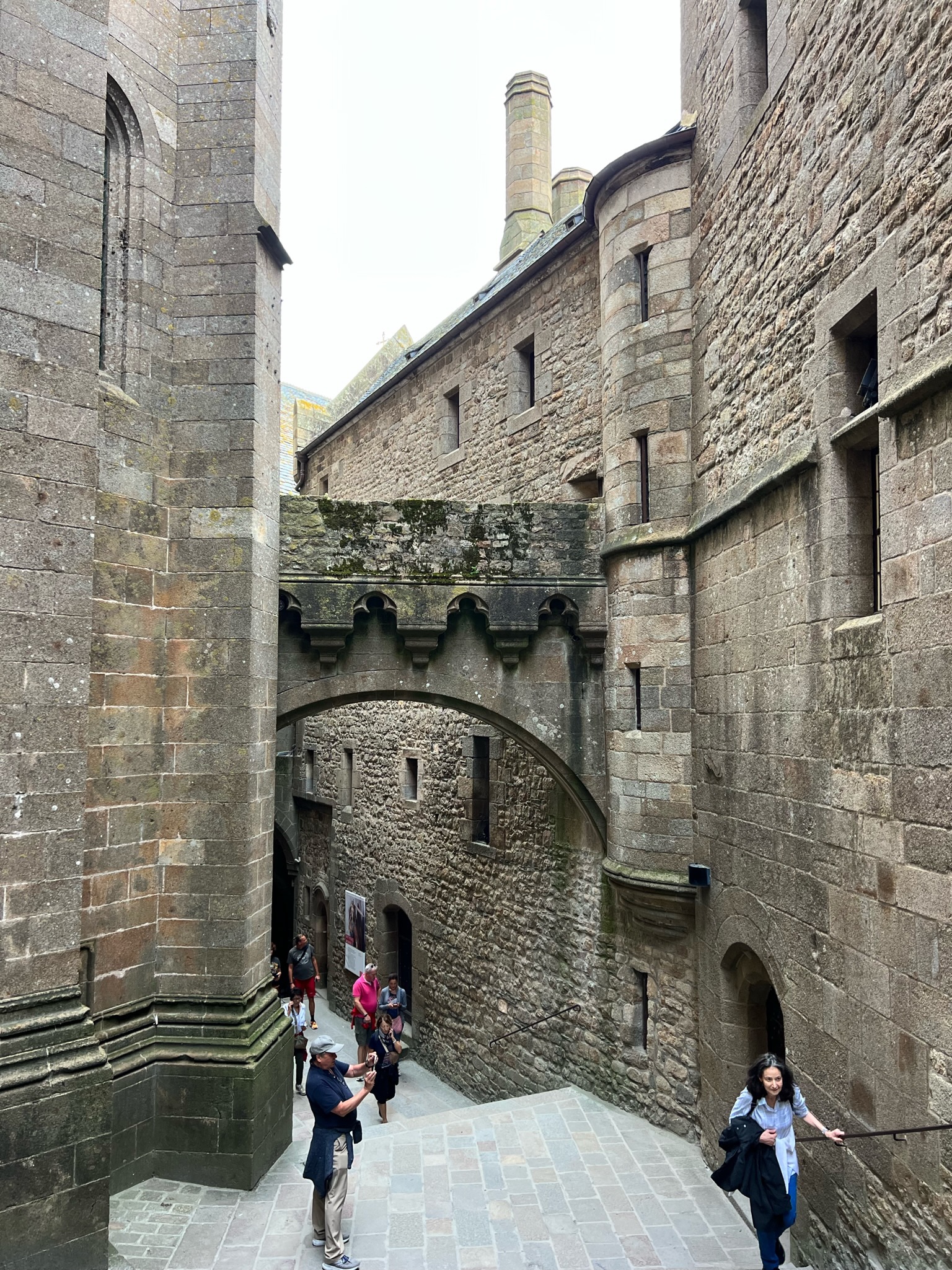
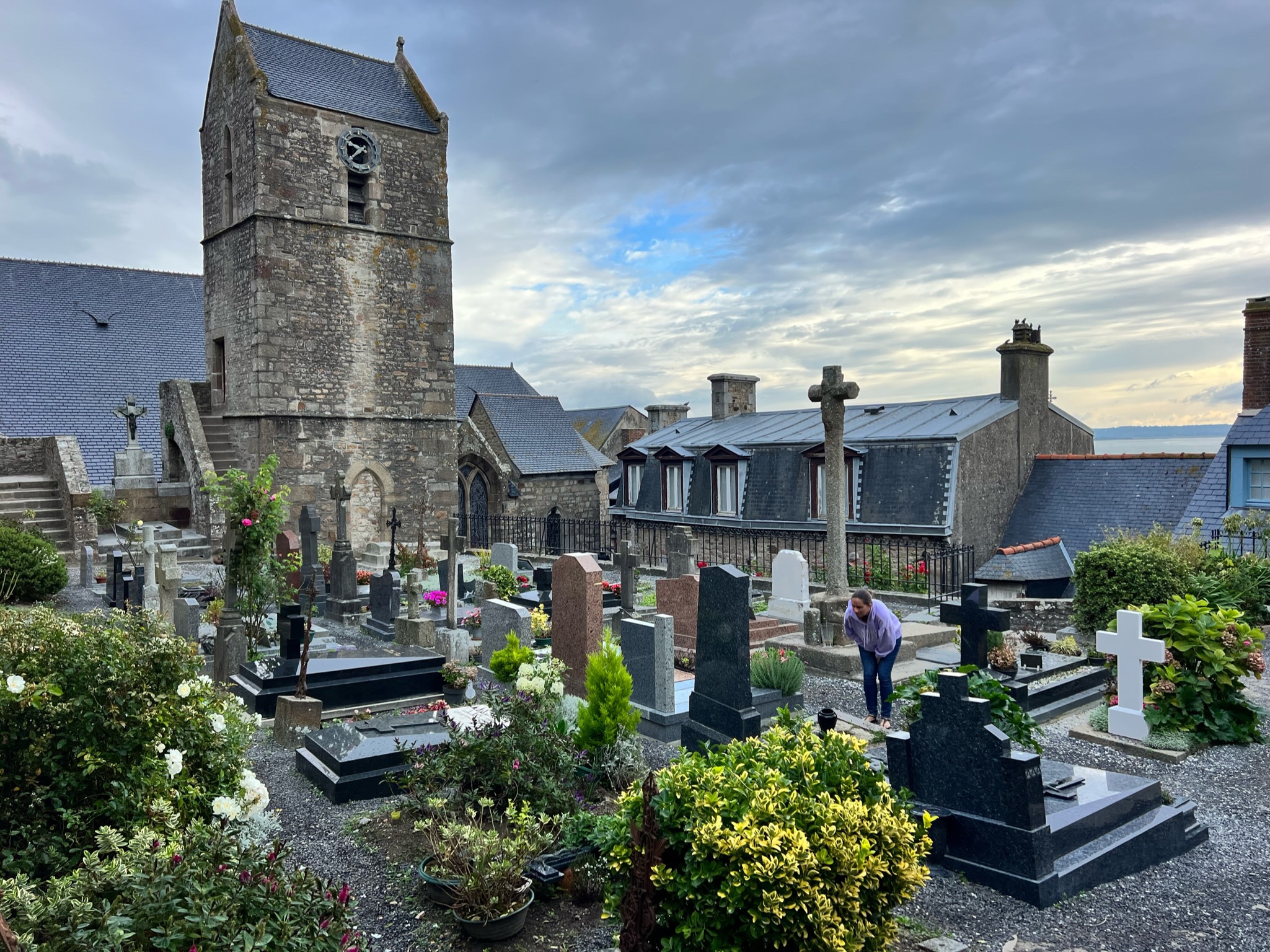
Arriving before most tourists, our guided tour gave us a real sense of the power of these hallowed grounds, which have attracted pilgrims throughout the Christian world for centuries and is now one of the most visited sites in Europe. We wound through narrow passages, up many stairs, passed by the small cemetery within the walled city for those in the community that serve the monks, and got to view the beautiful vista from atop the monastery itself.

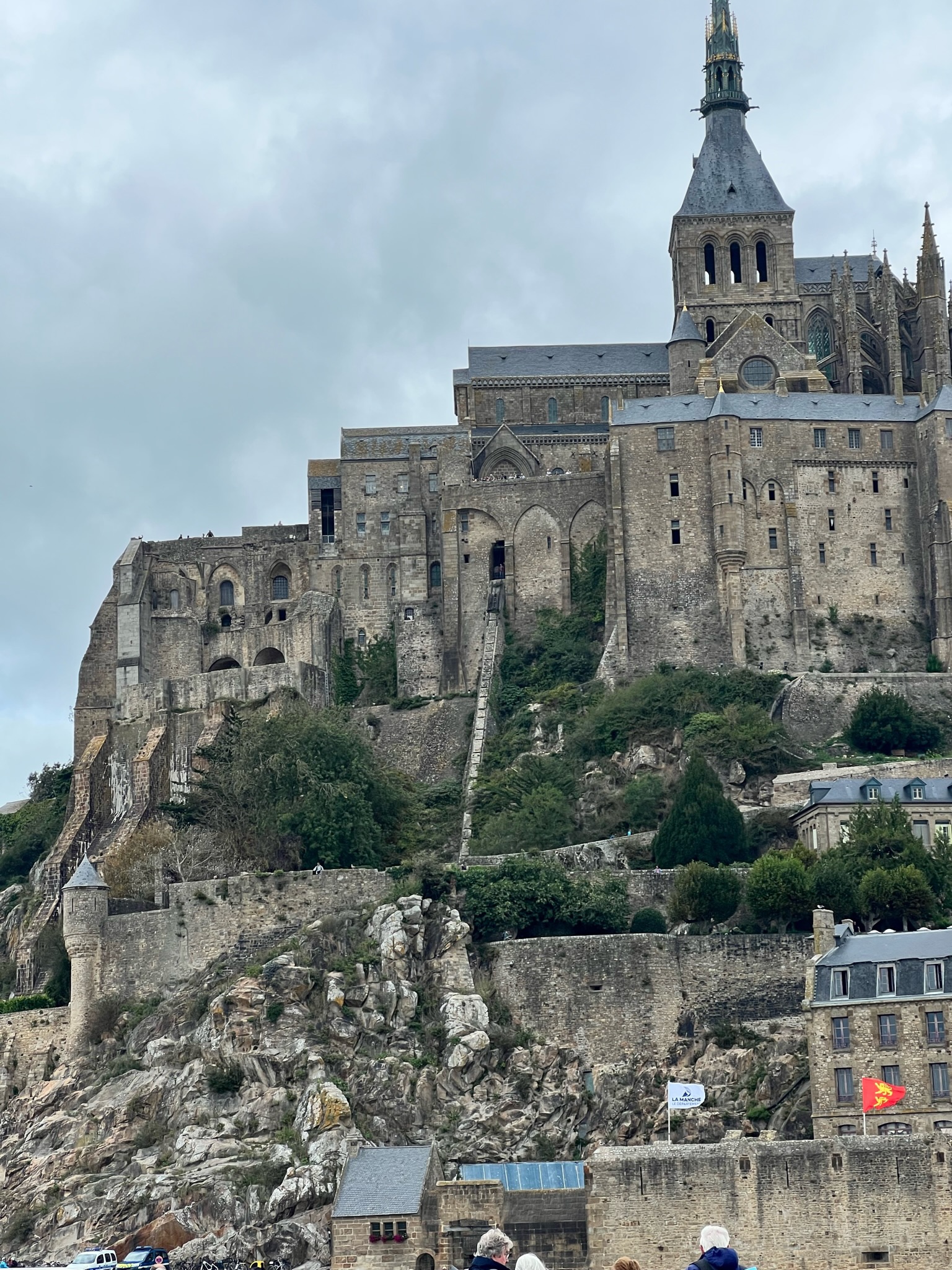
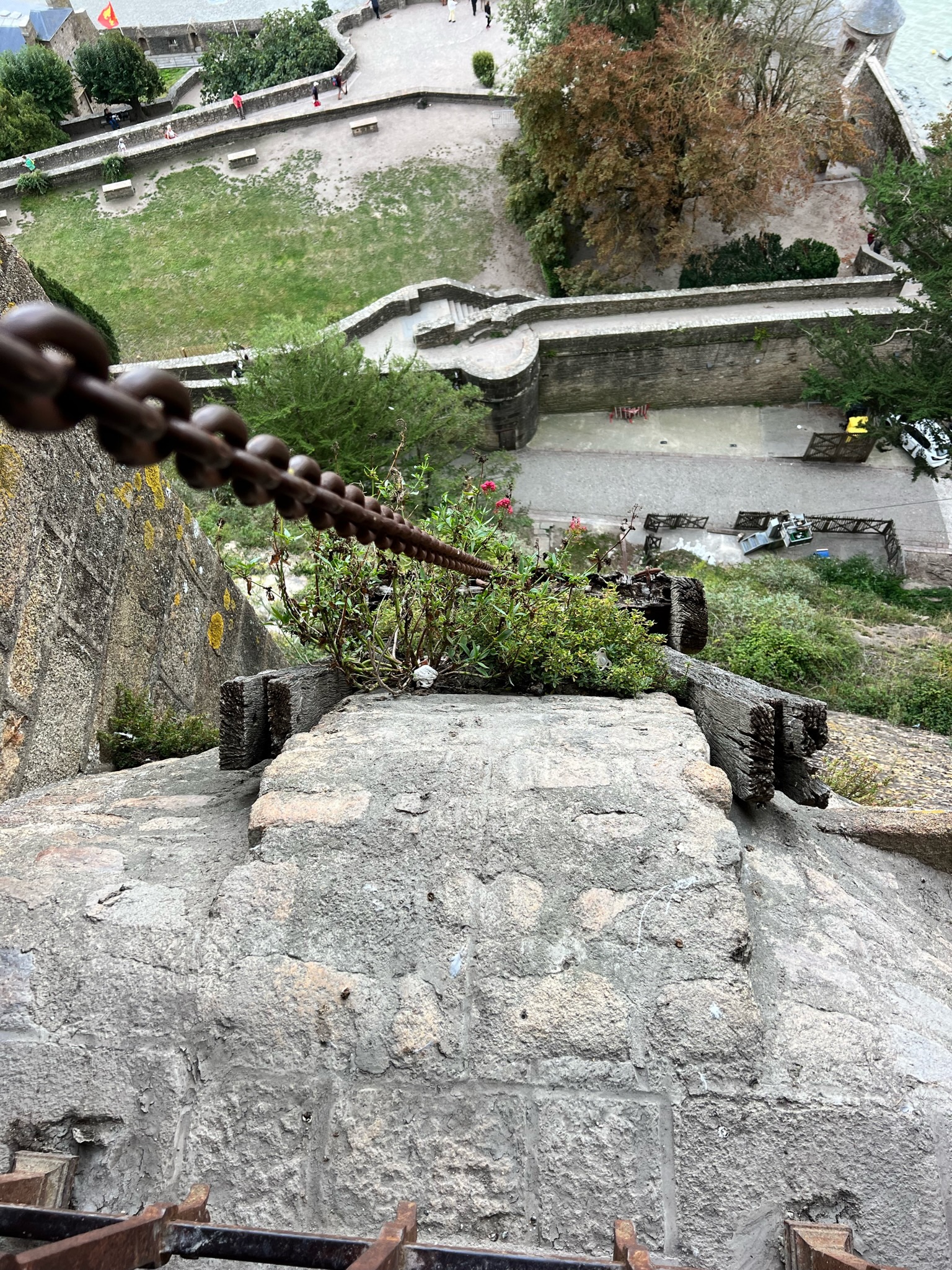
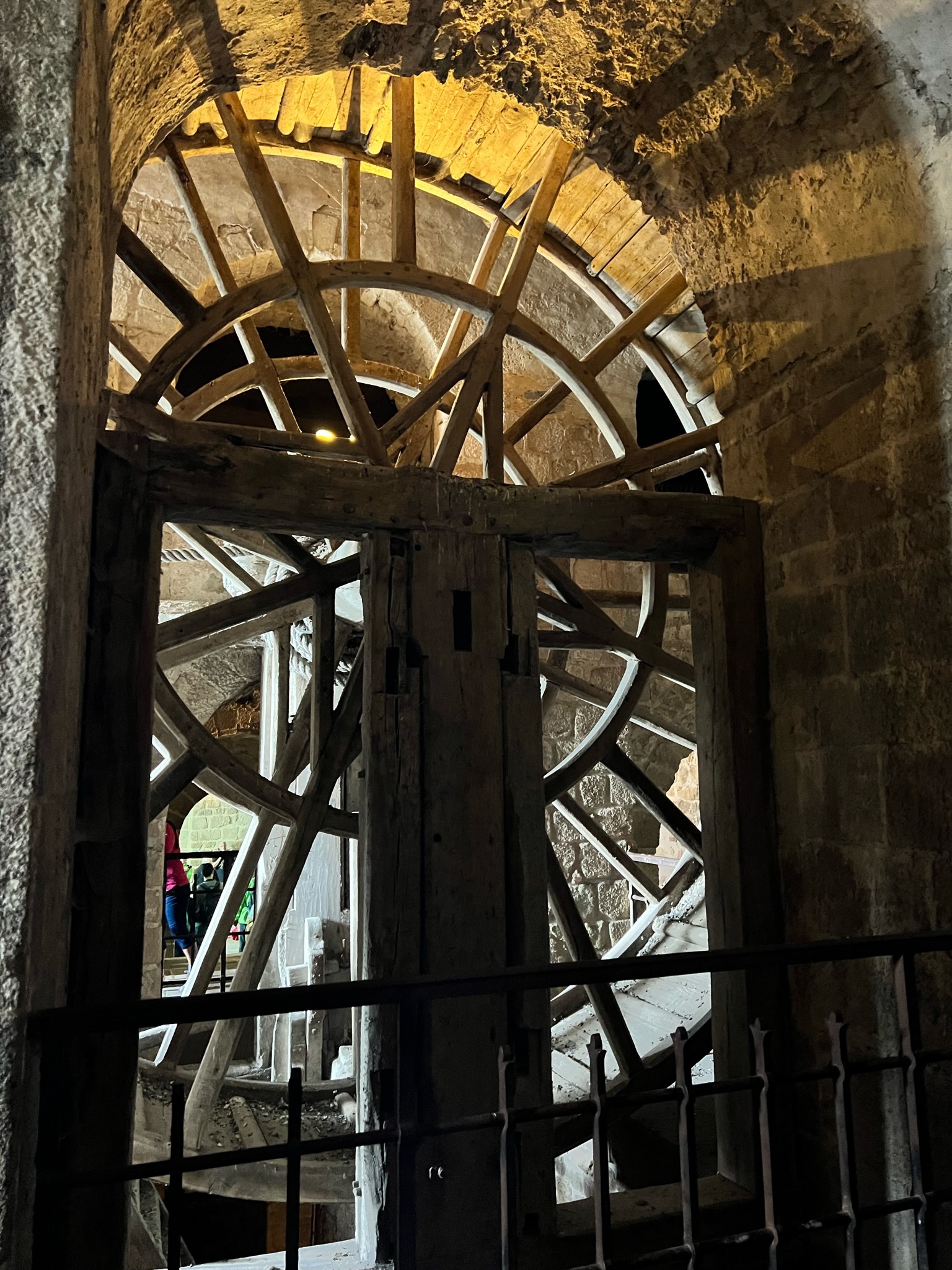
You might wonder how supplies got to this isolated spot and up into the higher levels where the monks actually live. Good question…in the photo on the left, spot a vertical line that extends from about a third of the way up to a much higher level. That is where a chain, platform and pulley (center photo) climb up the side of the structure. The wheel on the right was turned by volunteers (not mice, humans) who walked (like mice!) to turn the wheel and pull the chain and loaded goods up. Yes, they volunteered…it was considered an honor to help feed the sacred monks.
Our next stop was at a working cider farm outside
of the town of Bayeux, where we had a lovely lunch and learned all about how the yummy libation is made.

We took a beautiful path along the River Aure that led us all the way to the historic town of Bayeux. On June 7, 1944, this was the
first French town to be liberated by the Allies, and it was spared
major damage during the war as a result. We got to stay in a lovely boutique hotel called Villa Lara for the next three nights. All the rooms had gorgeous antique furniture and views over the Bayeux cathedral.
We spent the next day hiking along the waterfront and began to see the remnants of the battles that were fought toward the end of WWII. We saw concrete blocks resting in the sand and in the water that were there to keep Allied ships from grounding. We climbed up the cliff tops for views over town and across the English Channel. There were also original German weaponry at Longues-sur-Mer.


We had a great picnic lunch at the 12th-century Abbaye de Longues-sur-Mer. Founded in the 12th century, this Benedictine Abbey is a testimony to Norman religious life in the Middle Ages, Incredible restorations have gone on during the last century and it’s now classified as a historic monument.

I describe in another entry about the Battle of Normandy that took place at the end of WWII, but as we jump past that to the end of our trip, we got to do a bit of exploring the charming streets of Bayeux and its incredibly intact cathedral. On June 7, 1944, Bayeux became the first French town to be liberated by the Allies, thus avoiding major damage during the war. Afterward, continue walking to the Bayeux
Memorial and War Cemetery, where over 4,000 Commonwealth troops were laid to rest after World War II. We got to visit the Bayeux Tapestry, a 230-foot-long piece of embroidery that portrays the Norman invasion of England in 1066, led by William the Conqueror. This battle
marked the end of the Dark Ages in England, and the beginning of a 300-year period when the rulers and nobility of England spoke French, not English! The amount of detailed work that went into this incredibly long and intricate piece of art has survived more than 9 centuries…pretty amazing.
Now, on to 2024!
 Living La Vida Loca
Leave a comment