
Andrew and I made the decision over the last year or so that travel is so much a part of our DNA that we needed to take “calculated risks” – despite possible exposure to COVID – and keep exploring the world. Of course, we take guidance from Andrew’s physicians with regard to destinations that might present more risk than others should Andrew as an immunocompromised person need treatment – and some places are off the table for the time being. Mexico was not on this “no go” list so we went! Certainly, some of the recent news of violence in Mexico gave us pause, but as experienced travelers we did our research and planned our trip avoiding areas of the country that were clearly identified as higher risk for visitors. The US State Department website gives great guidance in that regard. That said, we decided to visit Monterrey, Mexico City, and Oaxaca. These three cities offered us a diverse look at a rich and centuries-old culture, and certainly gave our rudimentary Spanish knowledge a good workout!
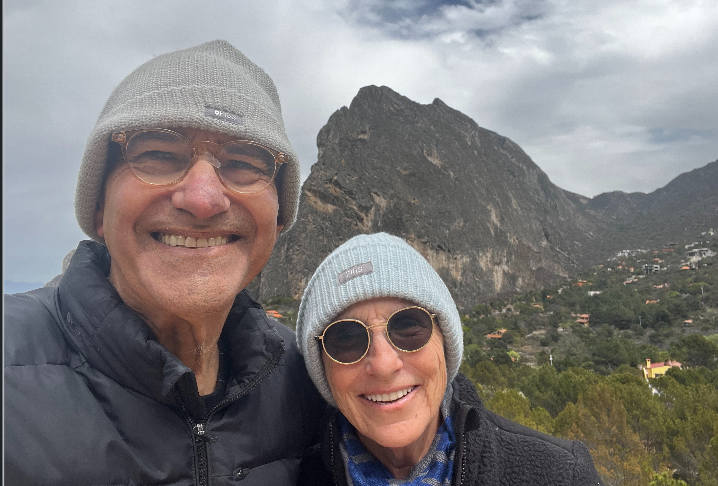
Monterrey: The City and the Mountains
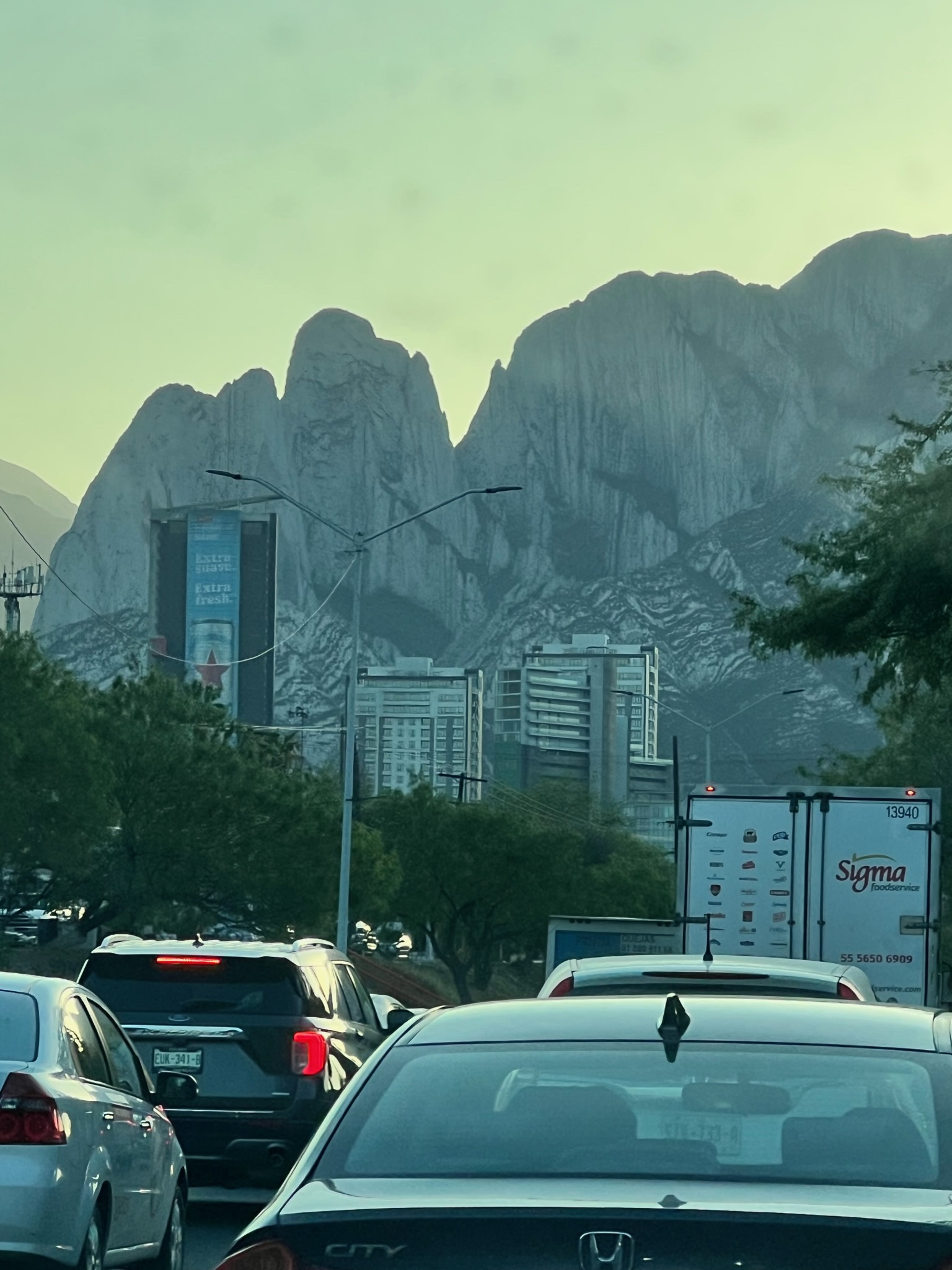
As our kids were growing up we had the good fortune to engage a series of wonderful young people as au pairs to help out at home so we both could continue to build a business together. The other clear benefit was cross-cultural exposure for all of us but especially the kids. The first of these was Marichu Igareda who came to us via referral from a friend on Mercer Island who knew her family. Coming from Guadalajara, Marichu spent a year living with us and we developed a lovely relationship with her, had the chance to visit her family, and we kept in touch over the years. As we began to plan our trip to Mexico we were invited to visit Marichu, her husband, Luis, and their children in Monterrey. They have a house in the city proper, and a home they built outside the city in the Sierra Madre mountains.
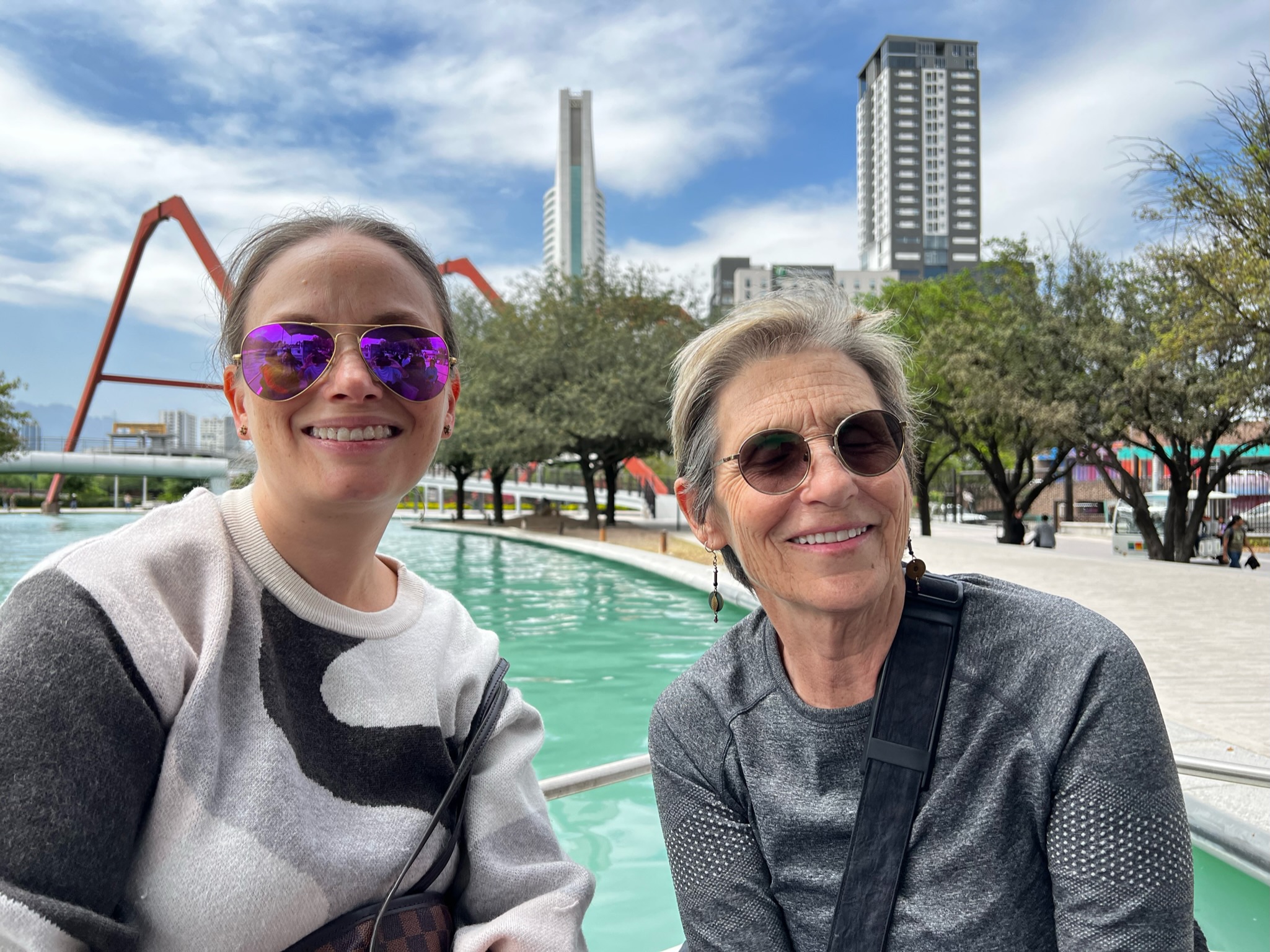
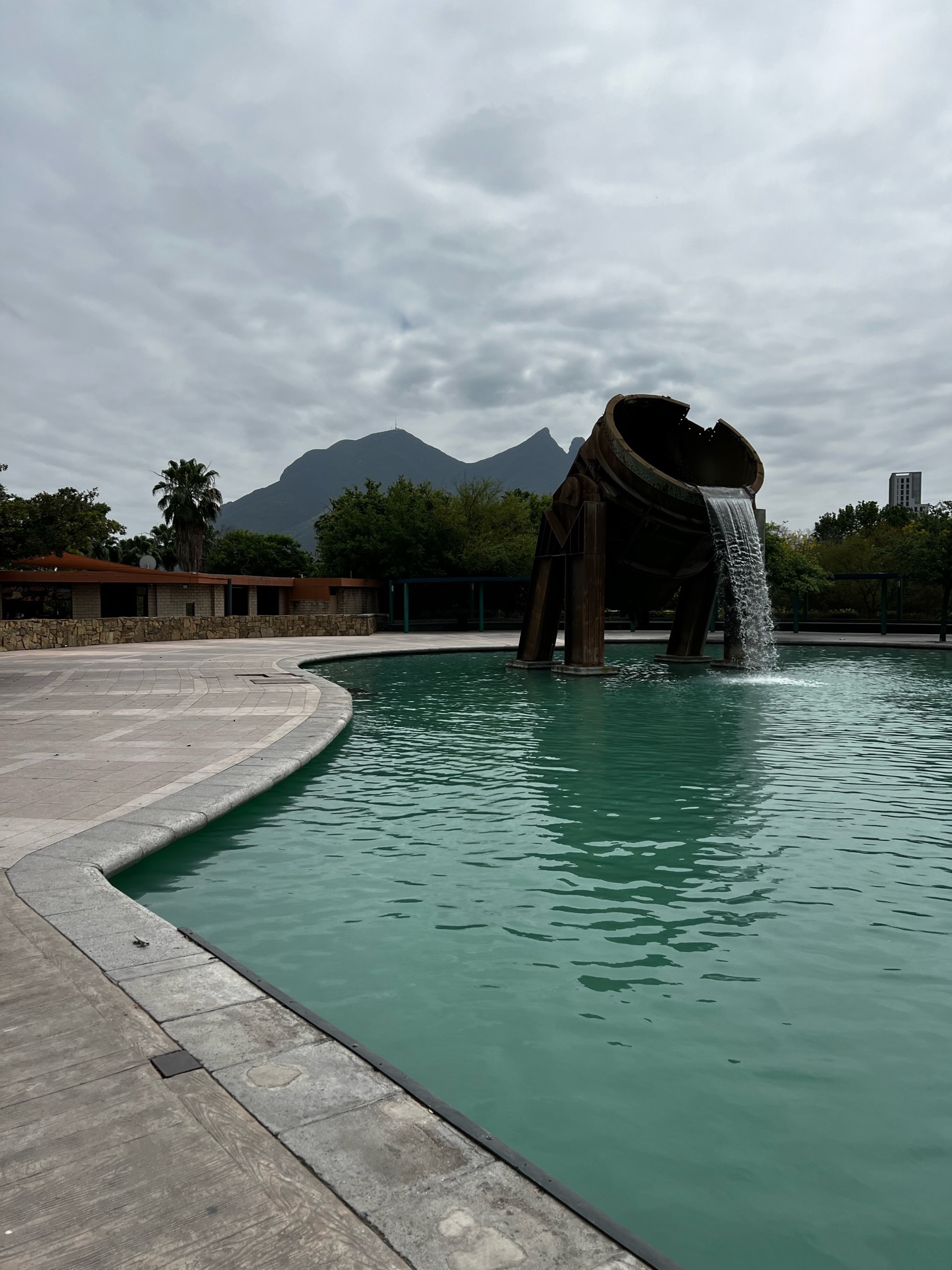
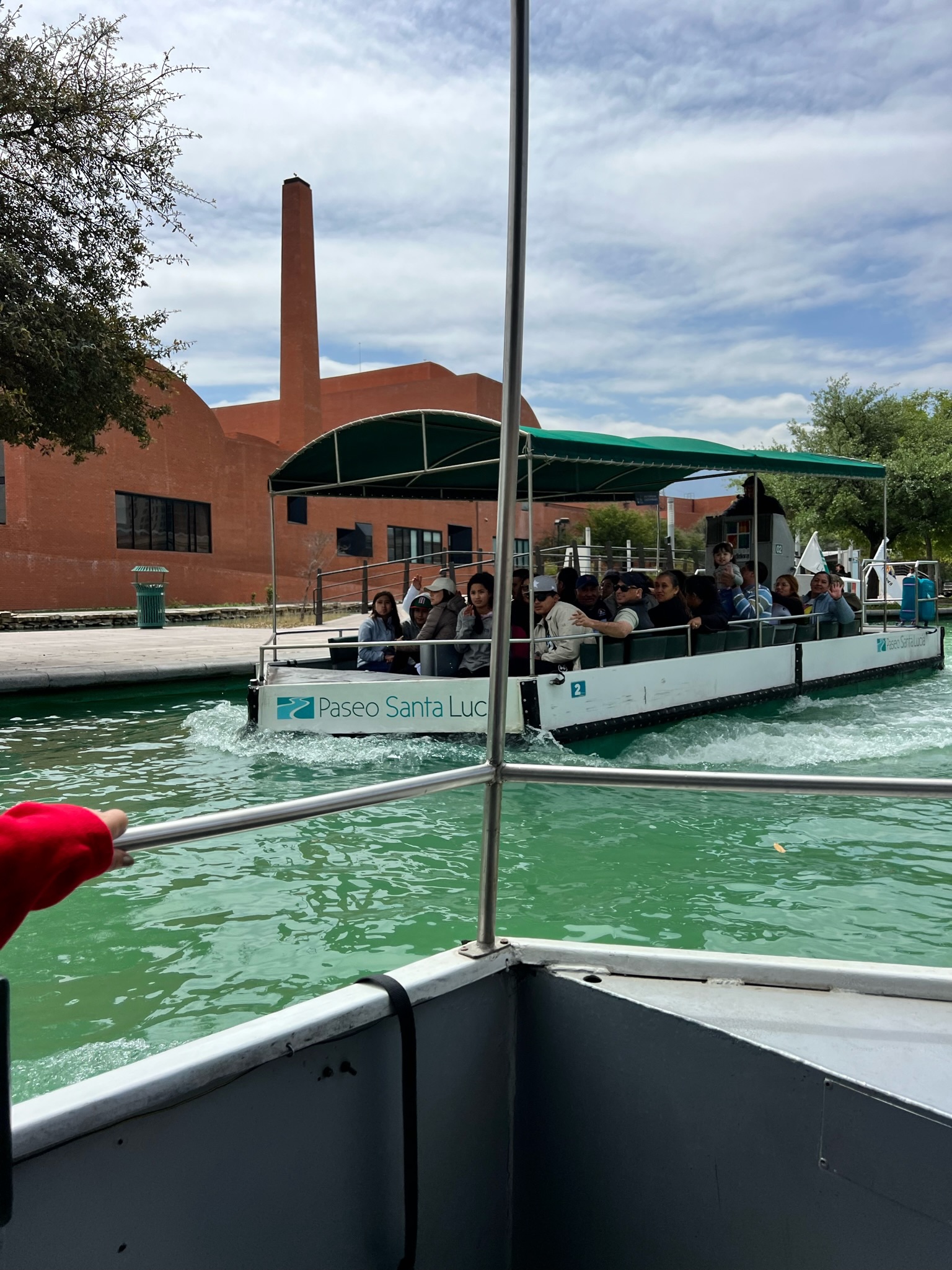
We spent just one evening in town and Marichu toured us around – in particular getting to ride the canal boat that connects the main public park (Parque Fundidora) with the city’s central district. The park once belonged to an iron and steel melting company and is now a cultural center containing museums, concert halls and an amusement park. The canal and boat ride known as the St. Lucia Riverwalk (Paseo Santa Lucía) is reminiscent of the same type of experience on San Antonio’s popular riverwalk across the border in Texas. The pedestrian walkway, which runs along an artificial river, connects the downtown “Macroplaza” with the park, with shops and restaurants dotting the way.
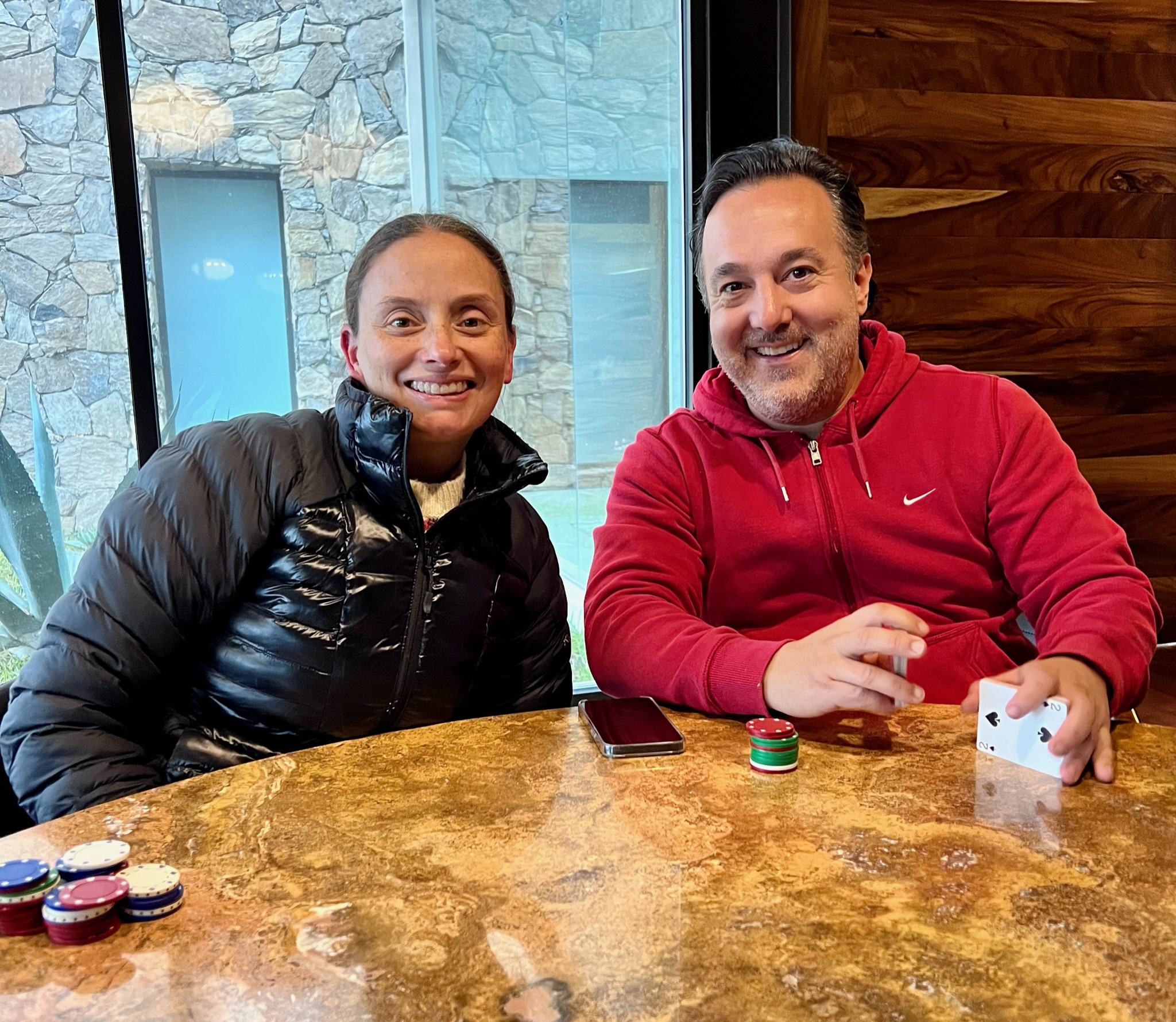
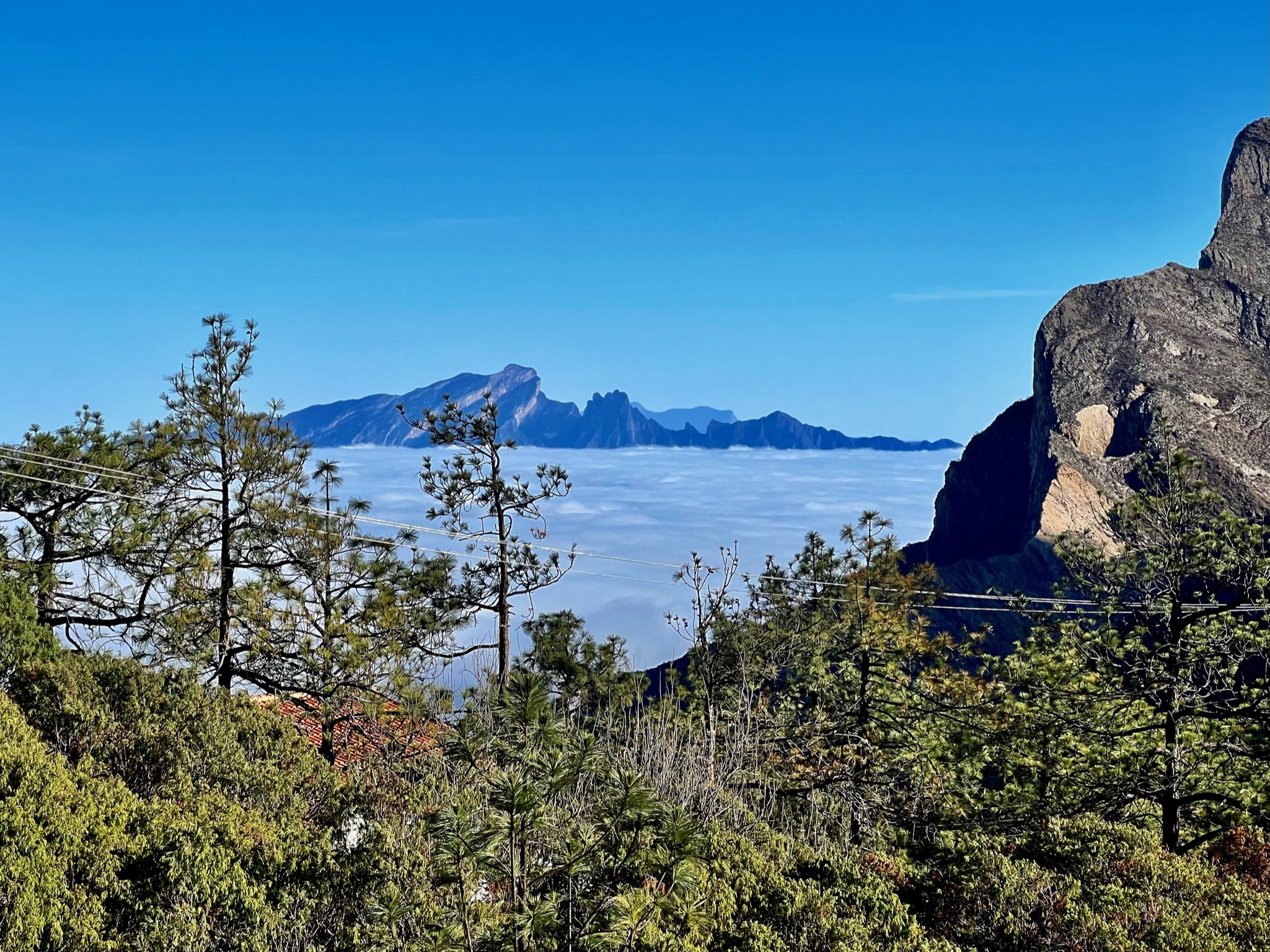
Spending time with Marichu and her family was a delight. It did make it abundantly clear just how much time had passed between her helping us chase down our small children and now, seeing her run a very busy household, having had a successful business career, marrying a great guy, and raising a bright and worldly brood. We spent most of our time together at their “mountain house” – about thirty minutes’ drive outside the city. It took more than a year to build the house and Marichu was the project manager. The community of about 80 custom homes is tucked away in the folds of the mountains and each home has plenty of privacy and amazing views. Being so close to town the family spends every weekend there and it was easy to see why. While it was quite cold the days we were there, fireplaces, warm food and great company made it fun and relaxing.
Mexico City
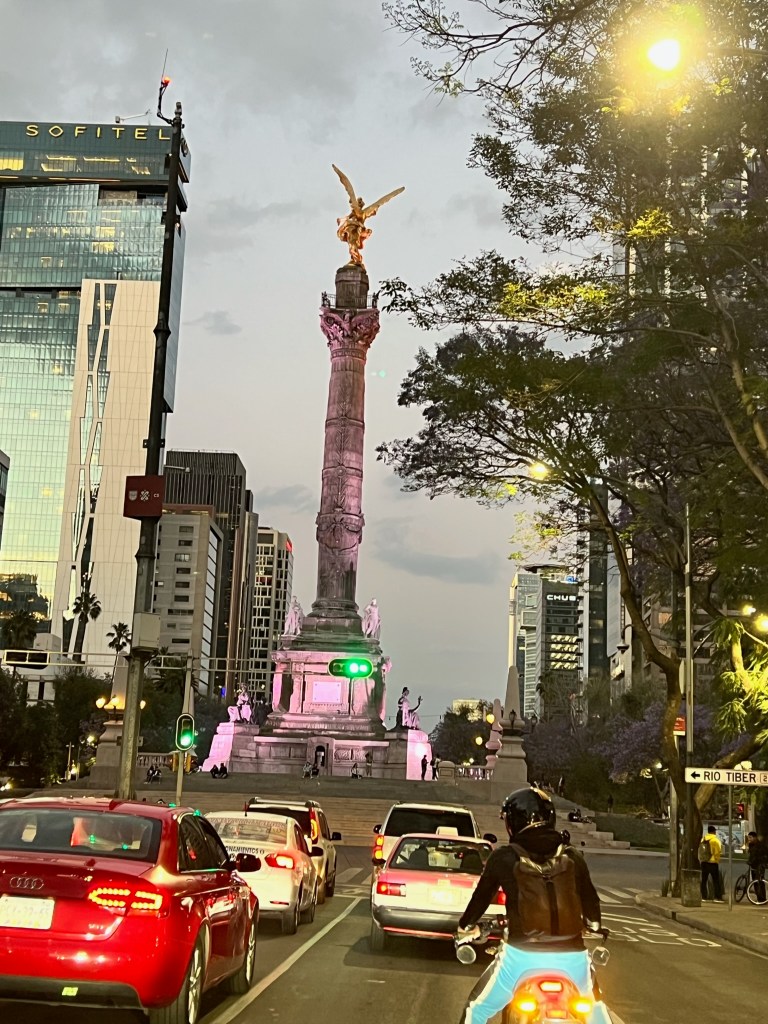
Our next stop was entirely different…Mexico City is the home to 23M+ people…Flying in, it seemed there was no end to the city limits, and it became clear as we spent time there that there was no way for us to take in all that the city has to offer in just a few days. Mexican history runs deep and across many centuries, unlike the youthful though also tumultuous United States. The city is brimming with museums that document and honor the multitudes of peoples and their cultures that added to the historic richness of architecture, foods, traditions, as well as its modern day diversity. Honestly, I had no idea just how many powerful anchors of civilization had passed through and created the building blocks of Mexican history, and a great effort has been made to preserve and tell these stories in this city.

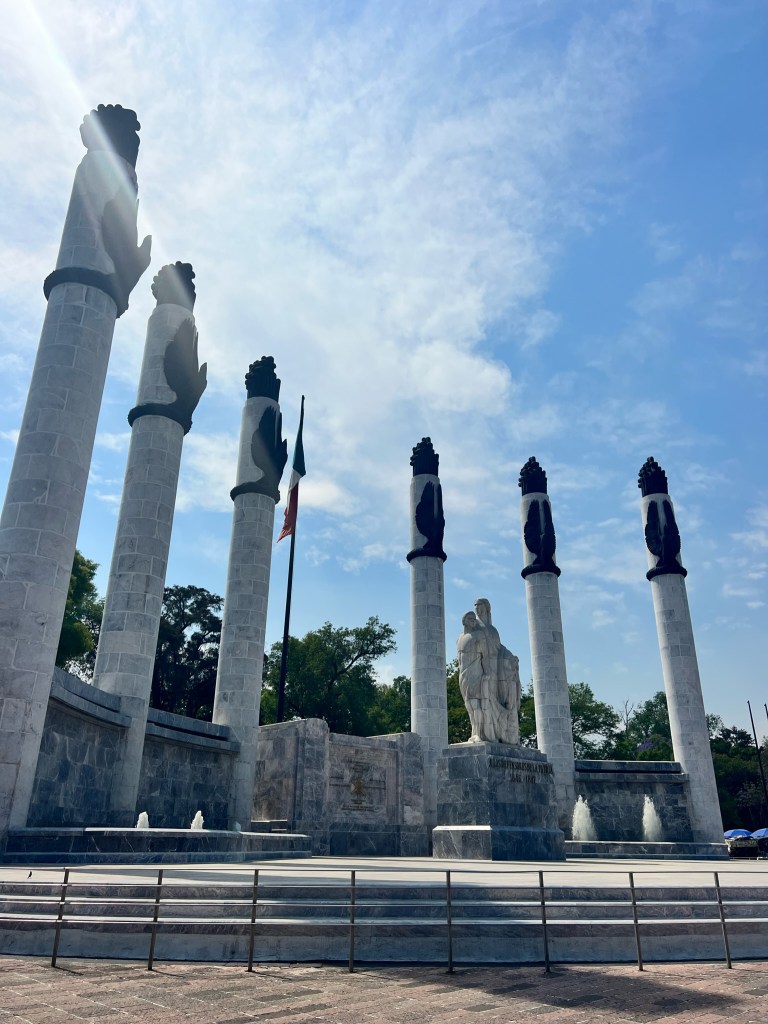
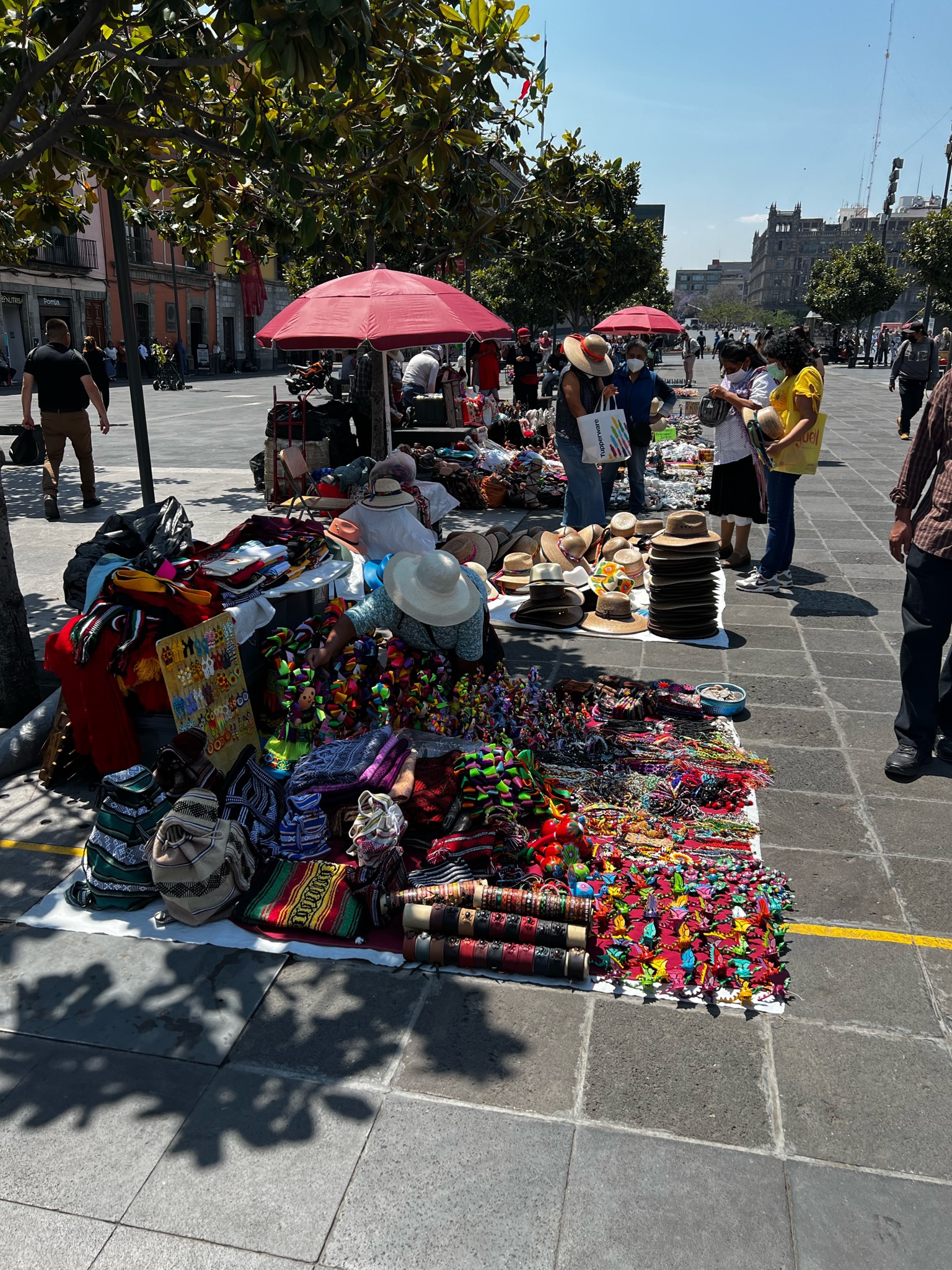
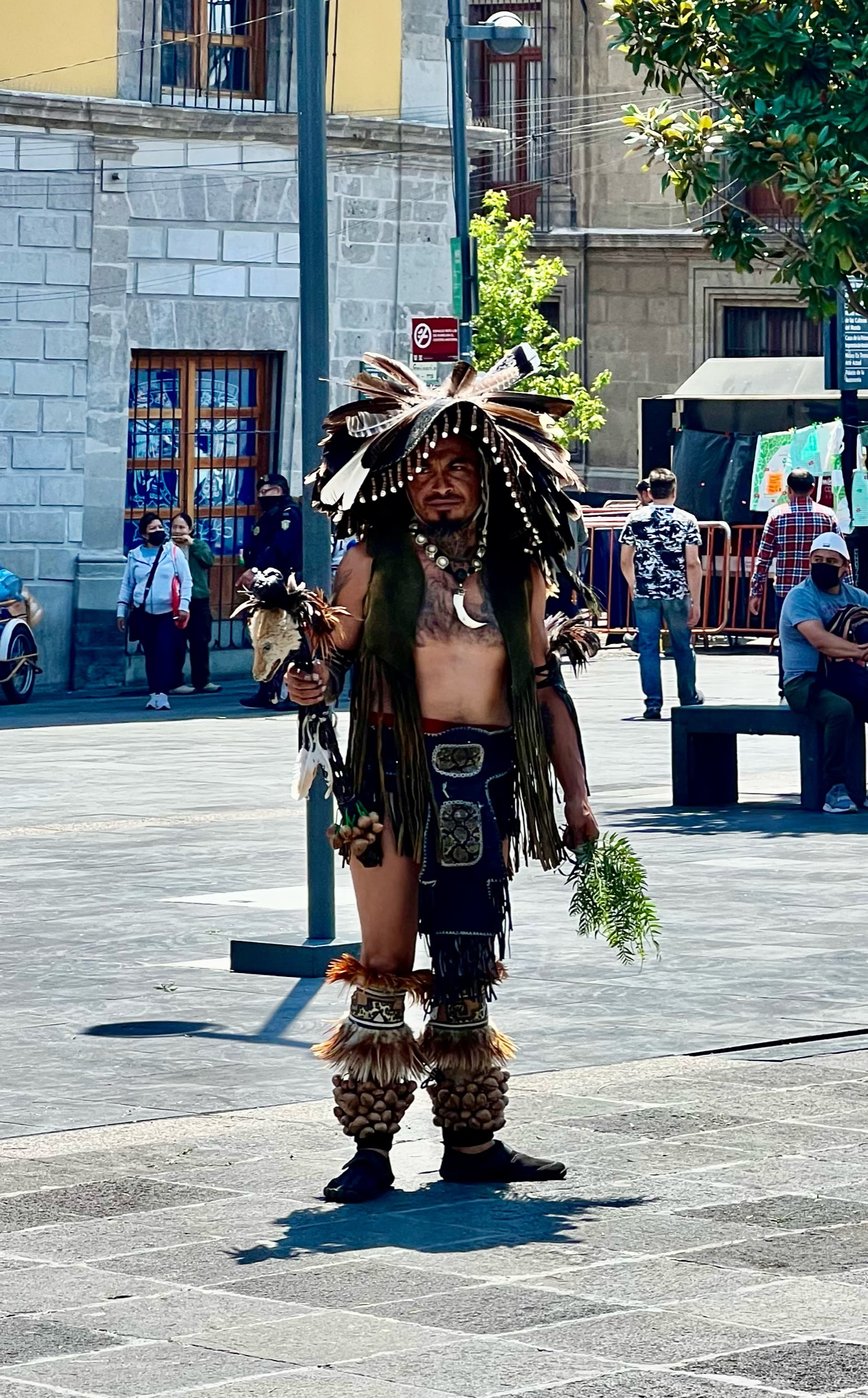
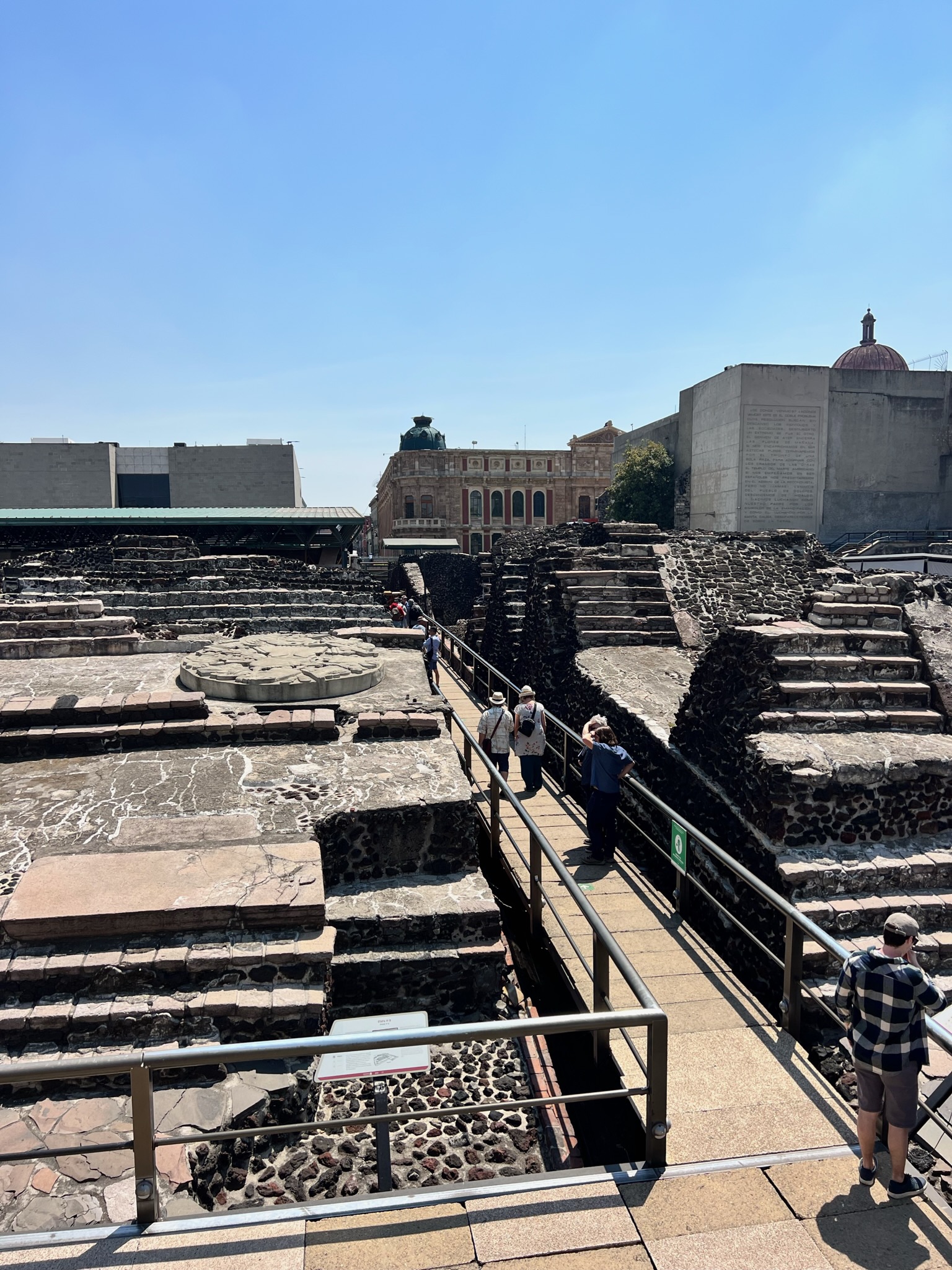
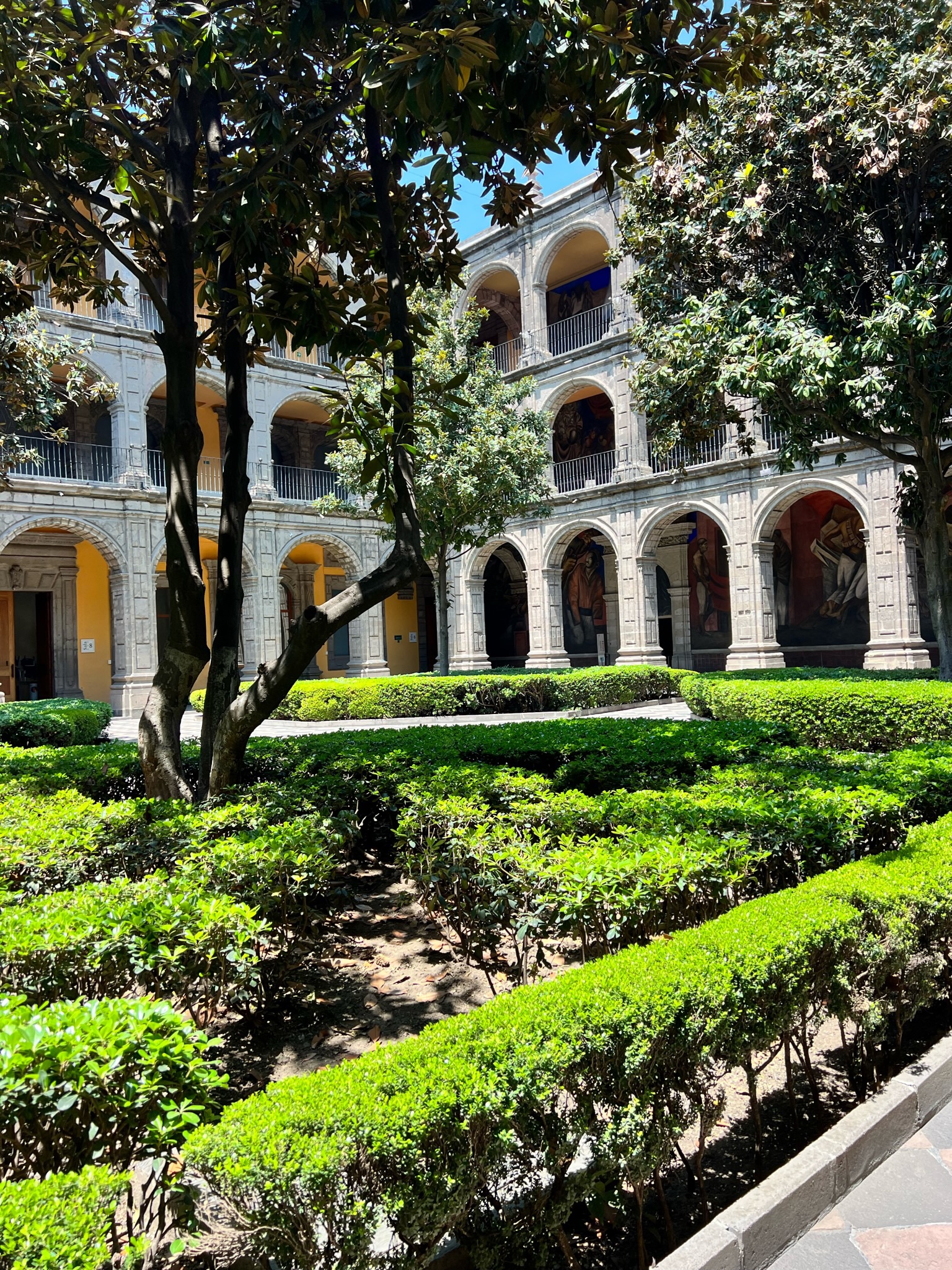
We were fortunate to connect with one of Marichu’s sisters, Maite, who lives in Mexico City, and she was so kind to tour us around for a couple of days to both orient us and point us to the “must sees”. One of the days we were with Maite she brought us together with a young couple from New Zealand on their first trip to the city, and together we explored the Zocalo (the center plaza) and ruins that had been unearthed there, explored a converted school that had been converted into an art gallery, observed a “cleansing ritual” by some local medicine men, and had a wonderful meal together for tastes of local cuisine.
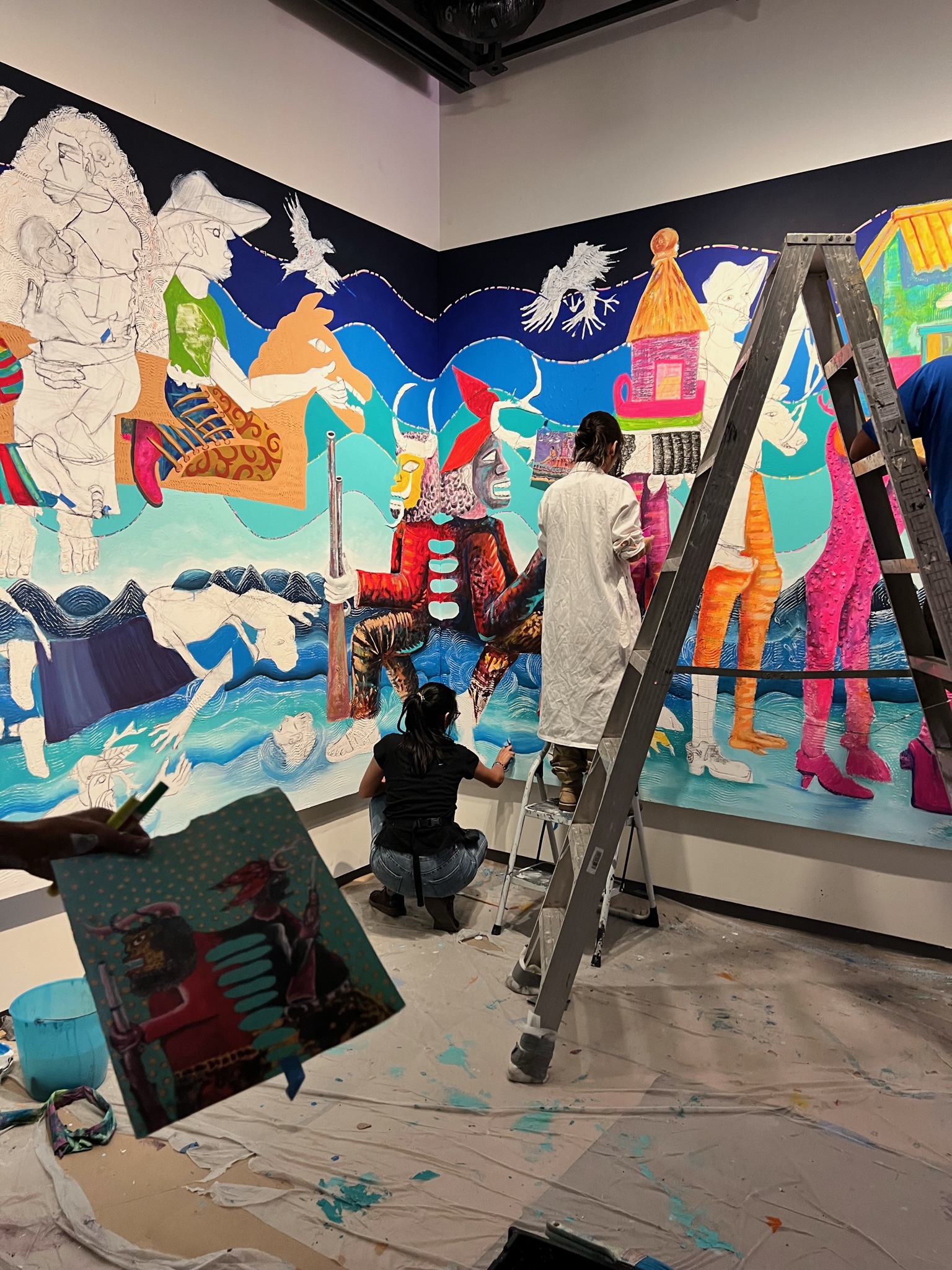
When we were wandering through the converted school, we stumbled on a group of young muralists working under the guidance of a professional artist. The collaborative mural they were working on depicted many of the historic as well as current day societal issues that are being faced in Mexico. This deeply touched me. Part of the work-in-progress put a spotlight on the horrors of an immigration system that is failing from every standpoint…and these young people are facing this and many other cross-cultural challenges.
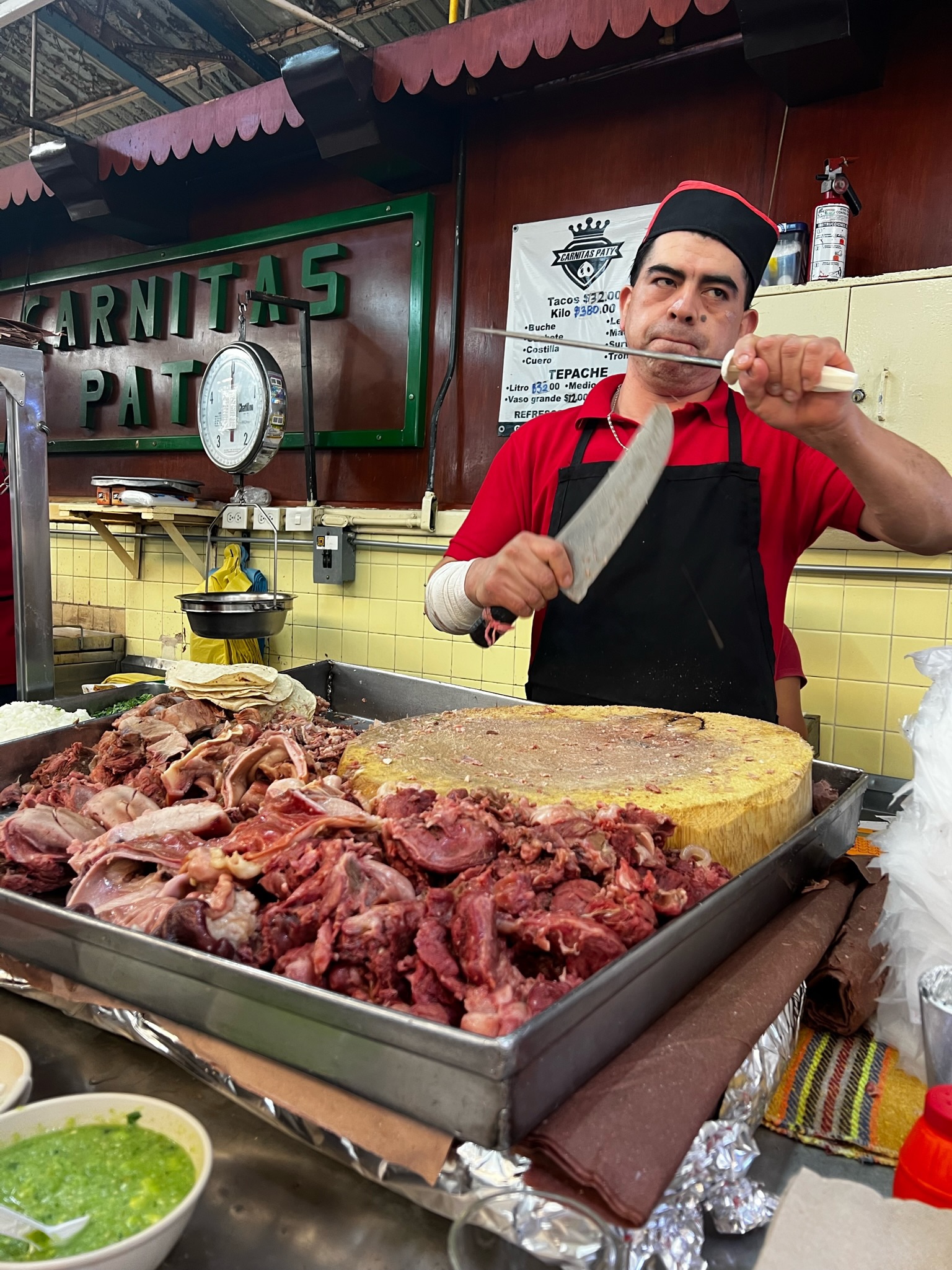
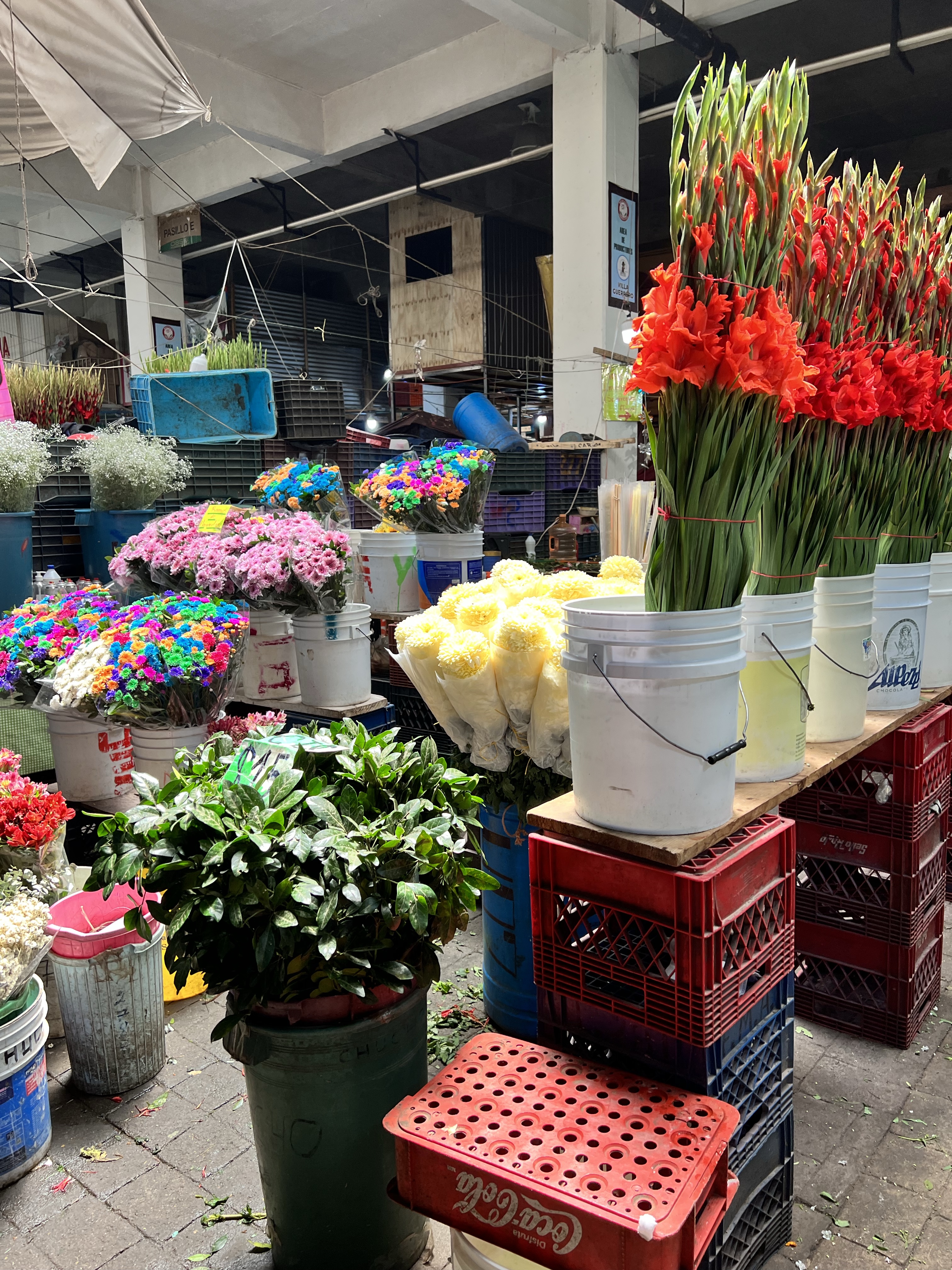
Another definite highlight of our Mexico City stop was a street food tour that had been recommended by our daughter, Ruthie and her husband, Simon. We were lucky to even get the very same guide – a vivacious (and loquacious) woman nicknamed “Panda”. While the idea of “street food” might not be for the overly cautious, in this case Panda took us through one of the city’s many well-established daily markets (called Jamaica) that also includes an incredible flower market. Panda and her associates know the regular vendors very well and the goal is to bring tourist dollars directly to the local purveyors to keep them in business. We got to try all sorts of local delicacies – from meat-filled tacos to spicy corn to yummy sweet cakes. It was a good thing we’d been warned not to eat breakfast!

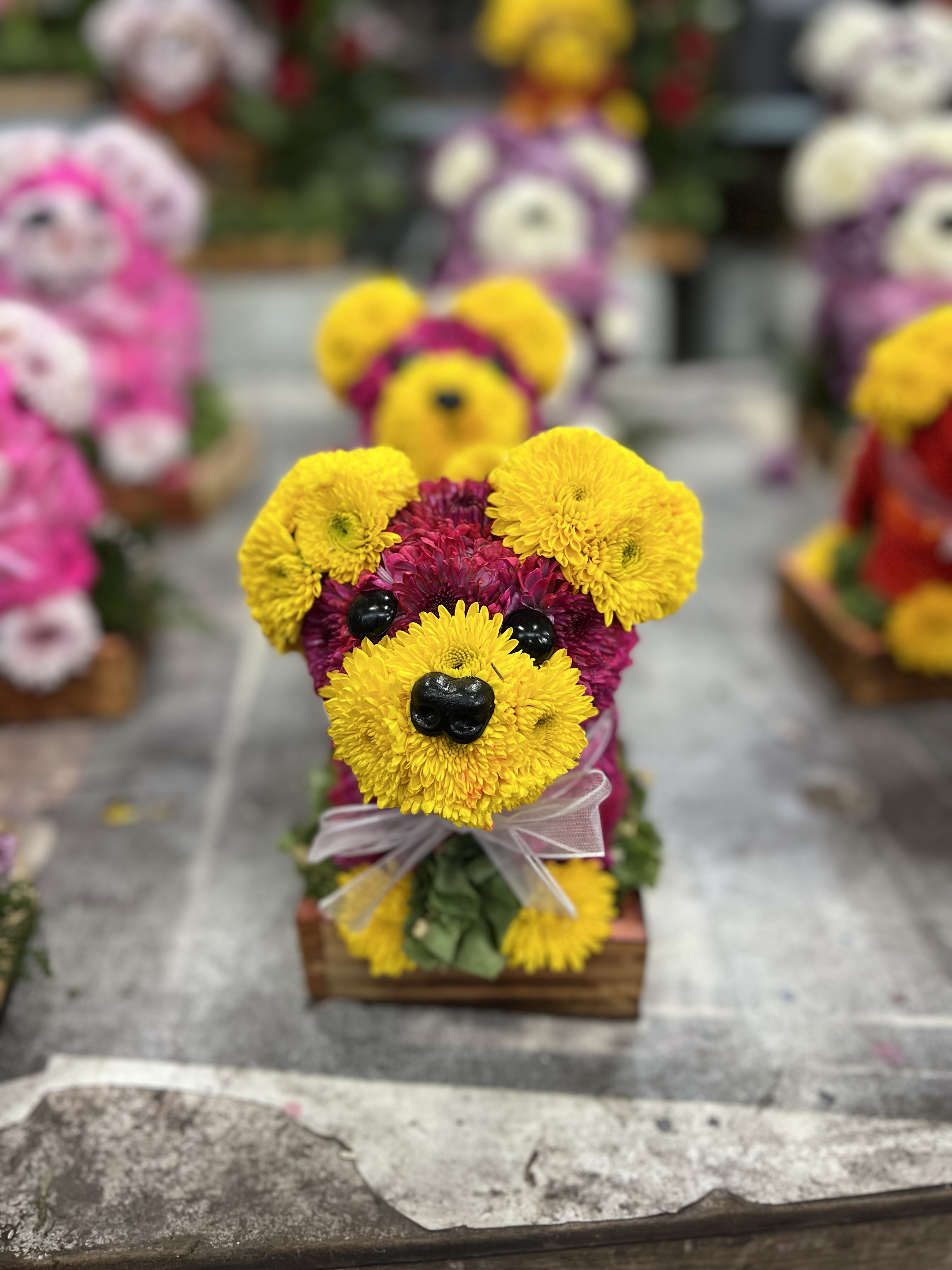
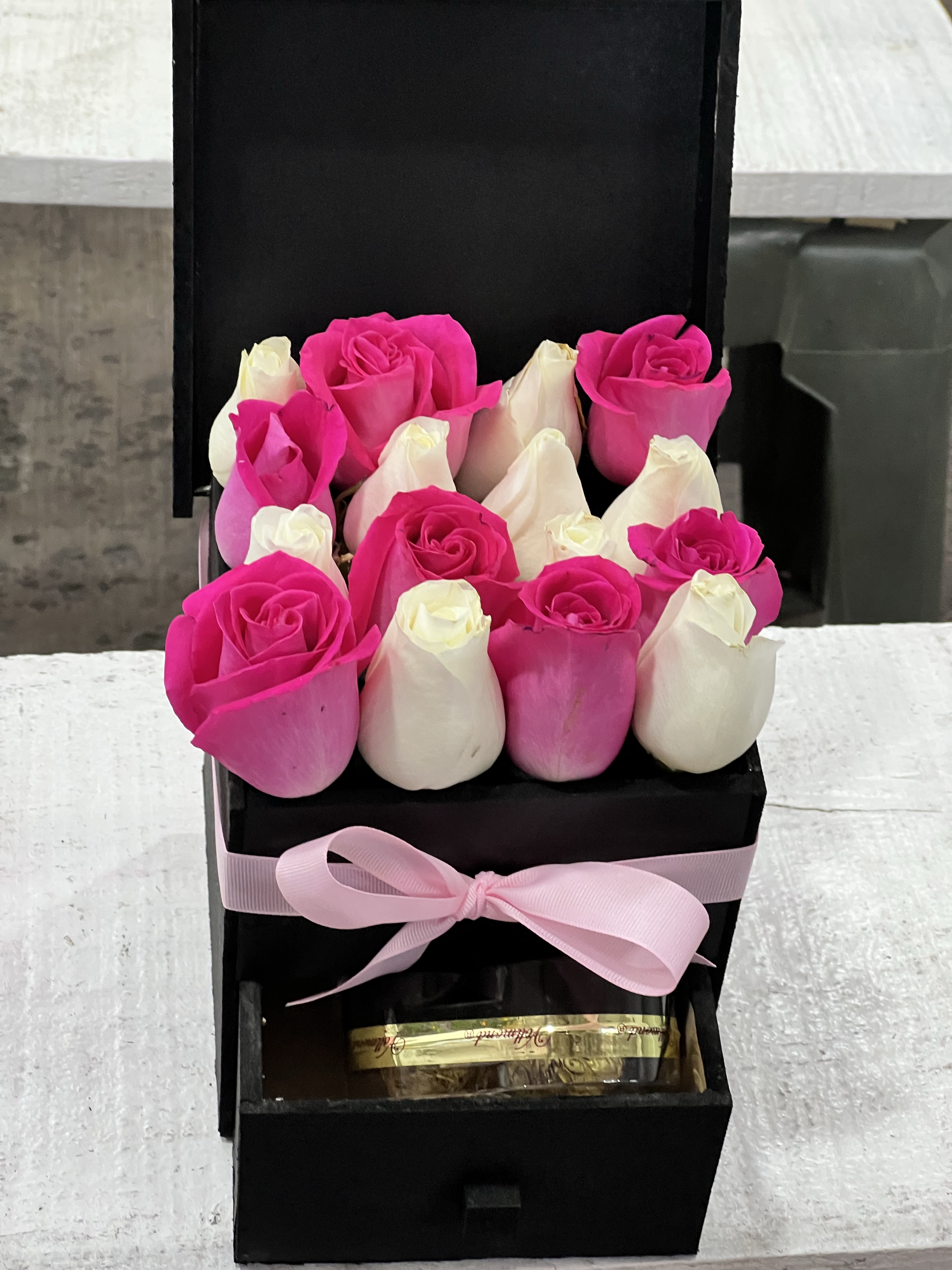
The flower market completely blew us away…I have never seen such a wide variety of flowers and creative arrangements!
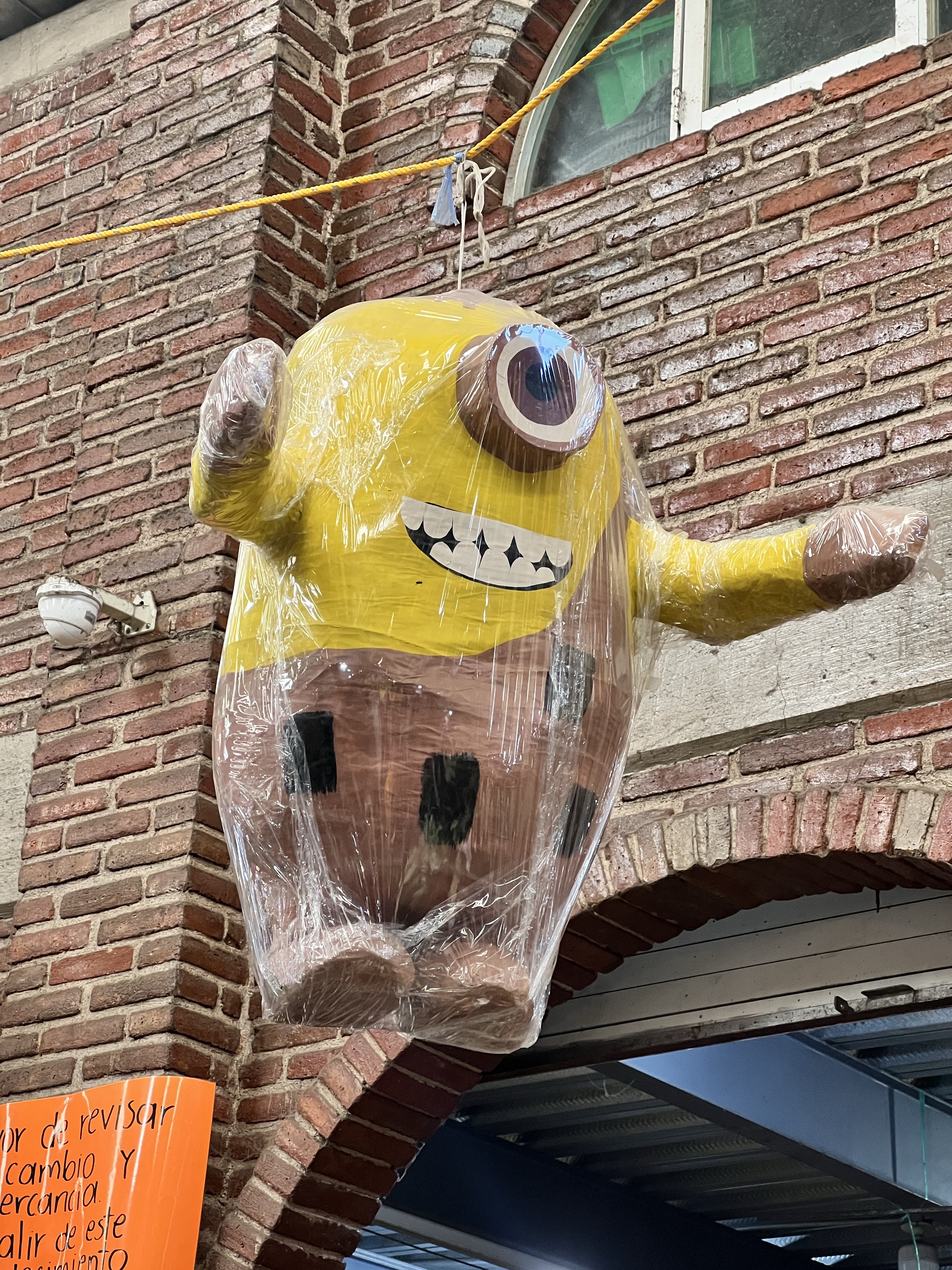
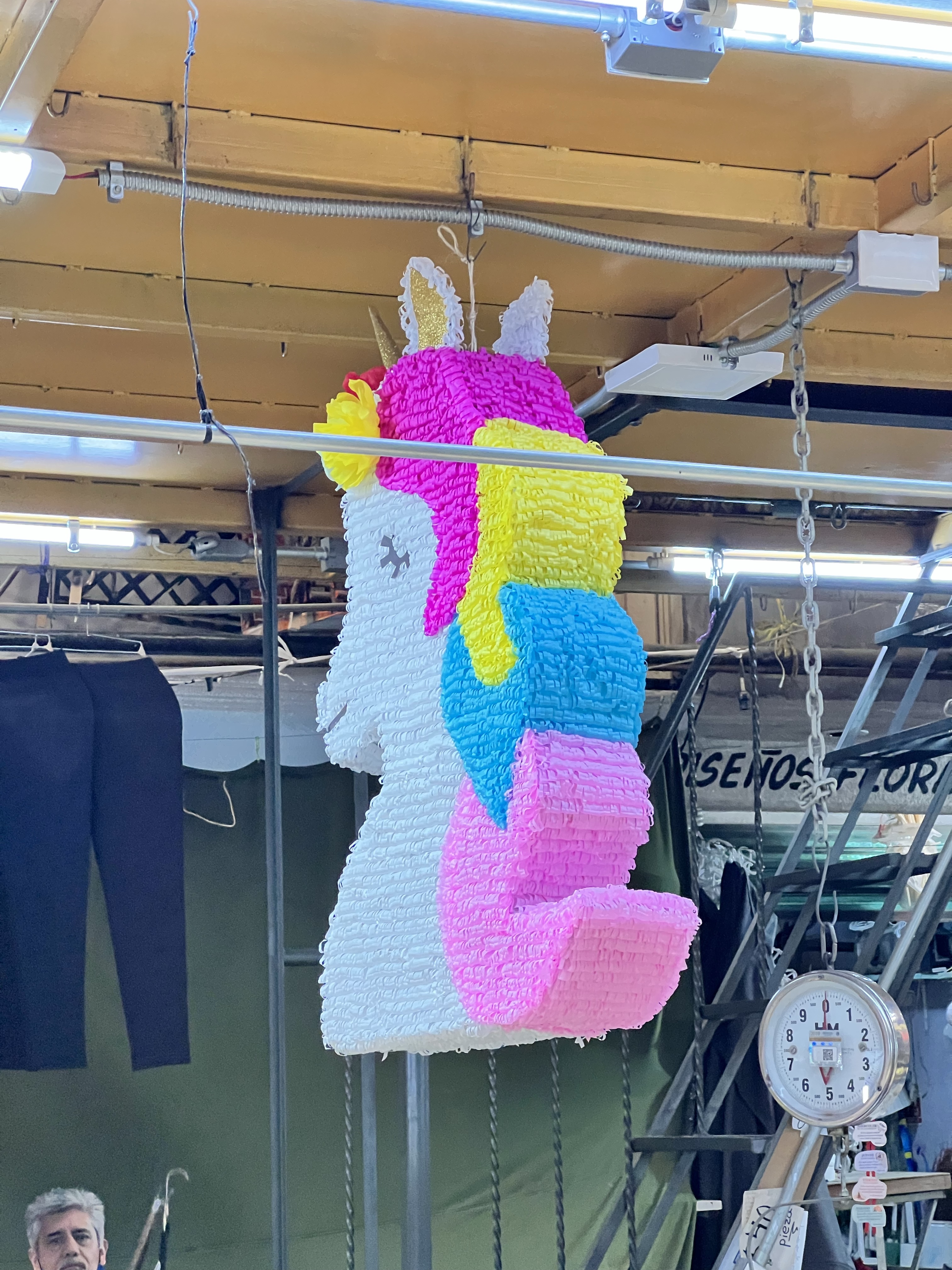
….And the pinatas were pretty cool too!
We spent another day in the city wandering the Bosque de Chapultapec (Chapultapec Park) that also included the Chapultepec Castle. This park rivals central park in size and beauty…smack in the center of this busy metropolitan city, the park has a beautiful lake, miles of walking paths, and many museums scattered within its borders. The hill on which the castle sits was a sacred place for Aztecs, and the buildings have served several purposes during its history, including those of Military Academy, Imperial residence, Presidential residence, observatory, and since February 1939, the National Museum of History. Chapultepec Castle, along with Iturbide Palace, also in Mexico City, are the only royal palaces in North America which were inhabited by monarchs.
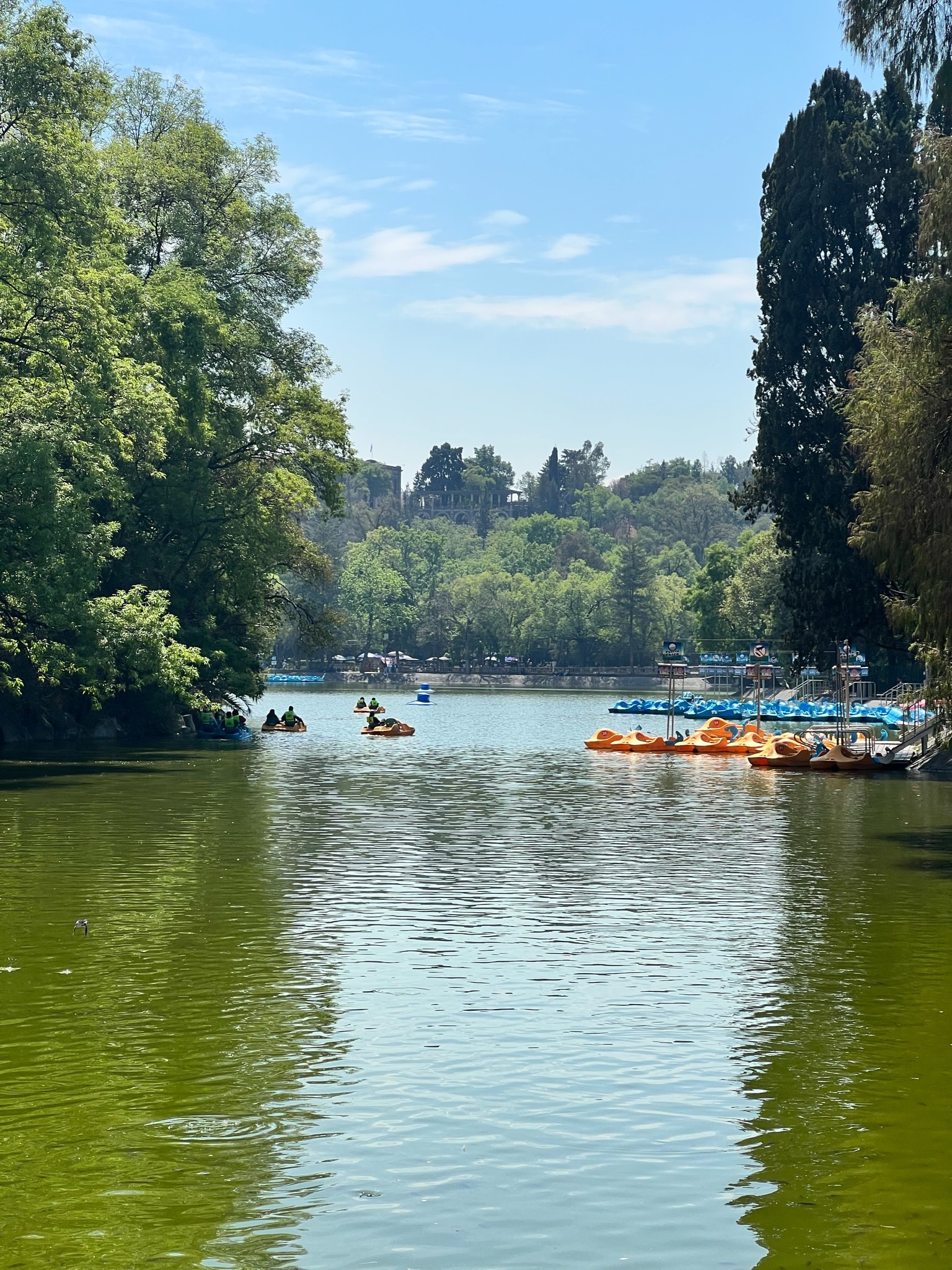
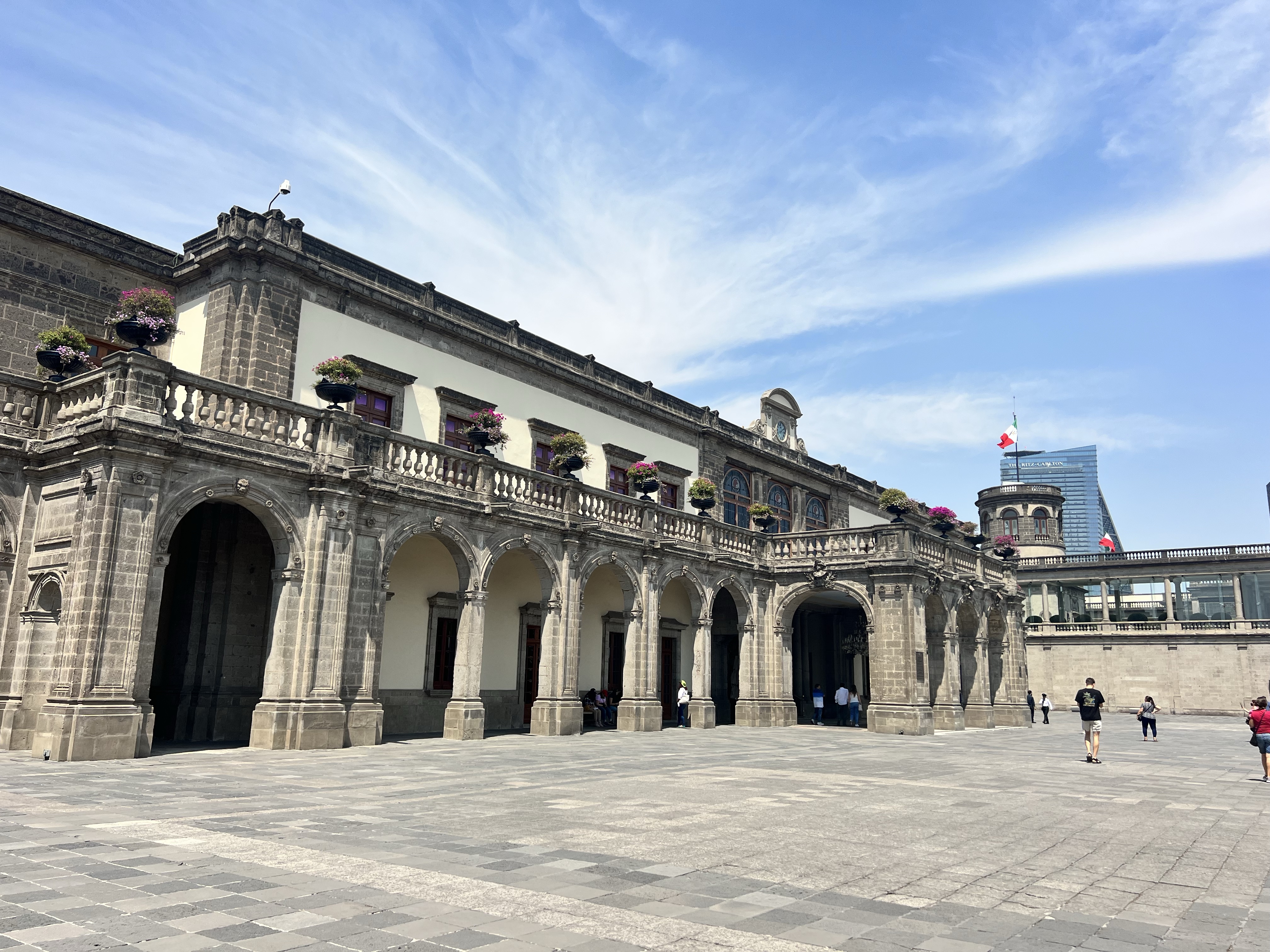
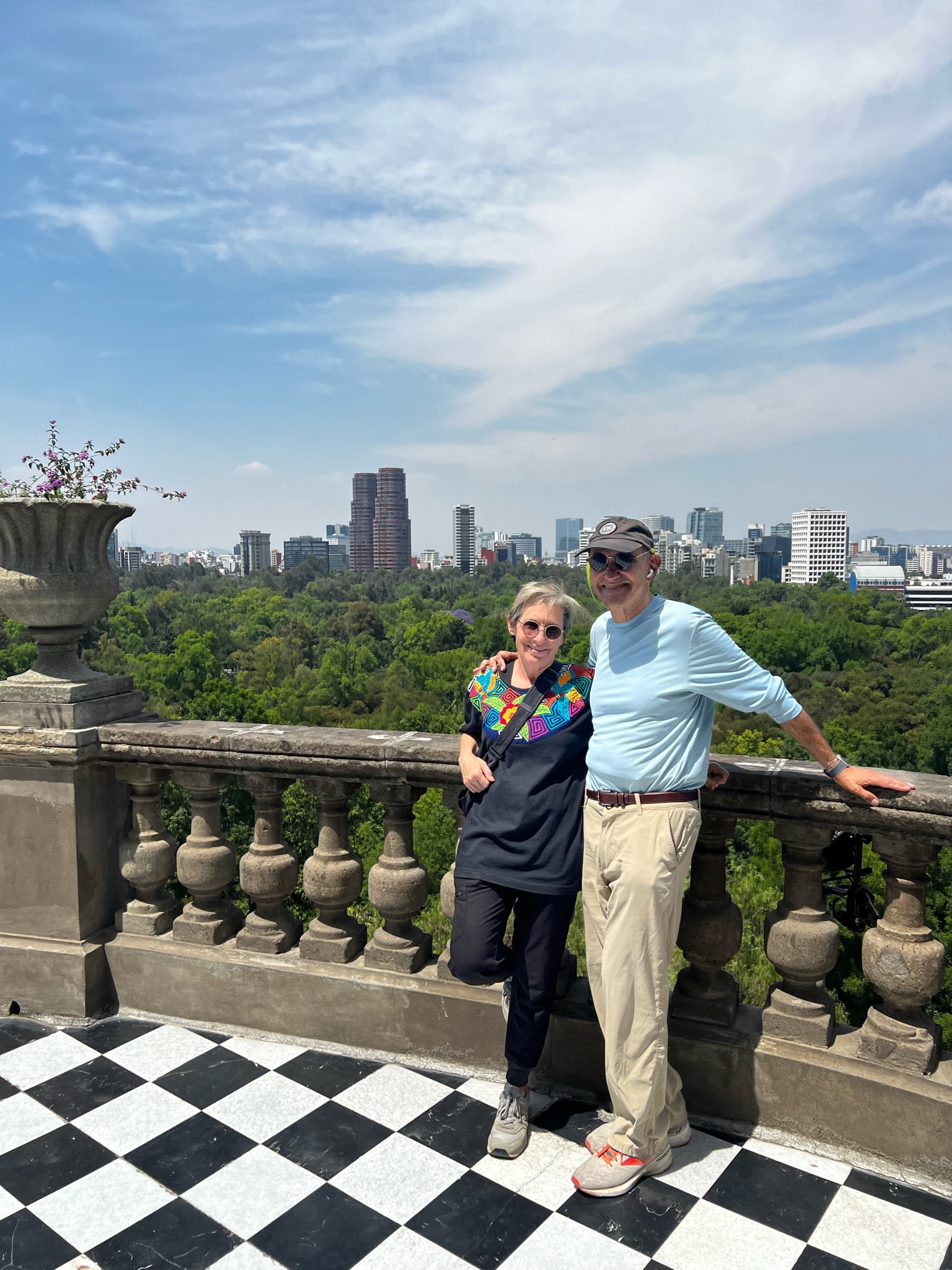
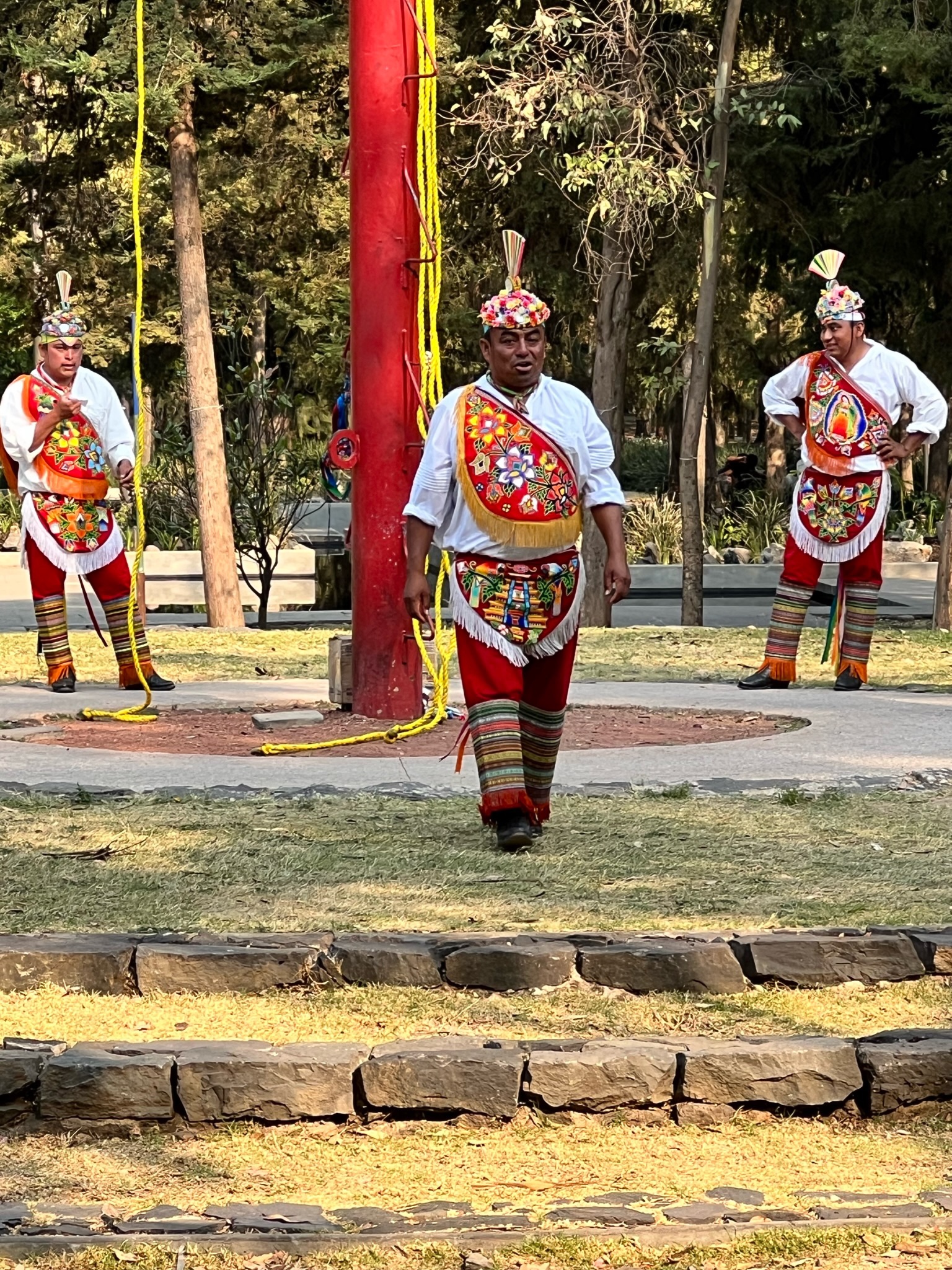
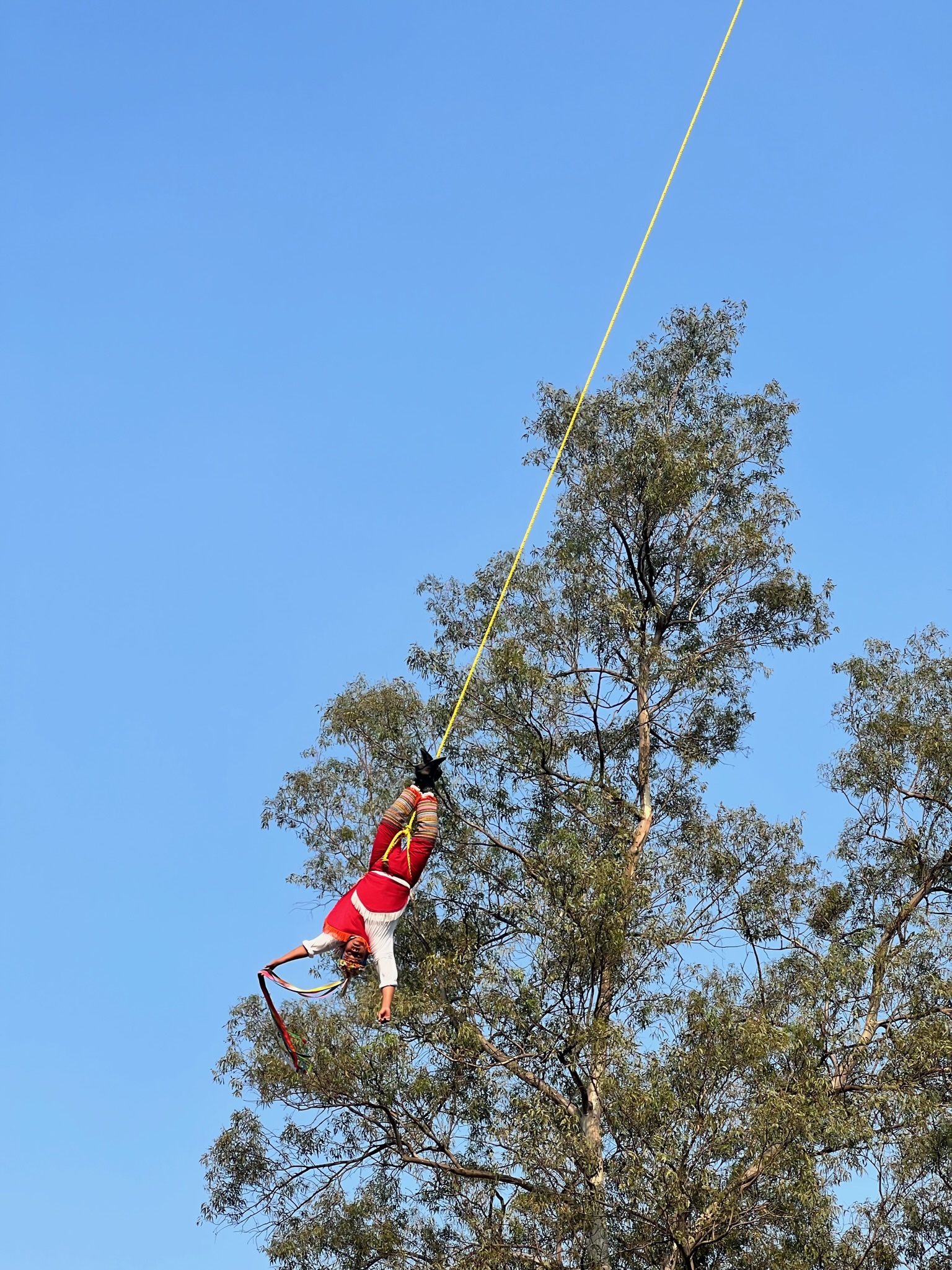
As we were leaving the park I spotted some unusual activity and went over to investigate. There was a crowd gathering around what looked like a maypole and some costumed men were busy shimmying up the very tall structure. I turned out to be a traditional ceremony for asking it to rain! Mexico has had more than its share of drought, and this is a rather dramatic ritual to try to get things watered. Once all five folks were at the top, four of them (apparently representing both cardinal directions and key life elements) jumped off and rotated while hanging from the end of ropes as they slowly lowered to the ground. Quite a spectacle.

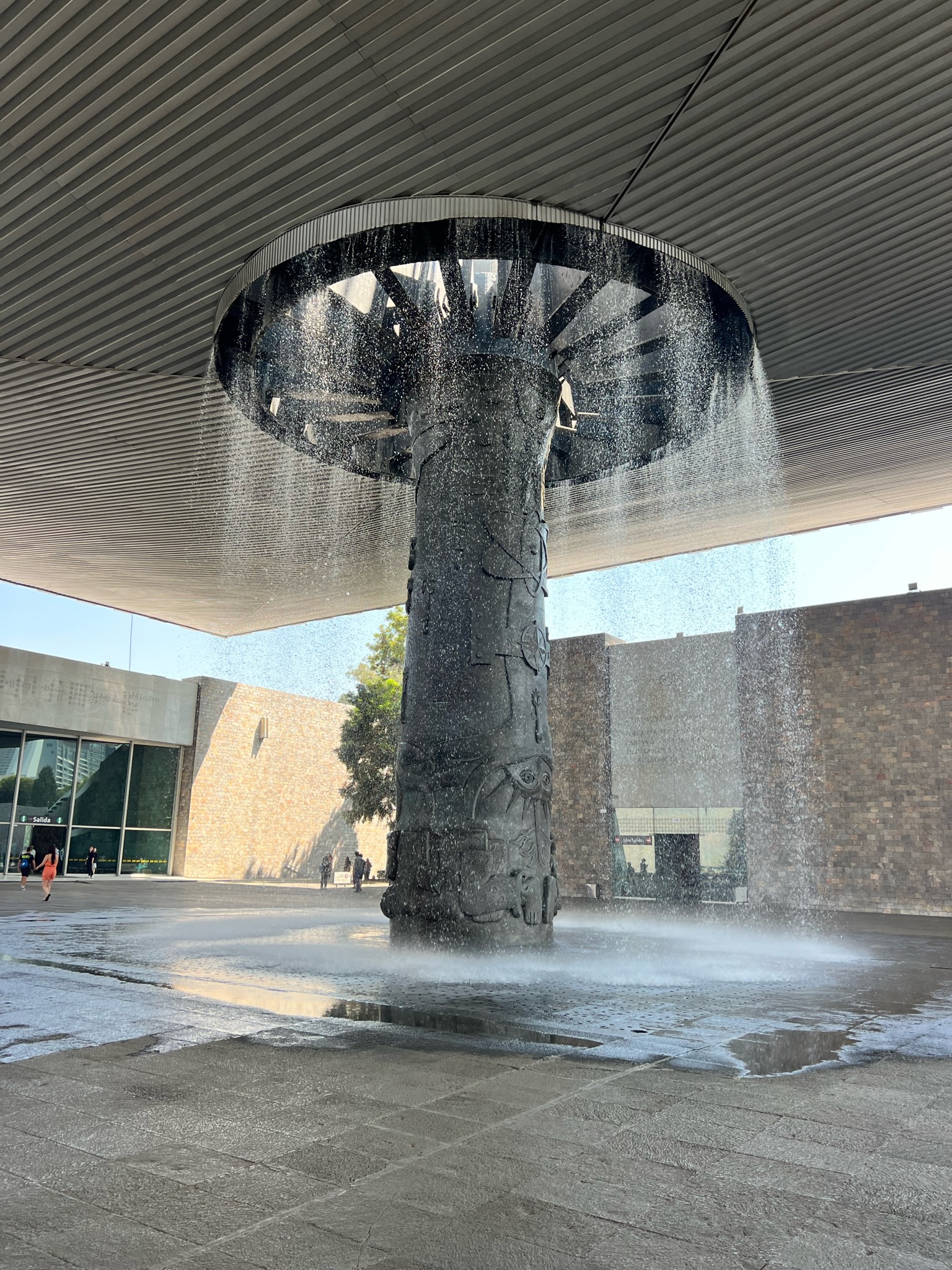
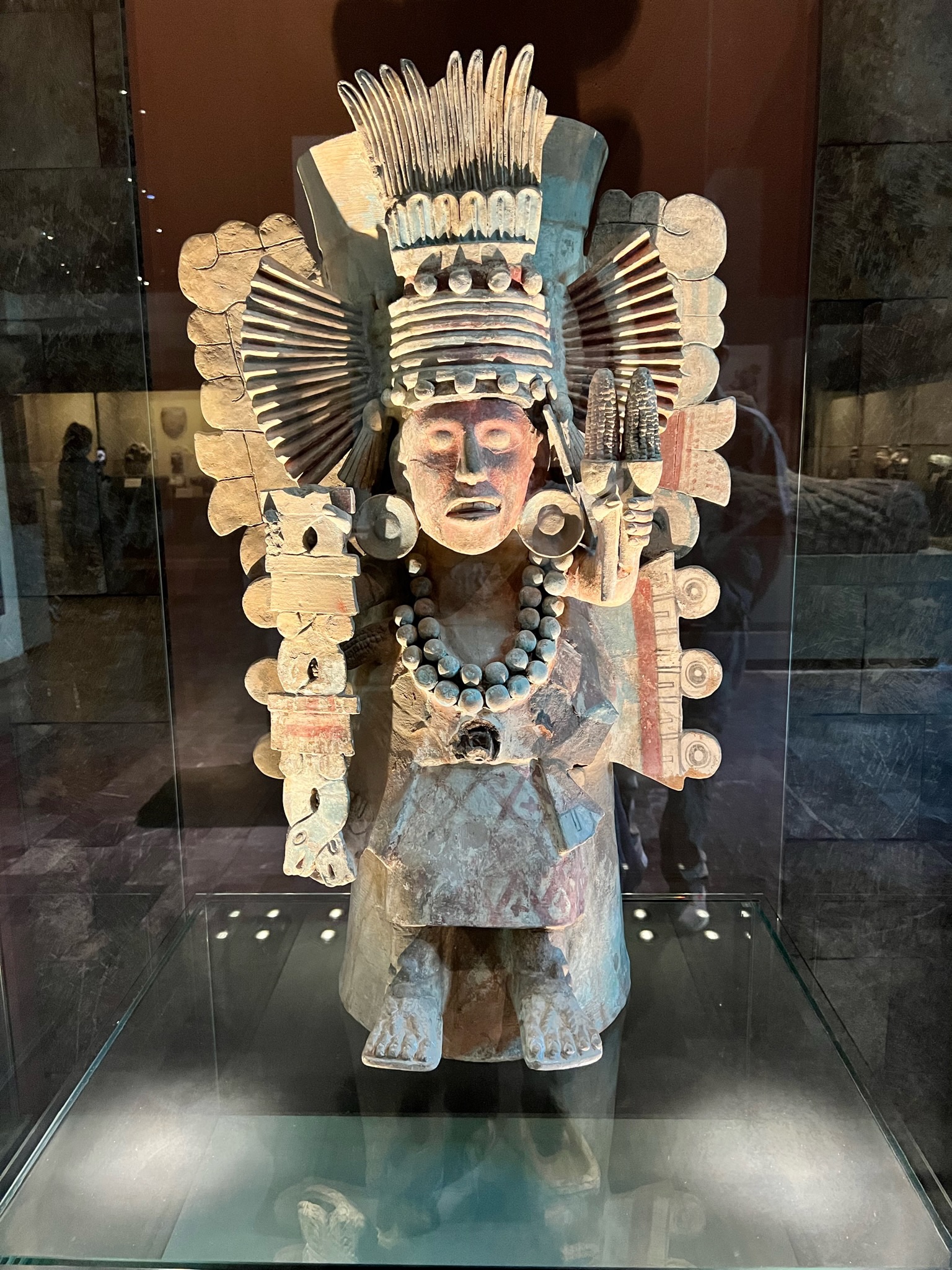
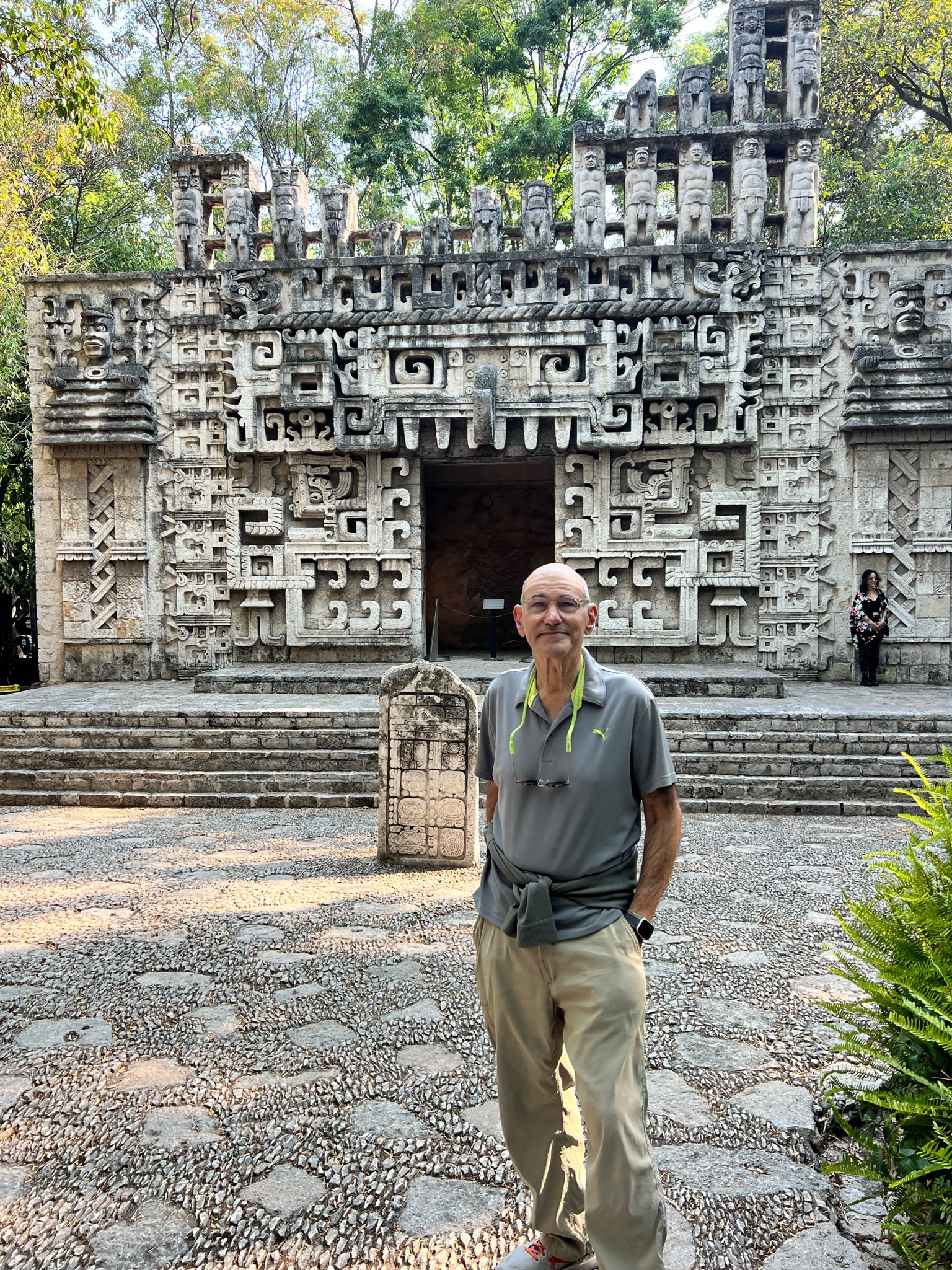
We’d been told that the one thing we could not miss in Mexico City was the National Museum of Anthropology. They were right. This massive collection of artifacts spans centuries of history and culture that would be impossible to absorb in one visit. We made the choice to tackle the Aztec and Mayan wings and could not believe the pristine preservation of so many remnants of these powerful empires that shaped Mexican life over the millennia.

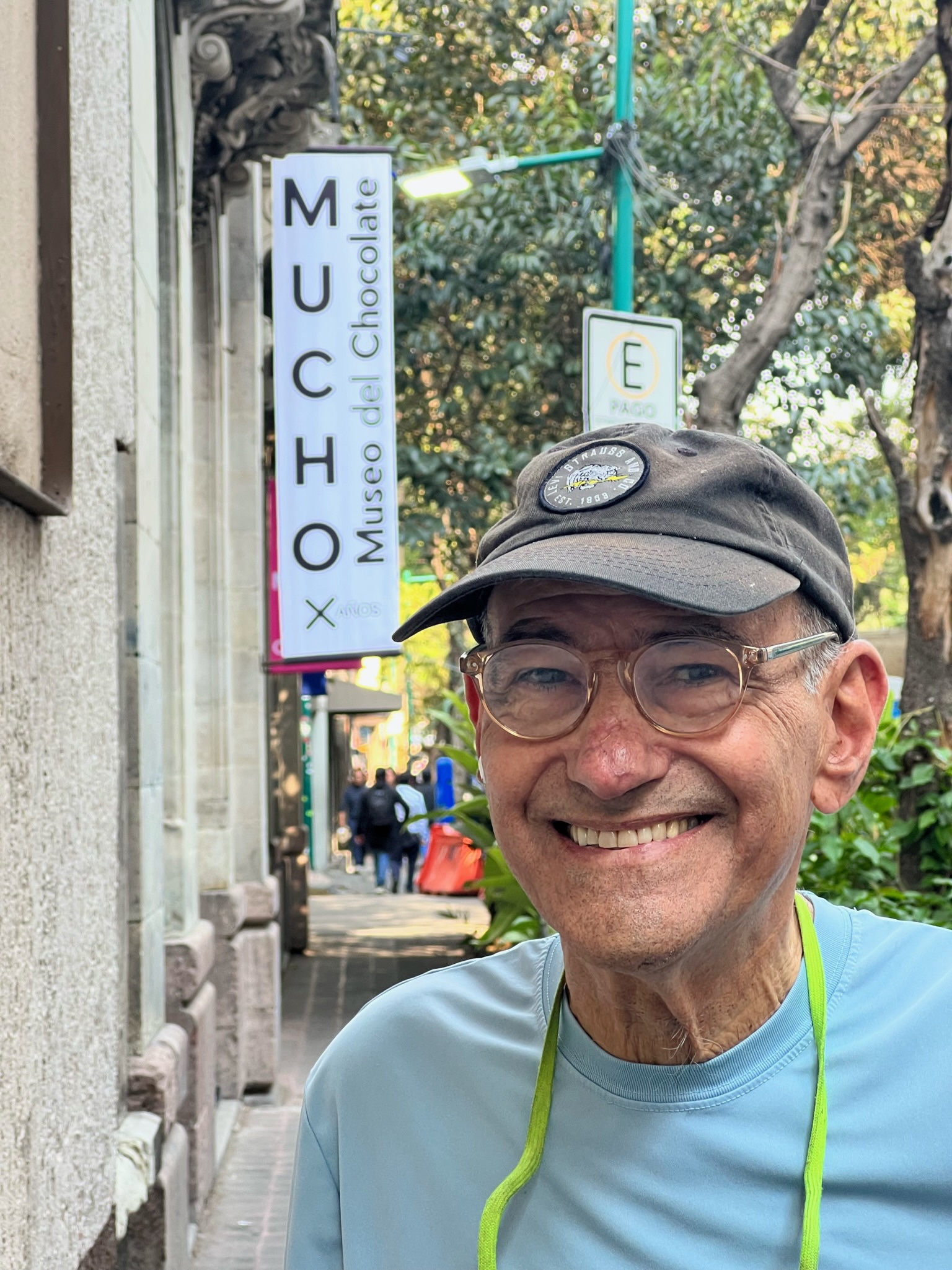
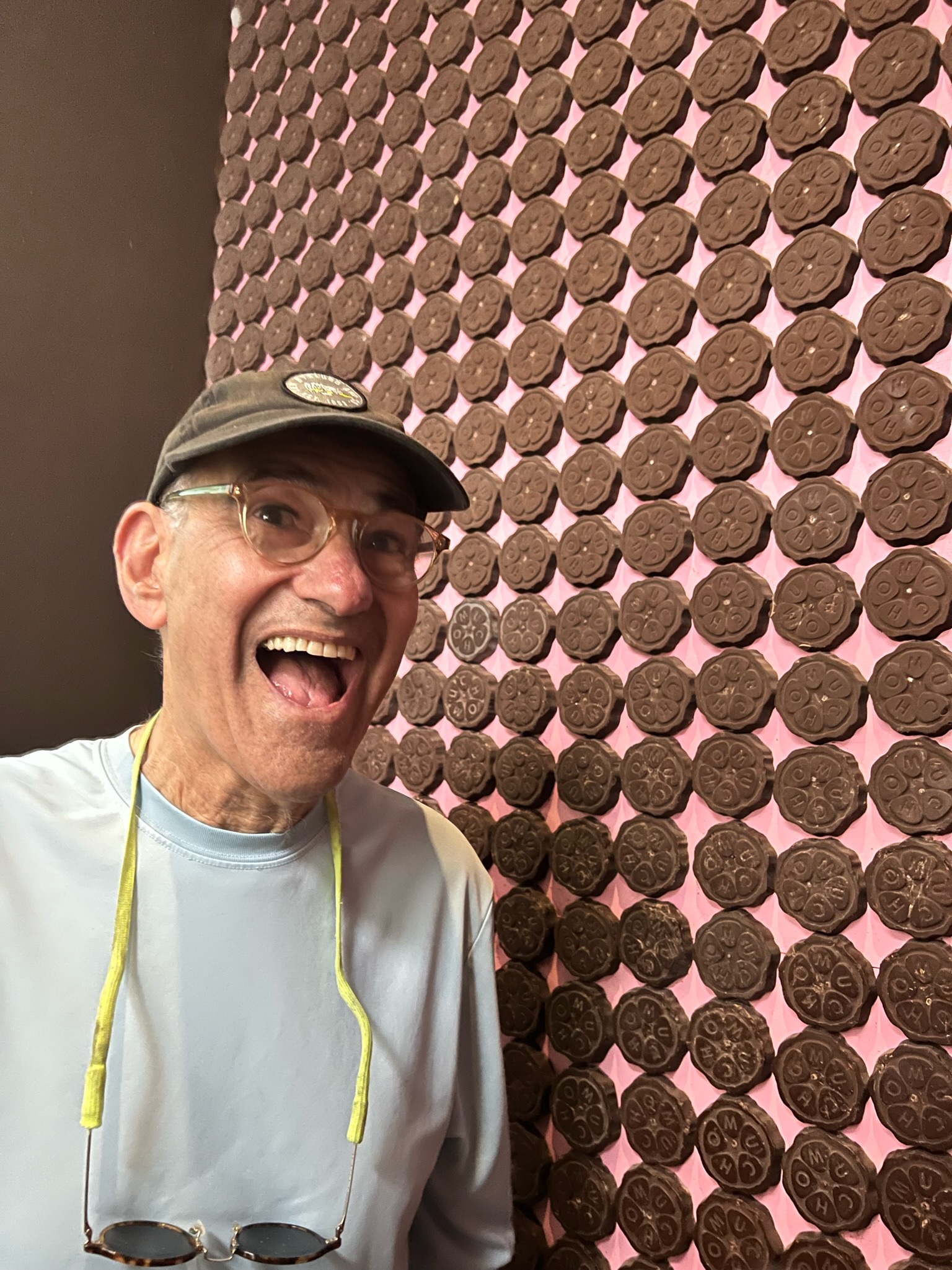
One other highlight of our time in the big city was a visit to the Chocolate Museum. Being married to a confirmed chocoholic, there was no way this could have been avoided! This small museum’s exhibits and docents explained the entire history of growing cacao (the key ingredient in what we lust after as chocolate), harvesting it, roasting and grinding it, and adding the various sweetening ingredients to produce the wide variety of end-products prized throughout history. It was a risky proposition letting Andrew stand in a room that was wall-to-wall chocolate but we did come out the other side and ended up with tasty treats from the onsite bakery.

Oaxaca
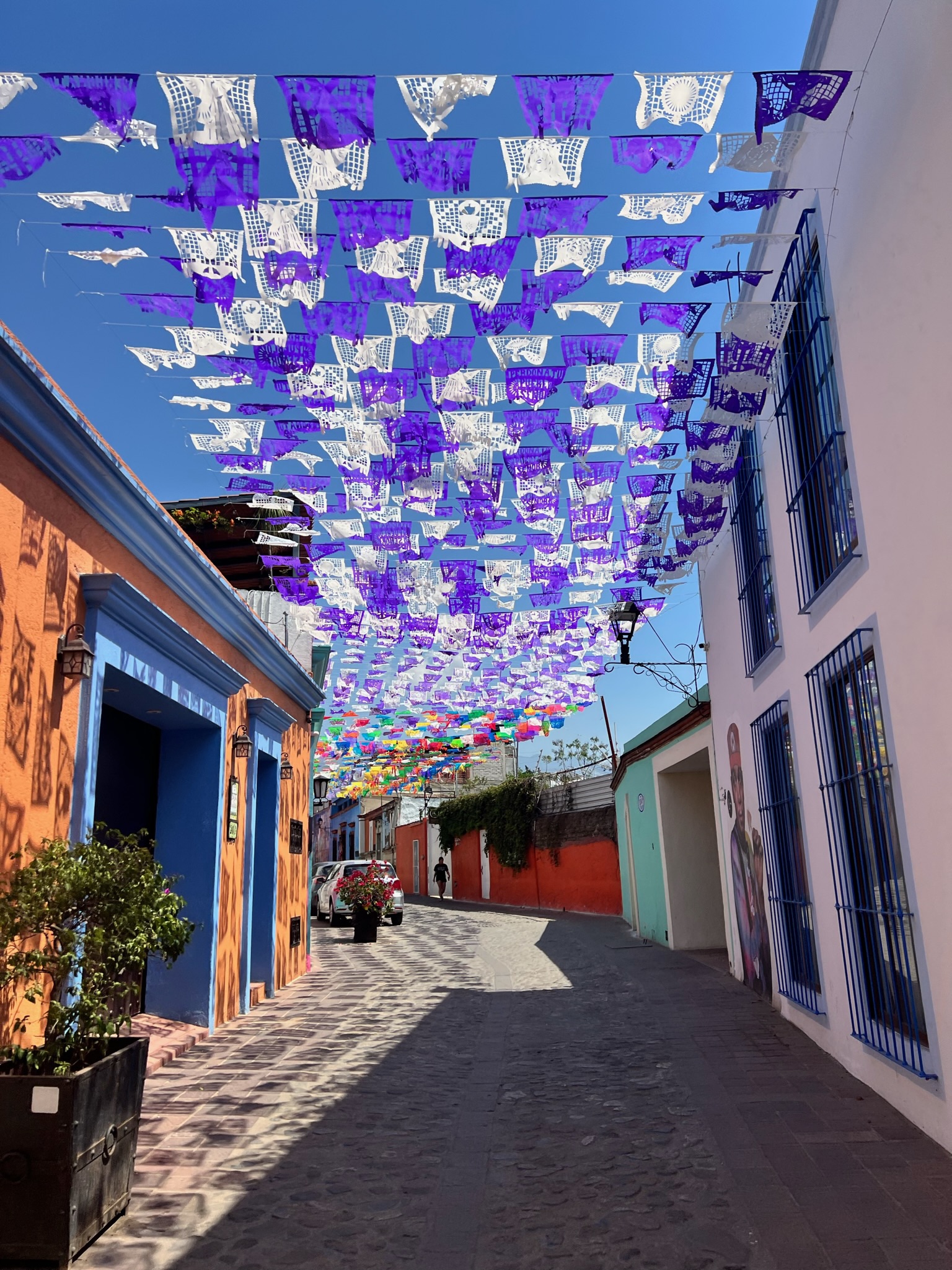
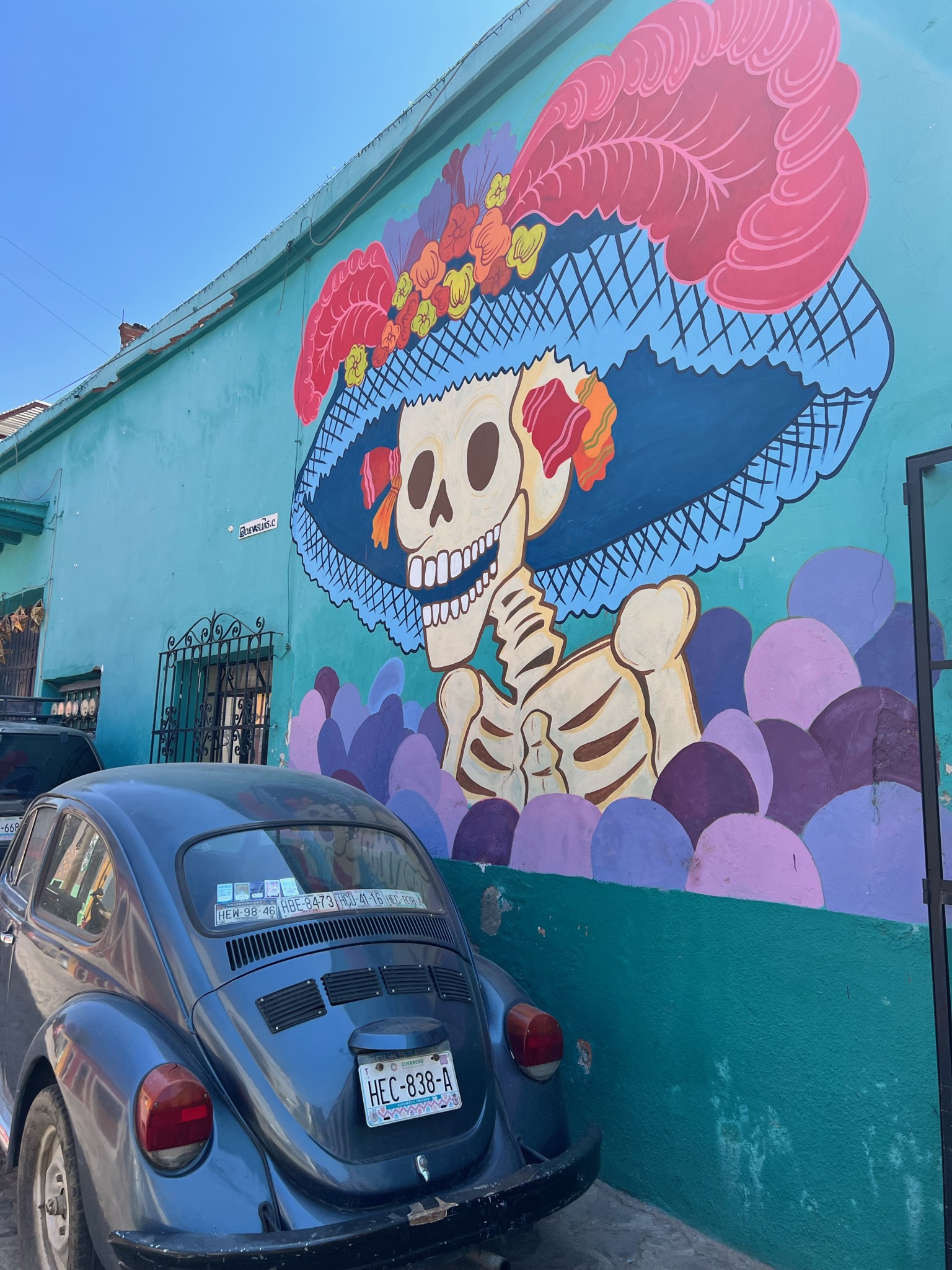
The final leg of our trip was in the southern part of Mexico – the city of Oaxaca (wah-HA-kah). We’d both heard of Oaxaca and had been told that it is famous for folk art and mole. Both proved to be true, and then some. In great juxtaposition to the big city we’d just been to, Oaxaca is best described as a substantial city that has retained a very close tie to its historical traditions in everyday life. Unlike in Monterrey and Mexico City, relatively few people we encountered here spoke English…and most of the tourists were from other parts of Mexico! While there were clearly signs of catering to tourism, with many outstanding restaurants and art galleries, the city itself has held on to its original layout built around centuries-old cathedrals and plazas. Most buildings remain low rise and simple with many having been renovated inside but retaining colorful cement on the outside.

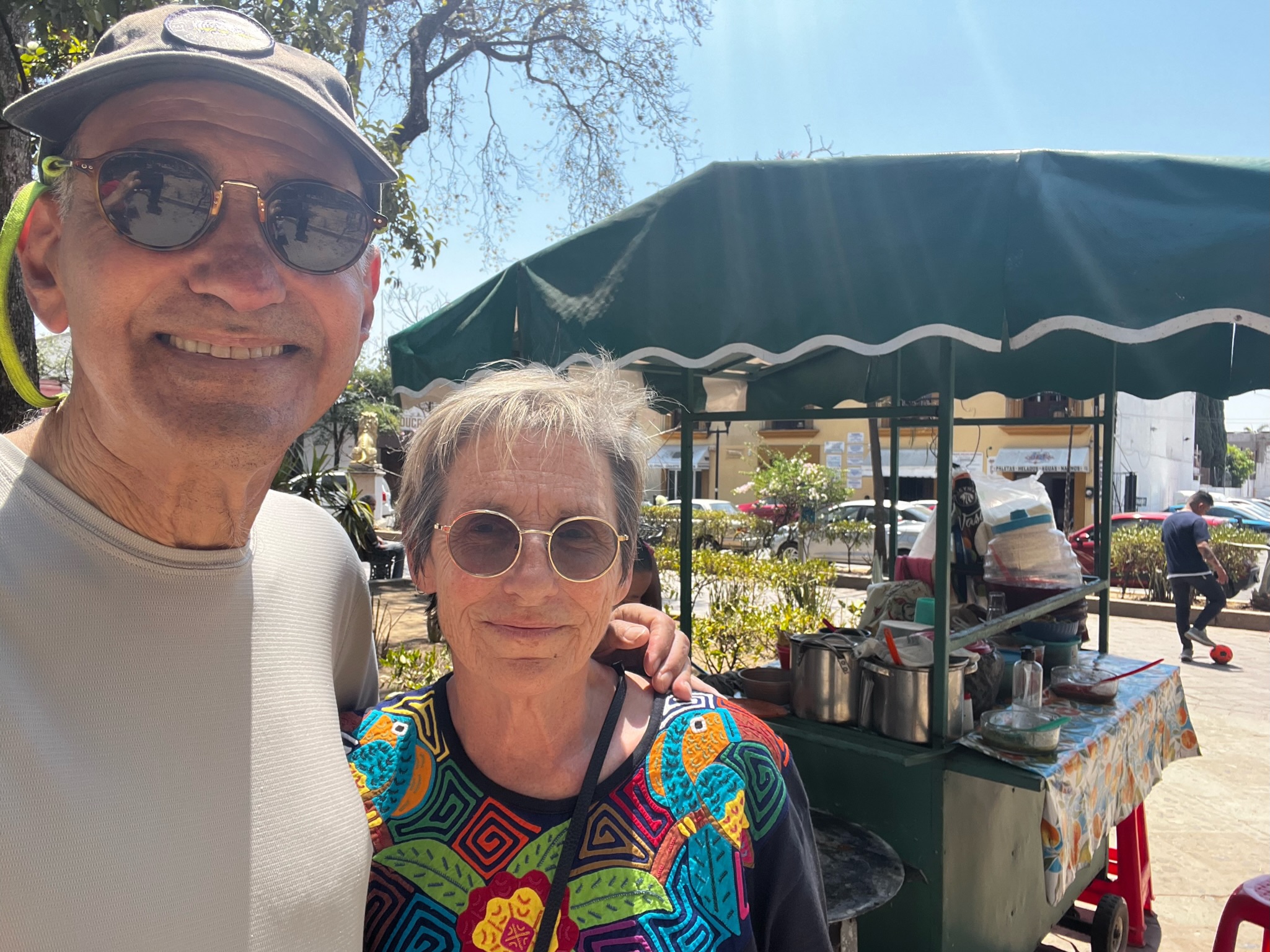
One real highlight in Oaxaca was our nightly stroll through the zocalo (again, the main square). Every night families gather there to hear live music, eat and drink from street vendors or hang at outside cafes, and let the kids blow off steam running around in a safe village-like atmosphere. The first night we were treated to a marimba band and the lead singer did a great rendition of New York, New York in tribute to Frank Sinatra…that was a mindblower.
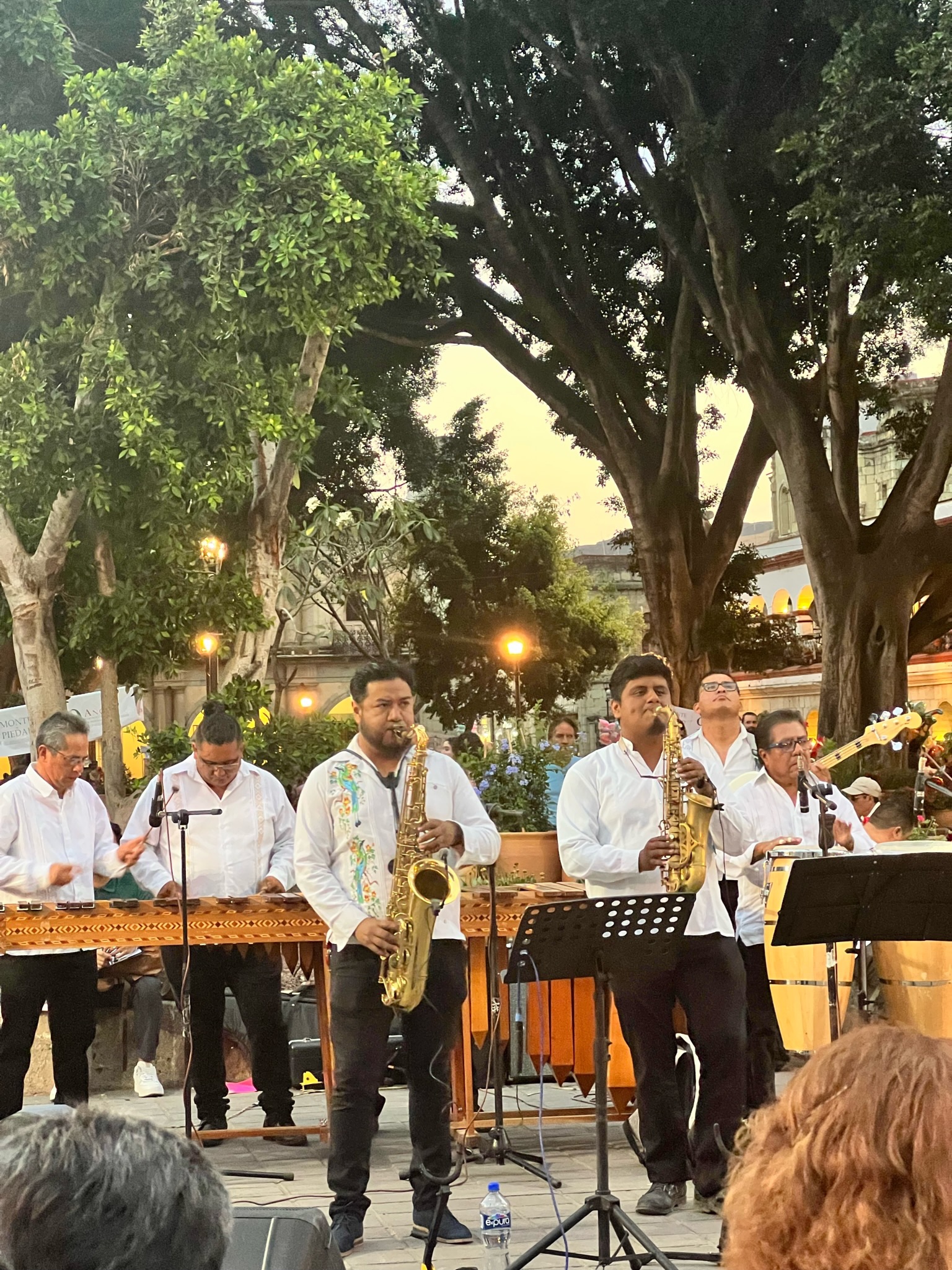
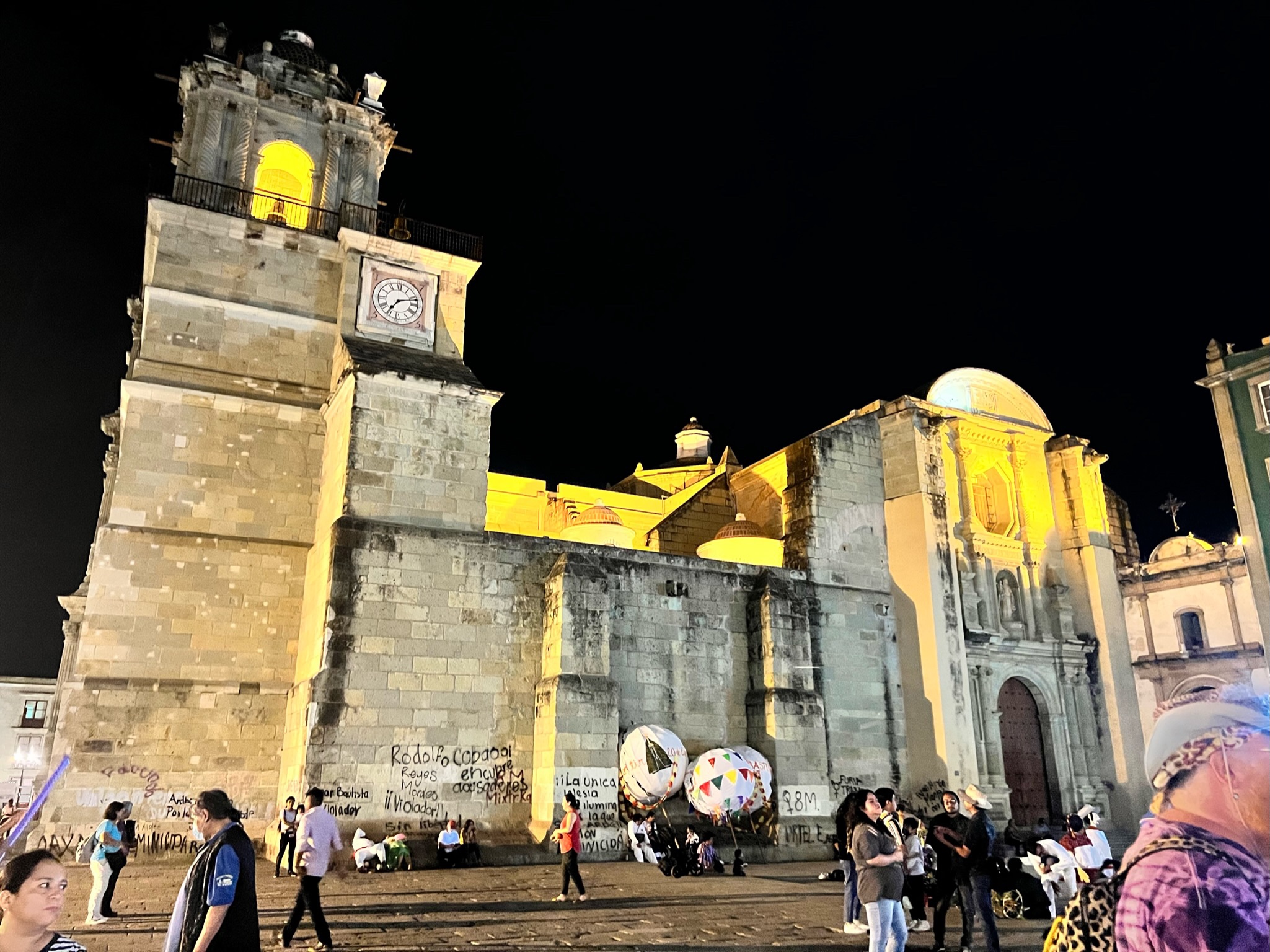
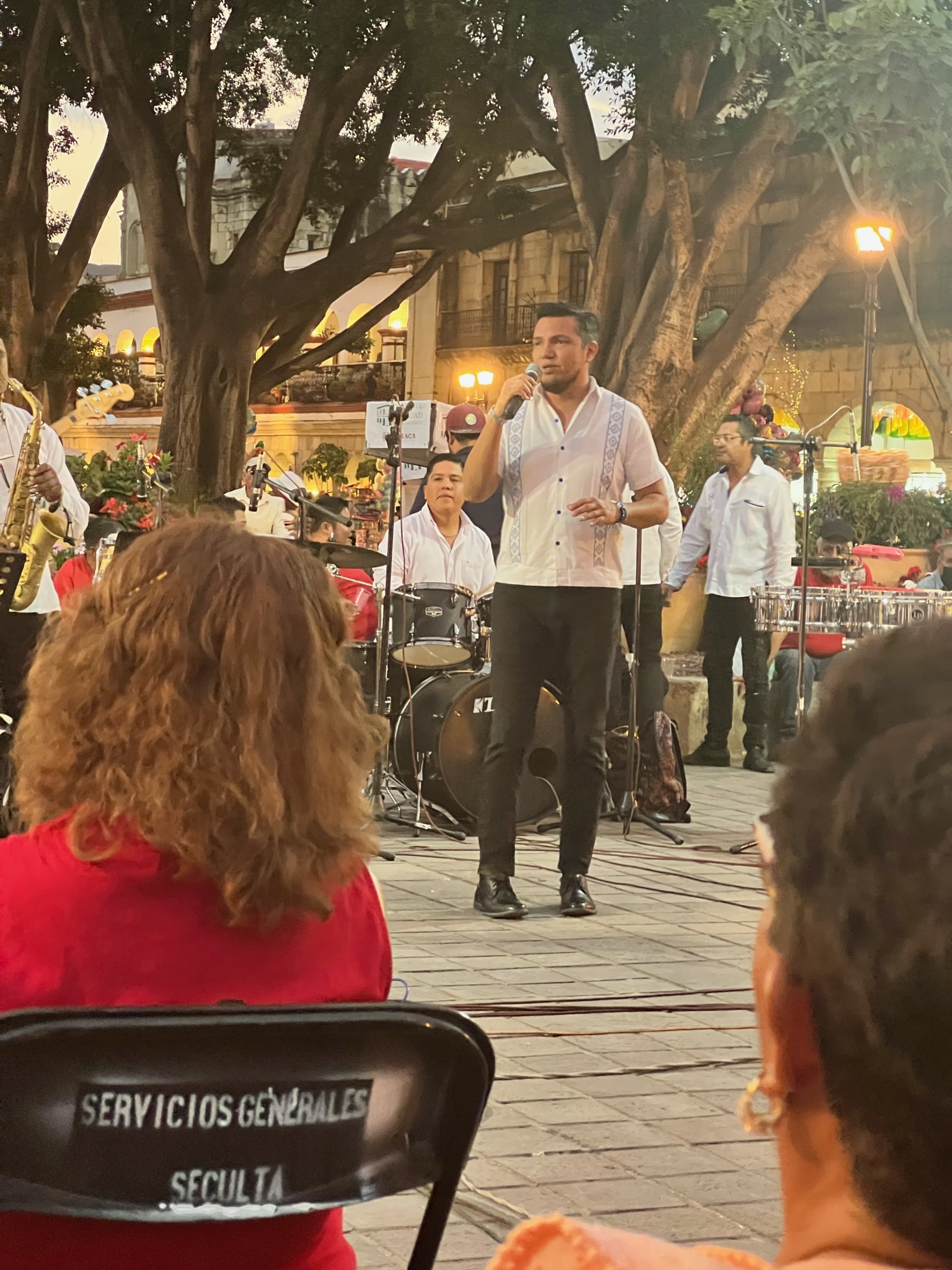
We also did a street food tour in Oaxaca and lucked out with another awesome guide, Luis. The tour was called “Earth, Corn and Fire” and we enjoyed every bite of it! Favorites were five or six different types of mole sauce and the most famous local ice cream found deep in a bowels of one of the daily markets.
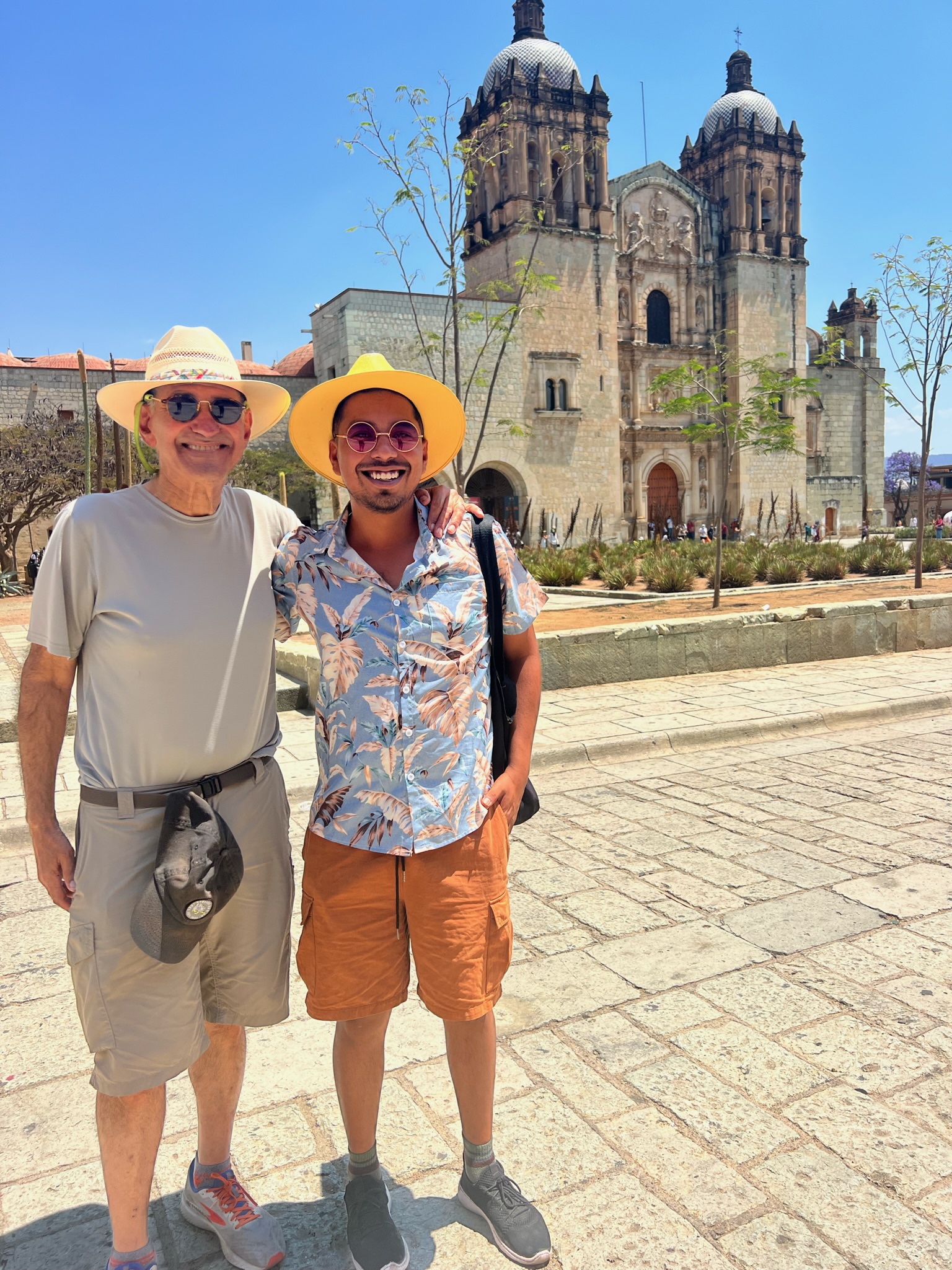
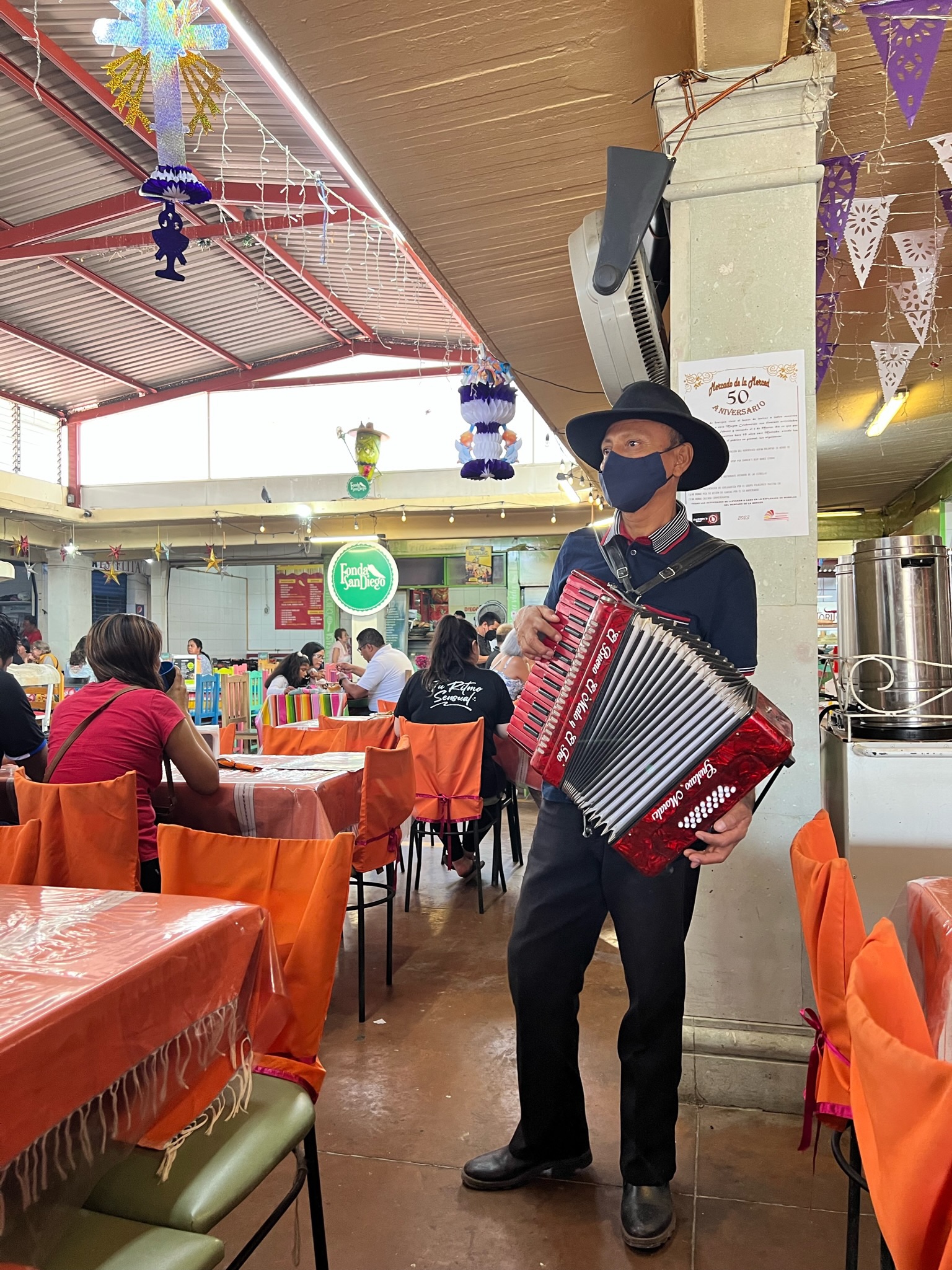
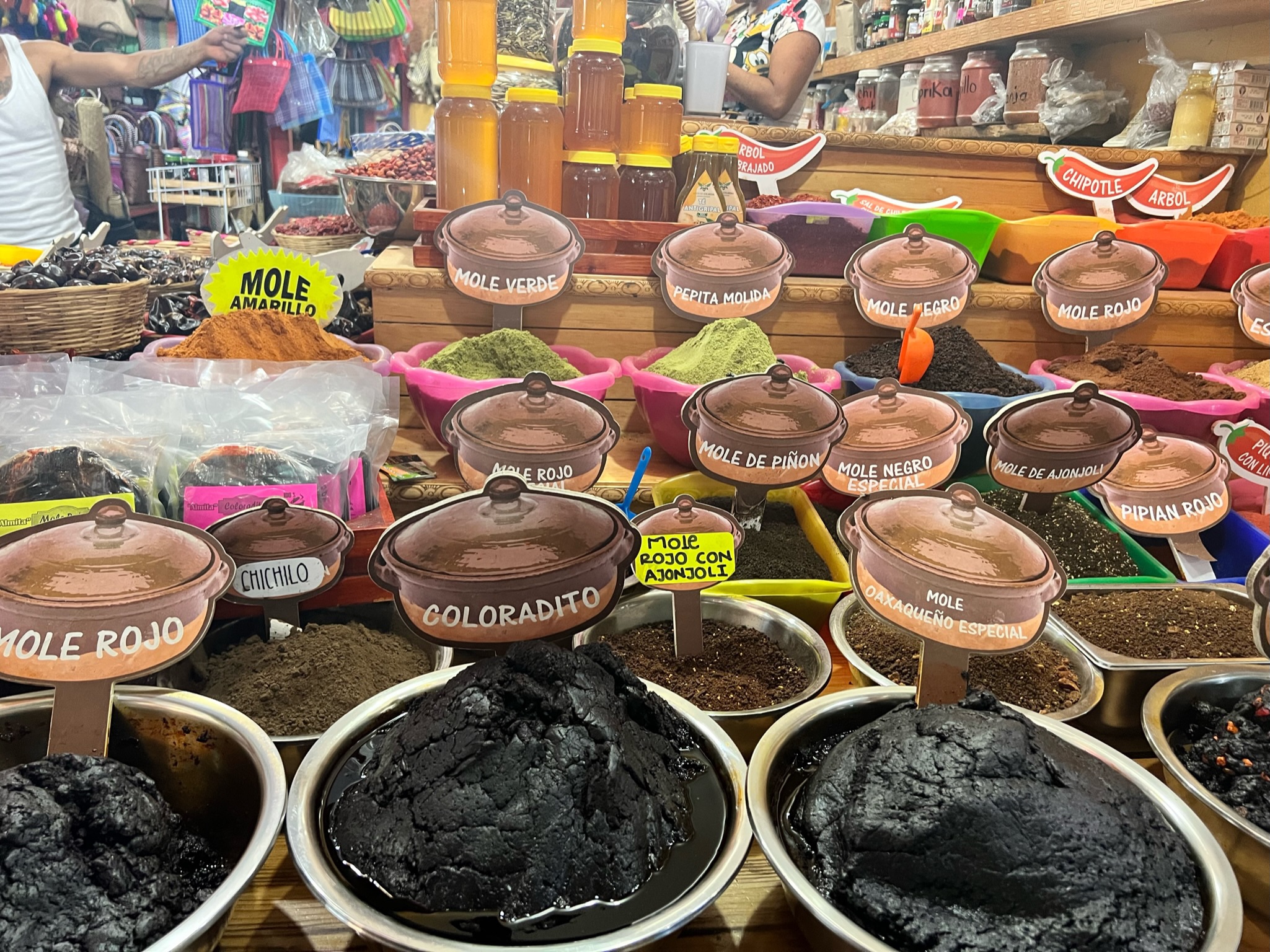
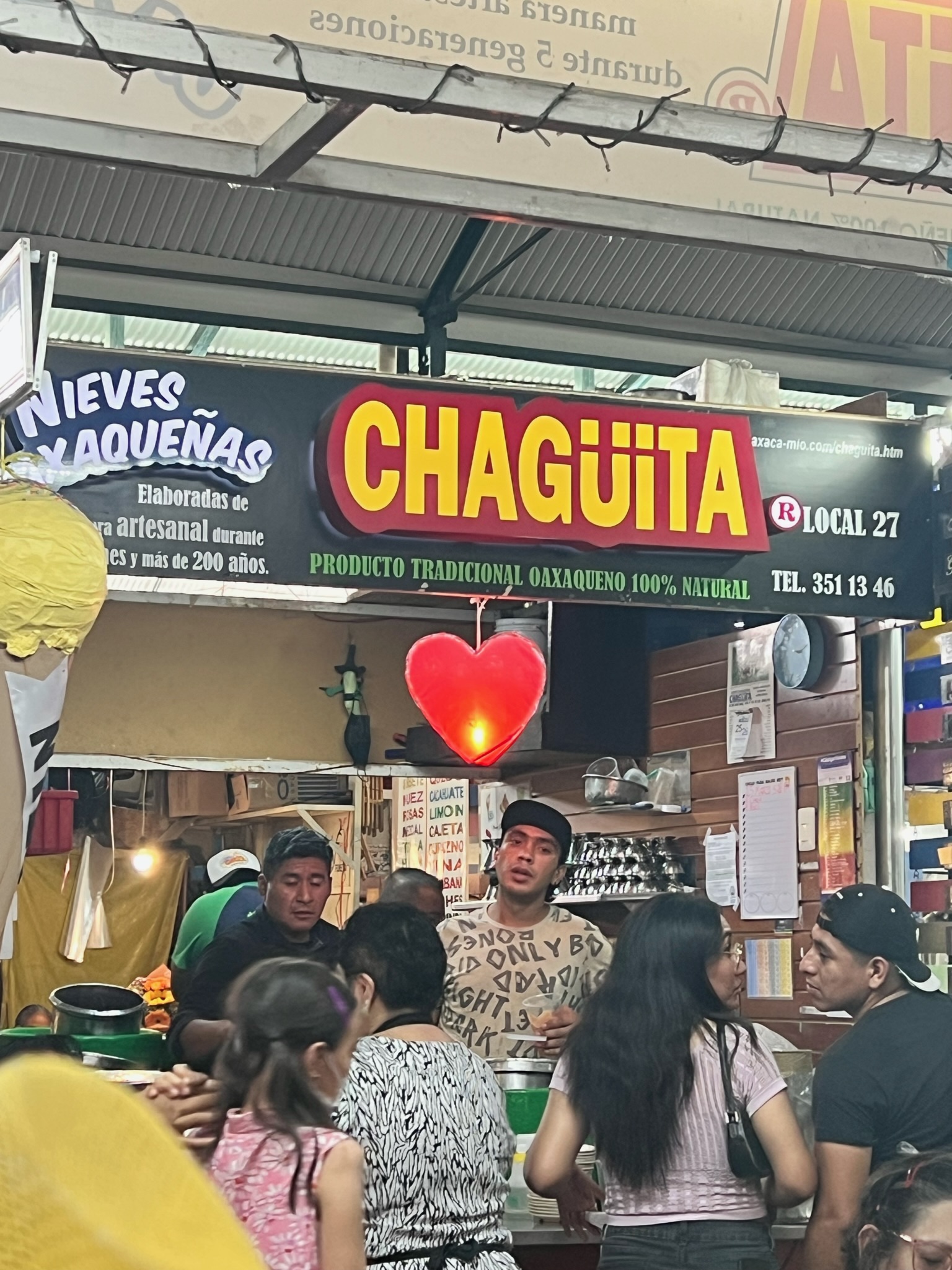
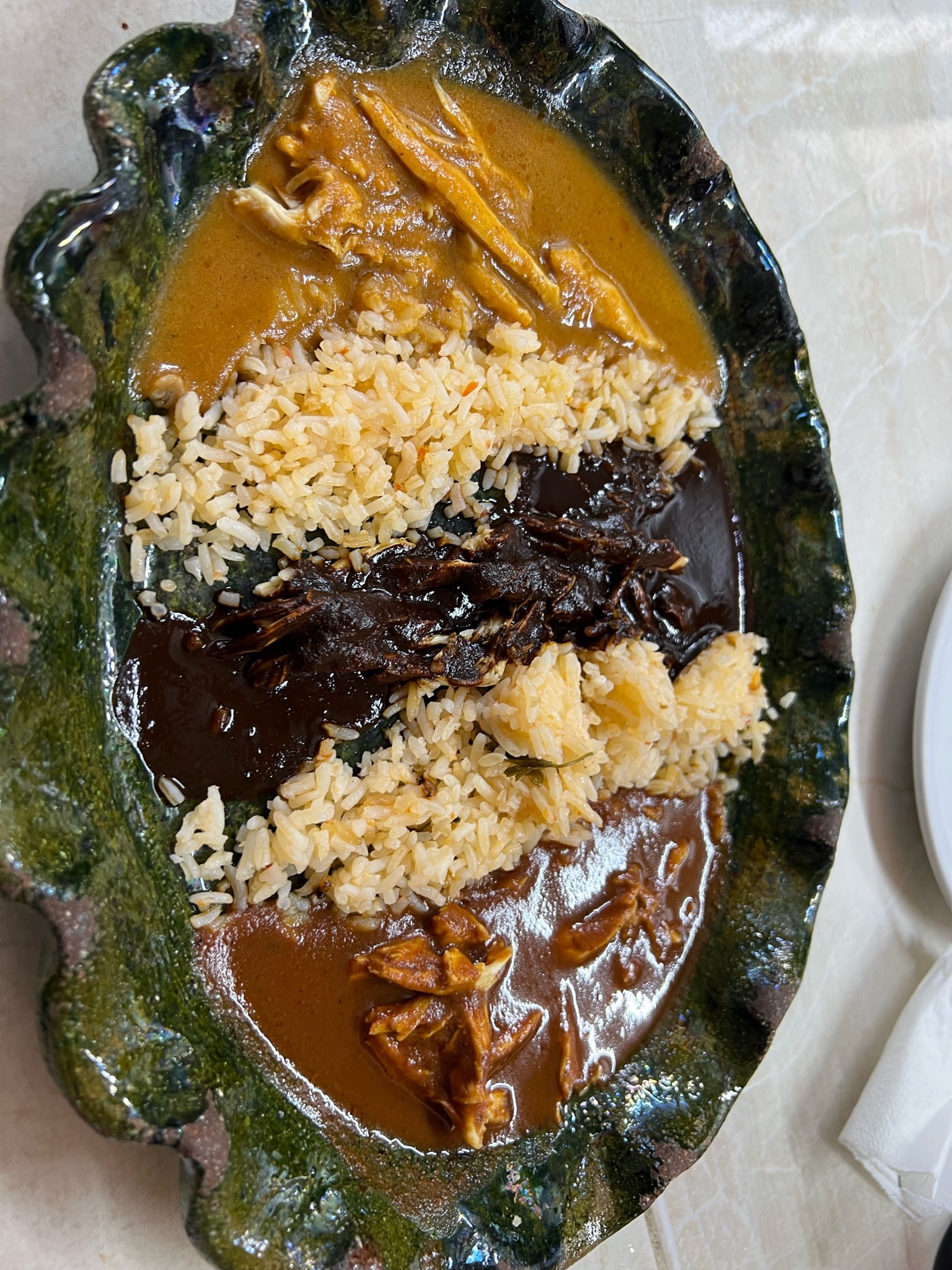
Having been told that the most incredible outdoor market in the state of Oaxaca only takes place about 45 minutes outside the city – and only on Sundays – we had to go. We took a taxi to the Tlacolula Market and were not disappointed. This market stretched as far as the eye could see in all directions, and there really wasn’t anything you could not find there. Growers and artisans gather from all over the area and this is where many families come to do their weekly marketing. Andrew did find a scrumptious fruit tart he couldn’t resist and we came away with a colorful rug/table runner for us and some handmade goodies for kids and grandkids. The ride home was an experience – we took a local bus filled to the standing brim with locals, tourists and live chickens!
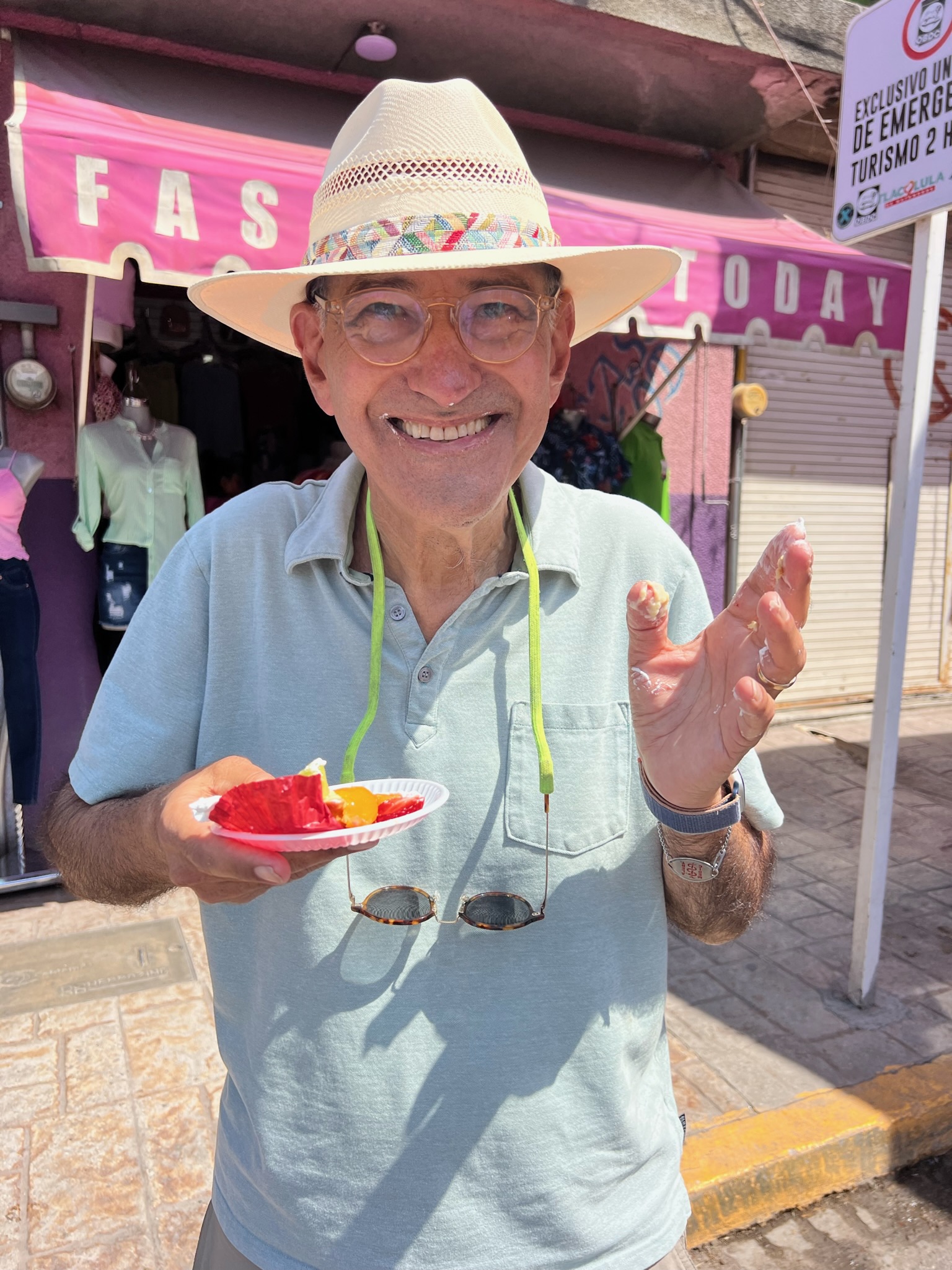
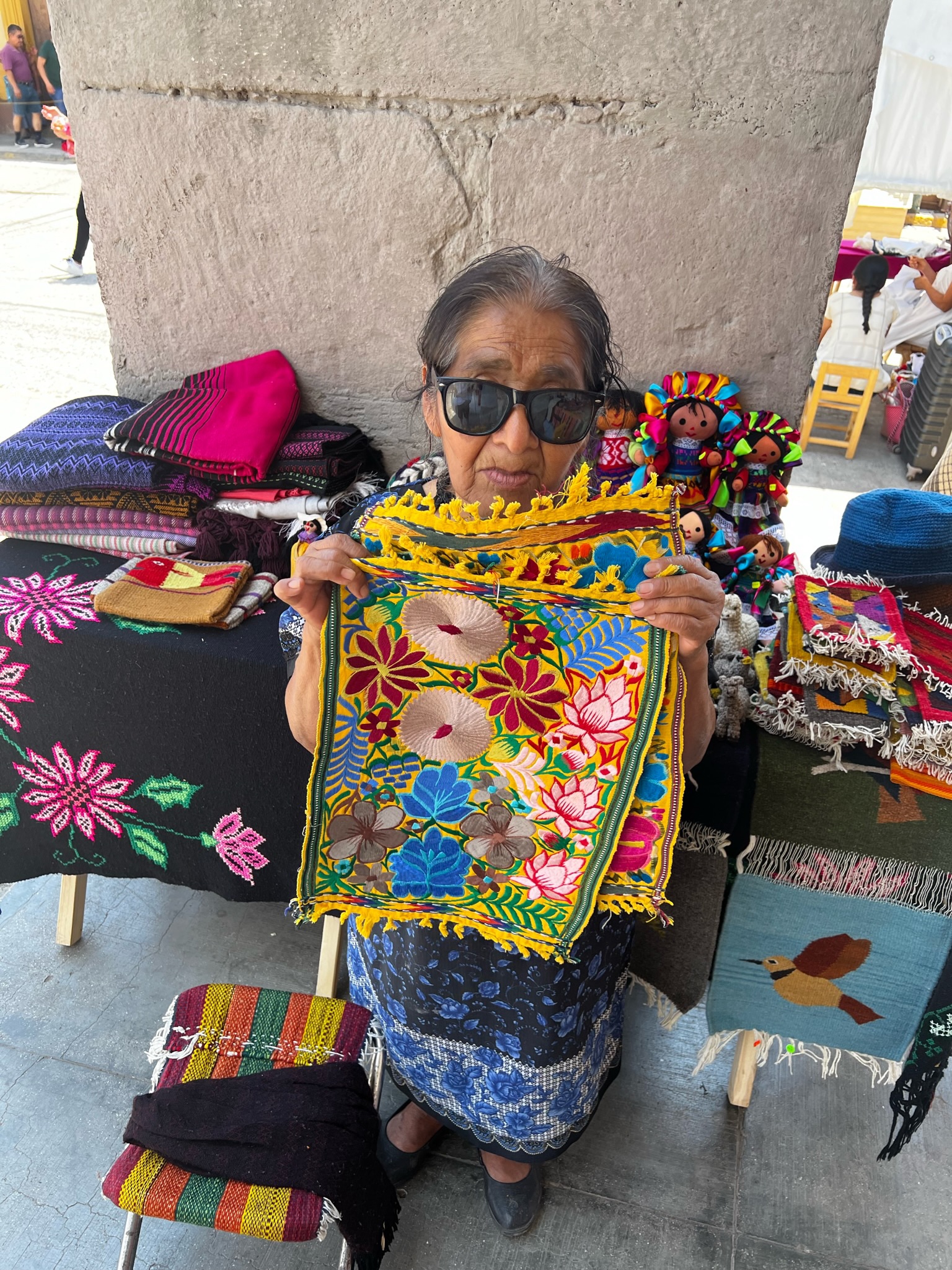
It was after this market day that I unfortunately took sick and was not able to join Andrew at Monte Alban. This UNESCO Heritage Site was inhabited over a period of 1,500 years by a succession of peoples – Olmecs, Zapotecs and Mixtecs. The terraces, dams, canals, pyramids and artificial mounds of Monte Albán were literally carved out of the mountain and are the symbols of a sacred topography.
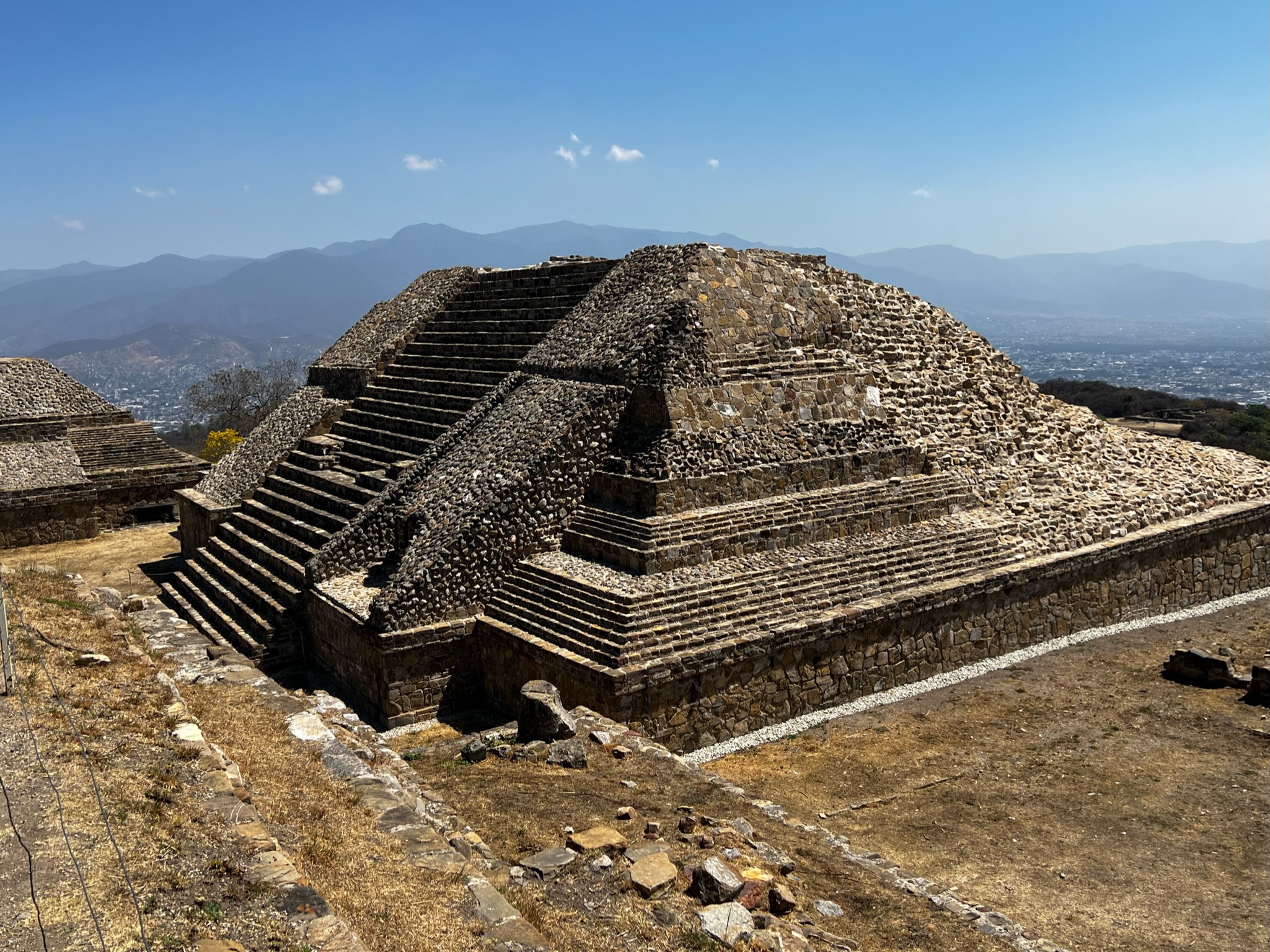
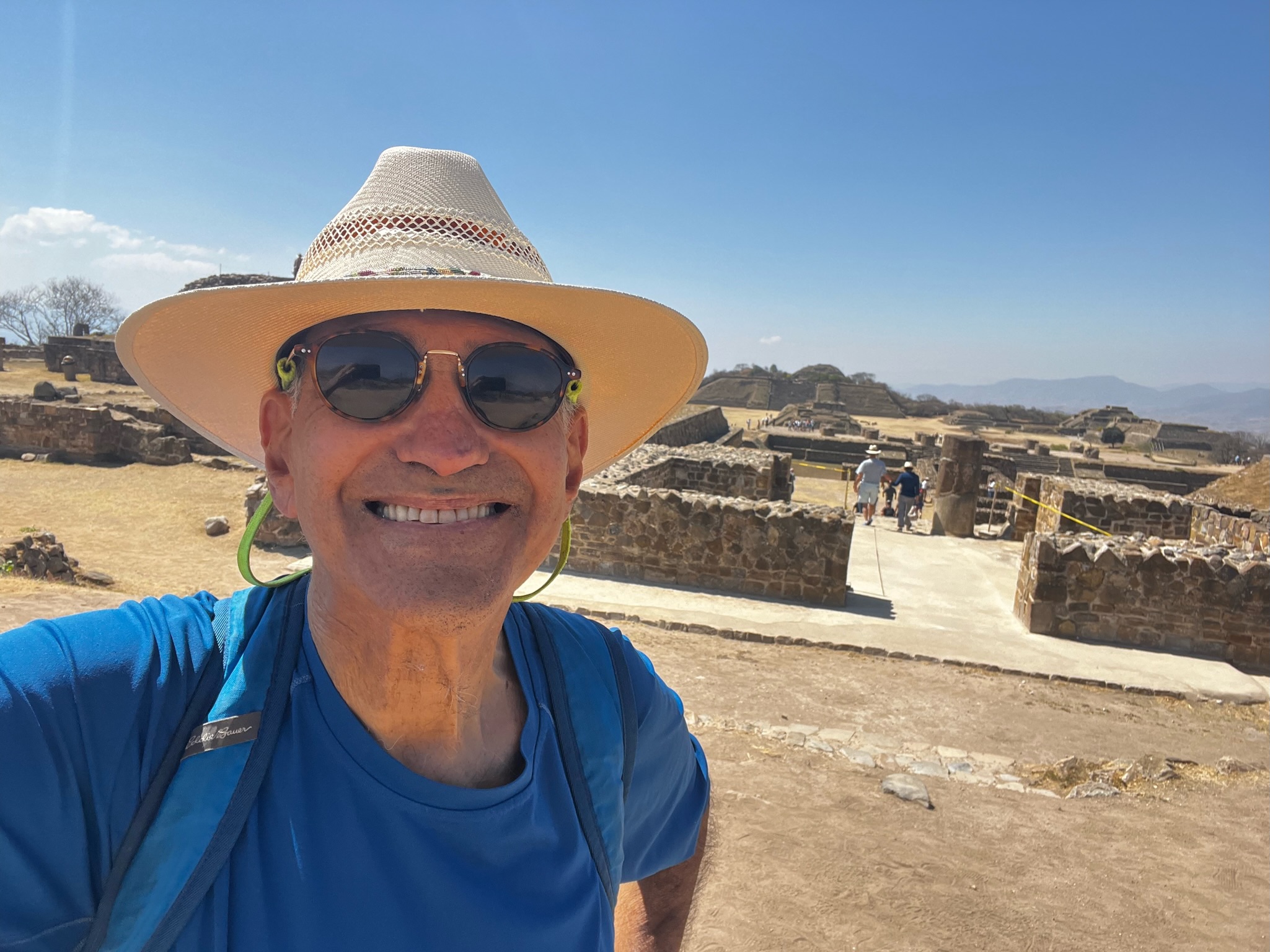
While the end of this amazing trip for me was spent in bed, I have no regrets and only incredible memories. This was definitely one of the most culturally rich experiences I’ve had while traveling, and I learned so much about a country that I believe is grossly underestimated by its neighbor to the north (That would be US!). I found the people warm and welcoming, the food amazing, and the history fascinating. Mexico is certainly not without its societal and political issues, but we are not untouched by some of the same kinds of struggles. Hopefully as time goes on our two countries can find a path to more collaboration and goodwill. There is so much potential…


 Living La Vida Loca
Leave a comment