
I have already written about our wonderful exploration of some of the Galapagos Islands, but that was actually only one “chapter” in our 18-day wanderings through Ecuador. The islands were the precipitating factor in our choosing Ecuador, but we were equally touched by and grateful for the experiences we had in the varied facets of this South American country.
Quito: Big City Life
I had written previously about Quito but here I have added some “retrospective” on it in context of the rest of our trip. Feel free to skip if you have had your fill of city life…
Bracketing our time in the Galapagos was a few days in Quito, Ecuador’s capital city – one of the few large cities in Ecuador. It sits high in the Andean foothills at about 9,300 feet above sea level. It was built on the foundations of an ancient Incan city, and its well-preserved colonial center is rich with 16th- and 17th-century churches and other structures blending European, Moorish and indigenous styles. There are about 2 million people living in Quito and it’s growing. Like many international cities we have visited, the neighborhoods are varied – both culturally and economically – but the greater chasm between those living the “big city life” and the vast majority of Ecuadorians in the agricultural expanses is abundantly clear. We purposely wanted to explore both lifestyles, and that paid off in a very personal and reflective way. We had a similar experience in both Spain and Italy. It is wonderful to taste the sights and sounds of bigger cities (Quito…Madrid…Barcelona…Rome…Florence…on and on) – the historical sites, the large-scale festivals, the diverse food options, etc. But personally I prefer the quieter, simpler pleasures of the countryside – small towns (here, pueblos), local customs, simple food. While it is not a great comparison but makes the point – this is part of why we chose to return to the US and leave near the beach in a village-like area versus dropping back into a very big city scene. Access to more is great but living it everyday not.
So, back to Quito. Our first adjustment was to altitude. We live (obviously) at sea level, and with Quito at almost 10K feet, the prescribed medication we were taking (Diamox) seemed to keep any adjustment symptoms at bay. We were counseled to drink lots of water and stay away from alcohol, and basically through the entire trip we managed the high altitudes well. We DID feel the effects of altitude on some of our hiking adventures (in later entries) because you simply have less oxygen to call on when exerting yourself! Despite being in pretty decent shape for “semi-seniors” 🙂 we admit that brute force was needed along the way to accomplish some pretty awesome hikes and take in some exquisite vistas.
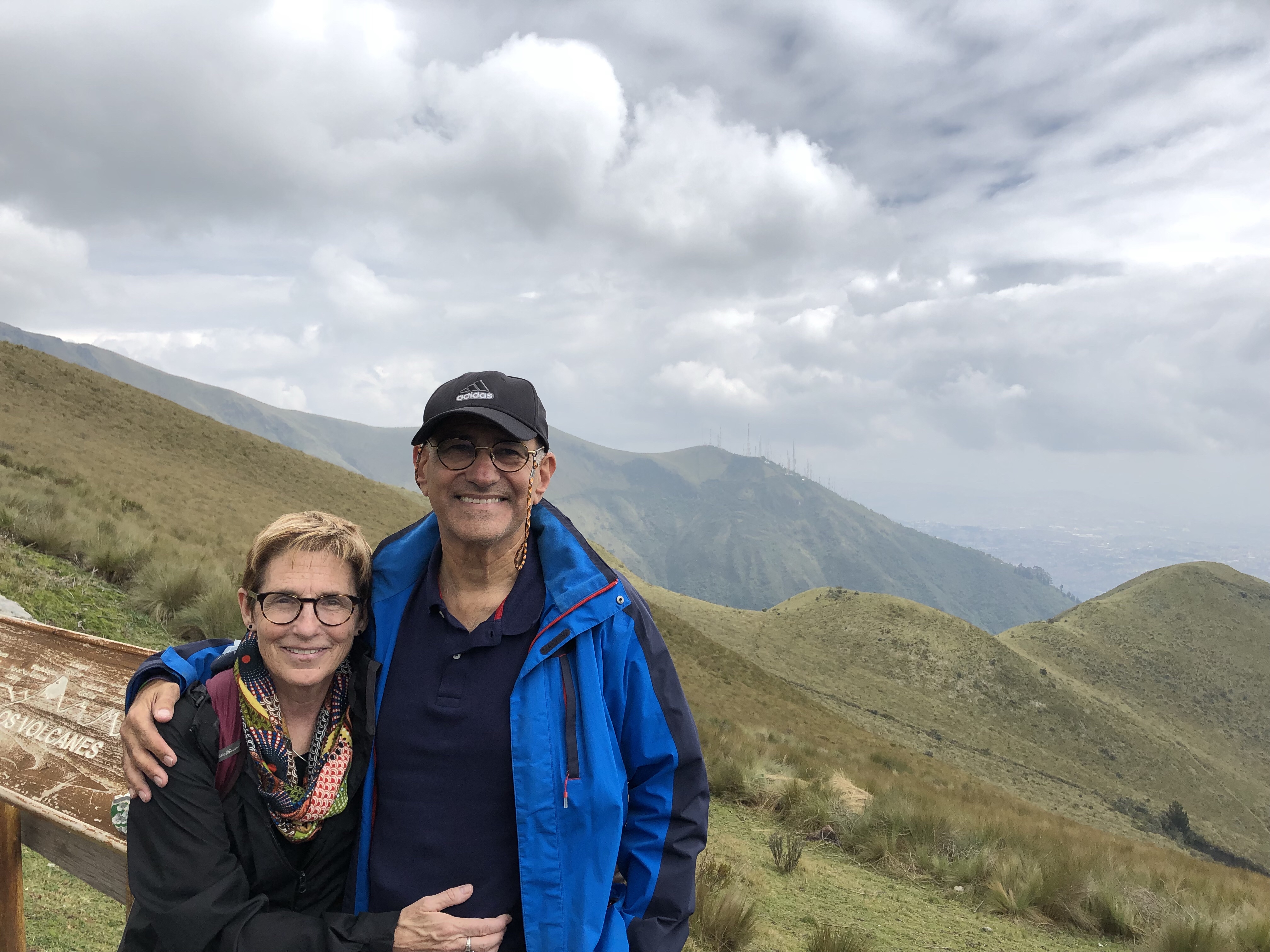
Our first high-flying view of Quito was on the The TelefériQo (from teleférico and Quito), is a gondola ride in running from the edge of the city center up the east side of Pichincha Volcano to lookout Cruz Loma. It is one of the highest aerial lifts in the world, rising from about 10,000 feet to nearly 13,000 feet!. The ride took about twenty minutes. We were lucky to meet a young couple in a coffee shop this first morning in the city – she from another large Ecuadorian city, Guayaquil, and he from Brazil now working in Quito – and they rode up the mountain with us and were great companions for some of the rest of the day.


The first full day in Quito we toured with a local guide, Luis, who took us to some of the local sites with a running commentary that had us move headlong into practicing our Spanish. In retrospect, this was a great start to a few weeks of really having to use the bits of the language each of us had in memory but even in Spain did not use enough to really become facile with it. I have to say our comprehension as well and spoken word did improve over the trip as much fewer Ecuadorians had English mastered.
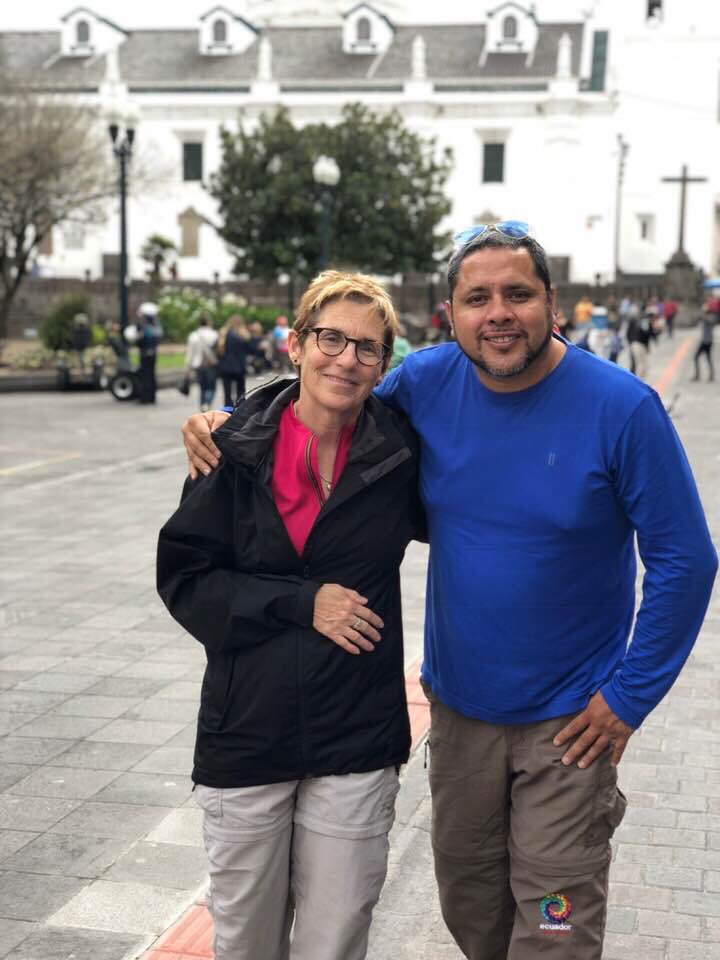
Our first stop was the local Carolina Mercado (market) that was chock full of colorful local produce including dozens of types of potatoes (a culinary staple), coast-caught varieties of crustaceans and other fish, and a rustic “food court” serving traditional dishes like hornado (pork roasted in the oven).


Our next stop was at the “real equator”. Apparently a huge monument was built years ago to supposedly mark the location of the Equator (mid-point on our globe). This was before exacting GPS was available and once GPS was used years later, the REAL equatorial line was found and marked a few meters away – down the street! We visited the later – the Inti Nan museum – which was a fun combination of guided briefing about indigenous Amazonian headhunters who still practiced shrinking head creation (not sure how this relates to the equator, but…); a tour of replicated native housing; and a run-through of some “proof” experiments to show the impact of being on the Equator related to magnetic forces. These hands-on experiments were, I believe, part truth/part showmanship, but they sure were fun.


Luis then toured us through La Floresta – a very “hipster” neighborhood in Quito that is the hub of a rising tide of street mural art.
After briefly visiting the main basilica of Quito – who’s most striking features were the Amazonian creatures that replaced standard gargoyles – our final stop with Luis was in the old colonial center of Quito – the centerpiece of which is the Presidential palace and a collection of churches that serve a diverse number of religious sects. One in particular, built by the Spaniards when Ecuador was still a colony of theirs, was literally gold-plated stem to stern…I admit that I violated the “no camera” rule to snap a shot of this pretentious interior. To boot, there was artwork that depicted Spaniards ascending to Heaven while the indigenous peoples were relegated to Hell. Lovely.


Some of the other things we did in Quito that were memorable…
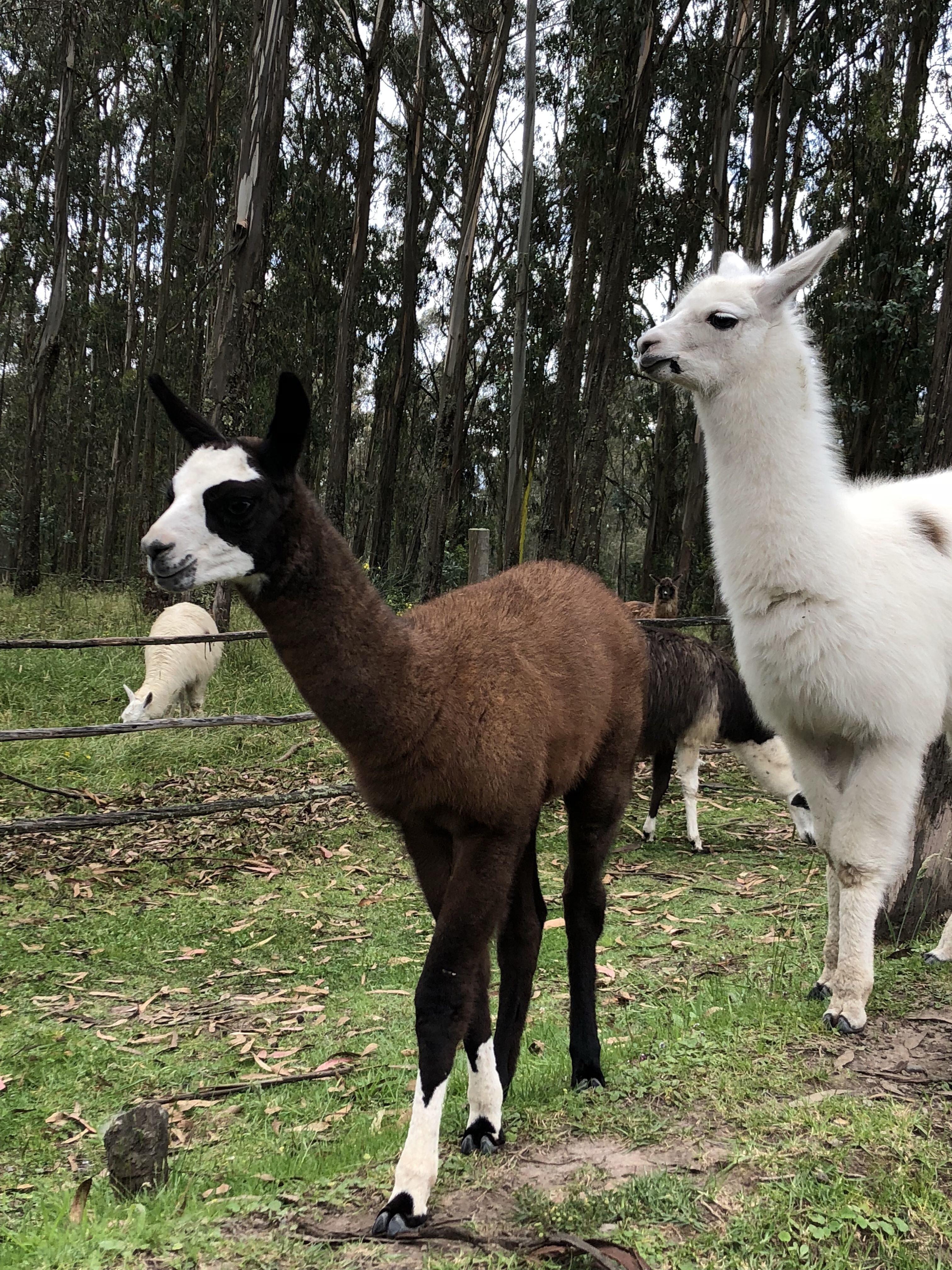
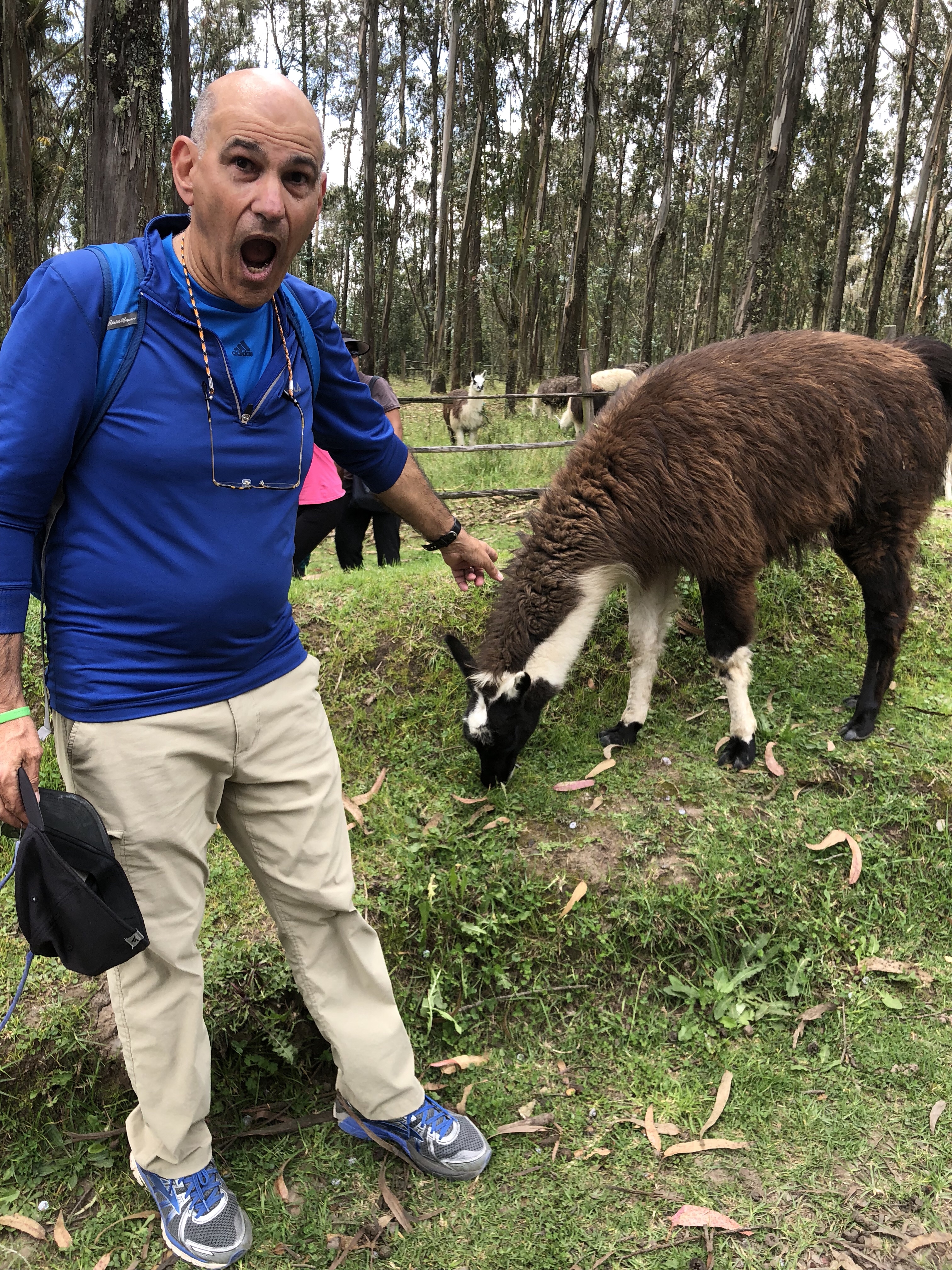
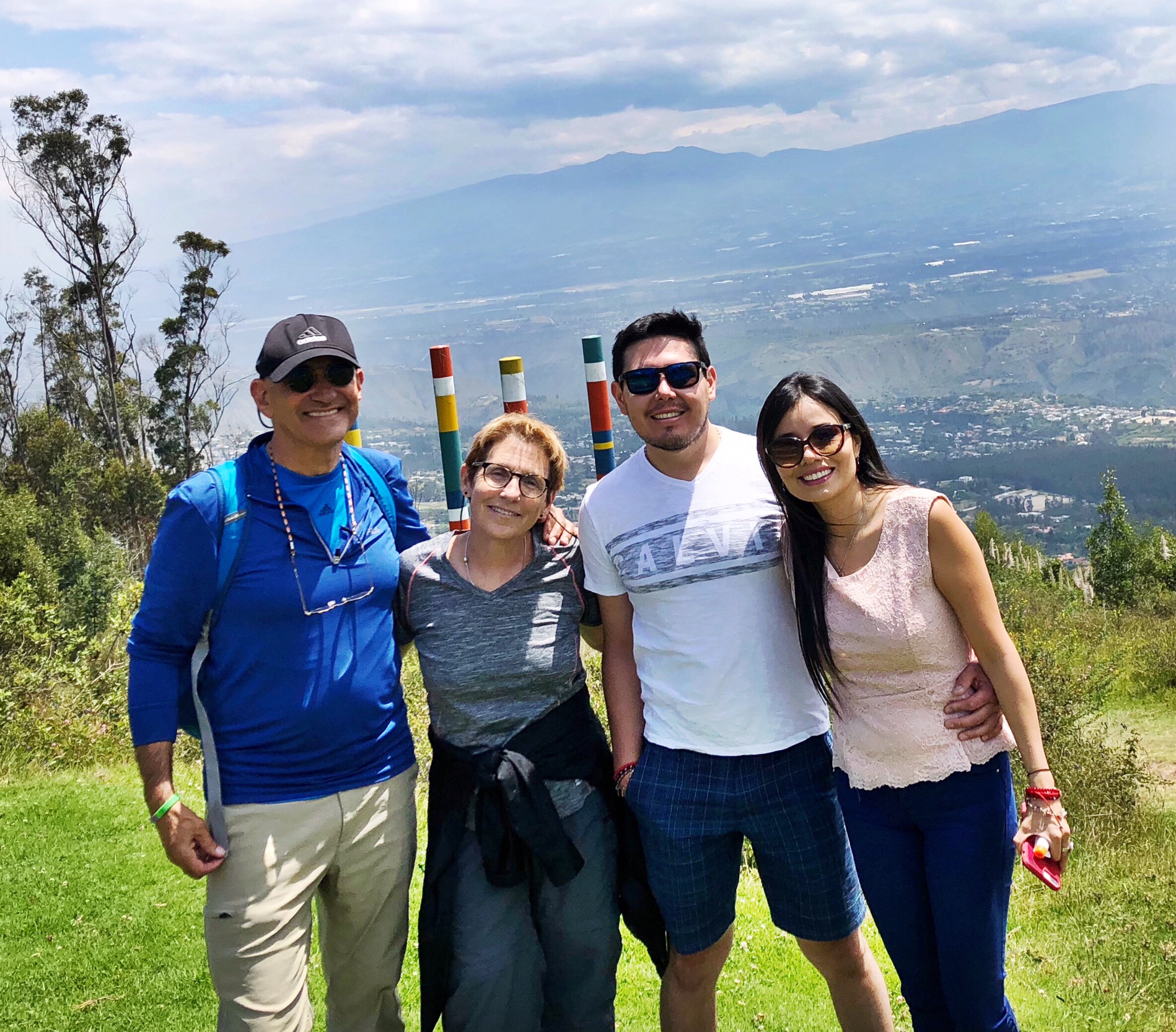
We met up with a couple of amazing young professionals, Andrea and Sebastian, who run a local foundation to support women who are dealing with gynecological and skin cancers – two of the most common cancers for women in Ecuador. We got a chance to learn about their work as well as spend some special time with them wandering in a lovely park/preserve. Our real treat there was coming across a herd of llamas!
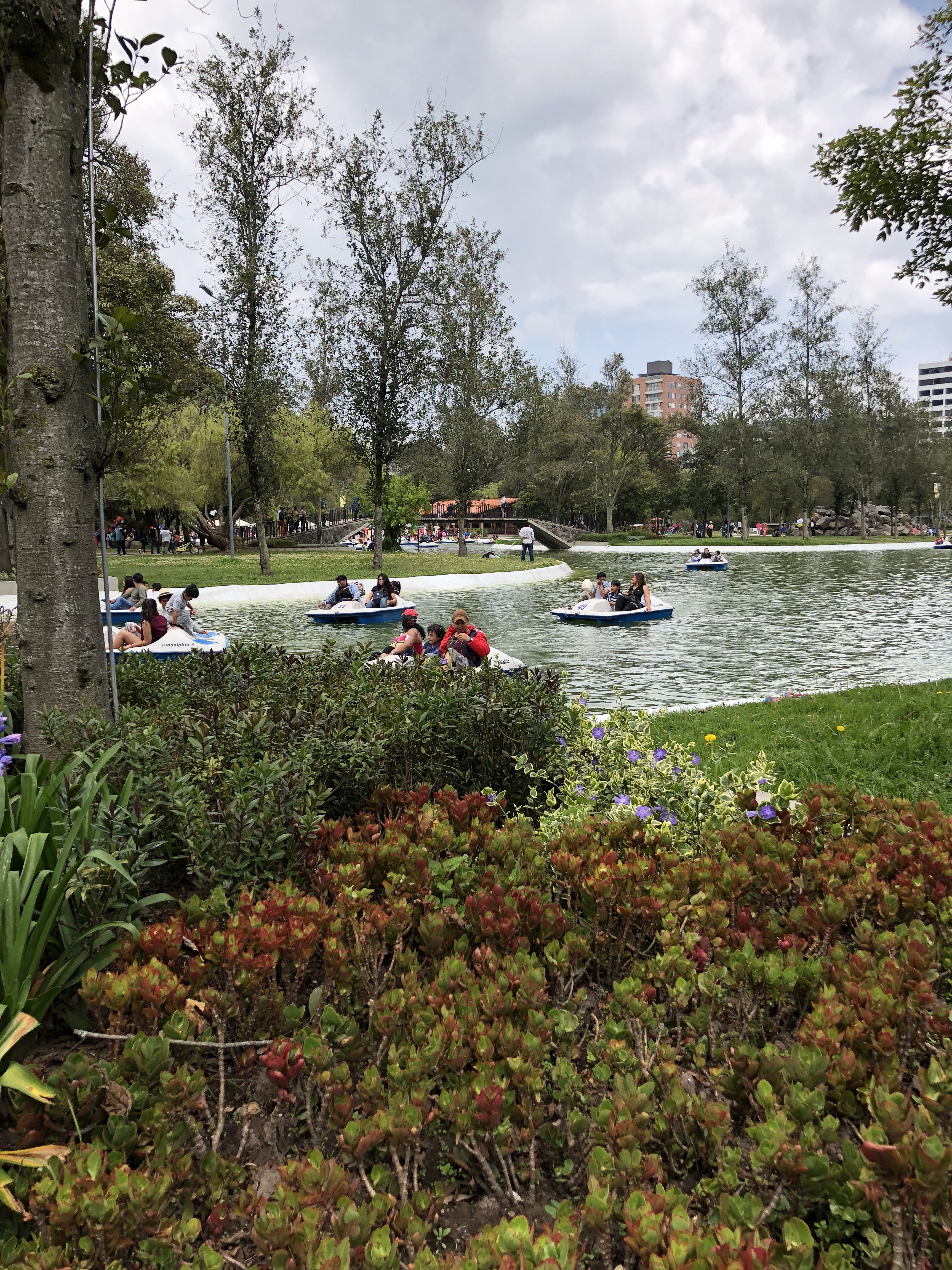
Spent an afternoon or two in Parque La Carolina – Quito’s version of Central Park. One of the days we wandered through the park during a festival/vacation period, dodging kids who were pasting each other with some whipped cream-type stuff as part of this celebration, enjoyed seeing families floating along a man-made lagoon in small boats, and taking in a very funny Michael Jackson impersonator (valiant effort though!).
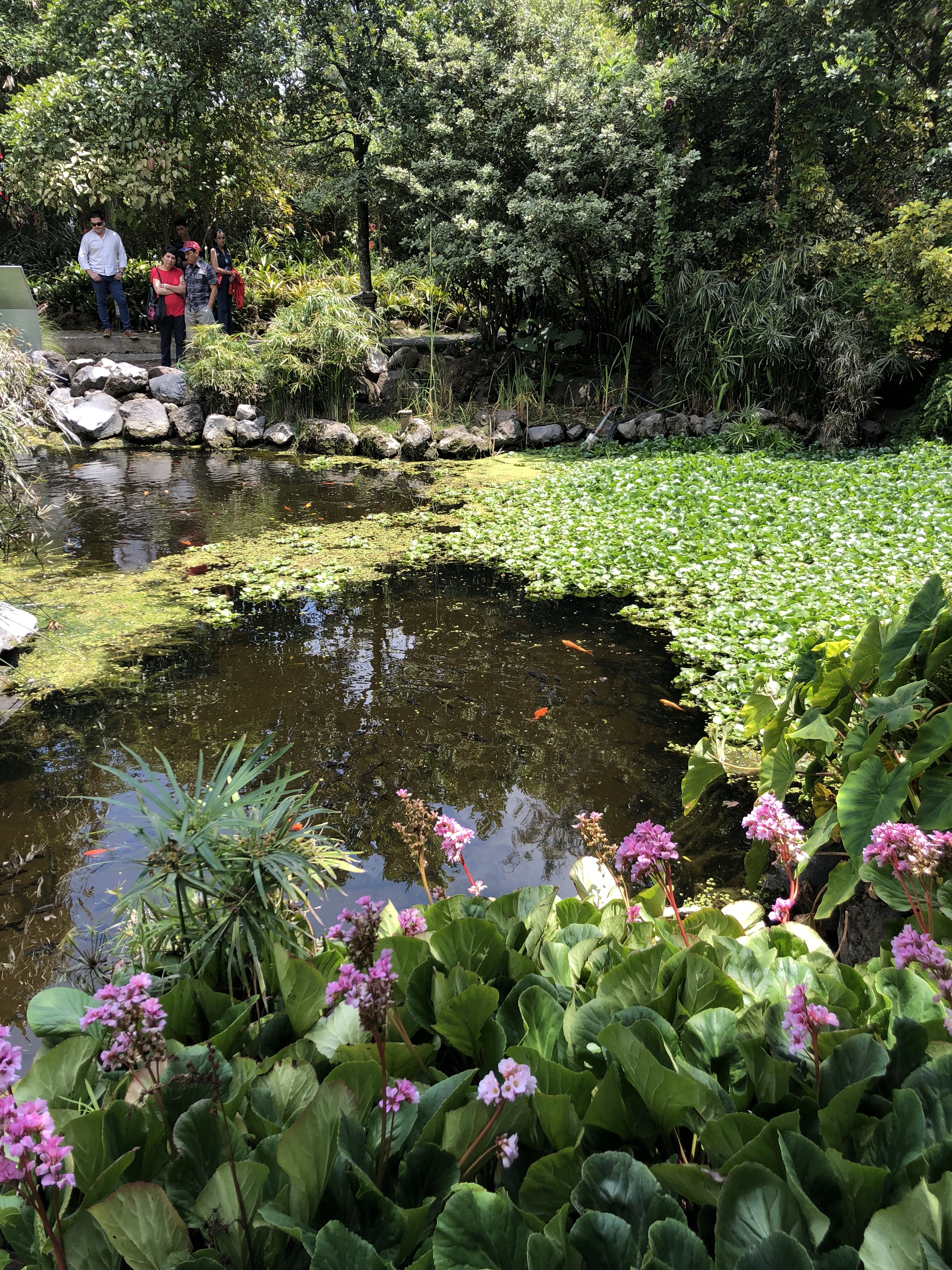
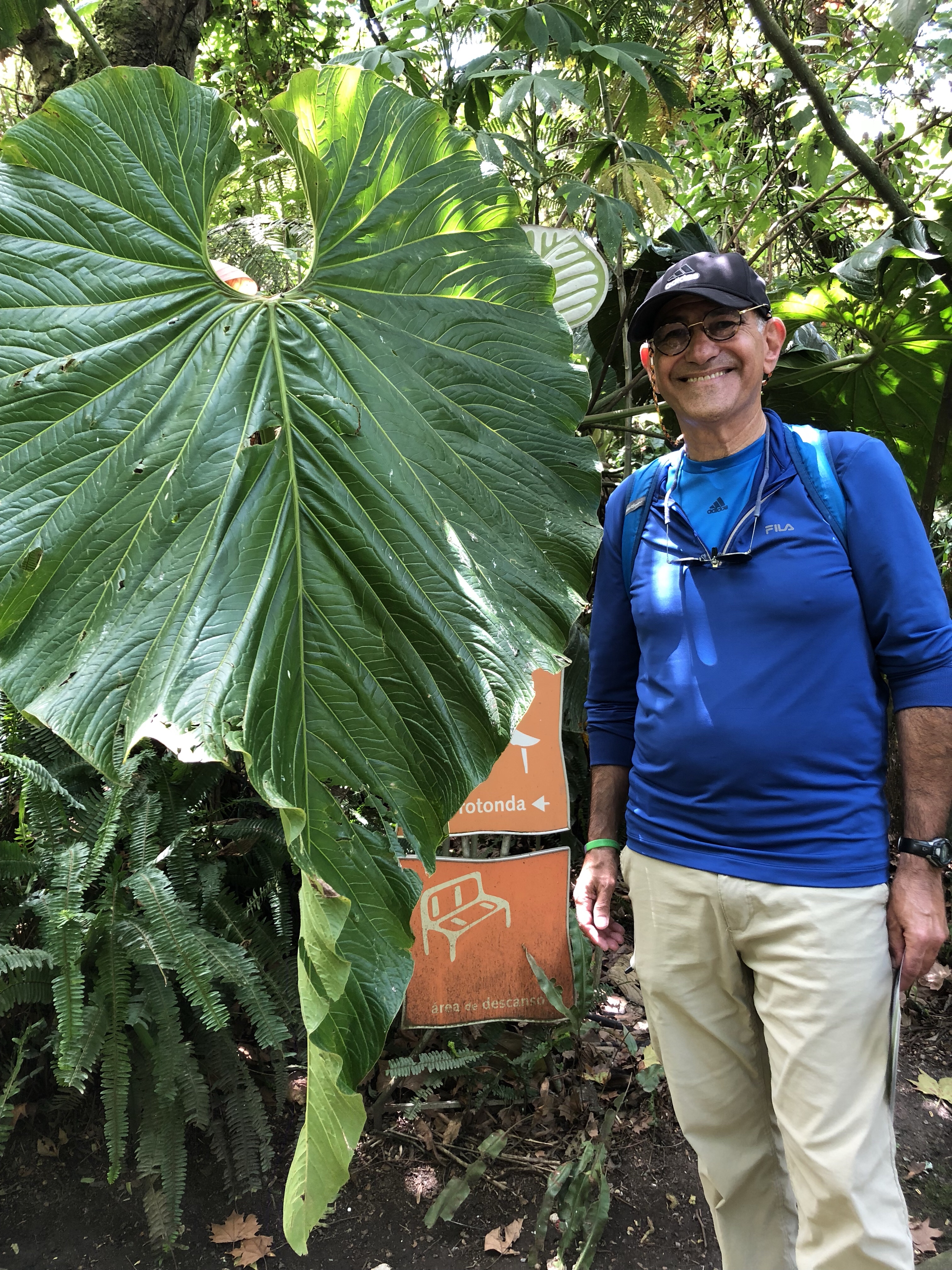
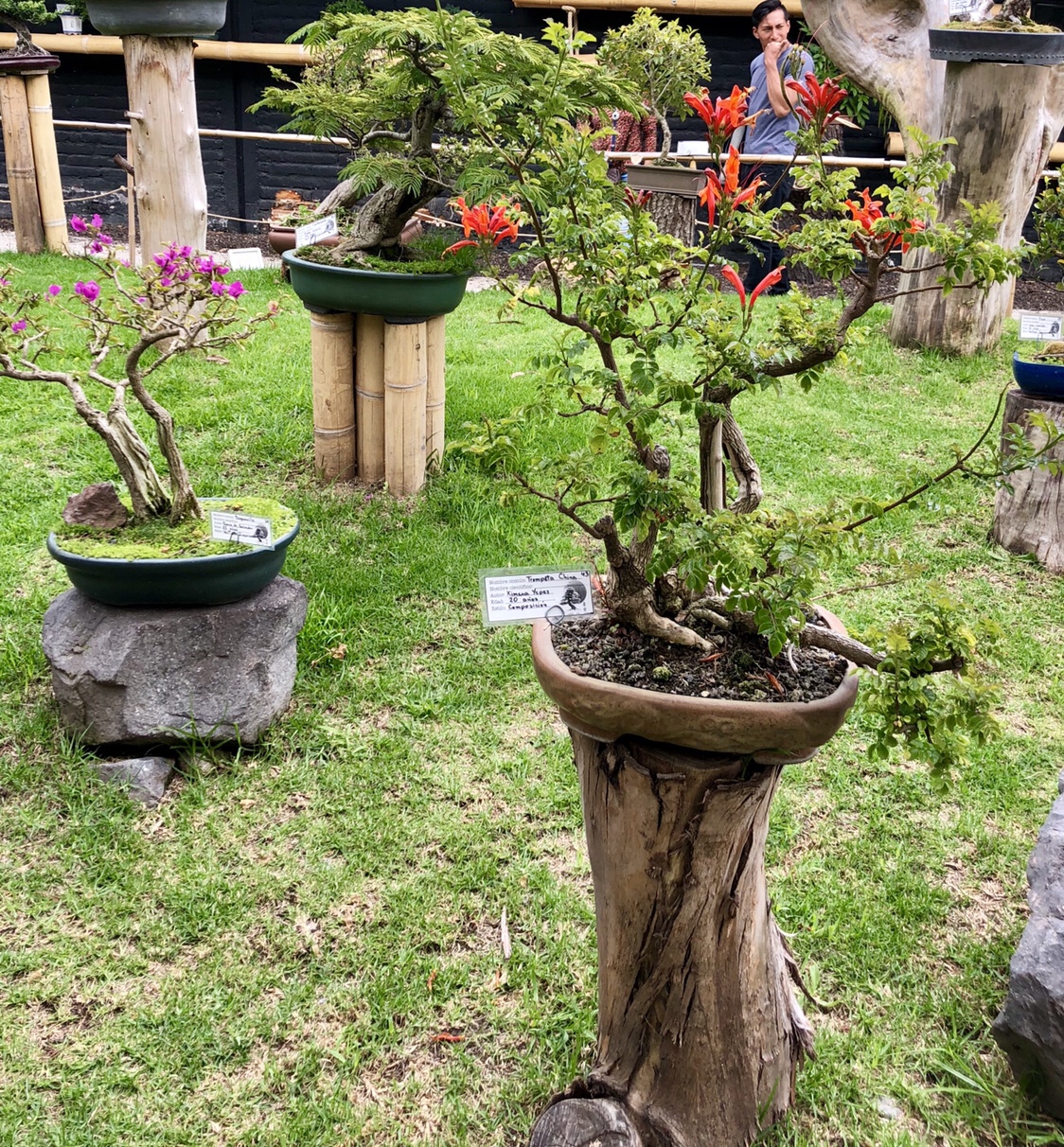
Another visit to this park included a wander through the botanical garden and a newly-opened bonsai exhibit.
Time to move out of the big city experience and head for the Andes!
Hasta pronto!
Esther
 Living La Vida Loca
Leave a comment