
Football – soccer to us Westerners – is very popular in Zambia as it is in other countries in Africa and Europe. Bernie, the youngest son of Marjory (our neighbor) came by the other night and was hoping for a contribution to help sponsor his football team in an all-day tournament. This is one of those “kick till you drop” deals where teams from all over play….and play…and play on a ladder of sorts until one team is declared the winner. And this all happens over one day. Ah, to be young and energetic. Bernie is 16 years old and cute as all get out. When he told us what it would take to cover the entire team sponsorship, Chrys, Karuna and I pooled our kwacha and made him whole. For 500,000KW and a little extra for snacks during the competition (About $100 US) between us we made it happen – Bernie was beside himself. So many things are different across the continents, but so many are just the same. Just as Patient Power has in the past “sponsored” our kids’ soccer and baseball teams, so the very same drill happens here. I am sorry I didn’t get to the matches but intend to see how Bernie’s team made out. Perhaps next go-around the Majochrys Café will be the T-shirt sponsor!
Buying Chitenge
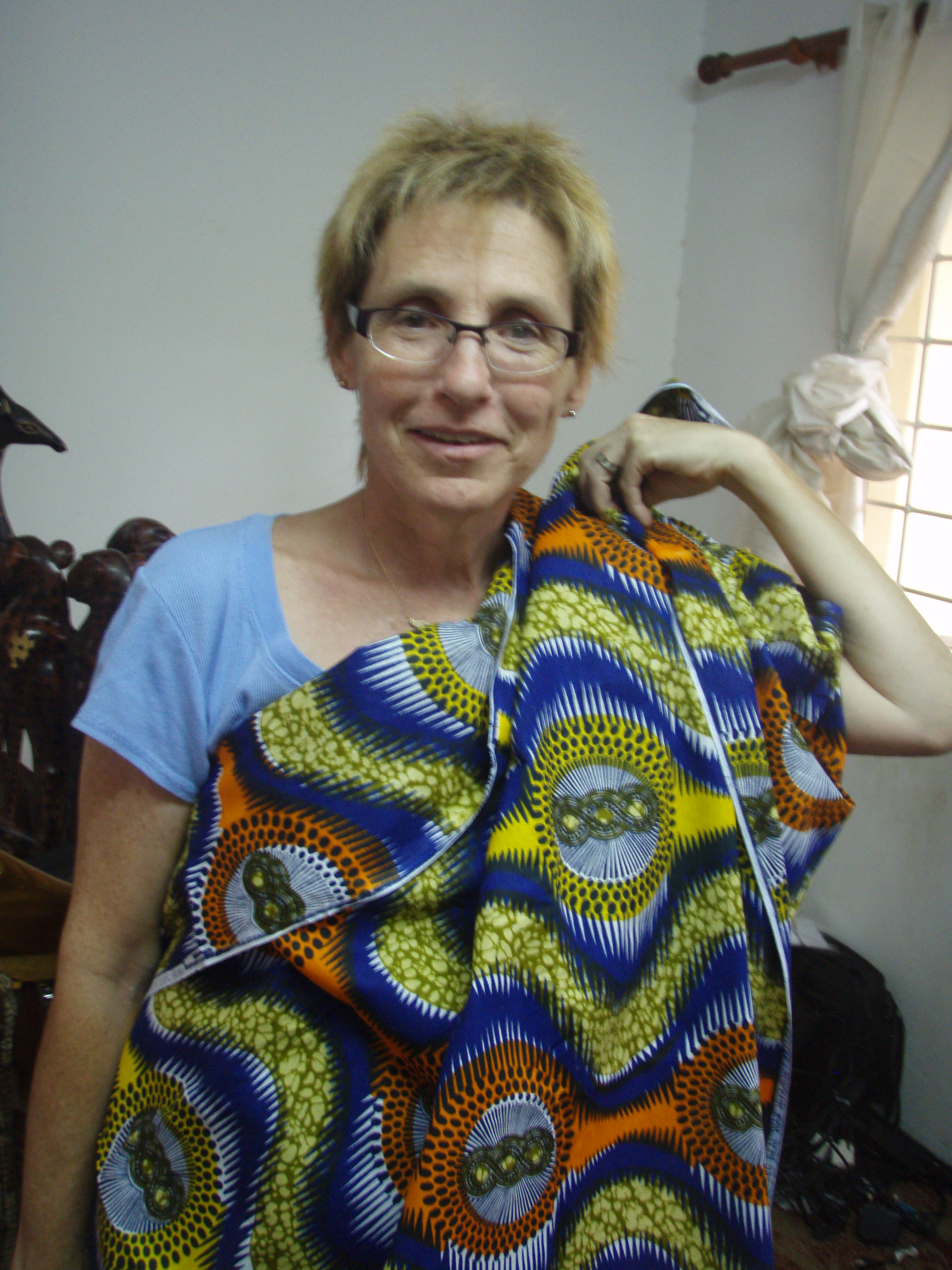
The most common and traditional material that Zambian (and I suspect women from other African countries) wear are called chitenge. The large swaths of brilliantly colored cotton cloth is wrapped, or cut and tailored, into various garments…could be a simple wrap skirt tied at the waist…a loose-fitting caftan dress…a wrapped headdress…or a very tailored suit depending on available budget. The material is produced in various African countries and the patterns can be anything from a Zambian flag, to the face of the Zambian President, to elaborate geometrics, to beautiful floral prints. The material is sold in various lengths but the most useful is 6 meters long and just wide enough to make about 3 basic garments. Janet tool Karuna and I one day last week to one of the downtown markets where chitenges are best purchased – and she helped us negotiate non-Mazungo (non-tourist) prices. I was able to get a beautiful length of geometrically patterned fabric to share with Ruthie in her favorite colors – red, yellow and blue. We’ll get something fun made out of it when I get back to Seattle. Meanwhile, here’s a picture of another brilliant chitenge cloth that Janet gave me as a “going away” gift.
Death – Janet’s Bro and Marjorie’s Husband…too young
It has become abundantly clear to me that longevity here is not common here. With less than adequate diets, sub-par preventative and urgent care – and in many rural areas, the need to travel great distances (likely on foot) for any care at all – it’s not surprising. It hit home twice while I have been here. Marjory’s husband – who could not have been more than 50 years old – died just a few short months before I arrived. To hear Chrys tell it, he had a heart attack while at home and by the time Marjory was able to get him to a local hospital it was too late. There are no paramedics “on call” here, and the local hospital did not even have anyone on duty that knew how to administer CPR, let alone treat a heart attack patient. Those with means to do so in such dire situations have a pretty good (but pricey) hospital in Lusaka, and for extreme cases they are airlifted to Johannesburg.
Just this last week Janet’s brother passed away – also not an older man. He’d been ill for a while – Janet has not shared what exactly his situation had been. But the really heartbreaking thing has been that Janet has felt compelled to keep working until this week when her job as Karuna’s attendant is complete…then she will go home and arrange for a funeral.
Relative Affordability – can’t afford brown rice and veggies
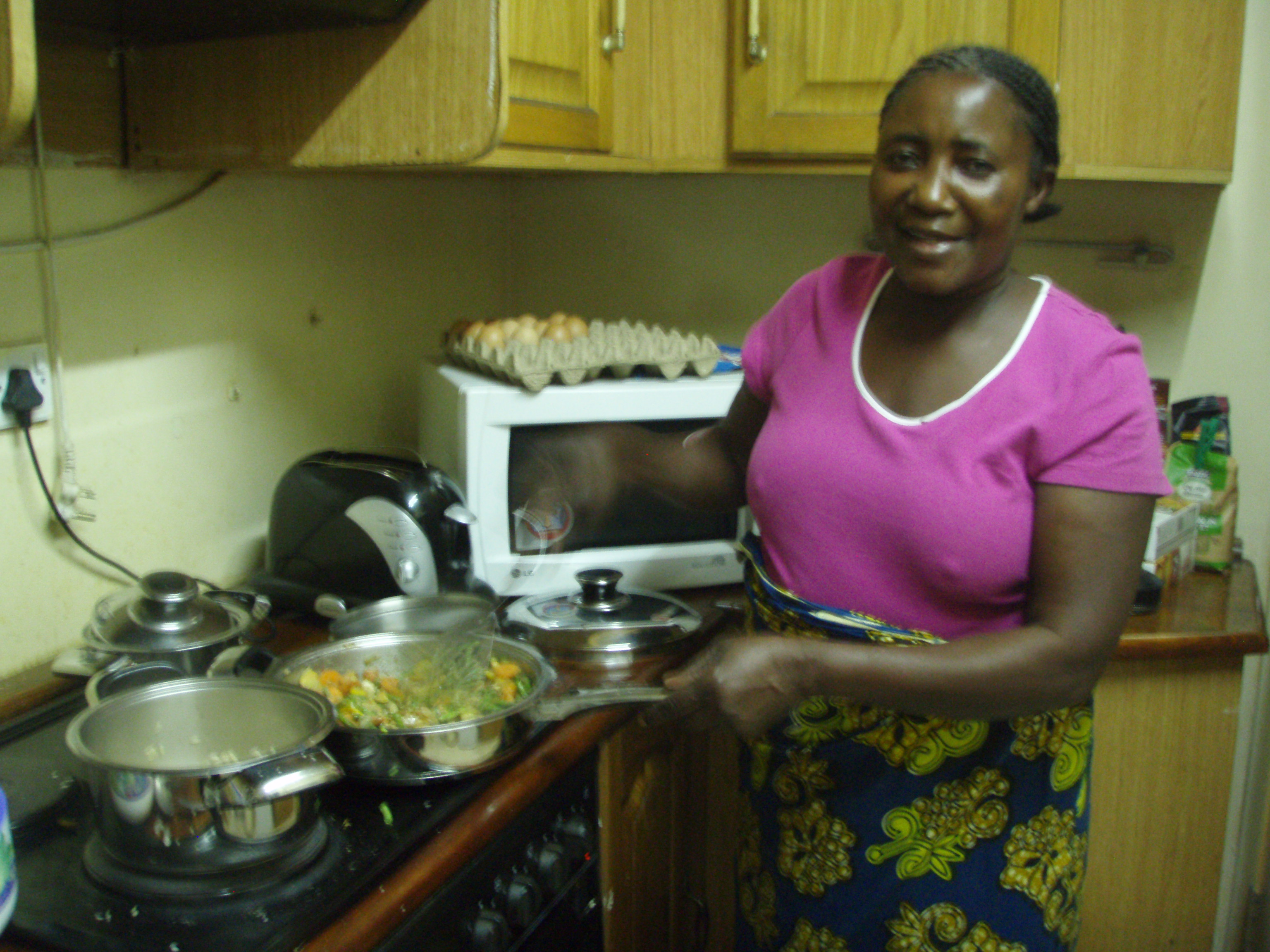
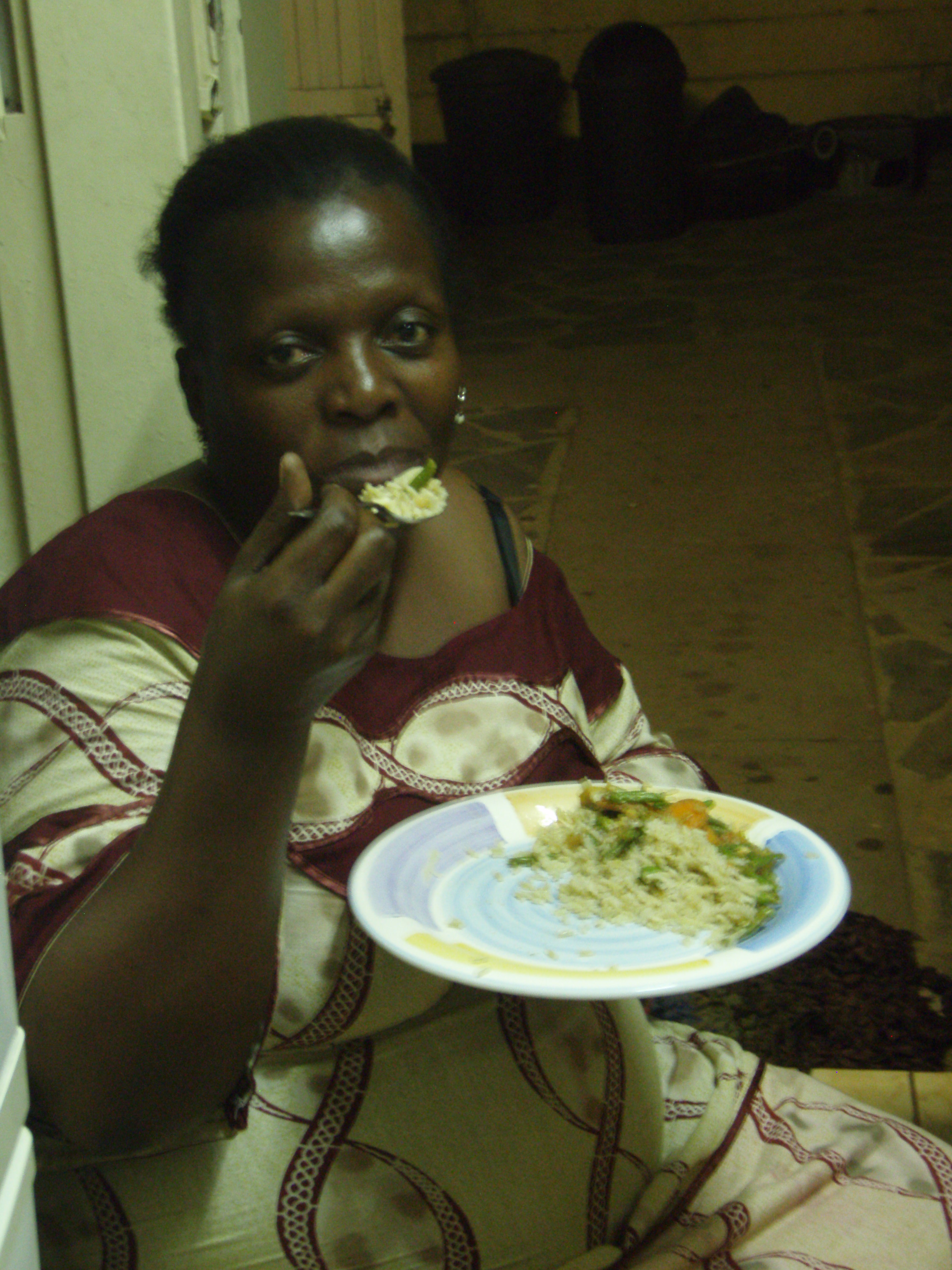
I continue to struggle with the grave inequity of how our world has evolved. This past week the “meal of the week” was stir fried veggies and brown rice (remember, the week before it was spaghetti and meat sauce). After a couple of observations of Chrys and I assembling the ingredients – using olive oil instead of corn oil; using pattypan squash and some sundried tomatoes along with the common green beans and onions, tossing on shaved parmesan cheese, and laying all this on top of brown instead of white rice – Janet tried her hand at making it and did a great job! We invited Marjory over to try it and it was a hit. I was humbled and somewhat embarrassed when Marjory said “I would make this for my family but it is too expensive for us…best we should eat shema (cornmeal).” I’m sorry, but this sucks.
The Saturday Dutch Market
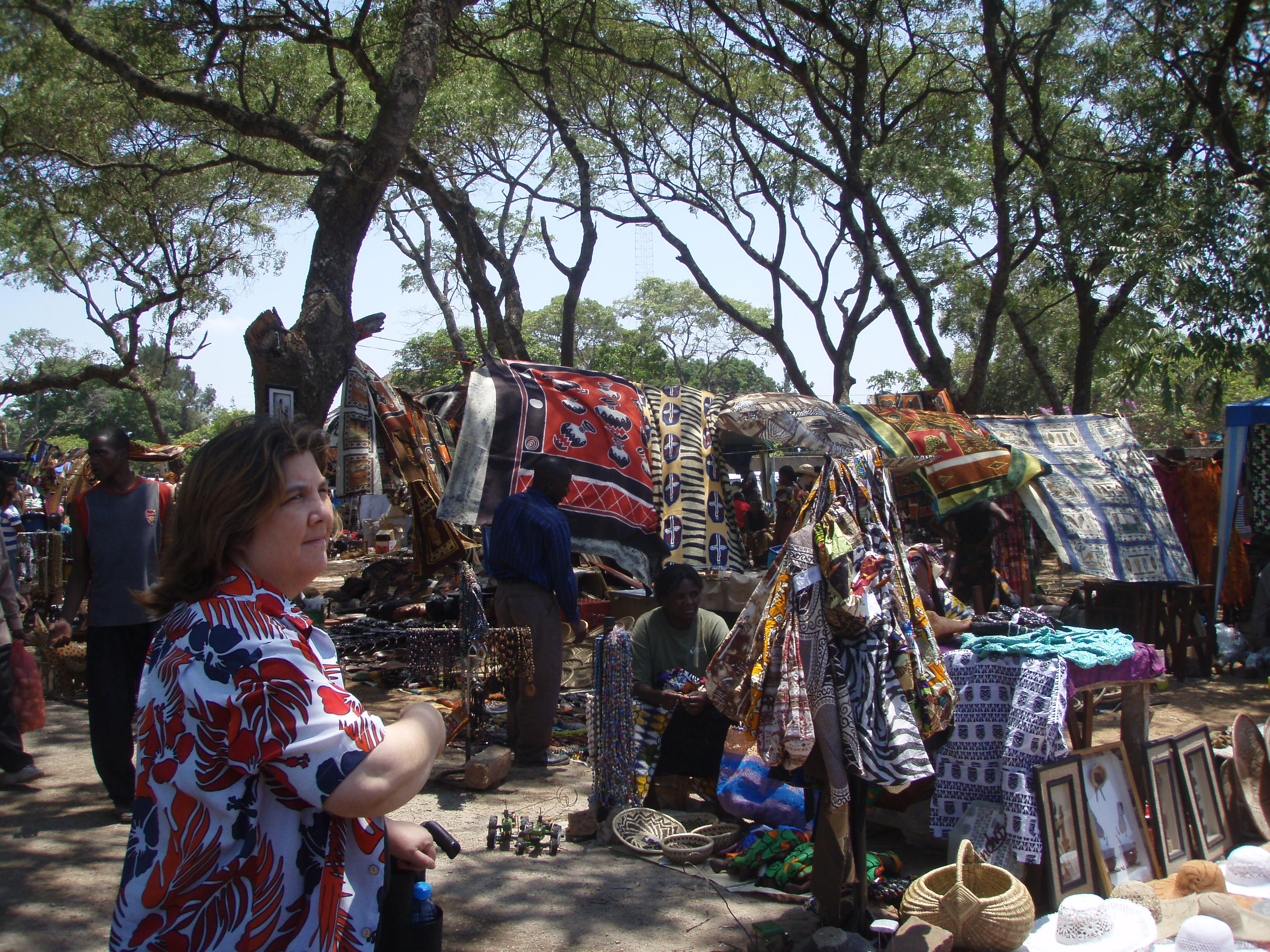
The last Saturday of each month, the Dutch Church here hosts a huge open market on the church grounds. Rows and rows of local artisans and local ethic food vendors attract both Lusaka locals and tourists and just about every conceivable type of “take home” was displayed…wooden animal carvings of every size and shape, chitenges and clothing made of chitenge, silver jewelry, hand woven baskets, pottery, copper statues, fine woven table coverings, bottle openers in the shape of crocodiles, birds carved from cow horns, and on and on and on. Nearly all are made in Zambia with some things imported from other African countries. We munched on Chinese dim sum (really – cha shu bow and sesame balls) and Janet again was our negotiator to stock up on goodies for family and friends back home.

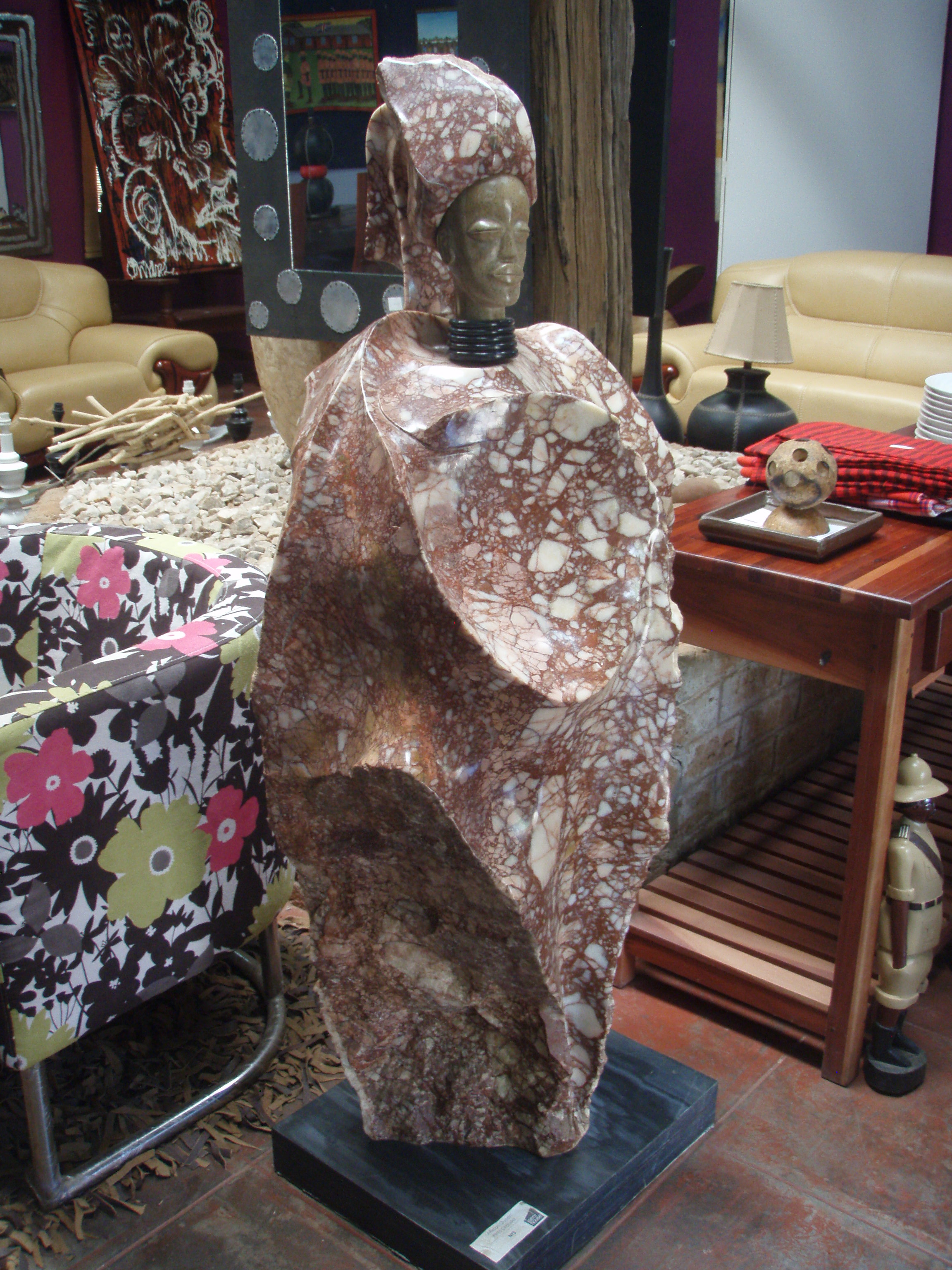
A lovely bonus was a small sculpture garden hidden away at the very back of the church grounds. The path meandered through incredible installations of native sculptures made from a variety of materials – rock, granite of some sort, plaster, metal, and other material I could not identify. It was both peaceful and breathtaking. A small indoor gallery inside the garden housed an incredible array of more exclusive and obviously expensive sculpture, furnishings made of natural materials, and paintings by famous Zambian artists. One awesome sculpture was of an African princess – regal and strong. Both Chrys and I agreed it was our favorite.
Cheers for now –
 Living La Vida Loca
Leave a comment